2027 Best Online Bachelor's in Physics for Career Changers

Co-Founder and Chief Data Scientist
Changing careers into physics is a serious decision because the degree is math-heavy, lab-based, and less commonly offered fully online than many majors. It can still be a smart route for adults targeting engineering support, data, teaching, research, aerospace, energy, or graduate study.
The U. S. Bureau of Labor Statistics projects physicists and astronomers employment to grow 7% from 2023 to 2033, faster than average. This guide explains how online physics bachelor's programs work, what they cost, how employers view them, and how to choose one that fits your career goal.
Key Things You Should Know
- Online bachelor's in physics programs are legitimate when the institution is regionally accredited, but fully online options are limited because physics requires calculus, advanced labs, and hands-on experimentation.
- College Board's 2024-25 data shows average published tuition and fees of $11,610 for in-state public four-year colleges and $43,350 for private nonprofit four-year colleges, before aid.
- A physics bachelor's can support roles in data, engineering support, education, aerospace, energy, and technical sales, while physicist roles often require a master's or PhD; BLS reports a May 2024 median wage of $166,290 for physicists.
What is an online bachelor's in physics and how does it work for career changers?
An online bachelor's in physics is an undergraduate degree focused on matter, energy, motion, forces, waves, electricity, quantum behavior, and mathematical modeling. For career changers, it is usually either a first bachelor's degree completed later in life, a second bachelor's degree after another major, or a degree-completion pathway that accepts prior college credit.
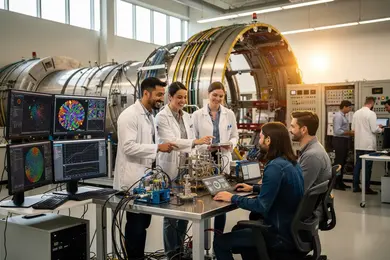
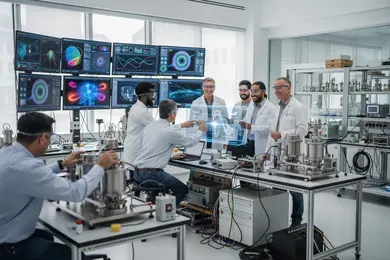
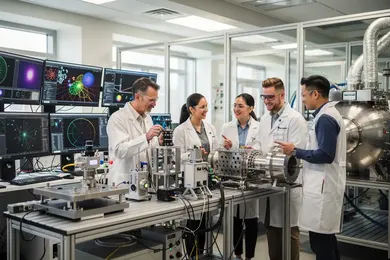
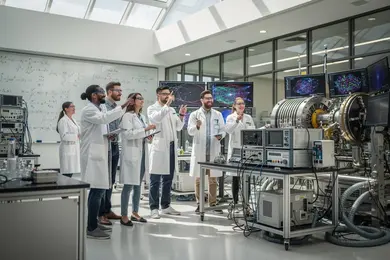
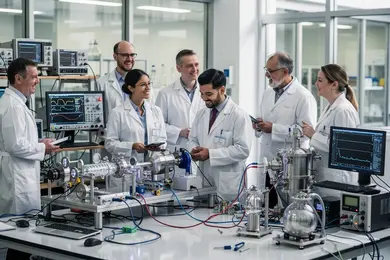
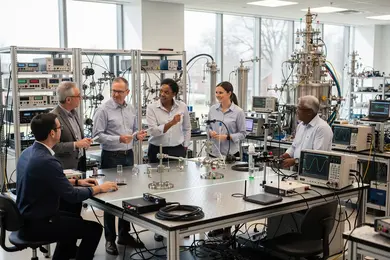
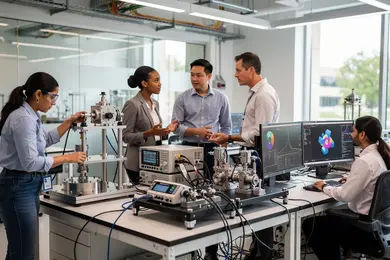
The "online" part usually applies to lectures, assignments, exams, advising, and some simulations. The most important detail is the lab model. Physics is an experimental science, so reputable programs must show how students complete labs through home lab kits, remote instrumentation, virtual labs combined with analysis assignments, local partner facilities, or short campus residencies.
Career changers should think of this degree less as a quick credential and more as a technical foundation. It can be useful if you want to move from business, education, military service, healthcare, IT, or another field into quantitative and scientific work. It may not be the fastest option if your goal is a narrowly defined job that can be reached through a certificate, coding bootcamp, teacher licensure pathway, or engineering technology degree.
This comparison can help you decide whether the physics route matches your intended outcome or whether a neighboring field may be more direct.
| Goal | When an online physics bachelor's makes sense | When another path may be better |
| Graduate school in physics, astronomy, materials science, or engineering | You need advanced math, core physics, lab work, and research preparation. | A non-degree post-baccalaureate plan may work if you already have a STEM bachelor's and only need prerequisites. |
| Data, modeling, or technical analytics | You want strong quantitative training and can add Python, statistics, and project work. | A data science or applied math degree may be faster if you do not need physics depth. |
| Engineering-adjacent work | You want physics fundamentals for testing, instrumentation, optics, semiconductors, or aerospace support. | An ABET-accredited engineering or engineering technology degree may be more direct for licensed engineering pathways. |
| Teaching | You want subject expertise and are ready to meet state teacher licensure rules separately. | A state-approved teacher preparation program may be simpler if licensure is the main goal. |
Are online bachelor's in physics programs accredited and respected by employers?
Employers generally care more about institutional accreditation, skills, projects, and role fit than whether every course was completed online. The safest choice is a physics program offered by a college or university with recognized institutional accreditation. In the U.S., that usually means regional accreditation through an accreditor recognized by the U.S. Department of Education or the Council for Higher Education Accreditation.
Programmatic accreditation is more complicated. Standalone physics bachelor's programs are not typically accredited by ABET in the way many engineering programs are, although some engineering physics or applied physics programs may be. That does not make a physics degree weak; it simply means you should verify that the curriculum covers the expected sequence of calculus-based physics, labs, upper-division theory, and advanced electives.
Before applying, career changers should verify the following items because they affect transfer credit, graduate school eligibility, employer screening, and financial aid access.
- Confirm the institution's accreditation status directly through the school and recognized accreditor databases.
- Ask whether the transcript or diploma distinguishes online study from campus study, and how the school describes the delivery format to employers.
- Review the lab requirements and ask how hands-on competencies are assessed.
- Check whether the degree meets prerequisites for the graduate programs, teacher licensure routes, or technical jobs you are targeting.
- Ask for recent examples of student research, capstone projects, internships, or employer partnerships involving online learners.
A respected online physics program should not feel easier or thinner than a campus program. If admissions staff cannot clearly explain labs, faculty access, upper-division courses, and transfer-credit rules, treat that as a warning sign.
How does an online physics bachelor's compare to a campus-based program in rigor and outcomes?
An online physics bachelor's should be comparable in intellectual rigor to a campus-based degree when it uses the same faculty standards, learning outcomes, lab expectations, and assessments. The difference is not supposed to be the difficulty level; it is the delivery model. Online students need more self-direction because they often learn advanced math and physics without the rhythm of daily in-person class meetings.
The biggest trade-off is not "quality versus convenience." It is flexibility versus access to physical infrastructure. Campus students may have easier access to optics benches, electronics labs, machine shops, research groups, and informal study networks. Online students may gain scheduling flexibility, lower relocation costs, and the ability to keep working while studying.
The table below summarizes the practical differences that matter most for career changers comparing online and campus physics options.
| Factor | Online physics bachelor's | Campus-based physics bachelor's |
| Schedule | Often better for working adults, especially when lectures are asynchronous. | More structured, but less flexible for full-time workers. |
| Labs | May use remote labs, simulations, home kits, local arrangements, or short residencies. | Usually provides direct access to teaching labs and research equipment. |
| Peer network | Requires intentional participation in discussion boards, virtual study groups, and faculty office hours. | Often easier to form study groups and join research teams informally. |
| Research access | Possible, but may require extra planning and faculty outreach. | Often more visible through departmental labs, seminars, and undergraduate research programs. |
| Career outcomes | Depend heavily on projects, internships, technical skills, and credibility of the institution. | Also depend on experience, but campus access may make internships and research easier to arrange. |
For many career changers, the best choice is the program that lets them complete a rigorous curriculum without leaving the workforce. However, if your target is a PhD in experimental physics, optics, nuclear science, or condensed matter research, you should prioritize programs that can document serious lab and research preparation.
What admission requirements do online physics bachelor's programs typically have for adult learners?
Admission requirements vary by school, but online physics programs usually expect evidence that you can handle college-level mathematics and science. Adult learners may be evaluated differently from first-time freshmen because they often bring transfer credits, military training, professional experience, or an earlier degree.
Most programs look for a mix of academic records and readiness indicators. The details matter because missing prerequisites can add time and cost before you even begin upper-division physics courses.
- Official transcripts from high school and all colleges previously attended.
- Minimum GPA requirements, often higher for transfer or degree-completion applicants than for general admission.
- College algebra, trigonometry, precalculus, or calculus readiness, depending on program entry point.
- Prior laboratory science coursework, especially for transfer applicants seeking advanced standing.
- Placement testing or prerequisite review for calculus and introductory physics.
- Personal statement, resume, or advising interview for adult, military, or second-degree applicants.
- English proficiency documentation for applicants educated in another language environment.
The most common mistake is assuming that previous college credit will automatically shorten the degree. Physics has a sequenced curriculum, so even students with many general education credits may still need several semesters of calculus, differential equations, classical mechanics, electricity and magnetism, quantum mechanics, and labs.
If you have been away from math for several years, ask whether the school offers a refresher path before calculus. A slower start can be smarter than enrolling directly into calculus-based physics and losing momentum in the first term.
What core courses and concentrations are offered in online bachelor's in physics programs?
Core coursework in an online physics bachelor's usually follows the same backbone as a campus program: calculus-based introductory physics, advanced mechanics, electricity and magnetism, thermodynamics, modern physics, quantum mechanics, computational methods, and laboratory work. Many programs also require substantial mathematics, including calculus, linear algebra, differential equations, and statistics or numerical methods.
Concentrations vary because fully online physics degrees are relatively uncommon. Some schools offer applied physics, physics teaching, engineering physics, astronomy, computational physics, or physical science tracks instead of a general physics major.
The table below shows common course areas and why they matter for career changers trying to translate a physics degree into a new role.
| Course area | What you study | Why it matters for career changers |
| Classical mechanics | Motion, forces, energy, oscillations, and analytical problem-solving. | Builds modeling skills used in engineering support, aerospace, robotics, and simulation. |
| Electricity and magnetism | Fields, circuits, waves, Maxwell's equations, and electromagnetic systems. | Useful for electronics, instrumentation, telecommunications, and energy roles. |
| Quantum and modern physics | Atomic behavior, quantum states, spectroscopy, nuclear concepts, and materials behavior. | Relevant to semiconductors, photonics, materials science, and graduate study. |
| Thermodynamics and statistical physics | Heat, entropy, gases, energy transfer, and probabilistic systems. | Supports work in energy, manufacturing, climate technology, and materials testing. |
| Computational physics | Programming, numerical methods, simulations, and data analysis. | Helps career changers show practical skills for analytics, modeling, and automation-heavy workplaces. |
| Laboratory sequence | Measurement, uncertainty, experiment design, instrumentation, and technical reporting. | Proves that the degree is not only theoretical and helps build a portfolio of technical work. |
If your interests lean toward earth systems, natural resources, environmental data, or field science, a geologist degree online may align better than physics because geology programs often connect physical science with applied field and environmental work.
How long does it take to complete an online bachelor's in physics, and can you study part time?
A bachelor's degree in physics usually requires about 120 credits, but completion time depends on your transfer credits, math placement, course availability, and whether you study full time or part time. Career changers with an earlier bachelor's may finish faster if general education requirements are waived, but they still need to complete the physics major sequence.
The main scheduling issue is sequencing. Upper-division physics courses often have prerequisites and may not be offered every term. That means a missed calculus, lab, or intermediate theory course can delay graduation even if you are otherwise earning credits steadily.
Use this general timeline to plan realistically before enrolling.
| Student profile | Typical pacing issue | Planning implication |
| First-time bachelor's student | Must complete general education, math, science, and major courses. | Expect the longest timeline unless studying full time year-round. |
| Transfer student with general education credits | May still need the full physics and calculus sequence. | Ask for a course-by-course degree plan before committing. |
| Second-degree student | May skip many general education requirements but still needs major prerequisites. | Can be efficient if prior math and science credits transfer cleanly. |
| Part-time working adult | May take one or two courses per term to manage workload. | Should prioritize prerequisite sequencing over random elective completion. |
Part-time study can work well, but physics is not a light "one course at a time" major for everyone. A single upper-division course can require problem sets, coding, lab reports, and intensive reading. The best part-time plans pair one mathematically demanding course with a lighter requirement rather than stacking multiple technical courses during a busy work season.
What do online bachelor's in physics programs cost, and what financial aid options are available?
Online physics degree costs depend on residency status, public versus private pricing, transfer credit, technology fees, lab fees, books, proctoring, and whether you need campus residencies. Published tuition is only the starting point. The total cost can change significantly if you need prerequisite math courses, repeat a difficult course, travel for labs, or take longer because courses are offered in limited rotations.
College Board's 2024-25 figures provide a useful national benchmark for published tuition and fees at four-year institutions before grants, scholarships, or institutional aid are applied.
- Public four-year, in-state average published tuition and fees: $11,610
- Public four-year, out-of-state average published tuition and fees: $30,780
- Private nonprofit four-year average published tuition and fees: $43,350
For online learners, the best price is not always the lowest sticker price. A program that accepts more transfer credit, offers predictable course rotations, and avoids travel-heavy lab requirements may cost less overall than a cheaper program that delays graduation.
Financial aid options commonly include federal grants, federal student loans, state aid, employer tuition assistance, military and veteran benefits, institutional scholarships, and payment plans. To access federal aid, the school must participate in federal student aid programs and the student must meet eligibility rules. Adult learners should also ask whether second-degree students qualify for the same scholarships as first-time degree seekers because some awards are restricted.
If cost is your primary constraint and your career goal is not tied to physics specifically, compare alternatives before borrowing. For example, an affordable library degree may be a better fit for adults aiming at information services, archives, research support, or education-adjacent work rather than technical physics roles.
What careers can you pursue with an online bachelor's in physics as a career changer?
A bachelor's in physics can open several career directions, but career changers should be realistic: the job title "physicist" often requires graduate education, especially in research and university settings. The bachelor's degree is most flexible when paired with applied skills such as Python, MATLAB, data visualization, CAD, electronics, laboratory instrumentation, technical writing, or teaching preparation.
Physics graduates are often valued because they can model complex systems, work with uncertainty, analyze data, and learn technical tools quickly. Those strengths are increasingly relevant as employers adopt automation, AI-assisted analysis, simulation software, sensors, and advanced manufacturing systems.
The table below outlines realistic pathways and the kind of preparation that improves employability.
| Career direction | Typical responsibilities | What strengthens your candidacy |
| Engineering technician or technologist | Testing systems, collecting measurements, troubleshooting equipment, documenting results. | Electronics, CAD, instrumentation labs, internships, and quality-control experience. |
| Data analyst or scientific programmer | Cleaning data, building models, automating workflows, creating visualizations. | Python, SQL, statistics, machine learning basics, and a project portfolio. |
| Laboratory or research assistant | Preparing experiments, operating equipment, recording data, writing technical reports. | Strong lab sequence, safety training, faculty research, and technical documentation samples. |
| Physics or physical science teacher | Teaching secondary students, designing labs, assessing learning, meeting state standards. | State-approved teacher preparation, student teaching, and licensure exam readiness. |
| Technical sales or applications support | Explaining scientific products, supporting customers, translating technical requirements. | Communication skills, product knowledge, internships, and customer-facing experience. |
| Graduate school pathway | Preparing for advanced research or specialized technical roles. | Upper-level theory, research experience, faculty recommendations, and strong math grades. |
If you are primarily interested in circuit design, power systems, embedded systems, or licensed engineering work, compare physics with engineering programs and online electrical engineering career outcomes before choosing. Physics can be powerful, but engineering is often the more direct credential for engineering-specific roles.
What salary ranges and job outlook can physics graduates expect in different industries?
Salary outcomes vary widely because physics graduates enter many different industries. A bachelor's degree may lead to technical support, data, lab, teaching, or engineering-adjacent roles, while higher-paying physicist research positions often require graduate education. Use salary data as a market reference, not as a promise of individual earnings.
The U.S. Bureau of Labor Statistics' May 2024 wage data helps show the range of occupations connected to physics training. The table includes roles that may require different education levels, experience, certifications, or licenses.
| Occupation | Relevant salary or outlook data | How to interpret it |
| Physicist | BLS reported a May 2024 median annual wage of $166,290 for physicists. | This is most relevant to research-heavy roles, many of which require a graduate degree. |
| Data scientist | BLS reported a May 2024 median annual wage of $112,590 for data scientists. | Physics graduates can compete when they add programming, statistics, and portfolio projects. |
| Electrical engineer | BLS reported a May 2024 median annual wage of $111,910 for electrical engineers. | Physics overlaps with electronics and electromagnetism, but engineering roles may require an engineering degree. |
| High school teacher | BLS reported a May 2024 median annual wage of $64,580 for high school teachers. | Physics expertise can help, but public school teaching typically requires state licensure. |
The broader outlook is favorable for quantitative talent, but the best opportunities depend on how you package the degree. Employers in aerospace, defense, semiconductors, renewable energy, medical devices, software, education, and advanced manufacturing often value physics skills when candidates can show practical tools and workplace-ready projects.
AI and automation are changing expectations. Employers increasingly want people who can use computational tools, validate model outputs, understand measurement error, and communicate technical uncertainty. A physics degree can support that profile, but only if the program includes enough computation and applied work to make your skills visible.
How should career changers choose the best online physics program for their goals?
The best online bachelor's in physics for a career changer is the one that matches your target role, respects your existing credits, provides credible lab experiences, and fits your time and budget. Rankings can help you discover schools, but they should not replace a detailed fit check.
Use the following steps before enrolling. They are designed to prevent the most common mistakes career changers make when choosing a technical online degree.
- Define the job target first, then work backward to the degree requirements, skills, and experience employers expect.
- Verify institutional accreditation and ask whether the physics curriculum is accepted by graduate programs or licensure pathways relevant to your goal.
- Request a transfer-credit evaluation before comparing prices so you know the real number of credits you still need.
- Ask exactly how labs are delivered, what equipment is used, and whether any travel or campus residency is required.
- Review the upper-division course rotation to avoid programs where required courses are offered too rarely for your timeline.
- Look for applied proof points such as capstones, research options, internships, coding assignments, instrumentation work, or faculty-led projects.
- Compare total cost, not just tuition, including fees, books, lab materials, proctoring, travel, and lost income from reduced work hours.
- Speak with career services about employers, graduate school placements, teacher licensure support, and alumni examples from the online format.
Several red flags deserve extra caution: vague lab descriptions, pressure to enroll before transfer credits are evaluated, unclear accreditation language, no access to faculty in the major, limited upper-division physics offerings, or career claims that sound guaranteed. A good program should be transparent about both its strengths and its limits.
Finally, compare physics with adjacent majors. If your motivation is life science, food systems, veterinary preparation, or agricultural technology, an online animal science degree may align more directly with your goals than physics. The smartest choice is not the most impressive-sounding major; it is the degree that gets you to the right next step with the least unnecessary cost and risk.
Other Things You Should Know About Physics
Yes, earning an online bachelor's in physics in 2027 can facilitate a career change. Many reputable institutions offer rigorous online programs that equip students with the necessary theoretical knowledge and technical skills. Coupled with relevant experience or further specialization, this degree can effectively support a transition into a physics-related career.
It can be worth it if your goal requires strong math, modeling, lab, or technical problem-solving skills. It may not be worth it if a shorter credential, engineering degree, teaching pathway, or data-focused program gets you to the same job faster.
Many physicist research roles require graduate education, especially in academia and advanced research labs. A bachelor's can still support roles in data analysis, engineering support, lab work, education, technical sales, and graduate school preparation.
Most career changers should add practical skills such as Python, statistics, data visualization, technical writing, electronics, CAD, or instrumentation. These skills help translate physics coursework into employer-recognized evidence of job readiness.
References
- Types of Financial Aid for Online Colleges https://www.umassglobal.edu/blog-news/types-financial-aid-online-colleges
- As a Physicist You're Always a Career Changer https://martin-ueding.de/posts/as-a-physicist-you-re-always-a-career-changer/
- How to begin a career change to physics? https://www.physicsforums.com/threads/how-to-begin-a-career-change-to-physics.810557/
- Physics Degree Online - Edubrain https://edubrain.ai/blog/physics-degree-online/
- Online Physics Course: 6 Helpful Considerations - Prereqcourses https://www.prereqcourses.com/online-physics-course/
- 2025 Best Online Degrees in Physics https://www.onlineu.com/degrees/physics