2027 Online Physics Degrees for Students Who Want Flexible Lab Access

Co-Founder and Chief Data Scientist
Choosing physics online is harder than choosing many other majors because labs, instruments, and advanced math still matter. The good news: remote lab kits, simulation software, short campus intensives, and partner-site experiments now make flexible study more realistic.
The U.S. Bureau of Labor Statistics projects physicist and astronomer employment to grow 7% from 2023 to 2033, faster than average, but many roles still require strong preparation. This guide explains how online physics degrees work, what labs look like, how to judge quality, and whether the investment fits your goals.
Key Things You Should Know
- Online physics degrees can be legitimate when the institution is regionally accredited and the curriculum includes verifiable lab work, but fully online bachelor's options remain less common than online general science, engineering, data, or computer science pathways.
- Flexible lab access usually means a mix of mailed lab kits, virtual instruments, simulation platforms, remote-controlled equipment, local proctoring, or short campus residencies. The best option depends on whether you want graduate physics, teaching, engineering-adjacent work, or technical industry roles.
- BLS projects 7% employment growth for physicists and astronomers from 2023 to 2033, while many physics graduates enter adjacent fields such as software, data, engineering technology, education, finance, or health physics.
What is an online physics degree with flexible lab access, and how does it work in practice?
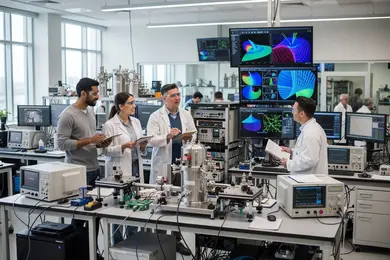
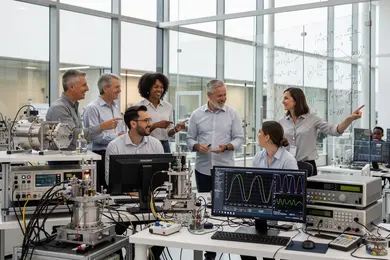
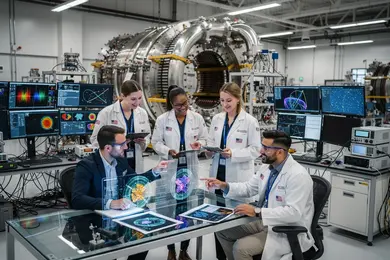
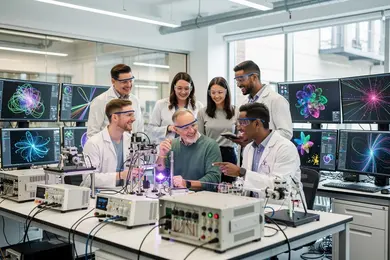
An online physics degree with flexible lab access is a physics or physics-related program delivered primarily through online coursework while meeting laboratory requirements through remote, hybrid, local, or intensive formats. The key difference from a non-lab online degree is that students must still demonstrate experimental design, measurement, uncertainty analysis, technical reporting, and safe handling of equipment or data.
In practice, the format varies by school. Some programs offer introductory physics labs through mailed kits and video submissions, while upper-division labs may require a campus visit, approved local lab site, or remote access to instruments. Students comparing a physics degree online should look beyond the word "online" and ask exactly how each required lab is completed.
The table below summarizes the most common formats. It is useful because "flexible lab access" can mean very different things for students with work schedules, military obligations, caregiving responsibilities, or limited access to a local college lab.
| Lab format | How it works | Best fit | Main limitation |
| Mailed lab kit | The school ships equipment for experiments completed at home with video, photos, data logs, and written reports. | Introductory mechanics, electricity and magnetism, optics, and measurement labs. | May not support advanced instrumentation or research-grade experiments. |
| Simulation-based lab | Students use software to model physical systems, collect simulated data, and analyze uncertainty. | Concept reinforcement, computational physics, astronomy, and complex systems. | Should not be the only lab format in a rigorous physics major. |
| Remote-controlled lab | Students operate real equipment through an online interface and download actual measurements. | Optics, electronics, spectroscopy, and instrument-based experiments. | Scheduling access and troubleshooting can be less flexible than asynchronous coursework. |
| Short campus residency | Students complete intensive lab blocks on campus during weekends, summer sessions, or weeklong residencies. | Upper-division physics labs and students considering graduate study. | Travel, lodging, and time away from work add cost. |
| Local approved site | A student completes lab work at a nearby institution, workplace, or partner facility under approved supervision. | Students near a community college, university, school lab, or technical employer. | Approval rules vary and may require planning before enrollment. |
The best programs explain these formats before you apply, not after you enroll. If admissions staff cannot describe how physics labs are assessed, who supervises them, and what equipment is used, treat that as a signal to investigate further.
How do online physics programs handle laboratory requirements, experiments, and hands-on learning remotely?
Online physics programs handle labs by separating the learning goal from the physical location. A good lab is not just a place; it is a structured experience in forming hypotheses, collecting measurements, evaluating error, interpreting data, and communicating results. Remote delivery can support those goals when the program uses appropriate tools and assessments.
Students should expect several layers of verification and support. Strong programs typically combine the following elements so that lab work is not reduced to watching demonstrations:
- Pre-lab preparation that covers theory, safety, equipment setup, and the data students are expected to collect.
- Hands-on or instrument-based activity through home kits, remote equipment, local labs, or required campus sessions.
- Evidence of participation, such as time-stamped data files, lab notebooks, video demonstrations, oral check-ins, or proctored practical tasks.
- Formal lab reports that include calculations, graphs, uncertainty estimates, and discussion of experimental limitations.
- Instructor feedback on technique, interpretation, and scientific communication rather than only grading the final numerical answer.
Remote labs work best for motivated students who can follow technical instructions independently. They can be frustrating for students who prefer immediate in-person troubleshooting, so it is worth asking whether the program offers live lab office hours, equipment replacement policies, and instructor support during evenings or weekends.
One current trend affecting online physics is the wider use of computational notebooks and AI-assisted coding tools. These tools can help students model physical systems and analyze large datasets, but they do not replace understanding. Programs should still require students to explain assumptions, validate outputs, and document their own reasoning.
Are online physics degrees with virtual or remote labs respected and properly accredited?
Online physics degrees can be respected when they come from properly accredited institutions and include a curriculum comparable to campus programs. In the U.S., the most important baseline is institutional accreditation by an agency recognized by the U.S. Department of Education or the Council for Higher Education Accreditation. For physics, there is no single required programmatic accreditor equivalent to ABET in many engineering fields, so curriculum quality and lab design deserve extra scrutiny.
Accreditation matters because it affects transfer credit, graduate school eligibility, employer confidence, and access to federal financial aid. It does not automatically prove that every online lab is excellent, but it confirms that the institution has been reviewed against recognized standards.
The table below shows what different reviewers may care about. This helps you evaluate whether an online physics degree will be accepted for the next step you have in mind.
| Reviewer | What they usually examine | Why it matters to the student |
| Graduate physics program | Upper-division coursework, math depth, research or advanced lab exposure, faculty recommendations, and GPA. | A program with minimal advanced labs may make graduate admission more difficult. |
| Employer in technical industry | Problem-solving ability, programming, data analysis, lab or instrumentation experience, internships, and projects. | Applied evidence of skills can matter as much as delivery format. |
| Teacher certification office | State-approved education coursework, student teaching, exams, and subject-area preparation. | A physics degree alone may not meet licensure requirements. |
| Transfer institution | Regional accreditation, course equivalencies, lab credit, and syllabi. | Physics lab transfer can be strict, so keep syllabi and lab documentation. |
| Financial aid office | Institutional eligibility, enrollment status, satisfactory academic progress, and program level. | Accreditation affects access to federal aid and some scholarships. |
Be cautious with programs that advertise "life experience" degrees, avoid listing faculty, refuse to explain lab requirements, or promise unusually fast completion without a clear transfer-credit basis. Physics is a cumulative field; shortcuts in calculus, labs, or upper-division theory can limit later options.
What types of online physics degrees are available, and which is best for my goals?
Online physics options range from associate degrees and bachelor's completion pathways to master's programs in physics-related fields. The right choice depends on whether you want broad scientific literacy, a teaching pathway, technical employment, graduate study, or a pivot into data-heavy work.
The table below compares common degree types. Use it to match the credential to your goal before focusing on tuition or speed.
| Program type | Typical student goal | What to check carefully | When it may not fit |
| Associate degree with physics emphasis | Prepare to transfer into a bachelor's program in physics, engineering, astronomy, or education. | Calculus sequence, calculus-based physics, and transfer agreements. | If you need upper-division physics immediately or cannot transfer lab credits. |
| Bachelor's in physics | Build broad preparation for industry, graduate study, teaching preparation, or technical roles. | Advanced labs, modern physics, quantum mechanics, electromagnetism, and math rigor. | If you want an engineering license pathway that requires an accredited engineering degree. |
| Bachelor's in physical science or natural science | Prepare for teaching, science communication, or interdisciplinary roles. | Physics course depth and state teacher-certification alignment. | If you plan to apply to competitive physics PhD programs. |
| Master's in physics or applied physics | Advance technical expertise, teaching credentials, or preparation for specialized industry roles. | Research expectations, thesis options, and required campus labs. | If the program lacks the specialization your employer or doctoral target expects. |
| Physics-adjacent degree | Apply quantitative skills in data, computing, engineering technology, or analytics. | Programming, statistics, project portfolio, and employer alignment. | If your goal specifically requires a physics major or advanced theoretical physics coursework. |
A pure physics bachelor's is usually best for students who enjoy calculus, abstract reasoning, and experimental analysis. A physics-adjacent path may be better if your main goal is employment in analytics, software, or applied technology rather than graduate physics research. If you are unsure, compare the first two years of coursework: the strongest transferable foundation usually includes calculus I-III, differential equations, calculus-based physics, programming, and introductory lab science.
How do online physics programs compare to campus-based programs for lab quality and rigor?
Online and campus-based physics programs can cover the same theories, mathematics, and problem-solving methods, but lab delivery changes the student experience. Campus programs typically offer easier access to faculty, peer study groups, research labs, machine shops, observatories, and specialized instruments. Online programs trade some of that immediacy for flexibility, which can be valuable for students who cannot relocate or attend daytime classes.
Quality depends less on modality and more on design. A well-designed online lab with real data, instructor feedback, and rigorous reporting can be stronger than a poorly supported campus lab where students follow instructions mechanically. However, students targeting research-intensive graduate programs should look for evidence of advanced lab work, faculty-mentored research, and opportunities to present or document technical projects.
The comparison below highlights practical trade-offs. It can help you decide whether online flexibility is worth the potential limitations in equipment access and research exposure.
| Feature | Online with flexible labs | Campus-based physics program |
| Schedule flexibility | Often stronger, especially for asynchronous lectures and remote assignments. | Usually tied to class, lab, and research schedules. |
| Introductory lab access | Can be strong through kits, simulations, or remote labs when well supervised. | Usually straightforward because equipment and instructors are on site. |
| Advanced instrumentation | May require residencies, local partnerships, or remote equipment access. | Often easier to access through department labs and research groups. |
| Peer collaboration | Depends on virtual study groups, discussion boards, and scheduled sessions. | Often more organic through labs, lounges, clubs, and tutoring centers. |
| Research preparation | Possible but must be verified program by program. | Often stronger at institutions with active physics research faculty. |
| Best fit | Working adults, transfer students, military students, rural students, and career changers. | Students who can attend full time and want immersion in a physics department. |
Do not assume online is easier. Physics is one of the more demanding online majors because the workload includes lectures, problem sets, labs, coding, and mathematical proof-like reasoning. The strongest online students treat the program like a structured work schedule, not a set of videos to watch when convenient.
What courses and lab experiences are typically included in an online physics curriculum?
An online physics curriculum typically begins with calculus-based mechanics and electricity and magnetism, then moves into modern physics, mathematical methods, computational tools, and upper-division theory. The lab sequence should grow from basic measurement to more complex experimental design and data analysis.
While course names vary, most rigorous physics pathways include several core areas. Review the catalog carefully because missing prerequisites can delay graduation or limit graduate-school options:
- Mathematics: calculus I-III, differential equations, linear algebra, and sometimes probability or numerical methods.
- Introductory physics: mechanics, waves, thermodynamics, electricity and magnetism, and optics with labs.
- Modern and upper-division physics: modern physics, quantum mechanics, classical mechanics, electromagnetism, statistical mechanics, and sometimes relativity.
- Computational preparation: programming, scientific computing, data analysis, simulations, and numerical modeling.
- Laboratory work: introductory experiments, electronics, optics, instrumentation, advanced measurement, and formal scientific reporting.
- Capstone or research: senior project, literature review, computational project, teaching project, or faculty-supervised research experience.
Students should also look for communication-heavy assignments. Employers and graduate faculty often value the ability to explain technical results clearly, especially when a student's lab work was completed remotely. A portfolio with lab reports, code repositories, posters, and capstone summaries can make the degree more credible in interviews.
Flexible science programs in other fields face similar hands-on questions. For example, students exploring an animal science bachelor degree online also need to verify how practical requirements are completed, which shows why "online science degree" should always be evaluated by lab design, not only by course delivery.
What are the admission requirements for U.S. online physics degrees, including math and science preparation?
Admission requirements depend on degree level, selectivity, and whether the program is a first-year, transfer, bachelor's-completion, or graduate pathway. Physics is math-intensive, so preparation matters more than in many majors. Students who enter underprepared in algebra, trigonometry, or calculus may spend extra time and money on prerequisite courses.
For U.S. undergraduate programs, schools commonly review academic readiness through high school or college transcripts, prior math and science coursework, GPA, placement exams, and transfer-credit evaluations. Graduate programs may ask for a bachelor's degree in physics or a closely related field, upper-division coursework, recommendations, a statement of purpose, and evidence of research or technical preparation.
Before applying, use the following checklist to identify readiness gaps. It is better to solve these before enrollment than to discover them after tuition deadlines:
- Confirm whether the program requires calculus before entry or allows you to take calculus during the first year.
- Check whether introductory physics must be calculus-based rather than algebra-based, especially if you plan to transfer credits.
- Ask how old math and science credits are treated because some schools limit older prerequisites.
- Request a written transfer-credit evaluation for physics labs, not just lecture courses.
- Ask whether online students have access to tutoring, math support, library databases, disability accommodations, and lab technical support.
- If teacher certification is your goal, verify state requirements before assuming a physics major satisfies licensure rules.
A common mistake is choosing the fastest admission path without checking math placement. If you are not calculus-ready, an additional preparatory term can be worthwhile because physics courses become much harder when students are simultaneously relearning algebra or trigonometry.
How long do online physics degrees take, and what do they cost compared to on-campus options?
Most bachelor's degrees require about 120 credits, so full-time students typically finish in about four years, while part-time online students may take longer. Transfer students with completed general education and calculus-based science credits may shorten the timeline, but physics sequencing can still slow progress because many upper-division courses have strict prerequisites.
Cost varies widely by residency status, public or private control, transfer credit, lab fees, technology fees, travel for residencies, and the number of prerequisite courses needed. The College Board's 2024 Trends in College Pricing reported average published tuition and fees of $11,610 for in-state students at public four-year institutions and $43,350 at private nonprofit four-year institutions for 2024-25. Published prices are not the same as net price, but they show why comparing total cost is essential.
The table below breaks down cost drivers specific to online physics. These are important because the lowest tuition rate may not be the lowest total price if labs require travel or if credits do not transfer cleanly.
| Cost factor | Why it matters | Question to ask |
| Tuition rate | May differ for in-state, out-of-state, online, military, or part-time students. | Is the online tuition rate the same for all students? |
| Lab fees and kits | Physics courses may require equipment, software, shipping, or replacement fees. | Which lab courses require extra fees, and are kits reusable? |
| Residency travel | Short lab intensives can add transportation, lodging, meals, and missed work. | How many campus visits are required before graduation? |
| Transfer-credit loss | Repeated calculus or lab courses increase both cost and time. | Will the school evaluate syllabi before I enroll? |
| Prerequisite coursework | Students not ready for calculus may need extra math courses. | Are prerequisite courses covered by my aid package? |
| Technology requirements | Computational physics may require a capable computer, software, webcam, or data tools. | What hardware and software are required for labs and coding? |
When comparing ROI, look at alternatives too. A student focused mainly on software jobs may want to compare physics tuition with computer science degree cost, while a student focused on modeling, analytics, or scientific computing may compare physics with applied math or data programs. The right investment is the one that matches both your interests and the hiring requirements of your target role.
What careers can I pursue with an online physics degree, and what are the typical salaries?
A physics degree can lead to physics-specific roles, but many graduates work in adjacent fields because the major builds quantitative reasoning, modeling, programming, experimentation, and technical communication. Entry-level options often depend on internships, coding ability, lab experience, security clearance eligibility, geographic location, and whether the student pursues graduate study.
For salary context, BLS wage and outlook data should be treated as role-based information, not a promise attached to any degree. The BLS Occupational Outlook Handbook reports that physicists and astronomers had a median annual wage of $149,530 in May 2023 and projects 7% employment growth from 2023 to 2033.
That figure reflects a specialized occupational group, and many bachelor's-level physics graduates enter broader technical roles with different pay ranges. The table below summarizes common pathways. It helps separate roles that typically require graduate physics from roles where a bachelor's degree plus applied skills may be enough to compete.
| Career direction | Typical responsibilities | Common education expectation | How online lab quality matters |
| Physicist or research scientist | Model physical systems, design experiments, analyze data, publish or present findings. | Often a master's or PhD for research roles. | Advanced labs, research experience, and faculty recommendations are highly important. |
| Laboratory technician or research assistant | Operate equipment, collect measurements, maintain instruments, document procedures. | Associate or bachelor's degree depending on employer. | Hands-on equipment experience and lab reporting are central. |
| Data analyst or scientific programmer | Clean data, build models, write code, visualize results, support technical decisions. | Bachelor's plus programming and statistics; graduate study may help. | Computational labs and project portfolios can strengthen applications. |
| Engineering or test technician | Run tests, troubleshoot systems, analyze performance, support product development. | Associate or bachelor's in physics, engineering technology, or related field. | Instrumentation, electronics, and measurement labs are valuable. |
| Physics teacher | Teach physics concepts, design demonstrations, assess students, manage classroom labs. | Bachelor's plus state-approved teacher preparation and licensure. | Lab confidence helps with classroom demonstrations and safety. |
| Medical or health physics pathway | Work with radiation safety, imaging, dosimetry, or nuclear-related systems. | Often requires specialized graduate training or certification depending on role. | Strong modern physics and radiation-related lab exposure can be helpful. |
AI and automation are changing these pathways. Routine data cleaning, code generation, and simulation setup are becoming more automated, so students should build skills that are harder to replace: experimental judgment, model validation, uncertainty analysis, domain knowledge, and clear explanation of technical trade-offs.
If your main interest is analytics rather than physics itself, a data science degree online may be a more direct credential, especially at the graduate level. Physics remains a strong foundation, but the smartest path depends on whether you want to study physical systems or use quantitative tools in business, technology, healthcare, or research settings.
How can I choose a reputable online physics program that offers high-quality, flexible lab access?
Choosing a reputable online physics program requires more than checking tuition and convenience. Because physics labs affect credibility, transferability, and skill development, you should evaluate the academic design before committing to a program.
Use the following steps when comparing schools. They are designed to reduce the risk of enrolling in a program that is flexible but not strong enough for your goals:
- Verify institutional accreditation through the U.S. Department of Education or CHEA-recognized directories, not only through the school's marketing page.
- Request a full degree plan showing every required physics, math, lab, and elective course.
- Ask which labs use kits, simulations, remote equipment, local sites, or campus residencies.
- Request sample lab syllabi so you can see equipment lists, report expectations, grading rubrics, and safety requirements.
- Confirm whether upper-division physics courses are offered regularly enough for your intended graduation timeline.
- Ask how online students access faculty advising, tutoring, research projects, internships, and career services.
- Check transfer policies in writing, especially for calculus-based physics labs and upper-division coursework.
- Compare total cost, including fees, travel, kits, software, and courses that may not transfer.
- Ask what recent graduates have done next, but avoid treating individual outcomes as guaranteed results.
Watch for red flags that can undermine your investment. These include vague lab descriptions, no named physics faculty, lack of upper-division courses, pressure to enroll quickly, unclear transfer-credit rules, no student support for difficult math courses, or claims that an online physics degree is effortless. A reputable program will be transparent about difficulty because rigor is part of the value.
The best choice is the program that fits your goal with the fewest hidden compromises. For graduate physics, prioritize advanced labs, research, and faculty access. For teaching, prioritize state certification alignment. For technical industry roles, prioritize applied projects, programming, instrumentation, and internships. For working adults, prioritize predictable scheduling and lab formats you can realistically complete.
Other Things You Should Know About Physics
Flexible lab access in 2027 online physics degrees allows students to schedule virtual or in-person lab experiences according to their availability. Institutions often provide remote access to simulations and equipment or partnerships with local facilities for hands-on practice, catering to diverse needs and time zones.
It can, but graduate admission depends on accreditation, grades, upper-division physics depth, math preparation, recommendations, research experience, and lab rigor. Students targeting a PhD should look for advanced lab and faculty-mentored research opportunities.
Virtual labs can be useful for modeling and concept development, but a strong physics program should also include real measurement, uncertainty analysis, instrumentation, or supervised experimental work when appropriate.
It can be a good fit for disciplined students with strong math habits and a realistic study schedule. Working adults should be especially careful about course sequencing, lab travel requirements, tutoring availability, and weekly workload.
References
- What Can You Do with a Physics Degree? https://willamette.edu/academics/college/physics/career-options
- Is an Online Degree in Physics Right for Me? https://www.physicsforums.com/threads/is-an-online-degree-in-physics-right-for-me.976843/
- Online Physics Course: 6 Helpful Considerations - Prereqcourses https://www.prereqcourses.com/online-physics-course/
- 2025 Best Online Degrees in Physics https://www.onlineu.com/degrees/physics
- What Are Virtual Labs and How Do They Differ from Physical Labs? - Apporto https://www.apporto.com/what-are-virtual-labs-and-how-do-they-differ-from-physical-labs
- Online Science Classes with Labs https://praxilabs.com/en/blog/2025/12/28/online-science-classes-with-labs/
- Physics II - Accelerated Sciences Online https://acceleratedsciences.scuhs.edu/course-listing/physics-ii/
- Where to Pursue a Physics Degree? https://www.superprof.ca/blog/studying-physics-in-canada/