2027 Online Physics Degrees That Prepare Students for High-Rigor Analytical Careers

Co-Founder and Chief Data Scientist
Choosing an online physics degree is a high-stakes decision because the major is math-heavy, lab-based, and tied to demanding analytical careers. The payoff can be meaningful: BLS data published in 2024 reports median annual pay of $149,530 for physicists and astronomers, though many roles require graduate study. This guide is for transfer students, working adults, military learners, and career changers who want rigorous science training online. You will learn which programs exist, what they require, what they cost, and how to judge whether this path fits your career goal.
Key Things You Should Know
- Fully online U.S. bachelor's degrees specifically named physics are uncommon; the clearest options are institutionally accredited programs such as Arizona State University's online BA in Physics and Liberty University's online BS in Physics.
- Physics is a strong preparation path for analytical careers in data science, operations research, engineering-adjacent analysis, finance, defense, energy, software, and graduate study, but roles such as physicist, astronomer, engineer, and medical physicist often require additional credentials.
- Use cost and outcome data carefully: NCES data published in 2024 shows public four-year published in-state tuition and fees were about $9,800, while private nonprofit four-year tuition and fees exceeded $40,000, so transfer credit, aid, and completion time can matter as much as the posted rate.
What is an online physics degree and how does it prepare students for analytical careers?
An online physics degree is a bachelor's program that teaches the mathematical laws governing motion, energy, matter, waves, fields, computation, and measurement through remote lectures, digital simulations, problem sets, coding work, and online or at-home lab components. The most common online formats are a Bachelor of Arts in Physics, which may allow more elective flexibility, and a Bachelor of Science in Physics, which often emphasizes deeper lab work, advanced math, and preparation for graduate study.
The value of physics for analytical careers comes from how students are trained to think. A physics major does not simply memorize formulas; it learns how to turn messy systems into models, test assumptions, analyze uncertainty, write code, interpret data, and explain results. Those habits transfer well to technical workplaces where employers need people who can handle ambiguity rather than follow a fixed script.
The degree is a good fit for students who enjoy calculus, abstract reasoning, experimentation, and quantitative problem-solving. It may not be the best fit for students who want a fast, low-math credential or a direct path into licensed engineering without checking whether the program supports that pathway.
Students more interested in organizing scientific information, archives, or research collections than mathematical modeling may be better served by a library science degree.
The table below compares common degree directions for students considering physics but still weighing adjacent analytical fields. It helps clarify when an online physics degree is the stronger choice and when another credential may offer a more direct route.
| Program direction | Best fit | Main trade-off |
| Online physics bachelor's degree | Students who want broad quantitative training for research, data, technology, defense, energy, or graduate school | More math and theory; some career goals require graduate study |
| Applied mathematics or statistics | Students targeting modeling, actuarial work, analytics, or quantitative finance | Usually less lab science and physical experimentation |
| Computer science | Students who primarily want software engineering, systems, or AI development roles | Less emphasis on physical systems, mechanics, and experimental uncertainty |
| Engineering technology or engineering | Students who want design, manufacturing, infrastructure, or regulated engineering roles | Licensure and ABET expectations may be more specific than in physics |
Are reputable online physics degrees as rigorous as on-campus programs?
A reputable online physics degree can be academically rigorous when it is offered by an institutionally accredited university, uses qualified physics faculty, includes real laboratory learning, requires calculus-based coursework, and applies the same learning outcomes expected of campus students. The delivery format changes how students access lectures and labs; it should not weaken the mathematical or experimental expectations.
The strongest online programs usually combine asynchronous lessons with scheduled exams, virtual office hours, computational assignments, remote labs, lab kits, simulations, or local proctoring. Students should expect weekly problem sets, multi-step derivations, coding assignments, and lab reports. Physics is rarely a "watch videos and pass quizzes" major.
Online rigor depends heavily on program design, so students should examine evidence rather than assume quality from branding. A high-quality program should show the following features clearly before enrollment:
- Institutional accreditation from an agency recognized by the U.S. Department of Education or the Council for Higher Education Accreditation.
- Calculus-based physics sequences rather than only conceptual or algebra-based survey courses.
- Advanced coursework in areas such as modern physics, quantum mechanics, thermodynamics, electromagnetism, optics, or computational physics.
- Documented lab expectations, including how experiments are completed, graded, and supervised online.
- Access to faculty, tutoring, research-style projects, computing tools, and advising for graduate school or technical careers.
Students comparing online programs should also look at how other distance-based disciplines handle quality controls. For example, reputable online library science programs often publish accreditation status, practicum expectations, faculty credentials, and student support details; physics applicants should expect the same level of transparency, adapted to lab science.
The main limitation is that some physics experiences are harder to replicate online, especially upper-level experimental labs using specialized equipment. Students aiming for research-intensive PhD programs should ask whether the online degree includes undergraduate research, faculty-led projects, or opportunities to build a portfolio beyond routine coursework.
Which accredited U.S. universities offer fully online physics bachelor's degrees?
The U.S. market for fully online bachelor's degrees specifically labeled physics is small. Many universities offer online general science degrees, physics education courses, engineering prerequisites, or individual physics classes, but far fewer offer a complete online physics major from admission through graduation.
The table below summarizes institutionally accredited U.S. universities with prominent fully online bachelor's programs specifically named physics. Students should verify current catalog requirements, lab formats, tuition, transfer rules, and state authorization before applying because online offerings can change.
| University | Online physics degree | Institutional accreditation | Best fit |
| Arizona State University | BA in Physics, online | Higher Learning Commission | Students who want a flexible physics major with broad preparation for analytics, education, technology, or graduate prerequisites |
| Liberty University | BS in Physics, online | Southern Association of Colleges and Schools Commission on Colleges | Students who prefer a structured online BS pathway with Christian university context and transfer-friendly policies |
Because the list is short, students should also consider whether an adjacent accredited degree may meet the same career goal. For example, a student targeting environmental modeling, climate analytics, or geoscience data work may compare physics with an environmental science degree, especially if the desired jobs require field science, policy knowledge, or ecology coursework in addition to quantitative skills.
Be cautious with programs that use physics-related language but do not award a physics degree. A "natural sciences" major, a "general studies" degree with physics electives, or a teaching program with some physics courses may be legitimate, but it may not carry the same signal to graduate physics departments or quantitative employers.
What admissions requirements and prior math preparation do online physics programs expect?
Admissions requirements for online physics programs usually look similar to other bachelor's programs: a high school diploma or equivalent, transcripts, transfer credit evaluation when applicable, and proof of English proficiency for some applicants. The real admissions issue is not just getting in; it is whether the student is mathematically ready to survive the first year.
Most successful physics students enter with strong algebra, trigonometry, precalculus, and readiness for calculus. If placement testing shows gaps, taking precalculus or college algebra first is usually wiser than rushing into calculus-based mechanics. Delaying one term to build math fluency can prevent a failed core sequence later.
Students should use the checklist below to assess readiness before enrolling. These items matter because weak math preparation is one of the most common reasons students struggle in physics majors.
- Can you manipulate equations, exponents, logarithms, vectors, and trigonometric functions without relying entirely on a calculator?
- Have you completed or placed into calculus, or do you have a clear prerequisite plan before calculus-based physics begins?
- Are you comfortable spending several hours on a single problem set rather than expecting quick multiple-choice assignments?
- Do you have access to a reliable computer, webcam, high-speed internet, scientific calculator, and any software required for coding or simulations?
- If transferring credits, have you confirmed whether prior physics, calculus, and lab courses count toward the major rather than only as electives?
Applicants with associate degrees or previous STEM credits should request an unofficial transfer review before applying if possible. A generous transfer policy can shorten time to graduation, but only if the credits satisfy major requirements. General elective credit may reduce the total credit count without accelerating the physics sequence.
What core courses and advanced topics are typically included in an online physics curriculum?
An online physics curriculum usually begins with calculus, mechanics, electricity and magnetism, waves, and laboratory methods. It then advances into modern physics and upper-division theory. Students should expect a sequence-based curriculum, meaning one missed prerequisite can delay later courses.
The table below shows common course areas and why they matter for analytical careers. Exact titles vary by school, but a rigorous program should cover most of these domains.
| Course area | What students learn | Career relevance |
| Calculus and differential equations | Rates of change, integrals, multivariable systems, and equation-based modeling | Essential for modeling, simulation, analytics, and graduate physics |
| Classical mechanics | Motion, forces, energy, oscillations, and systems | Useful in aerospace, robotics, defense, manufacturing, and simulation work |
| Electricity and magnetism | Fields, circuits, waves, and Maxwell's equations | Relevant to electronics, telecommunications, optics, and applied research |
| Modern and quantum physics | Atomic structure, probability, wave functions, and microscopic systems | Foundation for materials science, semiconductors, photonics, and graduate study |
| Thermodynamics and statistical mechanics | Heat, entropy, energy transfer, and large-scale behavior from microscopic rules | Relevant to energy systems, climate modeling, materials, and process analysis |
| Computational physics | Numerical methods, programming, simulation, and data visualization | Directly useful for data science, modeling, automation, and technical analysis |
Current workplace trends make computational training especially important. AI tools can now assist with coding, visualization, symbolic algebra, and literature review, but employers still need analysts who understand assumptions, error propagation, and whether a model reflects physical reality. Physics students should therefore build both conceptual depth and practical technical skills.
To strengthen the degree for high-rigor analytical careers, students should deliberately add career-aligned electives and projects. The most useful additions often include:
- Python, MATLAB, R, C++, or another programming language used for numerical analysis.
- Statistics, probability, data mining, or machine learning coursework.
- Research, capstone, or portfolio projects involving real datasets, simulations, or experimental reports.
- Technical writing and presentation practice, because analytical work often requires explaining uncertainty to non-specialists.
- Domain electives in astronomy, materials science, energy, finance, environmental systems, or engineering fundamentals.
How long do online physics degrees take to complete and what do they cost?
Most online bachelor's degrees in physics require about 120 credits. Full-time students commonly need around four years from the start of college, while transfer students may finish faster if prior calculus, general education, and lab science credits apply to the major. Part-time students should plan for a longer timeline because physics courses are sequential and not every upper-level course may be offered every term.
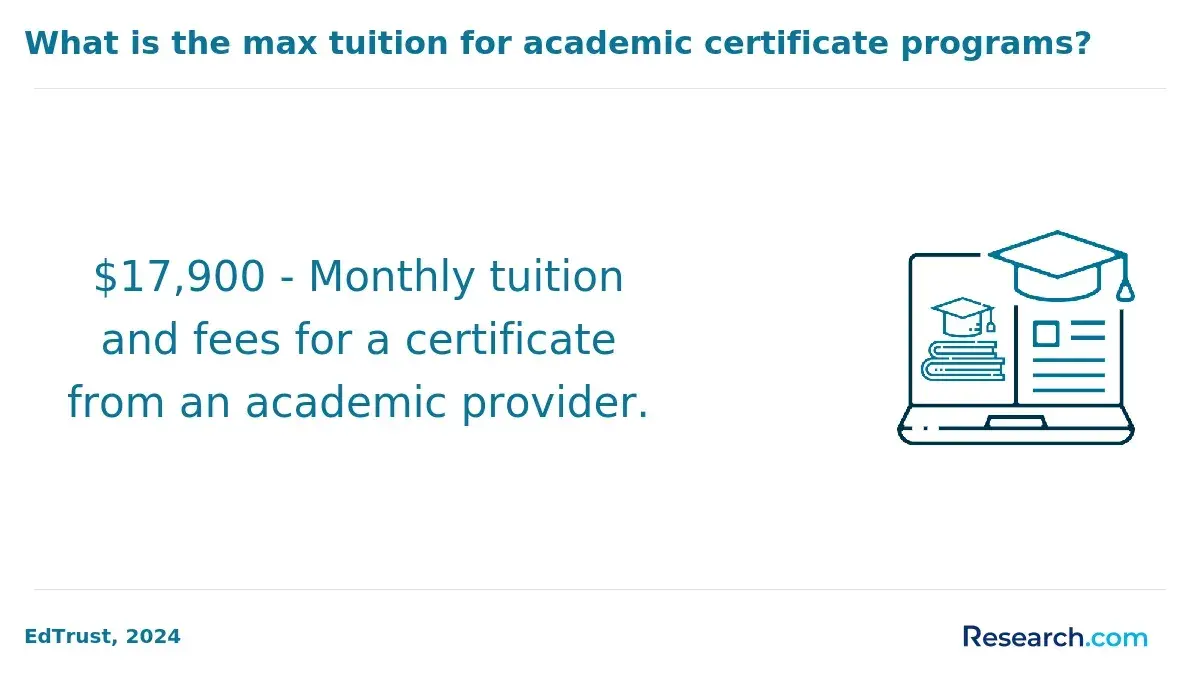
Cost varies by residency status, public versus private pricing, transfer credit, course load, technology fees, books, lab kits, and financial aid. NCES data published in 2024 is useful as a benchmark: published in-state tuition and required fees at public four-year institutions were about $9,800, while private nonprofit four-year institutions exceeded $40,000.
Those figures are not online physics-specific prices, but they show why students should compare total net cost rather than only the tuition headline.
The table below outlines the major cost and timeline variables students should compare before applying. It is designed to help readers identify where the posted tuition rate may understate or overstate the real investment.
| Factor | Why it matters | What to verify |
| Transfer credits | Accepted major credits can reduce both time and tuition | Whether calculus and lab physics transfer into the major sequence |
| Per-credit tuition | Online programs may charge flat, resident, nonresident, or special online rates | Total tuition for remaining credits, not just the advertised per-credit amount |
| Lab costs | Online labs may require kits, software, or proctored assessments | Required materials and whether they are included in tuition |
| Course availability | Upper-level physics courses may rotate less frequently | Whether part-time enrollment creates scheduling delays |
| Financial aid eligibility | Accredited degree programs may qualify for federal aid if the student is eligible | FAFSA participation, satisfactory academic progress rules, and scholarship options |
Students trying to control cost should ask admissions and academic advising for a degree plan before committing. The smartest low-cost option is not always the lowest per-credit rate; it is the program that accepts the most applicable credits, offers the required courses predictably, and supports completion without repeated withdrawals or course delays.
What high-rigor analytical careers can graduates pursue with an online physics degree?
Online physics graduates can pursue many analytical careers, but the best fit depends on the student's electives, coding ability, internships, research experience, and willingness to pursue graduate study. A physics bachelor's degree is often strongest when paired with a portfolio showing applied modeling, data analysis, simulation, or instrumentation skills.
The table below groups common career directions by how directly a physics bachelor's degree prepares students for entry. Some roles are accessible with a bachelor's degree and strong technical skills, while others usually require a master's or doctorate.
| Career direction | Typical responsibilities | Additional preparation often needed |
| Data analyst or junior data scientist | Clean data, build models, visualize results, test assumptions, and explain findings | Statistics, Python or R, SQL, machine learning projects, and domain experience |
| Operations research analyst | Optimize systems, forecast outcomes, evaluate constraints, and improve decision models | Optimization, probability, programming, and business or logistics context |
| Research technician or laboratory analyst | Run experiments, maintain instruments, analyze measurements, and document results | Hands-on lab experience, safety training, and instrumentation familiarity |
| Software or simulation analyst | Build technical tools, model physical systems, test algorithms, and support engineering teams | Software development, numerical methods, version control, and project portfolio |
| Quantitative finance or risk analyst | Model risk, analyze markets, test strategies, and communicate uncertainty | Finance coursework, probability, statistics, programming, and internships |
| Physicist, astronomer, or research scientist | Conduct advanced research, publish findings, design experiments, and lead technical investigations | Usually a PhD for independent research roles |
Physics is also relevant to defense, aerospace, energy, semiconductors, telecommunications, climate modeling, medical technology, and advanced manufacturing. However, students should avoid assuming the word "physics" alone will open every technical door. Employers often screen for specific tools such as Python, SQL, MATLAB, Git, machine learning libraries, CAD exposure, or laboratory instrumentation.
A practical career-building plan should start before graduation. Students can improve employability by taking the following steps:
- Build a portfolio with simulations, data analysis notebooks, lab reports, and visualizations that show how you solve quantitative problems.
- Choose electives that match a target sector, such as energy systems, astronomy, computational methods, finance, or materials.
- Pursue internships, undergraduate research, remote research assistantships, or employer-sponsored projects whenever available.
- Translate physics coursework into employer language by describing modeling, uncertainty analysis, coding, instrumentation, and technical communication skills.
- Network with faculty, alumni, professional societies, and employers that hire quantitative generalists rather than only narrowly defined majors.
What salary ranges and earning potential are common for physics-related analytical roles?
Salary potential for physics-trained graduates varies widely because the degree feeds into multiple labor markets. A bachelor's graduate entering data analysis will see a different pay range than a PhD physicist, a defense contractor, or a quantitative finance analyst. Location, security clearance, graduate education, programming skill, and industry all affect compensation.
BLS data published in 2024 provides useful benchmarks for several physics-related analytical roles. These medians describe occupations, not guaranteed outcomes for physics graduates, but they help students compare the economic direction of different pathways.
| Occupation | Median annual pay reported by BLS | How physics connects |
| Physicists and astronomers | $149,530 | Direct research pathway, usually requiring graduate education for many roles |
| Data scientists | $108,020 | Strong fit for physics majors with programming, statistics, and machine learning skills |
| Operations research analysts | $83,640 | Uses modeling, optimization, probability, and quantitative decision support |
| Actuaries | $120,000 | Requires probability strength plus actuarial exams and insurance or risk knowledge |
| Software developers | $132,270 | Accessible when physics students build substantial coding and software project experience |
Job outlook should also shape the decision. BLS projections published in 2024 showed especially strong demand for data scientists, with projected employment growth far above the average for all occupations. For physics students, that means computational and statistical skills may improve flexibility even if the long-term goal remains scientific research.
The key ROI question is whether the program helps the student reach a specific analytical labor market. A lower-cost online physics degree with strong transfer credit and a coding-heavy portfolio may be a good investment for analytics-oriented students.
A high-cost program without career support, research access, or advanced coursework may be harder to justify unless it clearly supports the student's graduate or professional plan.
What professional certifications, licenses, or graduate degrees might physics majors need?
A physics bachelor's degree is not usually a license by itself. Instead, it is a foundation for careers that may require certifications, exams, graduate degrees, or employer-specific clearances. Students should identify these requirements early because the right elective choices can save time later.
Common next-step credentials depend on the target role. The following list summarizes major pathways students may need to consider after or during the bachelor's degree:
- Graduate physics or astronomy programs: Often required for research scientist, professor, and many national laboratory roles; applicants usually need advanced coursework, research experience, strong recommendations, and high-level math preparation.
- Engineering licensure pathway: Students who want to become licensed professional engineers should check state board and ABET-related expectations because a physics degree may not satisfy the same requirements as an accredited engineering degree.
- Medical physics: Clinical medical physicist roles generally require graduate education, specialized residency or training, and board certification pathways through recognized professional bodies.
- Teaching licensure: Public school physics teachers typically need state-approved educator preparation and licensure, which may require coursework beyond the physics major.
- Actuarial credentials: Physics majors entering actuarial work usually need to pass professional exams and build insurance, finance, and risk modeling knowledge.
- Data and analytics credentials: Certificates in cloud computing, SQL, machine learning, cybersecurity, or data visualization can help demonstrate job-ready tools, but they should complement rather than replace a strong project portfolio.
Many physics graduates who pivot into analytics later pursue graduate training in statistics, computer science, applied math, engineering, or data science. Students comparing next steps can evaluate a masters degree in data science online if they want a structured path from quantitative science into machine learning, business analytics, or AI-focused roles.
The common mistake is waiting until senior year to discover that a preferred career has extra requirements. Before choosing electives, students should review job postings, graduate admissions prerequisites, state licensure rules, and certification requirements for the roles they want most.
How can students evaluate and choose a high-quality, accredited online physics program?
Choosing an online physics program requires more scrutiny than choosing many other online majors because lab quality, course sequencing, and math rigor are central to the degree's value. A program can be accredited and still be a poor fit for a specific goal if it lacks advanced courses, research options, or career-aligned electives.
Use the steps below to evaluate programs in a practical order. This process helps reduce the risk of enrolling in a program that is affordable or convenient but mismatched with your career plans.
- Confirm institutional accreditation through a recognized accreditor and verify that the degree title is clearly listed as physics in the university catalog.
- Map the curriculum against your goal, checking for calculus-based physics, upper-level theory, lab requirements, computational coursework, and relevant electives.
- Ask how online labs work, including whether students use lab kits, simulations, remote instrumentation, local facilities, or intensive sessions.
- Request a transfer credit evaluation before committing, especially for calculus, general chemistry, computer science, and previous physics labs.
- Compare total net cost after aid, fees, lab materials, transfer credits, and expected time to graduation.
- Check support services such as tutoring, faculty office hours, research opportunities, career advising, disability accommodations, and graduate school advising.
- Review outcomes carefully, including internship support, alumni pathways, graduate school preparation, and employer connections, without assuming any salary is guaranteed.
The table below highlights common red flags and better alternatives. It is especially useful for students comparing a short list of online programs that look similar on tuition or convenience.
| Red flag | Why it is risky | Better sign |
| Unclear accreditation language | Credits, aid eligibility, and employer recognition may be affected | Accreditation is easy to verify through recognized databases and the school catalog |
| No clear lab plan | Physics requires measurement, uncertainty analysis, and experimental reasoning | The program explains lab kits, simulations, grading, and faculty supervision |
| Mostly survey-level science courses | The degree may not prepare students for graduate physics or high-rigor analytics | The curriculum includes calculus-based and upper-division physics courses |
| Overpromised career claims | No degree can guarantee a job title or salary | The school discusses career support, skills, and outcomes with appropriate limitations |
| Poor course rotation transparency | Students may face unexpected delays near graduation | Advisors provide a multi-term plan for required upper-level courses |
Students should also decide whether online learning fits their habits. Online physics rewards independence, disciplined study blocks, and willingness to seek help early. If a student needs daily in-person lab access, structured campus study groups, or close faculty research mentorship, a campus or hybrid program may be a better investment.
Other Things You Should Know About Physics
An online bachelor's degree can be a starting point, but many physicist roles require a master's or PhD. The bachelor's degree is more commonly used for entry-level technical work, analytics roles, education pathways, or preparation for graduate study.
They can be, if the program is accredited and the labs require real measurement, analysis, reporting, and faculty assessment. Students aiming for research-heavy graduate programs should also seek research projects or hands-on experience when possible.
In 2027, consider your career goals when choosing between a BA and BS in Physics online. A BS typically focuses on technical skills and advanced physics, ideal for analytical careers. A BA may offer broader education, beneficial for interdisciplinary fields. Both can lead to reputable analytical roles.
Focus on algebra, trigonometry, precalculus, and calculus readiness. Basic programming, especially Python, is also valuable because modern physics, data analysis, and simulation work increasingly rely on computational tools.
References
- Careers in Physics | Academy Online Learning https://academyonlinelearning.com/careers-physics
- Careers - Vault https://vault.com/professions/physicists/requirements
- What Can You Do with a Physics Degree? https://willamette.edu/academics/college/physics/career-options
- Licenses and Certs for Physics Major? https://www.physicsforums.com/threads/licenses-and-certs-for-physics-major.679518/
- Physics Degree Careers and Salary in Europe - StudyinEurope.eu https://www.studyineurope.eu/physics/physics-degree-careers-salary-europe/
- Online Physics Course: 6 Helpful Considerations - Prereqcourses https://www.prereqcourses.com/online-physics-course/
- 2025 Best Online Degrees in Physics https://www.onlineu.com/degrees/physics