2027 Online Physics Degrees With the Best Value for Mid-Career Adults

Co-Founder and Chief Data Scientist
Choosing an online physics degree is a high-stakes decision for adults who need real flexibility without weakening their career options. The U. S. Bureau of Labor Statistics lists $155,680 as the median annual pay for physicists and astronomers in its 2024 occupational data, but most roles require careful planning beyond simply earning a bachelor's degree. This guide explains which online physics options exist, how to judge value, what programs usually cost, and how to connect the degree to realistic careers in research, engineering support, data, education, and technology.
Key Things You Should Know
- Fully online U.S. physics bachelor's degrees are uncommon; the strongest-value options usually come from regionally accredited public or nonprofit institutions with clear lab plans, transfer-credit policies, and upper-division physics coursework.
- Value depends on total net cost, not sticker tuition: adults should compare transfer acceptance, employer tuition assistance, required lab materials, course sequencing, and whether the program supports graduate school, teaching, engineering-adjacent roles, or data-heavy careers.
- BLS 2024 occupational data places physicists and astronomers among high-paying science occupations, but a bachelor's degree alone more often leads to technical, education, software, data, or engineering-support roles than to independent physicist positions.
What makes an online physics degree a good value for mid-career adults?
A good-value online physics degree is not simply the cheapest program. For mid-career adults, value means the program lets you finish without leaving the workforce, gives you credible scientific training, and keeps debt aligned with the jobs you are actually targeting.
Physics is the study of matter, energy, motion, forces, fields, waves, and the mathematical laws that describe the physical world. In a bachelor's program, students usually build skills in calculus, differential equations, mechanics, electromagnetism, thermodynamics, optics, quantum physics, laboratory measurement, and computational modeling. Those skills can transfer into engineering teams, software development, analytics, defense, education, aerospace, energy, and graduate study.
The best value for a working adult usually comes from a program that balances four priorities: academic credibility, manageable cost, flexible scheduling, and career relevance. A low-cost program may not be a good deal if it lacks advanced physics courses or requires daytime labs you cannot attend.
A prestigious program may not be worth the premium if your goal is a technical analyst job where portfolio projects, programming ability, and employer tuition reimbursement matter more.
Use the following comparison to define value in practical terms before you speak with admissions teams.
| Value factor | Why it matters for mid-career adults | What to verify before enrolling |
| Accreditation | Regional or institutional accreditation affects credit transfer, financial aid eligibility, employer recognition, and graduate-school options. | Confirm the school's accreditation status in the U.S. Department of Education or CHEA-recognized databases. |
| Lab delivery | Physics is lab-intensive, and weak lab design can limit graduate-school preparation. | Ask whether labs use mailed kits, simulations, remote instrumentation, local proctors, or short residencies. |
| Transfer credit | Adults often bring prior college credit, military credit, or technical training that can shorten the degree. | Request a written transfer evaluation before committing. |
| Course sequencing | Physics courses build on calculus and prerequisites, so missing a term can delay graduation. | Ask how often upper-division courses are offered and whether they are asynchronous. |
| Career alignment | Physics can support several pathways, but the right electives differ by goal. | Match electives to your target path, such as computation, teaching, engineering support, or graduate school. |
For many adults, the strongest return comes from combining physics with a practical skill set. That might mean adding Python, MATLAB, data visualization, electronics, CAD, instrumentation, machine learning, or teacher preparation. The degree supplies the scientific foundation; the surrounding skill choices often determine which jobs are realistic immediately after graduation.
Which accredited U.S. schools offer fully online physics degrees?
Fully online physics degrees are rare in the United States because advanced physics normally requires sequenced labs, mathematical prerequisites, and close faculty supervision. Most schools that teach physics online offer individual courses for transfer, general education science courses, astronomy programs, or engineering-adjacent degrees rather than a complete online physics major.
The table below summarizes the main accredited U.S. options adults are most likely to encounter when searching for a fully online physics bachelor's degree. Program formats can change, so use this as a starting shortlist and verify current catalog requirements directly with each school.
| School | Online physics option | Best fit | Important value check |
| Arizona State University Online | Online Bachelor of Arts in Physics | Adults who want broad physics training with flexibility and may be aiming for teaching, technical work, data roles, or graduate preparation with careful advising. | Confirm the difference between the BA and a more research-intensive BS pathway, especially if you plan to apply to physics graduate programs. |
| University of North Dakota | Online physics bachelor's pathway advertised through UND's distance programs | Students who want a more traditional physics curriculum from a public research university and can manage structured lab expectations. | Ask whether any labs, exams, or experiences require specific equipment, synchronous meetings, proctors, or campus visits. |
| Other regionally accredited institutions | Online physics courses, physics minors, natural science degrees, astronomy programs, or individualized studies with physics coursework | Adults who need transfer credits, prerequisites, or a science degree but do not need the transcript to say "physics major." | Do not assume a natural science or astronomy degree will meet the same graduate-school or employer expectations as a physics degree. |
If you cannot find a physics major that fits your schedule, compare adjacent science pathways. For example, adults interested in earth systems, geophysics, energy, or environmental monitoring may find stronger online availability through geology degrees online, while students focused on hardware, circuits, or power systems may be better served by engineering.
The main red flag is a school that advertises "physics" broadly but provides only introductory science courses, no upper-division physics sequence, or unclear lab requirements. Before applying, request a degree map showing every required course from calculus through senior-level physics, not just a marketing page.
How do online physics degrees compare to campus programs for rigor and flexibility?
Online physics programs can be rigorous, but their rigor depends on course design, lab quality, math expectations, faculty involvement, and assessment standards. The best online programs do not remove the difficult parts of physics; they redesign how lectures, problem sets, labs, exams, and faculty feedback are delivered.
The biggest trade-off is flexibility versus hands-on access. Online students often gain asynchronous lectures and the ability to keep working, but they may have fewer spontaneous research opportunities, fewer in-person lab interactions, and less exposure to campus-based physics communities.
This table compares the practical differences that matter most for adult learners deciding between online and campus formats.
| Feature | Online physics degree | Campus physics degree |
| Schedule flexibility | Often better for working adults, especially when lectures are asynchronous and labs are planned in advance. | Less flexible, with fixed class and lab times that may conflict with work. |
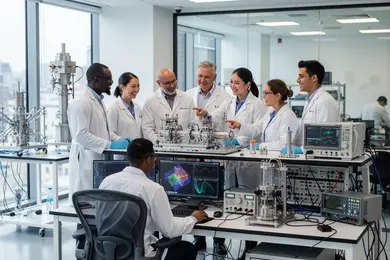
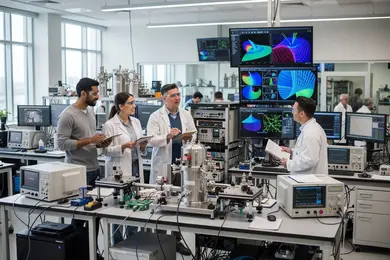
| Laboratory experience | May use home lab kits, simulations, remote labs, local arrangements, or short residencies. | Usually stronger access to physical lab equipment, instruments, and faculty-supervised experiments. |
| Research access | Possible but may require extra initiative, remote projects, data analysis, or summer research. | Often easier to join faculty labs, seminars, and campus research groups. |
| Peer network | Can be strong if the program uses cohorts, discussion sections, group projects, and active advising. | Usually easier to build through study groups, clubs, labs, and informal faculty contact. |
| Career fit | Strong for adults who need the degree while continuing in technical, military, education, or industry roles. | Strong for students seeking immersive research preparation or direct access to campus laboratories. |
An online format makes the most sense if you already have work obligations, live far from a physics department, or need to use transfer credits efficiently. A campus program may be better if you are targeting a PhD in experimental physics, want intensive faculty research mentorship, or need daily access to specialized lab equipment.
Adults should also consider hybrid strategies. Some students complete lower-division math and science online or at a community college, transfer into an online physics major, and then add summer research, internships, or local lab experience to strengthen the résumé.
Employer Confidence Share in Online vs. In-Person Degree Skills, Global 2024

What admission requirements do online physics bachelor's programs in physics typically have?
Online bachelor's programs in physics typically require the same core academic readiness as campus programs: college-level math preparation, proof of high school completion or prior college study, transcripts, and placement into calculus or precalculus depending on the school. Transfer students may also need minimum grades in previous math and science courses.
Physics is mathematically cumulative, so admissions is only the first gate. A student who is admitted but not ready for calculus may need extra terms before starting the main physics sequence. That is not necessarily a problem, but it affects time and cost.
Most online physics bachelor's applicants should be ready to provide or complete the following items.
- Official transcripts from high school and all colleges previously attended, including withdrawn or incomplete attempts.
- Math placement evidence, such as completed college algebra, trigonometry, precalculus, calculus, or a placement exam.
- Transfer-credit documentation, including syllabi for prior physics, calculus, chemistry, programming, or engineering courses if equivalency is unclear.
- Proof of English proficiency if required by the institution for applicants educated outside English-language systems.
- Technology readiness, including a reliable computer, broadband access, webcam if proctored exams are used, and software required for computation or labs.
Some physics applicants also compare engineering programs because both fields require calculus and problem-solving. If you are weighing engineering instead, reviewing electrical engineering degree online admissions can help you understand how math readiness, lab expectations, and accreditation considerations differ from physics.
A common mistake is applying before asking how prerequisites are sequenced. If Calculus I is offered every term but Modern Physics is offered once a year, one missed course can delay graduation. Ask for a term-by-term plan based on your transfer credits, not a generic four-year sample plan.
How long does it take to complete an online physics degree, and what does it cost?
Most bachelor's degrees require about 120 credits, but completion time for adults varies widely because physics has strict prerequisites. A full-time student with strong transfer credits may finish much faster than a student who must begin with precalculus, take one course at a time, or wait for upper-division courses offered on rotation.
Cost also varies by residency, public versus private pricing, transfer credit, institutional aid, employer benefits, fees, books, lab kits, software, and proctoring. College Board's 2024 pricing trends reported average published tuition and fees of $11,610 for in-state students at public four-year institutions and $43,350 at private nonprofit four-year institutions for the 2024-25 academic year. For online physics shoppers, that gap shows why net price and transfer policy can matter more than the headline program format.
The following cost factors are especially important because they can change the true price of an online physics degree.
- Accepted transfer credits: Prior credits can reduce both tuition and time, but only if they apply to degree requirements rather than free electives.
- Math starting point: Beginning below calculus may add courses before the physics major sequence starts.
- Lab costs: Some programs require lab kits, software, instrumentation, proctoring, local lab arrangements, or short residencies.
- Enrollment pace: Part-time study can protect income but may extend fees, delay career transitions, and complicate course sequencing.
- Financial aid limits: Federal undergraduate loan limits may not cover the full cost for every student, especially those who already borrowed for prior study.
Adults choosing between physics and a faster technology pivot should compare opportunity cost, not just tuition. If your main goal is software or data work, an accelerated bachelor's degree computer science online may offer a more direct route, while physics may be the better fit for scientific computing, instrumentation, modeling, aerospace, energy, or graduate study.
Before enrolling, ask the school for a written estimate that includes tuition, required fees, transfer credits accepted, remaining credits, expected time to completion, lab costs, and whether tuition is locked or can rise each year. A program is not truly affordable if the schedule forces you to retake credits, pause frequently, or take courses that do not support your goal.
What core courses and labs are included in most online physics curricula?
Most online physics curricula combine mathematics, foundational physics, advanced theory, laboratory methods, and computational work. The exact course names vary, but the sequence usually moves from calculus-based mechanics into electricity and magnetism, waves, thermodynamics, quantum mechanics, and modern physics.
For mid-career adults, the key question is not only "What courses are listed?" but "How are labs and upper-division courses delivered?" A credible curriculum should show how students practice measurement, uncertainty analysis, modeling, and scientific communication.
Common course categories include the following.
- Mathematics foundation: Calculus I-III, differential equations, linear algebra, and sometimes mathematical methods for physics.
- Introductory physics: Calculus-based mechanics, electricity and magnetism, waves, optics, and thermodynamics.
- Modern and advanced physics: Modern physics, quantum mechanics, statistical mechanics, classical mechanics, electromagnetism, and sometimes relativity or particle physics.
- Laboratory sequence: Introductory and advanced labs focused on experimental design, measurement, error analysis, instrumentation, and scientific reporting.
- Computational physics: Programming, numerical methods, simulation, data analysis, and modeling using tools such as Python, MATLAB, or similar platforms.
- Capstone or research experience: A senior project, literature review, data project, remote research activity, or applied physics project.
Online labs can be legitimate when they are intentionally designed. Strong programs explain how students collect or analyze data, demonstrate experimental reasoning, receive feedback, and document uncertainty. Weak programs rely too heavily on passive simulations without enough problem-solving, reporting, or assessment.
If graduate school is on your radar, ask whether the curriculum includes the standard upper-division sequence expected by physics departments. If your goal is industry, ask whether you can add electives in programming, electronics, statistics, engineering, machine learning, or technical writing.
What career paths can an online physics degree open for adult learners?
An online physics degree can open several career paths, but the best path depends on whether you stop at the bachelor's level or continue into graduate education, teacher preparation, engineering credentials, or data-focused training. Physics is a versatile degree because it signals quantitative reasoning, modeling ability, and comfort with complex systems.
At the bachelor's level, many graduates work in applied or adjacent roles rather than as independent physicists. Common options include technical analyst, laboratory technician, quality assurance specialist, data analyst, scientific programmer, systems test technician, technical sales specialist, research assistant, aerospace or defense contractor support, energy analyst, and secondary science teacher where state requirements are met.
The table below connects career directions to the preparation adults should prioritize while enrolled.
| Career direction | Typical work | Helpful add-ons during the degree |
| Scientific computing or data | Modeling, simulation, data cleaning, visualization, and analysis of technical datasets. | Python, SQL, statistics, machine learning, numerical methods, Git, and portfolio projects. |
| Engineering support | Testing systems, analyzing performance, supporting design teams, and documenting technical results. | Electronics, CAD, instrumentation, materials, circuits, and internship experience. |
| Education | Teaching physics or physical science, tutoring, curriculum support, or informal science education. | State-approved teacher preparation, classroom experience, and licensure exam planning. |
| Research support | Assisting with experiments, maintaining equipment, processing data, and preparing reports. | Advanced labs, research projects, technical writing, and faculty references. |
| Graduate school pathway | Preparing for master's or doctoral study in physics, applied physics, engineering, astronomy, or related fields. | Upper-division theory, strong math grades, research experience, and recommendation letters. |
Mid-career adults often have an advantage when they combine the degree with prior experience. A manufacturing professional may move toward quality engineering support; a military technician may pursue aerospace testing; a teacher may add physics credentials; an IT worker may pivot toward scientific computing. The degree is most powerful when it builds on what you already know rather than forcing a complete reset.
Students should avoid assuming that "physics degree" automatically means "physicist job." In the U.S., many physicist positions require a master's or PhD. If you want to work immediately after a bachelor's, plan for applied roles and build evidence of practical skills before graduation.
What salary ranges and job outlook can physics graduates expect in the U.S.?
Salary outcomes for physics graduates vary by degree level, industry, location, technical skills, and whether the role is actually classified as physics, engineering, data, education, or technician work. Use salary data as a planning benchmark, not as a promise of individual earnings.
BLS 2024 occupational data lists $155,680 as the median annual pay for physicists and astronomers, with employment projected to grow 7% from 2024 to 2034. That figure is useful because it shows strong demand for advanced scientific expertise, but it is not the typical immediate outcome for every bachelor's graduate because many roles in that category require graduate training.
The following table shows how adults should interpret common physics-related career categories.
| Career category | Typical education signal | How to interpret salary potential |
| Physicist or astronomer | Often master's or PhD for research and advanced technical roles. | High median pay in federal data, but entry is more competitive and education-intensive. |
| Data analyst or scientific programmer | Bachelor's plus strong programming, statistics, and project portfolio. | Physics can be attractive when paired with demonstrable coding and domain knowledge. |
| Engineering technician or test support | Bachelor's or associate-level technical experience, depending on employer. | Prior technical work experience can matter as much as the degree title. |
| Secondary teacher | Bachelor's plus state-approved teacher licensure route. | Pay and requirements vary substantially by state and district. |
| Research assistant or lab specialist | Bachelor's with lab, instrumentation, and data skills. | Often a stepping stone toward graduate school or specialized technical roles. |
Current trends make physics training more marketable when paired with computation. Employers in aerospace, defense, energy, semiconductor, climate technology, medical devices, and analytics increasingly value people who can model systems, interpret noisy data, automate workflows, and explain technical results. AI tools may speed up coding and analysis, but they also increase the value of workers who understand whether a model's output is physically reasonable.
The smartest salary strategy is to identify target job postings before choosing electives. If postings repeatedly ask for Python, signal processing, lab instrumentation, SQL, CAD, or security clearance eligibility, build those requirements into your degree plan early.
Are licenses or certifications needed for physics-related careers, and how do degrees help?
Most physics-related careers do not require a single universal license, but licensing and certification can matter in specific paths. Requirements vary by state, employer, occupation, and industry, so adults should check the rules for the role they actually want rather than relying on general advice.
The most common credential considerations are teacher licensure, engineering licensure, safety or technical certifications, and graduate-degree expectations. A physics degree can help satisfy education requirements or prerequisites, but it may not be sufficient by itself.
These are the credential areas adults should evaluate early.
- Teaching licensure: Public school physics teachers generally need to meet state teacher certification requirements, which may include an approved preparation program, exams, student teaching, and background checks.
- Professional engineering licensure: A physics degree alone usually does not replace an accredited engineering degree for traditional PE pathways, though some states provide alternative routes with additional experience and review.
- Radiation, medical, or nuclear roles: Some jobs require specialized training, employer-specific qualifications, safety credentials, or graduate study, especially in medical physics or nuclear operations.
- Data and computing roles: Certifications are usually optional, but cloud, analytics, cybersecurity, or vendor credentials can help when paired with physics and project evidence.
- Graduate school: Advanced physics research, medical physics, astronomy, and many national-lab roles often expect graduate education rather than licensure.
The degree helps most when you choose courses that match the credential route. A future teacher should ask whether the school offers a licensure pathway or only a physics major. A future medical physicist should plan for graduate accreditation expectations. A future engineering professional should verify whether physics is accepted for the intended state licensing route.
A major mistake is assuming that any science degree meets every professional requirement. Before enrolling, contact the state licensing board, graduate program, or employer category you are targeting and ask which degrees, coursework, exams, and supervised experiences are required.
How can mid-career adults evaluate and choose a reputable online physics program?
Choosing a reputable online physics program requires more than reading rankings. Adults should evaluate whether the program is accredited, academically complete, financially realistic, and aligned with the career outcome they want. The best school on paper may not be the best school for a student who needs part-time pacing, transfer credits, or teacher licensure.
Use a structured process before you apply or accept admission. The steps below help reduce the risk of choosing a program that is flexible but not useful, affordable but too slow, or rigorous but incompatible with your schedule.
- Verify institutional accreditation through recognized U.S. accreditation sources and confirm the school is eligible for federal financial aid if you plan to use it.
- Request a complete degree map showing prerequisites, course rotation, lab format, upper-division physics requirements, and capstone expectations.
- Get a written transfer-credit evaluation before comparing costs, because accepted credits can change both price and graduation date.
- Ask how online labs work, what equipment or software is required, and whether any campus visits, proctors, or synchronous sessions are mandatory.
- Compare the curriculum with your goal: graduate physics, teaching, engineering support, data work, scientific computing, or technical management.
- Ask about career services for online students, including internship support, undergraduate research access, alumni outcomes, and faculty recommendation letters.
- Calculate total net cost after grants, employer tuition assistance, military benefits, transfer credits, fees, books, lab kits, and lost work time.
- Review withdrawal, repeat, and course-cancellation policies because a missed physics prerequisite can delay the entire sequence.
It can also help to compare physics with other online degrees that offer clearer professional pathways. For example, someone seeking a lower-cost credential for information organization, research support, or academic library work might compare an affordable library science degree online, while a technically oriented student may compare computer science, engineering, mathematics, or geoscience.
Watch for red flags: unclear accreditation, no named physics faculty, vague lab descriptions, no upper-division course rotation, pressure to enroll before transfer review, unusually broad career promises, and unwillingness to provide total cost estimates. A reputable program should welcome detailed questions because physics is too sequential and technical for guesswork.
The best choice is the program that fits your constraints while preserving your next step. If you want graduate school, prioritize rigor, labs, research, and faculty references. If you want an industry pivot, prioritize applied electives, projects, technical tools, and employer-recognized skills. If you want to keep working, prioritize predictable scheduling and part-time feasibility.
Other Things You Should Know About Physics
They can be, especially when the school is properly accredited and the curriculum includes calculus-based physics, labs, advanced coursework, and practical technical skills. Employers usually care about what you can do with the degree, so projects, programming, lab experience, and prior work history matter.
In 2027, many online physics programs incorporate virtual labs and offer partnerships with local institutions for hands-on experiences. This hybrid approach ensures that students gain essential practical skills alongside their theoretical studies.
It can be a strong choice if your goal involves quantitative problem-solving, scientific computing, technical analysis, education, aerospace, energy, or graduate study. If you want the fastest path into software, IT, or business analytics, a more directly career-aligned degree or certificate may be more efficient.
References
- Physics Degree Online - Edubrain https://edubrain.ai/blog/physics-degree-online/
- Science Online Courses https://www.straighterline.com/online-college-courses/sciences/
- 2025 Best Online Degrees in Physics https://www.onlineu.com/degrees/physics
- Is an Online Degree in Physics Right for Me? https://www.physicsforums.com/threads/is-an-online-degree-in-physics-right-for-me.976843/