2027 Best Online Bachelor's in Physics With No Full-Time Campus Residency

Co-Founder and Chief Data Scientist
Finding a true online bachelor's in physics is harder than finding many other online science degrees because upper-level labs and instrumentation matter. That makes program format, accreditation, lab delivery, and transfer policy especially important. NCES distance education data released in 2024 shows that more than half of U. S. undergraduates took at least one online course, confirming that online study is now mainstream. This guide is for students comparing flexible physics programs, career changers, military learners, and transfer students who want a rigorous degree without relocating full time.
Key Things You Should Know
- True online bachelor's in physics programs are limited in the U.S.; the strongest options usually combine asynchronous theory courses with remote, kit-based, summer, or short intensive lab requirements rather than a full-time campus residency.
- Cost varies widely: College Board's 2024-25 data lists average published tuition and fees at $11,610 for in-state public four-year institutions, $30,780 for out-of-state public institutions, and $43,350 for private nonprofit institutions.
- Physics can support careers in data analysis, engineering support, research assistance, education, software-adjacent technical roles, and graduate study, but many physicist roles require a master's or PhD.
What is an online bachelor's in physics with no full-time campus residency?
An online bachelor's in physics with no full-time campus residency is a four-year undergraduate degree in physics that lets students complete most or all lecture-based coursework remotely. "No full-time campus residency" does not always mean "never visit campus." In physics, the key distinction is whether the school requires you to relocate for regular semesters or whether any in-person work is limited to short lab sessions, local proctored experiences, transfer labs, or optional campus intensives.
Physics is different from many online majors because students must learn mathematical modeling and experimental methods. A reputable program should still include calculus-based mechanics, electromagnetism, thermodynamics, quantum physics, laboratory measurement, computational tools, and advanced problem solving. If a program removes labs entirely or replaces upper-level physics with only broad natural science electives, it may not prepare you for the same outcomes as a traditional physics degree.
This format tends to fit students who need geographic flexibility but are comfortable with demanding math and independent study. It can be a strong choice for military students, working adults, community college transfers, and students living far from a university that offers upper-division physics. It may be a poor fit if you need daily access to research facilities, want a heavily mentored campus research experience, or plan to move directly into a competitive PhD program without building research experience elsewhere.
When schools use different labels, the differences matter. The table below explains the common formats so you can tell whether a program truly matches your need for minimal campus time.
| Format | What it usually means | Best fit | Main caution |
| Fully online physics degree | Lectures, assignments, and most labs are delivered online or through approved remote methods | Students who cannot travel regularly | Upper-level lab depth can vary by school |
| Online degree with short lab intensives | Lecture courses are online, but selected labs may require brief campus visits | Students who can travel once or a few times | Travel, lodging, and time off work add cost |
| Hybrid physics degree | A meaningful share of courses or labs require campus attendance | Students near campus | May not solve relocation or scheduling barriers |
| Natural science degree with physics concentration | Broader science curriculum with some physics coursework | Students seeking science literacy or teaching-adjacent preparation | May not be equivalent to a physics major for graduate admissions |
Which accredited schools offer online bachelor's in physics with minimal campus visits?
The U.S. market for online physics bachelor's degrees is small, so the best search strategy is to separate true physics majors from physics-adjacent science degrees. Always confirm the current catalog, delivery format, lab requirements, state authorization, and whether the degree title will appear as physics, applied physics, natural sciences, or another related field.
The table below summarizes accredited options and near-options that commonly appear in searches for online physics study. Use it as a starting point, not as a substitute for checking the school's current academic catalog.
| School | Program type | Accreditation status to verify | Campus residency profile | Who should consider it |
| Arizona State University Online | Online Bachelor of Science in Physics | Institutionally accredited by the Higher Learning Commission | Designed for online delivery with no full-time campus residency | Students seeking one of the clearest online physics-major pathways |
| University of North Dakota | Online or distance-delivered physics-related bachelor's pathway, subject to current catalog availability | Institutionally accredited by the Higher Learning Commission | May involve remote coursework with limited in-person or intensive lab expectations depending on catalog year | Students who can handle occasional travel or structured lab scheduling |
| Liberty University | Online Bachelor of Science in Physics or physics-related online offering, subject to current catalog availability | Institutionally accredited by the Southern Association of Colleges and Schools Commission on Colleges | Advertised online delivery should be checked for lab, practicum, and transfer requirements | Students seeking a private university option with flexible online scheduling |
| American Public University | Natural sciences bachelor's with physics-related coursework, not always a standalone physics major | Institutionally accredited by the Higher Learning Commission | Generally online with no full-time campus residency | Students who want broad science preparation rather than a traditional physics major |
Because program availability can change, contact admissions and the physics department before applying. Ask for answers in writing, especially on lab delivery, whether transfer labs are accepted, whether courses are offered every term, and whether the degree is appropriate for graduate school, teacher certification, or technical employment.
Students who are mainly interested in mechanical systems, robotics, manufacturing, or product design should also compare physics with a mechanical engineer degree, because employers may prefer an engineering credential for design-focused roles.
How does an online physics bachelor's compare to a campus-based program in rigor and outcomes?
A well-designed online physics bachelor's can be academically rigorous, especially when it uses the same faculty standards, calculus sequence, lab reports, exams, and upper-level physics requirements as a campus program. The main difference is not necessarily difficulty; it is access. Campus students may have easier access to research groups, teaching assistant work, machine shops, observatories, peer study groups, and faculty office hours.
Online students can still build strong outcomes, but they must be more intentional. They may need to seek local internships, summer research experiences, community college lab transfers, coding projects, or faculty-led remote research. This is particularly important for students planning graduate study in physics, astronomy, materials science, medical physics, or engineering.
The comparison below shows where online and campus programs tend to differ most. These differences should guide your decision more than the delivery label alone.
| Decision factor | Online physics bachelor's | Campus-based physics bachelor's | What it means for you |
| Academic theory | Can be comparable if curriculum and faculty standards match | Typically delivered through in-person lectures and recitations | Compare required courses, not marketing language |
| Laboratory training | May use home kits, simulations, local labs, or short intensives | Usually offers direct access to equipment and lab spaces | Ask how upper-level experimental work is assessed |
| Research access | Possible but often requires extra initiative | Often easier to join faculty labs | Graduate-school-bound students should plan research early |
| Schedule flexibility | Usually stronger for working adults and military students | Less flexible but more immersive | Online works best for self-directed learners |
| Career networking | May depend on virtual advising, internships, and alumni services | Often supported by campus events and faculty networks | Ask about placement support for online students specifically |
An online program makes the most sense when flexibility is essential and the school can document strong lab, advising, and course availability. A campus program may be better when you want intensive research mentorship, plan to compete for highly selective physics graduate programs, or learn best in structured in-person environments.
What coursework and concentrations are typically included in an online physics bachelor's?
Most online physics bachelor's programs begin with the same foundation as campus programs: calculus, differential equations, classical mechanics, electricity and magnetism, waves, optics, thermodynamics, and modern physics. Strong programs also include laboratory methods, computational physics, mathematical physics, and a capstone or advanced seminar.
The exact course mix matters because physics can point toward different outcomes. Students interested in graduate physics need a more theoretical and lab-intensive curriculum, while students targeting industry may benefit from programming, electronics, statistics, and applied modeling.
Common curriculum areas usually include the following, and each should be reviewed in the catalog before enrollment:
- Mathematics core: calculus I-III, differential equations, linear algebra, and sometimes complex variables or numerical methods.
- Physics core: mechanics, electromagnetism, modern physics, quantum mechanics, statistical mechanics, thermodynamics, optics, and waves.
- Laboratory sequence: introductory labs, electronics or instrumentation, advanced measurement, data analysis, and experimental design.
- Computational preparation: Python, MATLAB, numerical simulation, data visualization, or computational modeling.
- Applied electives: astronomy, materials science, biophysics, geophysics, engineering physics, medical physics, or energy systems.
Students who want software, AI, simulation, or data-heavy roles should pay close attention to computational coursework. If your primary goal is software engineering rather than physical science, comparing physics with computer science degrees may help you choose the credential employers expect for programming-first positions.
AI and automation are also changing the value of a physics degree. Employers increasingly value graduates who can combine physical modeling with coding, data interpretation, and communication. A physics program that treats computation as optional may still be academically valid, but it may require you to build job-ready technical skills through electives, internships, certificates, or independent projects.
What are the admission requirements for online bachelor's in physics programs?
Admission requirements vary by school, but online bachelor's programs in physics typically expect a high school diploma or equivalent, transcripts, math readiness, and standard undergraduate application materials. Some schools use test-optional policies, while others rely on placement testing or prior coursework to determine whether you are ready for calculus and physics.
Physics is mathematically demanding, so readiness matters more than minimum admission. A student admitted without strong algebra, trigonometry, and pre-calculus preparation may need extra terms before starting the major sequence. That can increase time and cost even when tuition looks affordable.
Before applying, review the requirements that affect your actual starting point:
- Check whether you are admitted directly to the physics major or first admitted to the university as a pre-major or general online student.
- Confirm the required math placement level for calculus I and whether remedial or prerequisite courses are available online.
- Ask how previously completed physics, calculus, chemistry, computer science, and general education courses transfer.
- Confirm whether lab science transfer credits must include in-person lab hours or can be accepted from online or hybrid courses.
- Ask whether the program has state authorization limits for students living outside the institution's home state.
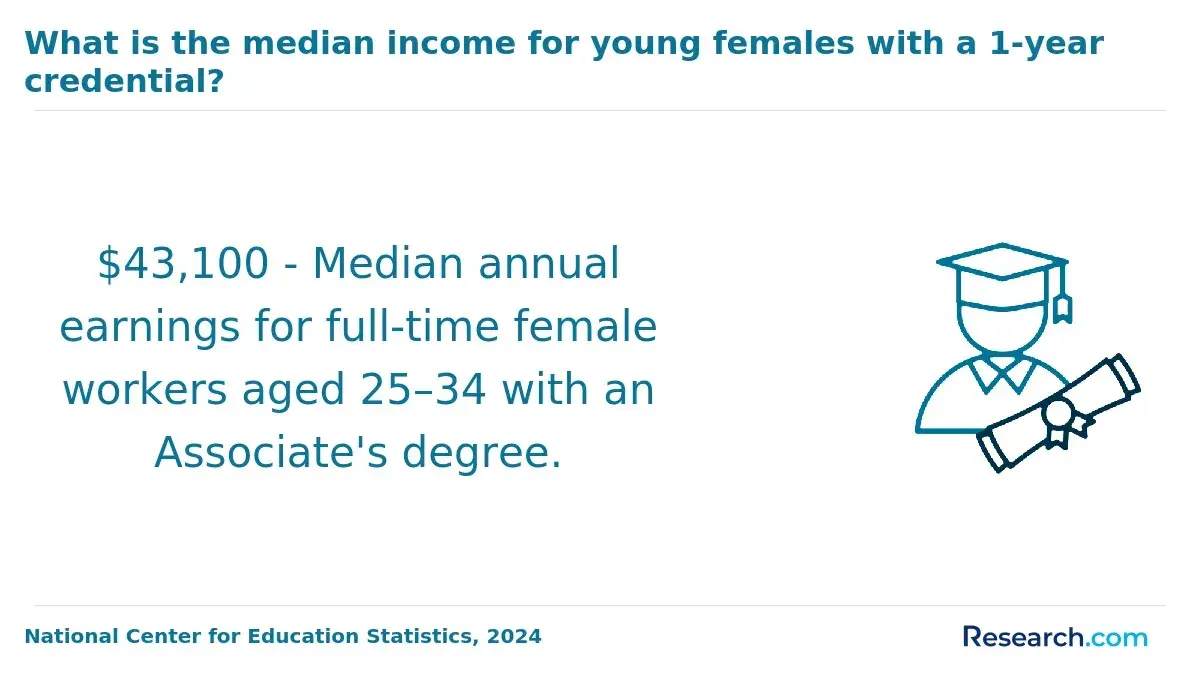
Transfer students should be especially careful. A program may accept many general education credits but still require most upper-division physics courses in residence through the degree-granting university. If you already have an associate degree, ask for a formal degree audit before you commit.
How long does an online bachelor's in physics take, and what does it cost?
A bachelor's in physics usually requires about 120 credits. Full-time students often finish in about four years, while part-time online students may take longer because physics courses are sequential. Calculus I often unlocks physics I, which then unlocks mechanics, electromagnetism, and upper-level labs. Missing one prerequisite can delay progress by a full term if courses are not offered frequently.
Cost depends on tuition rate, residency status, transfer credits, fees, lab materials, textbooks, technology requirements, and travel for any lab intensives. College Board's 2024-25 tuition data shows why online students should compare total cost rather than assuming online is automatically cheaper.
| Cost category | Typical issue for online physics students | Decision impact |
| Tuition and fees | Rates may be per credit, flat-rate, in-state, out-of-state, or online-specific | Ask for total program cost after transfer credits |
| Lab costs | May include kits, software, sensors, shipping, or campus lab fees | Physics can cost more than lecture-only majors |
| Travel costs | Some programs require short campus sessions or approved local labs | Add lodging, transportation, and lost work time |
| Course sequencing | Prerequisites may limit acceleration | A cheap program can become costly if courses are not offered often |
| Financial aid | Federal aid generally requires eligible accreditation and enrollment status | Part-time study may change aid amounts and timelines |
For planning, use published tuition only as the first filter. Then request a written estimate based on your transfer credits, expected course load, lab requirements, and aid eligibility. The federal Pell Grant maximum for the 2024-25 award year is $7,395, but eligibility depends on financial need, enrollment intensity, and federal rules.
To control costs, prioritize transfer-friendly programs, complete lower-division calculus and general education credits affordably before transfer when appropriate, and avoid repeating lab courses because formats do not match. Also ask whether online students pay the same fees as campus students and whether summer courses are priced differently.
What careers can you pursue with an online bachelor's in physics?
A physics bachelor's is a versatile quantitative degree, but it is not a single-job credential. Many graduates move into roles where analytical reasoning, mathematical modeling, instrumentation, programming, and problem solving matter. Others use the degree as preparation for graduate school, engineering roles, teaching, medical physics, data science, patent work, or technical sales.
Common career directions include the roles below. The degree can help you qualify for some entry-level positions, but employers may also expect internships, programming skills, lab experience, security clearance eligibility, or graduate education.
| Career path | Typical responsibilities | Additional preparation that may help |
| Research assistant or laboratory technician | Collect data, maintain instruments, run experiments, document results | Lab coursework, undergraduate research, instrumentation experience |
| Data analyst or quantitative analyst | Analyze datasets, build models, communicate findings | Python, SQL, statistics, portfolio projects |
| Engineering technician or test engineer support | Support product testing, quality checks, simulations, and measurements | Electronics, CAD exposure, industry internship |
| Secondary physics teacher | Teach physics, physical science, or math in middle or high school settings | State-approved teacher preparation and licensure |
| Technical sales or applications specialist | Explain scientific products, support customers, translate technical requirements | Communication skills and product-specific training |
| Graduate or professional school applicant | Continue into physics, astronomy, engineering, medical physics, law, or health fields | Research experience, strong GPA, recommendations, prerequisite planning |
Physics also overlaps with environmental modeling, climate instrumentation, remote sensing, and energy systems. If your main interest is environmental work rather than physics theory, reviewing jobs for environmental science majors can help you compare science career paths with different fieldwork, policy, and lab expectations.
The strongest online physics students usually build a career plan while completing the degree. That means choosing electives intentionally, saving lab reports and coding projects for a portfolio, applying for internships early, and asking faculty how online students can access research or capstone opportunities.
What are the salary expectations and job outlook for physics graduates in the U.S.?
Salary expectations for physics graduates vary widely because a bachelor's degree in physics can lead to many different occupations. Some graduates enter technician, analyst, education, or engineering-support roles; others pursue graduate degrees before becoming physicists, astronomers, medical physicists, or advanced researchers.
The U.S. Bureau of Labor Statistics reported in its 2024 occupational data that physicists earned a median annual wage above $150,000, but that figure mainly reflects specialized physicist roles that often require graduate education. A bachelor's graduate should not treat that number as an entry-level salary expectation. Instead, use it as evidence that advanced physics expertise can be valuable when paired with the credentials and experience required for those roles.
For bachelor's-level planning, compare target occupations rather than looking for one "physics salary." Data analyst, engineering technician, high school teacher, laboratory technician, and software-adjacent roles each have different salary ranges, hiring cycles, and credential expectations. Geography also matters because defense, aerospace, semiconductor, energy, finance, and national laboratory employers are clustered in specific regions.
Job outlook also depends on your path. Technical roles tied to computing, data, advanced manufacturing, AI, energy systems, and instrumentation may value physics training, but hiring managers often look for evidence of applied skills. That makes internships, coding ability, communication, and project documentation especially important for online students who may not have as much built-in campus research exposure.
How do accreditation and professional standards affect online physics degrees and licensure?
Accreditation is one of the most important quality checks for an online physics degree. At minimum, choose a school with recognized institutional accreditation because it affects federal financial aid eligibility, transfer credit, graduate admissions, and employer confidence. For physics specifically, programmatic accreditation is less common than in fields such as engineering, nursing, or education, so the curriculum and faculty qualifications deserve close review.
Licensure depends on your career goal. Most physics roles do not require a general physics license, but teaching, engineering, and some health-related careers may have separate rules. For example, becoming a public school physics teacher generally requires completing state-approved teacher preparation and passing required exams. Becoming a licensed professional engineer usually follows engineering-specific rules, and a physics degree may not meet those requirements without additional accredited engineering education.
Use the following checks before enrolling if licensure or graduate school is part of your plan:
- Institutional accreditation: Confirm the accreditor is recognized by the U.S. Department of Education or the Council for Higher Education Accreditation.
- Degree title: Verify whether the transcript will say physics, applied physics, natural sciences, or another major.
- Lab documentation: Ask whether lab courses appear clearly on the transcript and whether they meet graduate or teacher-preparation prerequisites.
- Teacher licensure alignment: If you want to teach, confirm state-by-state eligibility with the school and your state licensing board.
- Graduate school preparation: Ask whether alumni have entered physics, astronomy, engineering, medical physics, or related graduate programs.
A major red flag is any school that avoids clear answers about accreditation, lab requirements, faculty credentials, or state authorization. Another warning sign is a program that markets itself as "physics" but offers only a small number of physics courses inside a broad general studies degree.
How can you evaluate and choose a reputable online physics bachelor's program?
The best online physics program is not simply the cheapest or fastest one. It is the program that matches your goal, offers enough physics depth, fits your schedule, documents lab quality, and gives you a realistic path to employment or graduate study.
Use a structured evaluation process before applying. These steps can help you avoid common mistakes and compare programs on evidence rather than marketing claims:
- Define your goal first: graduate physics study, teaching, data work, engineering support, technical sales, or general science preparation.
- Download the full degree plan and map prerequisites term by term, especially calculus, physics I-II, modern physics, and upper-level labs.
- Ask how every lab is completed, what equipment is used, and whether any travel is required.
- Request a transfer credit evaluation before enrolling if you have prior college coursework.
- Compare total cost, including fees, lab kits, software, textbooks, travel, and extra prerequisite courses.
- Ask how online students access faculty advising, research, internships, tutoring, and career services.
- Check whether the program has alumni outcomes relevant to your goal, not just general university outcomes.
The table below highlights common mistakes and better alternatives. Use it as a final checklist before making a deposit.
| Common mistake | Why it can hurt you | Better approach |
| Choosing based only on tuition | Hidden lab, travel, and sequencing costs can change affordability | Compare total cost to completion |
| Ignoring lab format | Weak lab preparation can affect graduate school or technical readiness | Ask for detailed lab delivery and assessment methods |
| Assuming online means self-paced | Physics prerequisites often follow fixed schedules | Review course rotation and term availability |
| Skipping accreditation checks | Credits, aid, and employer recognition may be affected | Verify recognized institutional accreditation |
| Picking physics for an unrelated career goal | A different science or technical major may be more direct | Compare degree outcomes before committing |
If your interest is science but your goal is health, wellness, food systems, or dietetics, a nutritionist degree online may align better than physics. The right choice depends on the work you want to do after graduation, not just which science subject you enjoyed in high school.
Other Things You Should Know About Physics
Yes, but options are limited. Some schools offer online physics bachelor's pathways with no full-time campus residency, while others require short lab intensives or approved local lab work. Always confirm the current lab requirements before applying.
It can be, especially if it comes from an institutionally accredited university and includes rigorous math, physics, lab, and computational coursework. Employers usually care about skills, projects, internships, and the degree's credibility more than the delivery format alone.
For many roles with the title physicist, a master's or PhD is common. However, a bachelor's in physics can support entry-level work in data analysis, lab technology, engineering support, education pathways, technical sales, and other quantitative fields.
Pursuing an online physics bachelor's in 2027 may present challenges such as the need for self-discipline, limited hands-on laboratory experiences, and potential concerns about program credibility. However, accredited programs often address these with virtual labs and partnership opportunities for in-person labs.
References
- The Australian Institute of Physics https://www.aip.org.au/ACCREDITATION
- Physics Degree- Best Schools, Major & Programs https://www.onlinedegree.com/bachelors/physics/
- 2025 Best Online Degrees in Physics https://www.onlineu.com/degrees/physics
- Where to Pursue a Physics Degree? https://www.superprof.ca/blog/studying-physics-in-canada/
- Accreditation https://www.iomp.org/accreditation/