2027 How to Choose an Online Physics Degree for Technical Careers Without a PhD

Co-Founder and Chief Data Scientist
Choosing an online physics degree is a high-stakes decision because physics can lead to strong technical careers, but not every program fits industry hiring. The U.S. Bureau of Labor Statistics projects 7% employment growth for physicists and astronomers from 2024 to 2034, yet many hands-on technical roles do not require a PhD.
This guide is for students, career changers, veterans, and working adults who want applied physics, engineering, computing, lab, or data roles. You will learn how to compare programs, costs, labs, accreditation, skills, and career outcomes before enrolling.
Key Things You Should Know
- A bachelor's degree is usually the most useful online physics credential for technical careers without a PhD; fully online programs are less common than hybrid formats because strong programs must solve the lab requirement credibly.
- Use cost and outcome data together: College Board reported average published tuition and fees of $11,610 for in-state public four-year colleges and $43,350 for private nonprofit four-year colleges in 2024-25, before aid and living costs.
- Physics can support roles in testing, instrumentation, optics, semiconductors, energy, defense, software, and data; BLS reported a 2024 median pay of $112,590 for data scientists, making computational skills especially valuable for physics graduates.
What types of online physics degrees best support technical careers without a PhD?
The best online physics degree for a technical career is usually the one that matches the kind of work you want: hardware, software, lab testing, instrumentation, engineering support, or analytics. Physics degrees are not all built the same, and the difference between a general physics curriculum and an applied or computational one can change your job options.
For most non-PhD technical careers, prioritize programs that combine physics fundamentals with computing, electronics, statistics, and project-based labs. A degree labeled "physics" may be more theoretical, while "applied physics," "engineering physics," or "physical science" may include more practical technical coursework.
The table below compares common online or hybrid physics-related degree options. Use it to decide which credential best matches your target role rather than choosing by title alone.
| Degree type | Best fit | Typical strengths | Limits to check |
| Online or hybrid BS in Physics | Students who want the broadest physics foundation for technical, computing, or graduate-study options | Mechanics, electromagnetism, quantum physics, math, labs, scientific reasoning | May be theory-heavy unless electives include programming, electronics, or instrumentation |
| Online or hybrid BA in Physics | Students combining physics with education, business, computing, or another field | More elective flexibility and easier double-major planning | May include fewer advanced lab or math requirements than a BS |
| Applied Physics | Students targeting industry roles in testing, devices, sensors, materials, optics, or energy | Practical labs, measurement, instrumentation, engineering-style projects | Availability online can be limited, and some programs may require campus residencies |
| Engineering Physics | Students interested in engineering-adjacent roles, systems, design, or technical development | Strong math, physics, and engineering integration | May not substitute for an ABET-accredited engineering degree when employers require one |
| Physical Science or General Science | Students seeking broad STEM preparation, teaching pathways, or technician roles | Flexible science coverage and transfer-friendly requirements | May be less competitive for specialized physics-heavy roles |
| Physics minor plus computing, engineering technology, or data major | Students who want technical employment faster or want physics as a specialty | Direct career alignment with software, electronics, analytics, or manufacturing | Less depth in upper-division physics |
A BS in physics is usually the safest choice if you are unsure because it keeps more doors open. A BA or minor can be smarter if your target job clearly values another primary skill, such as software development, electronics, technical sales, or analytics.
Before choosing a program type, ask what the degree is designed to produce. If the curriculum reads like preparation for graduate research only, it may still be excellent academically, but you may need to add applied projects, coding, internships, or certifications to compete for technical jobs without a PhD.
How does an online physics degree compare to campus programs for technical roles?
An online physics degree can work well for technical careers if the program is honest about labs, measurement skills, faculty support, and project work. The biggest issue is not whether lectures are online; it is whether students get enough hands-on experience to prove they can use equipment, analyze data, troubleshoot systems, and document results.
Campus programs often have easier access to advanced labs, research groups, and local internship networks. Online programs can be stronger for working adults because they reduce relocation barriers and may allow students to keep technical jobs while studying.
The comparison below focuses on decision factors that matter for non-PhD technical roles. It is not a ranking of formats; it shows where each format tends to be stronger.
| Factor | Online or hybrid physics degree | Campus physics degree | What to ask before enrolling |
| Labs | May use home lab kits, simulations, remote instruments, local lab partners, or short residencies | Usually offers direct access to teaching labs and research equipment | Which courses require in-person labs, and how are lab competencies assessed? |
| Flexibility | Often better for working adults, military students, parents, and transfer students | Better for students who can attend full time and use campus resources daily | Are upper-division physics courses offered regularly online? |
| Networking | Depends heavily on virtual advising, employer partnerships, and project showcases | Often easier through faculty labs, clubs, seminars, and local employers | What internships or employer-connected projects have online students completed? |
| Employer perception | Can be strong if institution is accredited and labs are rigorous | Usually familiar to employers, especially for research-heavy preparation | Does the transcript distinguish online delivery, and do employers recruit from the program? |
| Cost control | May reduce relocation and commuting costs, but technology and lab fees can add up | May include more campus fees and housing costs for residential students | What is the total cost after transfer credit, fees, and required residencies? |
Choose online if flexibility is essential and the program has credible labs, strong advising, and applied projects. Choose campus if you need intensive research access, advanced instrumentation, or a local employer pipeline that depends on campus relationships.
A common mistake is assuming online automatically means easier or less respected. A better test is whether the program requires real quantitative work, real lab reports, real coding, and real feedback from faculty. For technical hiring, the evidence you can show in a portfolio or interview often matters more than the delivery format alone.
What technical and non-PhD careers can you pursue with an online physics degree?
An online physics degree can prepare you for many technical careers, but the job title "physicist" is not the only or most common destination for bachelor's-level graduates. Many employers hire physics graduates because they can model complex systems, work with uncertainty, analyze measurements, and learn technical tools quickly.
The strongest non-PhD paths usually combine physics with an applied skill. For example, optics roles value lasers and electromagnetism; semiconductor roles value materials and cleanroom processes; data roles value Python, statistics, and modeling; test roles value electronics, sensors, and documentation.
The table below shows practical career directions that may be realistic with a bachelor's-level physics background plus targeted skills or experience. Requirements vary by employer, clearance needs, region, and industry.
| Career direction | Common entry titles | What the work involves | Useful add-ons |
| Test and measurement | Test engineer, validation technician, lab technician, instrumentation specialist | Collecting data, calibrating equipment, troubleshooting prototypes, writing test reports | Electronics, LabVIEW, Python, statistical analysis, quality systems |
| Optics and photonics | Optical technician, laser technician, applications engineer, photonics technologist | Working with lasers, lenses, sensors, imaging systems, and optical alignment | Optics labs, CAD familiarity, safety training, MATLAB or Python |
| Semiconductors and materials | Process technician, yield analyst, materials technician, failure analysis technician | Supporting fabrication, analyzing defects, monitoring processes, preparing reports | Materials science, cleanroom awareness, statistics, microscopy |
| Energy and environmental technology | Energy analyst, radiation safety technician, solar performance analyst, field scientist | Modeling systems, measuring performance, supporting compliance, analyzing field data | GIS, sensors, regulatory awareness, data visualization |
| Software and data | Data analyst, scientific programmer, simulation analyst, junior data scientist | Building models, cleaning datasets, automating analysis, communicating results | Python, SQL, statistics, machine learning, version control |
| Technical sales and applications | Applications specialist, technical sales engineer, product support scientist | Explaining complex products, supporting customers, testing use cases, translating technical needs | Communication, product demos, instrumentation knowledge, business awareness |
Students leaning toward analytics should treat physics as a quantitative foundation, not a complete career plan. If you already know you want advanced analytics leadership rather than physics-based lab work, comparing physics with an online doctorate data science pathway can clarify whether you need deeper data credentials later.
Physics is a good fit if you enjoy abstract problem-solving but also want to build, measure, code, or troubleshoot. It may not be the best fit if you want a clearly licensed profession with a standardized pathway, such as nursing, accounting, or civil engineering licensure.
How do you evaluate accreditation and program quality for online physics degrees?
Accreditation is the first filter. For U.S. students, choose a school that holds recognized institutional accreditation because it affects federal financial aid, credit transfer, graduate school eligibility, and employer acceptance. Physics itself does not typically have the same universal programmatic accreditation requirement that engineering, nursing, or dietetics may have.
Quality is the second filter. A legitimate online physics program should explain how it handles labs, upper-division courses, faculty access, advising, academic integrity, and career preparation. If those details are vague, ask before applying.
Use the following checklist when evaluating programs. It focuses on evidence you can verify instead of relying only on rankings or marketing language.
- Confirm institutional accreditation through the school's accreditation page and the U.S. Department of Education or CHEA-recognized accreditor listings.
- Review the full degree map, not just the catalog description, to confirm calculus-based physics, advanced math, labs, and technical electives are available online or through clear residencies.
- Ask how lab courses are delivered, what equipment students use, and whether lab reports are graded by physics faculty.
- Check whether the program offers industry-relevant electives such as electronics, optics, computational physics, materials, statistics, or programming.
- Look for evidence of student outcomes, including internships, senior projects, employer partnerships, graduate school placements, or alumni roles.
- Ask whether online students have equal access to tutoring, faculty office hours, research opportunities, career services, and disability accommodations.
Programmatic accreditation rules differ sharply across fields. For example, students comparing science-focused distance programs may see different accreditation considerations in a nutrition degree online, while physics students should focus first on institutional accreditation, lab rigor, and technical alignment.
Red flags include no clear lab plan, few upper-division physics courses, heavy reliance on prerecorded content without faculty interaction, unclear transfer policies, and career claims that sound guaranteed. A strong program should be able to explain both what it teaches and how students demonstrate competence.
What admission requirements and prior math or science background do programs expect?
Admission requirements vary by school and degree level, but physics is math-intensive everywhere. For first-year admission, schools usually expect a high school diploma or equivalent, transcripts, and evidence of college readiness. For transfer or degree-completion programs, schools may expect prior college coursework in calculus, general physics, chemistry, or general education.
The most important preparation is not simply having taken science courses; it is being ready for calculus-based problem-solving. Students who are rusty in algebra, trigonometry, or precalculus may still succeed, but they should plan extra time before upper-division physics.
The table below summarizes common preparation levels and what they usually mean for your timeline. Use it to estimate whether you are ready to start physics courses immediately or need a bridge semester.
| Your background | Likely starting point | Planning implication |
| Strong high school math through precalculus or calculus | Calculus I and introductory mechanics | You may be able to follow a standard four-year sequence |
| Some college math but no calculus | Precalculus, trigonometry review, or placement-based math | Your degree may take longer unless summer courses or transfer credits help |
| Associate degree in science, engineering, or technology | Transfer evaluation determines placement into calculus, physics, and general education | Ask for a course-by-course degree plan before enrolling |
| Military, technician, or industry experience | Possible elective credit, prior learning assessment, or stronger internship profile | Experience may help career readiness but does not replace calculus and lab requirements |
| Career changer from a non-STEM field | Math bridge courses and introductory science sequence | Plan for a longer ramp-up and consider part-time enrollment at first |
Before applying, take the school's math placement process seriously. Starting too high can lead to poor grades in the foundation courses; starting too low can add cost and time. The best choice is the highest level where you can solve problems consistently without relying on memorized steps.
If you have transfer credits, ask for an official evaluation before committing. Physics sequences are highly ordered, and one missing prerequisite can delay several later courses.
What core physics, math, and lab courses should a strong online program include?
A strong online physics degree should look rigorous on paper and feel practical in execution. The curriculum needs enough theory to build real scientific reasoning, enough math to support modeling, and enough lab work to show that you can measure, analyze, and communicate results.
For technical careers without a PhD, the best programs also include applied electives. Employers may not ask whether you took "Modern Physics II," but they will care whether you can code, work with sensors, interpret uncertainty, document a test procedure, or explain a technical result to a non-specialist.
The table below shows the course areas to look for when comparing degree maps. Missing one area does not automatically disqualify a program, but multiple gaps should raise questions.
| Course area | Examples | Why it matters for technical careers |
| Introductory calculus-based physics | Mechanics, electricity and magnetism, waves, thermodynamics | Builds the foundation for engineering, testing, energy, and instrumentation work |
| Advanced physics core | Classical mechanics, electromagnetism, quantum mechanics, statistical mechanics | Develops modeling ability and problem-solving depth beyond technician-level training |
| Mathematics | Calculus I-III, differential equations, linear algebra, probability or statistics | Supports simulation, data analysis, signal processing, and technical modeling |
| Laboratory sequence | Intro labs, electronics lab, modern physics lab, advanced lab, capstone lab | Shows employers that you can measure, troubleshoot, estimate error, and write reports |
| Computing | Python, MATLAB, numerical methods, computational physics, data analysis | Connects physics training to software, automation, analytics, and simulation roles |
| Applied electives | Optics, materials, electronics, instrumentation, sensors, semiconductor physics | Helps align the degree with specific industries |
| Capstone or project | Design project, research project, modeling portfolio, applied lab investigation | Creates interview evidence and a portfolio artifact |
When comparing programs, request syllabi for upper-division labs and computational courses. Course titles can be misleading; a "computational physics" course that teaches serious numerical modeling is more valuable than one that only introduces spreadsheets.
Also look for communication requirements. Technical careers require clear lab notebooks, test reports, project updates, and presentations. A program that grades scientific writing and oral explanation is helping you prepare for real workplace expectations.
How long do online physics degrees take, and what do they typically cost?
Most bachelor's degrees require about 120 credits, but physics can be harder to accelerate than some majors because courses are sequential. Calculus, introductory physics, advanced physics, and labs often have strict prerequisites, so even students with transfer credit need a carefully planned schedule.
Cost depends on institution type, residency status, transfer credit, fees, books, technology, lab kits, and any required campus visits. College Board's 2024 Trends in College Pricing reported average published tuition and fees of $11,610 for in-state students at public four-year colleges and $43,350 at private nonprofit four-year colleges for 2024-25. Those published prices are not the same as net cost after grants, scholarships, employer aid, or military benefits.
The table below outlines common timeline scenarios. Use it to estimate feasibility, not to assume every program will offer every course in the term you need it.
| Student profile | Typical pace | Estimated completion pattern | Main risk |
| First-time full-time student | 12 to 15 credits per term | About four academic years | Course sequencing can delay graduation if math readiness is weak |
| Transfer student with an associate degree | Full time or part time | Often two to three years after transfer, depending on physics prerequisites | General credits may transfer, but physics major credits may not line up |
| Working adult | 6 to 9 credits per term | Often four to six years if starting from limited prior credit | Upper-division labs may require time blocks that conflict with work |
| Student using summer courses | Year-round enrollment | May shorten general education or math sequence | Advanced physics courses may not be available every summer |
When comparing affordability, look beyond tuition. Physics programs may include expenses that are easy to miss during a quick website scan.
- Required lab kits, sensors, software, calculators, or electronics components
- Campus residency travel, lodging, meals, and unpaid time away from work
- Online course fees, technology fees, proctoring fees, and graduation fees
- Extra math prerequisites if placement testing shows you are not calculus-ready
- Lost transfer credits if the school does not accept prior physics or lab courses
If price is your main constraint, compare physics with adjacent quantitative programs that may have more online options and clearer cost rankings. For example, reviewing a cheapest data science degree list can help you benchmark tuition expectations for online STEM programs, even if physics remains your preferred major.
The smartest cost strategy is to get an official degree audit, estimate total cost through graduation, and ask which courses must be taken at the institution. A program with higher tuition can be cheaper overall if it accepts more credits and offers required physics courses on schedule.
What skills from an online physics degree matter most in industry hiring?
Employers rarely hire bachelor's-level physics graduates for theory alone. They hire them when the degree signals that the candidate can solve hard quantitative problems, learn technical systems, work with data, and communicate uncertainty. Your job search will be stronger if you translate coursework into workplace language.
The most marketable physics skills fall into three groups: quantitative reasoning, technical execution, and communication. A strong online program should help you build all three, but you may need internships, projects, or certificates to make them visible.
Use the following skill priorities to plan electives and portfolio projects. These are especially important for students who want industry roles without a graduate research degree.
- Programming for analysis and automation, especially Python, MATLAB, SQL, or a similar tool used to clean data, run simulations, and visualize results
- Measurement and uncertainty analysis, including calibration, error propagation, repeatability, and clear lab documentation
- Electronics and instrumentation, including sensors, circuits, oscilloscopes, signal acquisition, and basic troubleshooting
- Statistical thinking, including distributions, regression, experimental design, and interpreting noisy real-world data
- Modeling and simulation, including translating a physical problem into equations, code, assumptions, and testable outputs
- Technical communication, including lab reports, short memos, presentations, and explaining complex results to mixed audiences
- Project discipline, including version control, documentation, deadlines, collaboration, and reproducible workflows
AI and automation make these skills more important, not less. Tools can generate code, summarize documents, and assist with modeling, but employers still need people who understand physical assumptions, recognize bad data, validate outputs, and explain why a result is trustworthy.
A practical mistake is listing only course names on a resume. Instead of "Completed Electromagnetism," write about what you modeled, measured, coded, or built. For example, a senior project involving sensor data, Python analysis, and uncertainty estimates can support applications for test, instrumentation, or data roles.
What are typical salaries and job outlook for physics-related technical careers?
Salary outcomes for physics graduates vary widely because the degree can lead to many industries rather than one licensed occupation. Geography, clearance eligibility, internships, programming ability, industry, and whether the job is technician-level or engineer-adjacent can all change compensation.
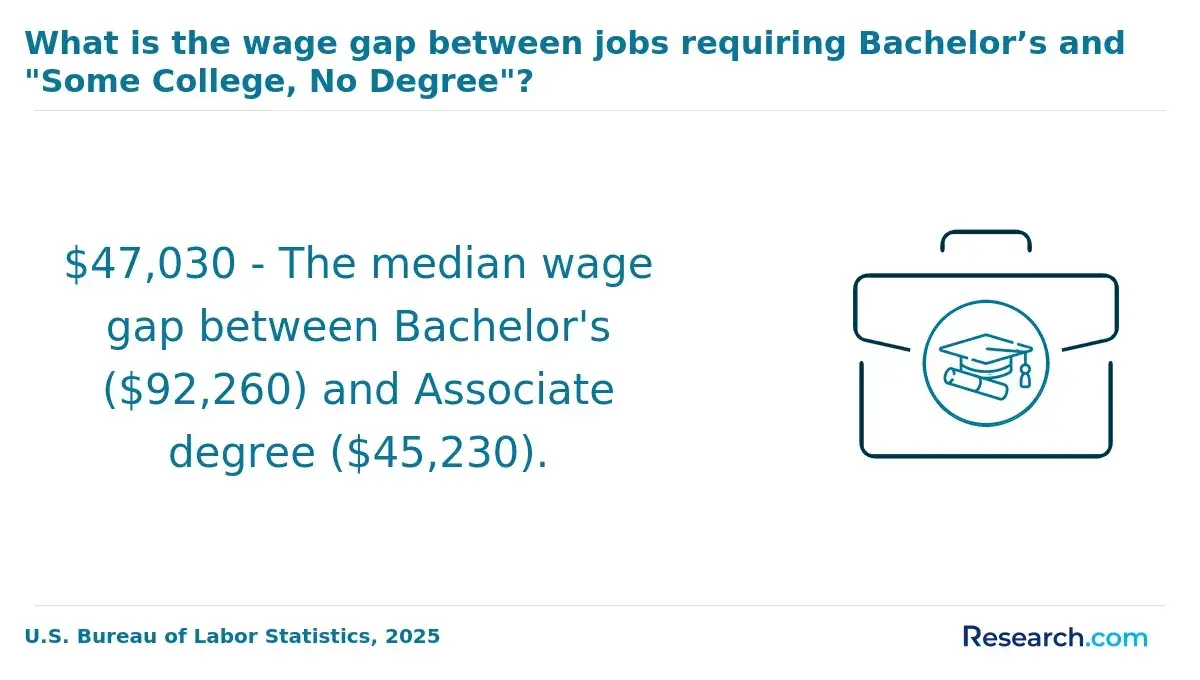
Use national salary data as a benchmark, not a promise. The BLS reported 2024 median annual pay of $149,530 for physicists and astronomers, but many of those roles require graduate education. For bachelor's-level technical careers, related roles such as data scientist, engineering technician, quality specialist, or software-adjacent analyst may be more realistic entry targets.
The table below summarizes broad U.S. labor-market context for common physics-related directions. Median pay reflects occupations, not physics degree holders specifically.
| Occupation or direction | 2024 U.S. median pay context | How physics connects | Important limitation |
| Physicists and astronomers | About $149,530 | Advanced modeling, research, instrumentation, and scientific analysis | Many roles prefer or require a master's or PhD, especially in research |
| Data scientists | About $112,590 | Physics builds modeling, statistics, coding, and problem-solving habits | Employers usually expect strong Python, statistics, SQL, and portfolio evidence |
| Electrical and electronic engineering technologists and technicians | About $77,180 | Physics supports circuits, signals, instrumentation, and lab testing | Some roles prefer electronics, engineering technology, or hands-on lab experience |
| Software developers | About $133,080 | Physics graduates can move into simulation, scientific computing, or technical software | A physics degree alone is not enough; coding depth and projects are essential |
| Quality control inspectors | About $47,220 | Measurement, documentation, and process awareness can be useful in manufacturing | Some roles are not degree-level and may not fully use physics training |
The job outlook is strongest when physics is paired with growing technical demand. Data, automation, semiconductors, defense systems, energy systems, photonics, and advanced manufacturing all value quantitative workers, but entry-level hiring can be competitive.
To evaluate return on investment, compare your expected total cost with realistic first-step roles, not only with high-end physicist salaries. A bachelor's degree may be worth it if you use it to enter a technical field with advancement potential, but it is riskier if the program lacks labs, projects, internships, or computing depth.
Are licenses or certifications needed for common physics-based technical jobs?
Most physics-based technical jobs do not require a state license. That is different from fields such as nursing, public school teaching, or professional engineering, where licensing rules can define the career path. For physics graduates, credentials are usually employer-specific, tool-specific, safety-related, or tied to a specialized industry.
Licensure becomes important when your target role crosses into regulated engineering, radiation work, education, or government requirements. For example, using the title Professional Engineer generally requires meeting state engineering board rules, and a physics degree may not satisfy the same requirements as an ABET-accredited engineering degree.
The table below explains when credentials may matter. Always verify requirements with employers, state boards, or certification bodies before paying for a credential.
| Career area | Credential or requirement type | When it matters |
| Engineering roles | FE exam, PE license, ABET-related requirements in some paths | Important for regulated engineering work, signing plans, or roles explicitly requiring engineering licensure |
| Radiation safety or health physics | Employer training, state rules, radiation safety officer requirements, Certified Health Physicist for advanced roles | Important in nuclear, medical, research, and regulatory environments |
| Electronics and instrumentation | LabVIEW, IPC, manufacturer training, electronics certificates | Useful when job postings name specific tools or production standards |
| Quality and manufacturing | Six Sigma, quality auditor, metrology, OSHA safety training | Useful in process improvement, inspection, manufacturing, and compliance-heavy settings |
| Non-destructive testing | ASNT-style NDT certifications and employer-supervised hours | Often required for inspection roles using ultrasound, radiography, magnetic particle, or similar methods |
| Data and computing | Cloud, Python, SQL, machine learning, cybersecurity, or analytics certificates | Useful when certificates validate skills not obvious from the physics transcript |
Students sometimes confuse degree requirements with professional credentials. In some fields, a specific master's degree is a standard entry expectation; for example, a library science master's is often discussed for librarian roles, while physics-based technical jobs usually emphasize applied skills, labs, projects, and employer-specific tools.
The best certification strategy is targeted, not random. Read 20 job postings in your target industry, list the tools and credentials that appear repeatedly, and choose one or two that directly support your first job goal.
Other Things You Should Know About Physics
You may qualify for some entry-level technical or government roles with a bachelor's degree, but many jobs with the title "physicist" require a master's or PhD. If you do not want a PhD, target applied roles in testing, data, instrumentation, optics, manufacturing, software, or technical support.
They can be respected if they are rigorous, faculty-supervised, and tied to real measurement, analysis, and reporting. Ask how labs are delivered, what equipment is used, and whether you will produce reports or projects you can discuss in interviews.
Consider your career goals, the skill sets required in your desired field, and the industry's demands. Physics focuses on theoretical knowledge, beneficial for research roles, while engineering offers practical applications, often required for engineering jobs. Research job market trends and consult industry professionals to make an informed decision.
Check institutional accreditation, request a transfer evaluation, review the lab plan, confirm upper-division course availability, estimate total cost, and compare the curriculum with real job postings in your target field.
References
- Online Physics Course: 6 Helpful Considerations - Prereqcourses https://www.prereqcourses.com/online-physics-course/
- Is an Online Degree in Physics Right for Me? https://www.physicsforums.com/threads/is-an-online-degree-in-physics-right-for-me.976843/
- Requirements for Admission https://cusm.edu/academics/md/requirements-for-admission/index.php
- Medical School Requirements in 2025: The Definitive Guide — Shemmassian Academic Consulting https://www.shemmassianconsulting.com/blog/medical-school-requirements
- Medical School Requirements + Prerequisites: The Ultimate Guide (2026-2027) https://mededits.com/mededits-resources/medical-school-admissions/medical-school-requirements/
- Are Online Degrees Accredited? How to Identify Quality Distance Learning Programs https://www.umassglobal.edu/blog-news/online-degrees-accredited-identify-quality-distance-learning-programs
- Admissions Requirements https://www.aacom.org/become-a-doctor/apply-to-medical-school/admissions-requirements
- 2025 Best Online Degrees in Physics https://www.onlineu.com/degrees/physics
- How to Get Quantum Jobs Without a PhD in 2026 https://www.quantumjobslist.com/post/how-to-get-quantum-jobs-without-a-phd