2027 Best Online Bachelor's in Physics With Prior Learning Credit

Co-Founder and Chief Data Scientist
Choosing an online physics bachelor's is harder than choosing many online degrees because lab access, transfer rules, and upper-level math requirements vary widely. The payoff can be strong: the U. S. Bureau of Labor Statistics reported a May 2024 median annual wage of $149,530 for physicists and astronomers, although many roles require graduate study. This guide is for transfer students, working adults, military learners, and career changers who want to use prior learning credit wisely. You'll learn how credits work, what programs cost, how online study compares, and how to choose a credible option.
Key Things You Should Know
- Fully online physics bachelor's programs are less common than online programs in business or computing, so the best choices usually combine regional accreditation, clear lab policies, strong transfer evaluation, and transparent prior learning credit rules.
- Prior learning credit can shorten time to degree by covering general education, electives, introductory science, math, military training, standardized exams, or portfolio-assessed learning, but upper-division physics courses are often harder to waive.
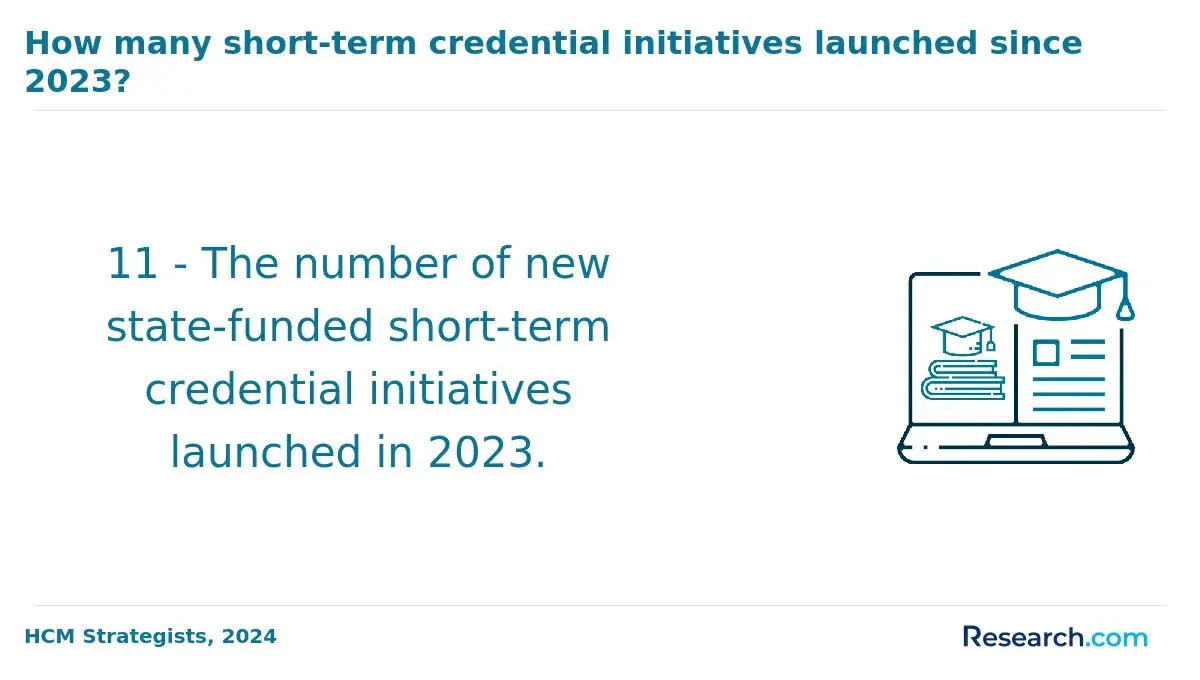
- Cost savings depend on the number of credits accepted; College Board's 2024 pricing data placed average published tuition and fees at $11,610 for in-state public four-year colleges and $43,350 for private nonprofit four-year colleges, making transfer efficiency a major ROI factor.
What is an online bachelor's in physics with prior learning credit and who is it for?
An online bachelor's in physics with prior learning credit is an undergraduate degree that covers core physics, mathematics, laboratory methods, computational modeling, and scientific reasoning while allowing eligible students to apply previous college credits, exams, military training, professional learning, or portfolio evidence toward degree requirements. In most cases, the degree is not "easier" than an on-campus physics degree; it simply uses online course delivery and flexible scheduling.
This path is best for students who need flexibility but still want a rigorous quantitative science degree. It can fit community college transfer students, military-affiliated learners, working adults in technical roles, aspiring engineers who want a physics foundation, future graduate students, and career changers interested in data, research, energy, aerospace, education, software, or applied science.
It may not be the right choice if you need daily in-person lab access, want a highly specialized experimental research environment as an undergraduate, or are targeting a graduate program that expects extensive campus-based research. Those students may still use online coursework strategically, but they should compare lab expectations carefully before enrolling.
The table below summarizes the most common student profiles and how prior learning credit affects the decision. Use it to identify whether an online physics route supports your goal or whether a hybrid or campus-based option may be stronger.
| Student profile | Why the degree may fit | Credit strategy | Important caution |
| Community college transfer student | Can bring lower-division math, science, and general education coursework into a bachelor's plan | Request a course-by-course transfer review before enrolling | Physics sequences must align closely, especially calculus-based mechanics and electromagnetism |
| Military or veteran learner | May receive credit for ACE-reviewed training, technical coursework, or exams | Submit Joint Services Transcript or Community College of the Air Force transcript early | Military credit often applies to electives rather than upper-level physics |
| Working technical professional | Can study part time while building credentials for advancement | Ask whether portfolio credit is available for documented technical learning | Work experience alone usually is not enough; schools need evaluated evidence |
| Future graduate student | Can complete the bachelor's while preparing for research, engineering, or applied science programs | Prioritize programs with rigorous math, lab, and research preparation | Too many waived technical courses may weaken graduate school preparation |
How does prior learning credit work in online physics programs and what can it cover?
Prior learning credit, often called PLA or credit for prior learning, is the process of awarding academic credit for college-level knowledge gained outside the program. In physics, it works best when the learning maps clearly to a course requirement. Schools usually evaluate credits through transcripts, standardized exam scores, military credit recommendations, industry training documentation, or faculty-reviewed portfolios.
The most important thing to know is that physics departments tend to be more cautious with major requirements than with general education or electives. A school may accept a humanities course, calculus course, or programming course more readily than it accepts an advanced quantum mechanics substitute because the major sequence builds tightly from one course to the next.
The table below explains the major types of prior learning credit and where they usually apply in an online physics bachelor's plan. It can help you estimate which credits are likely to reduce tuition and which may still require department approval.
| Credit source | What it can cover | Typical evidence required | How likely it is to affect the physics major |
| Regionally accredited college transfer credit | General education, calculus, chemistry, programming, introductory physics, electives | Official transcripts and course descriptions or syllabi | High for lower-division courses if content matches |
| AP, IB, CLEP, or DSST exams | General education, introductory science, math, or electives depending on score | Official score reports | Moderate; policies vary by school and exam score |
| Military training | Technical electives, general education, leadership, applied technology, or lab-related competencies | Joint Services Transcript, CCAF transcript, or ACE recommendations | Usually stronger for electives than major physics requirements |
| Portfolio assessment | Documented college-level learning from work, research, technical training, or independent study | Learning narrative, artifacts, supervisor verification, certifications, or projects | Variable; upper-level physics credit is possible but uncommon |
| Institutional challenge exams | Specific courses when the school allows students to test out | Department-approved exam or assessment | Potentially useful, but not always available for lab or advanced theory courses |
Before you assume your experience will count, ask the school how credits are applied. A credit that transfers as a free elective may still reduce total credits needed, but it may not shorten your physics sequence if the remaining courses must be taken in order.
Students can protect themselves by following a simple evaluation process before committing to a program:
- Collect official transcripts, exam scores, military records, syllabi, training documentation, and proof of completed projects.
- Ask the admissions or registrar's office for a written preliminary transfer evaluation, not just a verbal estimate.
- Confirm which accepted credits meet general education, major, lab, math, residency, and upper-division requirements.
- Ask whether accepted credits affect financial aid pace, scholarship eligibility, or full-time enrollment status.
- Compare the remaining degree plan across schools, because the cheapest per-credit tuition is not always the lowest total cost.
What are the admission requirements for online bachelor's in physics programs?
Admission requirements for online bachelor's in physics programs usually resemble requirements for other undergraduate science degrees, but placement in math and lab science matters more. Schools want evidence that students can handle calculus, scientific problem-solving, and quantitative coursework. Transfer students may have a smoother path if they have already completed college algebra, precalculus, calculus, introductory physics, chemistry, or programming.
Typical admissions materials include high school transcripts or GED documentation, college transcripts from every institution attended, a minimum GPA, standardized test scores if required, proof of English proficiency for applicable students, and sometimes a personal statement. Adult learners may also be asked for a resume if they are pursuing prior learning credit or portfolio assessment.
The table below shows common requirements and why they matter specifically for physics. It can help you identify gaps before applying.
| Requirement | Why it matters in physics | How to prepare |
| High school or college transcripts | Schools verify math and science readiness as well as transfer eligibility | Request official records early and gather syllabi for science courses |
| Minimum GPA | Physics programs may use GPA to assess readiness for sequential coursework | If your GPA is lower, highlight recent success in math or science classes |
| Math placement or prerequisites | Calculus is foundational for mechanics, electromagnetism, waves, and quantum physics | Complete precalculus or calculus before starting the major sequence if possible |
| Lab science background | Programs must ensure students can meet experimental and measurement outcomes | Ask how prior lab courses transfer and whether online labs meet program standards |
| Prior learning documentation | Experience must be evaluated against course-level learning outcomes | Prepare portfolios, certifications, military records, and work samples before enrollment |
One common mistake is applying before asking whether the program is designed for first-time freshmen, transfer students, or degree-completion learners. A degree-completion physics option may be excellent for someone with 60 transferable credits but frustrating for a student who still needs the full lower-division sequence.
How do online physics bachelor's programs compare to on-campus options in rigor and outcomes?
Online physics programs can be academically rigorous when they require the same learning outcomes as campus programs: calculus-based physics, laboratory analysis, mathematical modeling, modern physics, computational work, and upper-level theory. The difference is delivery. Lectures may be asynchronous, labs may use home kits or simulation-supported experiments, and exams may use remote proctoring or project-based assessment.
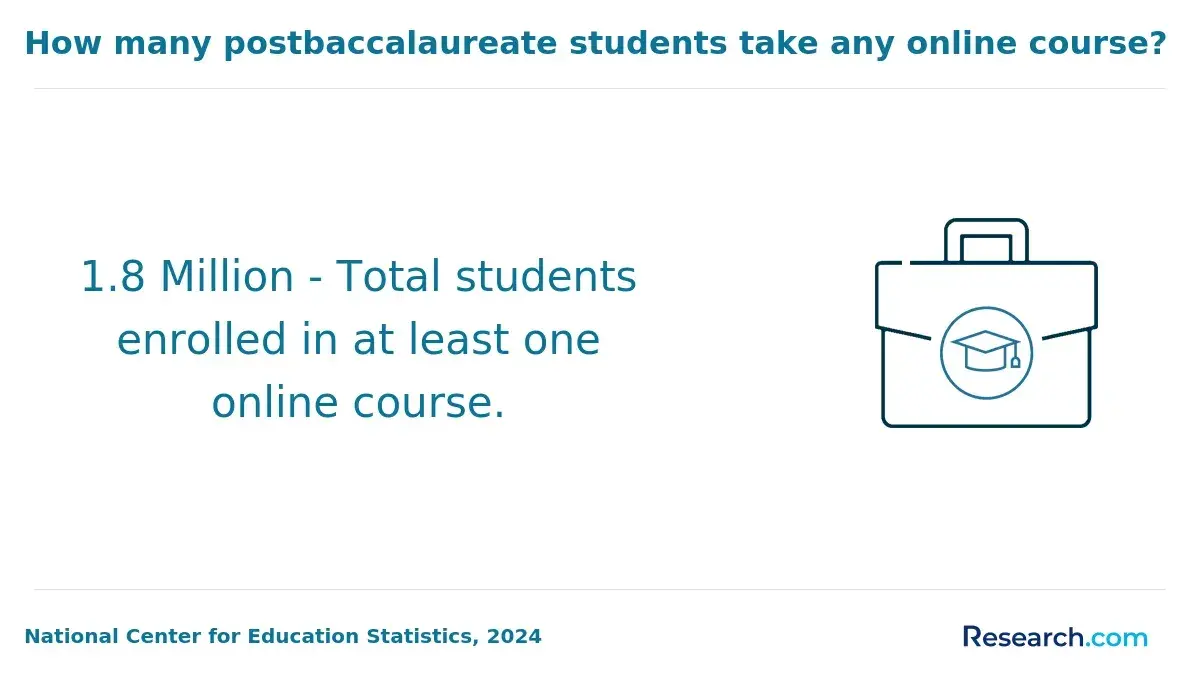
Online learning also reflects a broader enrollment trend. The National Center for Education Statistics reported in 2024 that distance education remains a major part of U.S. higher education, especially among students balancing school with work or family obligations. For physics students, that trend means more flexibility, but it does not remove the need for disciplined study time and access to appropriate lab tools.
The table below compares online and on-campus physics study across the decision points that matter most. Use it to decide whether flexibility or physical access to facilities should carry more weight in your search.
| Factor | Online physics bachelor's | On-campus physics bachelor's | Best fit |
| Course rigor | Can be equivalent if the same outcomes, assessments, and faculty standards apply | Often includes traditional lectures, labs, recitations, and in-person exams | Choose based on delivery quality, not assumptions about difficulty |
| Lab experience | May use home labs, virtual labs, remote instrumentation, summer residencies, or local partnerships | Usually offers direct access to teaching labs and equipment | Campus may be better for students targeting experimental research |
| Faculty access | Depends on office hours, discussion boards, advising, and response times | Can include informal mentoring and lab-based interaction | Ask about advising structure and undergraduate research opportunities |
| Schedule flexibility | Stronger for working adults and students outside commuting range | Stronger for students who want a full-time residential experience | Online is often better for adults with fixed work schedules |
| Career outcomes | Depend on accreditation, skills, projects, internships, and employer perception | Depend on the same factors plus campus network access | Look for career services and documented graduate outcomes |
A red flag is any program that downplays labs or says simulations replace all experimental learning without explaining how students meet measurement, uncertainty, instrumentation, and data-analysis outcomes. Online does not have to mean weak; it does need to be transparent.
What courses and specializations are typically included in an online physics curriculum?
An online physics curriculum typically combines general education, a calculus sequence, differential equations, classical mechanics, electricity and magnetism, waves and optics, thermodynamics, modern physics, quantum mechanics, statistical mechanics, computational physics, and laboratory courses. Many programs also include capstone projects, undergraduate research, or applied electives in engineering, astronomy, data analysis, or materials science.
Specializations are less common at the bachelor's level than at the graduate level, but students can often shape the degree through electives. Current employer demand in technical fields makes computational modeling, Python programming, statistics, instrumentation, and data visualization especially valuable alongside the physics core.
The table below groups common courses by purpose. This helps you evaluate whether a program is giving you a complete physics foundation or only a broad science degree with a physics label.
| Curriculum area | Common courses | Why it matters |
| Mathematics foundation | Calculus I-III, linear algebra, differential equations, mathematical methods | Physics relies on quantitative modeling, not just conceptual science |
| Core physics | Mechanics, electromagnetism, waves, optics, thermal physics, modern physics | These courses build the theoretical base for advanced study and technical work |
| Advanced theory | Quantum mechanics, statistical mechanics, classical mechanics, electrodynamics | Graduate programs and research roles often expect depth in these areas |
| Laboratory and experimentation | Introductory labs, electronics, advanced lab, measurement and uncertainty analysis | Students learn how to collect, evaluate, and communicate scientific evidence |
| Computing and applied skills | Python, numerical methods, data analysis, simulations, scientific computing | These skills support roles in data, software, aerospace, finance, and engineering-adjacent work |
If you are drawn to earth systems, planetary science, or environmental applications of physics, comparing a physics curriculum with a geology degree online can clarify whether you want a math-heavy physical science path or a field-oriented geoscience path.
How long does an online bachelor's in physics take and how much can you accelerate with credits?
A bachelor's degree normally requires about 120 semester credits. A first-time full-time student usually needs four academic years, while part-time online students may take longer. Prior learning credit can accelerate completion, but the amount of acceleration depends on which credits apply to degree requirements and whether required physics courses are offered every term.
The biggest timeline constraint is course sequencing. Even if you transfer many electives, you may still need several terms to complete calculus, mechanics, electromagnetism, modern physics, and upper-level theory in the correct order. This is why students should compare remaining course maps, not just total accepted credits.
The table below shows realistic completion scenarios. It is not a promise of completion time, but it illustrates how credit acceptance and course sequencing interact.
| Starting point | Possible remaining credits | Likely timeline | Main acceleration factor |
| No prior college credit | About 120 credits | About four years full time, longer part time | Year-round enrollment and strong math placement |
| 30 transferable credits | About 90 credits | About three years full time if prerequisites align | General education and introductory math transfer |
| 60 transferable credits | About 60 credits | About two years full time, but physics sequencing may extend this | Completed calculus-based physics and calculus sequence |
| 90 transferable credits | About 30 credits, but residency and major rules apply | One to two years depending on upper-level availability | Careful fit with major, lab, and upper-division requirements |
To accelerate without weakening your preparation, focus on credits that clear general education, free electives, math prerequisites, and lower-division science. Be cautious about trying to skip foundational physics courses if you plan to pursue graduate study, teaching, engineering-adjacent work, or research.
A practical way to estimate your true timeline is to ask each school for a term-by-term plan after transfer evaluation. That plan should show prerequisite chains, lab requirements, residency credits, capstone timing, and course rotation.
Students interested in AI, modeling, or analytics should also compare physics electives with a structured data science learning path, because many physics graduates move into roles where programming and statistical reasoning are as important as theoretical physics.
What do online bachelor's in physics programs cost and how does prior learning credit reduce tuition?
Costs vary by public or private status, residency, credit load, fees, technology requirements, textbooks, lab kits, proctoring, and travel for any required residencies. College Board's 2024 data reported average published tuition and fees of $11,610 for in-state public four-year colleges and $43,350 for private nonprofit four-year colleges. Those sticker prices do not tell the full story, but they show why reducing repeated credits can matter.
Prior learning credit lowers cost when it reduces the number of credits you must pay for. The savings are strongest when accepted credits fulfill required categories rather than landing as excess electives. Some schools also charge assessment fees for portfolio credit or exam credit, so the net savings should be calculated after fees.
- Tuition may be charged per credit, per term, or through a flat full-time rate.
- Online programs may add technology, distance learning, proctoring, lab kit, or course materials fees.
- Transfer credit can reduce tuition only if it applies to the degree plan and does not exceed transfer caps.
- Portfolio assessment may cost less than taking a course, but approval is not automatic.
- Financial aid eligibility can change if accepted credits reduce your remaining enrollment load.
The table below shows how to compare cost beyond advertised tuition. This is especially important for physics because lab courses and course sequencing can create expenses that are easy to miss.
| Cost factor | What to ask | Why it affects ROI |
| Accepted credits | How many credits apply to requirements, not just total transfer credits? | Only applicable credits reduce the courses you still need |
| Lab expenses | Are there home lab kits, software, equipment, or travel costs? | Physics programs may require materials beyond standard online fees |
| Residency requirement | How many credits must be completed at the degree-granting school? | A high residency requirement can limit transfer savings |
| Course availability | Are upper-level physics courses offered every term or only once per year? | Delays can increase living costs and opportunity costs |
| Financial aid and scholarships | Does the aid package change after transfer credits are applied? | The lowest tuition is not always the lowest net price |
A common mistake is choosing the lowest per-credit tuition before seeing the degree audit. A school with slightly higher tuition may cost less overall if it accepts more applicable credits and offers the remaining physics sequence on a predictable schedule.
What careers can you pursue with an online bachelor's in physics and what roles value prior experience?
A physics bachelor's degree can lead to several paths, but not all of them use the word "physicist" in the job title. Many graduates work in data analysis, software, engineering support, quality assurance, laboratory technology, aerospace, energy, education, technical sales, finance, scientific communication, or graduate study. Prior experience can be especially valuable when it connects physics training to a specific industry.
Employers often value physics graduates for quantitative reasoning, modeling, problem-solving, programming, and the ability to learn technical systems quickly. Prior learning credit can support career positioning if it reflects real skills, such as military electronics training, laboratory work, programming experience, manufacturing quality work, or research support.
The table below connects common career directions to the skills that make physics graduates competitive. It also shows where additional education or credentials may be needed.
| Career direction | Typical responsibilities | Skills to emphasize | Additional preparation to consider |
| Research or laboratory technician | Run experiments, maintain equipment, collect data, document procedures | Instrumentation, lab safety, measurement, data analysis | Internships, undergraduate research, electronics coursework |
| Data analyst or scientific programmer | Build models, analyze datasets, automate workflows, communicate findings | Python, statistics, numerical methods, visualization | Portfolio projects, SQL, machine learning basics |
| Engineering support specialist | Assist engineers with testing, modeling, documentation, and product analysis | Mechanics, electromagnetism, CAD exposure, technical writing | Engineering electives or certifications depending on the industry |
| Physics or science educator | Teach science concepts, design lessons, assess student learning | Communication, lab demonstrations, pedagogy, content knowledge | State teaching licensure requirements vary and must be checked locally |
| Graduate school pathway | Prepare for research, advanced technical roles, academia, or specialized industry work | Advanced theory, research methods, mathematical depth | Research experience, faculty recommendations, strong upper-level grades |
Physics can also intersect with health, biomechanics, and human performance, but students who want a more direct path into wellness, rehabilitation support, or sport science should compare physics with exercise science degrees online before choosing a major.
What is the salary outlook and job demand for graduates with a physics bachelor's degree?
The salary outlook for physics graduates depends heavily on role, industry, location, and education level. The BLS reported a May 2024 median annual wage of $149,530 for physicists and astronomers, but that figure is most relevant to advanced research and specialized roles, many of which require a master's degree or doctorate. Bachelor's graduates often enter broader technical roles where pay may differ substantially.
Job demand is shaped by research funding, aerospace and defense activity, semiconductor and energy investment, data-intensive industries, and the spread of AI-enabled modeling tools. Physics graduates who can combine theory with programming, statistics, instrumentation, and communication are usually better positioned than those who rely on coursework alone.
The table below gives a decision-focused view of outcomes rather than implying that one salary applies to every graduate. Use it to connect your degree plan with the labor market you want to enter.
| Path after the bachelor's | Market signal | What improves competitiveness | Important limitation |
| Direct entry into technical roles | Physics skills can transfer to data, lab, engineering support, and software-adjacent roles | Internships, coding portfolio, lab documentation, applied projects | Job titles may not say "physics," so search broadly |
| Graduate study in physics or astronomy | BLS salary data for physicists and astronomers reflects many advanced roles | Research experience, strong math preparation, advanced lab work | A bachelor's alone may not meet requirements for many research scientist roles |
| Engineering-adjacent employment | Employers may value modeling and testing skills | Engineering electives, CAD or simulation tools, industry experience | Some engineering positions require an ABET-accredited engineering degree |
| Teaching | Demand varies by state, district, and licensure area | Teacher preparation program, classroom experience, state exams | Licensure requirements are state-specific |
| Data and AI-related work | Quantitative majors can be attractive when paired with computing skills | Python, statistics, machine learning, reproducible project portfolio | Physics coursework alone may not be enough for competitive data roles |
The practical takeaway is that ROI depends on how intentionally you build the degree. Students who use prior learning credit to save money, then add internships, programming, research, and applied projects, usually have a stronger career story than students who simply complete the minimum course list.
If your long-term goal is science information work, archives, research librarianship, or managing technical knowledge systems rather than lab or modeling work, a master of library science may eventually pair well with a physics background.
How can you evaluate and choose an accredited, reputable online physics program that accepts prior learning?
The best online bachelor's in physics with prior learning credit is not necessarily the cheapest, fastest, or most heavily advertised program. It is the accredited program that accepts the right credits, teaches rigorous physics, provides credible lab experiences, supports your career goal, and gives you a clear path to completion.
Start with accreditation. In the U.S., institutional accreditation from a recognized accreditor is essential for federal financial aid eligibility, transferability, and employer confidence. Programmatic accreditation is less central for physics than for fields such as nursing or engineering, but students considering engineering licensure or teaching should verify any additional state, employer, or licensure requirements.
Use the following steps to compare programs before applying. This sequence helps you avoid paying application fees or enrolling before you know whether the degree truly fits.
- Verify institutional accreditation through official accreditation records and confirm that the online program is offered by the accredited institution, not only a third-party platform.
- Request a written transfer and prior learning credit review that separates general education, electives, math, lab science, major, upper-division, and residency requirements.
- Ask how online labs work, including kits, simulations, remote instrumentation, local lab options, safety procedures, and any required campus visits.
- Review the remaining term-by-term course plan and check whether upper-level physics courses are offered often enough to avoid delays.
- Compare total net cost after grants, scholarships, fees, transfer credits, portfolio assessment charges, books, software, and lab expenses.
- Ask about faculty access, tutoring, undergraduate research, career services, internship support, and graduate school advising.
- Match the curriculum to your target outcome, such as graduate study, data analytics, teaching, lab work, aerospace, energy, or engineering support.
The table below lists common red flags and the better alternative to look for. These are especially important in physics because a weak lab or math foundation can limit graduate school and technical job options.
| Red flag | Why it matters | Better alternative |
| No clear lab explanation | Physics requires experimental reasoning, not just video lectures | A program that explains lab tools, assessments, and learning outcomes |
| Vague transfer promises | Accepted credits may not apply to the major | A written degree audit before enrollment |
| Unclear accreditation | Credits, aid, and employer acceptance may be affected | Recognized institutional accreditation and transparent program ownership |
| Too much emphasis on speed | Skipping foundations can hurt advanced physics readiness | Acceleration through applicable credits without weakening prerequisites |
| No career or graduate advising | Physics outcomes vary widely by path | Advising that supports internships, projects, research, and next-step planning |
Before you enroll, ask one final question: "After my credits are evaluated, what exact courses, costs, labs, and terms remain between me and graduation?" A reputable program should be able to answer clearly.
Other Things You Should Know About Physics
General education, electives, calculus, introductory science, programming, standardized exams, and military training are often the most transferable. Upper-level physics and advanced labs usually require closer department review.
Employers generally care most about accreditation, skills, projects, experience, and how well you can explain your technical preparation. The online format is less of a concern when the institution is reputable and the program includes rigorous math, lab, and computing work.
Yes, several universities offer fully online bachelor's degrees in physics, enabling flexibility for remote study. These programs may also accept prior learning credits, allowing students to expedite their education based on previous academic or experiential learning achievements. Always verify accreditation and the specific credit transfer policies of the university.
References
- Physics Employment Facts https://www.compadre.org/careers/facts.cfm
- Where Can I Find a Physics Online Course for Credit? 5 Great Options - Prereqcourses https://www.prereqcourses.com/physics-online-course-for-credit/
- Credit for Prior Learning – Definition & Benefits – Planning Your Education https://planningyoureducation.pressbooks.sunycreate.cloud/chapter/what-is-credit-for-prior-learning/
- Credit for Prior Learning https://www.albany.edu/undergraduate-education/students/credit-prior-learning
- 2025 Best Online Degrees in Physics https://www.onlineu.com/degrees/physics
- How Long to Get a Physics Degree? | ValidGrad https://validgrad.com/blog/physics-degree-timeline/
- General Physics I https://www.straighterline.com/online-college-courses/general-physics-i/
- What Can You Do with a Physics Degree? https://willamette.edu/academics/college/physics/career-options
- Costs of Online and Campus Colleges | University of Phoenix https://www.phoenix.edu/blog/comparing-the-costs-of-online-and-campus-colleges.html
- Turn Your Experience Into a Degree | Woolf RPL Credit Exemption https://landing.woolf.university/recognition-of-prior-learning