2027 Best Online Physics Degrees for Engineering-Adjacent Careers

Co-Founder and Chief Data Scientist
Choosing an online physics degree is really a career-path decision: you want rigorous science training that can translate into engineering, data, materials, aerospace, or technical R& D roles. That matters because BLS May 2024 wage data show several physics-aligned occupations, including physicists and software developers, with national median pay above six figures.
This guide is for students comparing flexible physics programs with engineering-adjacent outcomes. You will learn how online programs work, what they cost, which roles they support, and how to choose a reputable option without overpaying or picking the wrong curriculum.
Key Things You Should Know
- Online physics degrees can support engineering-adjacent roles, but the strongest options include calculus-based physics, advanced labs, programming, numerical methods, and opportunities for research, internship, or project-based technical work.
- Cost varies widely: NCES-published 2023-24 undergraduate tuition and fees show public four-year in-state averages below private nonprofit averages, so transfer credit and residency status can strongly affect ROI.
- BLS May 2024 data place national median pay above $100,000 for several adjacent paths, including physicists, software developers, data scientists, electrical engineers, and mechanical engineers, but job eligibility depends on skills, projects, location, and employer requirements.
What is an online physics degree and how does it support engineering-adjacent careers?
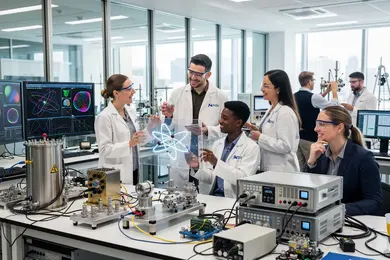
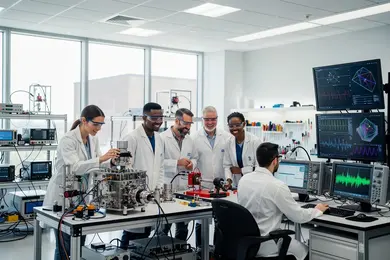
An online physics degree is a college program that teaches the laws governing matter, motion, energy, fields, waves, thermodynamics, quantum behavior, and measurement. In a strong online program, lecture content may be remote, but students still need hands-on or simulation-based lab work, mathematical modeling, programming assignments, and sometimes in-person lab intensives.
For engineering-adjacent careers, physics is valuable because it builds first-principles problem-solving. Instead of training you for one engineering license track, it helps you understand how systems behave, how to model uncertainty, how to analyze experimental data, and how to communicate technical findings. That makes it useful for roles near engineering, such as test engineering support, systems analysis, optical instrumentation, materials testing, computational modeling, technical sales engineering, patent technology support, and data-heavy R&D assistance.
The key distinction is that physics is not the same as an ABET-accredited engineering degree. If your target job explicitly requires a bachelor's in mechanical, electrical, civil, or chemical engineering, a physics degree may not substitute. If your target role values quantitative modeling, lab reasoning, programming, instrumentation, and technical communication, physics can be a strong foundation.
Students drawn to Earth systems, energy exploration, environmental instrumentation, or geotechnical-adjacent work may also compare physics with geology degrees online, especially when the desired role involves field data, subsurface modeling, GIS, or natural-resource analysis.
Are online physics degrees respected and properly accredited in the United States?
Online physics degrees can be respected in the United States when they come from institutionally accredited colleges and include a curriculum comparable to campus-based physics programs. Employers and graduate schools typically focus on the institution, degree level, coursework, projects, lab rigor, research exposure, recommendations, and technical skills rather than simply whether lectures were online.
The most important accreditation check is institutional accreditation from a U.S. Department of Education-recognized accreditor. Physics programs generally do not have the same common programmatic accreditation expectation as engineering programs. By contrast, many engineering bachelor's programs use ABET accreditation as a major quality signal, particularly for licensure-oriented engineering paths. That difference matters if you hope to become a professional engineer or enter an engineering role with strict degree requirements.
Before enrolling, students should verify the following quality indicators because they affect transferability, graduate admission, and employer trust:
- Institutional accreditation is active and listed through recognized U.S. accreditation databases.
- The transcript and diploma do not carry unusual wording that weakens recognition of the degree.
- The physics curriculum includes calculus-based sequences, upper-division theory, modern physics, lab work, and computational components.
- Faculty profiles show physics, applied physics, engineering physics, astronomy, materials science, or closely related expertise.
- The program explains how remote students complete labs, capstones, research, or supervised technical projects.
Common red flags include vague lab requirements, no clear transfer policy, unclear faculty credentials, aggressive admissions pressure, and career claims that sound guaranteed. A reputable school should be willing to explain accreditation, total cost, course rotation, lab format, and outcomes before you commit.
How do online physics programs compare to campus-based options for engineering-focused students?
Online and campus-based physics programs can lead to similar academic foundations, but they are not interchangeable for every student. The best choice depends on your need for flexibility, your access to labs and research, your career target, and whether you plan to pursue graduate study or engineering licensure later.
The table below summarizes the most important trade-offs for engineering-focused students comparing online and campus options.
| Decision factor | Online physics degree | Campus-based physics degree | Best fit |
| Schedule flexibility | Often stronger for working adults, military students, caregivers, and transfer students. | Usually less flexible because labs, lectures, and office hours follow fixed campus schedules. | Online fits students who need to keep working while studying. |
| Laboratory access | May use at-home kits, remote instrumentation, simulations, local lab partnerships, or short residencies. | Usually offers direct access to lab rooms, equipment, and faculty-supervised experiments. | Campus fits students targeting experimental research-heavy pathways. |
| Research exposure | Possible, but students may need to be proactive about remote projects, summer research, or local internships. | Often easier to access through faculty labs, undergraduate research offices, and departmental seminars. | Campus may be better for PhD-bound students. |
| Engineering-adjacent networking | Can be strong if the program has industry projects, virtual career services, and employer partnerships. | Often stronger when engineering departments, makerspaces, and local employers are nearby. | Either can work if the program has practical project pathways. |
| Cost control | May reduce relocation and commuting costs, but technology, lab kits, and out-of-state tuition can add expenses. | May offer more campus resources but can add housing, transportation, and lost-work costs. | Online often helps students who must avoid relocation. |
Choose online if flexibility is essential and the program has credible labs, rigorous math, and applied projects. Choose campus if you need heavy equipment access, close faculty research mentorship, or a smoother transition into engineering graduate study.
What types of online physics degrees best align with engineering-adjacent career paths?
The best online physics degree for an engineering-adjacent career is usually the one with the right level, specialization, and technical depth for your target role. A general physics degree can work, but applied physics, engineering physics, computational physics, or physics with a data or materials concentration may align better with industry-facing roles.
The table below compares common degree types and how they typically map to engineering-adjacent goals.
| Degree type | Typical level | Engineering-adjacent fit | Best for | Limitations |
| Associate degree in physics or physical science | Two-year undergraduate | Builds transfer-ready math and science foundations. | Students planning to transfer into physics, engineering, or applied science. | Usually not enough for most professional technical roles by itself. |
| Bachelor's in physics | Four-year undergraduate | Provides broad quantitative training for technical analyst, test, lab, software, data, or R&D support roles. | Students who want flexibility across science and technology careers. | May need targeted electives or projects for specific engineering roles. |
| Bachelor's in applied physics | Four-year undergraduate | Often emphasizes instrumentation, electronics, optics, materials, or computation. | Students seeking industry-facing technical work rather than pure theory. | Availability online is limited, and labs must be evaluated carefully. |
| Engineering physics | Four-year undergraduate | Connects physics theory with engineering design concepts. | Students considering aerospace, photonics, semiconductors, energy, or advanced technology fields. | May not satisfy every employer or licensure requirement unless the program has the right accreditation and curriculum. |
| Physics minor or second major | Undergraduate add-on | Strengthens an engineering, computer science, math, or data science major. | Students who already have a career-specific major but want deeper physical modeling skills. | May not carry the same signal as a full physics degree. |
| Master's in physics, applied physics, or related field | Graduate | Can support advancement in R&D, modeling, instrumentation, data analysis, or specialized technical roles. | Students with strong math and science preparation who need deeper specialization. | May require undergraduate prerequisites and research experience. |
If your goal is engineering-adjacent employment rather than a traditional physics PhD, prioritize programs with applied electives, coding, numerical methods, lab documentation, and industry-relevant capstones. If your goal is graduate research, prioritize faculty mentorship, rigorous upper-division theory, and research opportunities.
What core courses and technical skills do online physics majors typically learn?
Online physics majors typically study the same core subjects as campus students: mechanics, electricity and magnetism, waves, optics, thermodynamics, quantum mechanics, statistical physics, and laboratory methods. For engineering-adjacent careers, the most valuable programs also teach computation, electronics, instrumentation, data analysis, and technical communication.
The table below connects typical physics coursework to skills employers may recognize in applied technical environments.
| Course or requirement | What students learn | Engineering-adjacent value |
| Calculus-based mechanics | Motion, forces, energy, momentum, rotation, and differential equations in physical systems. | Useful for mechanical systems, aerospace concepts, robotics basics, and modeling physical behavior. |
| Electricity and magnetism | Fields, circuits, electromagnetic waves, and Maxwell's equations. | Supports electronics, signal systems, photonics, sensors, and electrical test environments. |
| Modern and quantum physics | Atomic structure, quantum states, spectroscopy, and semiconductor-related concepts. | Helpful for optics, materials, semiconductor, nanotechnology, and advanced manufacturing contexts. |
| Thermodynamics and statistical mechanics | Heat, entropy, energy transfer, probability, and many-particle systems. | Supports energy systems, materials behavior, chemical-adjacent processes, and reliability analysis. |
| Experimental physics labs | Measurement, uncertainty, calibration, sensors, instrumentation, and lab reporting. | Directly relevant to testing, quality, validation, metrology, and R&D support roles. |
| Computational physics | Programming, numerical simulation, algorithms, modeling, and visualization. | Builds skills for simulation, data analysis, automation, and technical software roles. |
| Capstone or research project | Problem definition, independent investigation, documentation, and presentation. | Creates portfolio evidence for employers and graduate admissions committees. |
Students targeting data-heavy engineering environments should look for Python, MATLAB, C++, numerical methods, machine learning exposure, and statistical modeling. Those who discover they want a more data-centered graduate path can compare physics preparation with an MS data science online, especially if their target roles involve modeling, analytics, AI systems, or scientific computing rather than lab instrumentation.
AI and automation are changing what "technical skill" means for physics graduates. Employers increasingly value people who can use computational tools, validate model outputs, understand measurement limits, and explain whether an AI-generated result makes physical sense. Physics students can stand out by building a project portfolio that combines theory, code, data, and clear documentation.
What are the admission requirements and prerequisites for online bachelor's in physics programs?
Admission requirements for online bachelor's in physics programs vary, but schools usually look for college readiness in mathematics and science. Physics is mathematically demanding, so the admissions question is not only whether you can get in; it is whether you are prepared to succeed in calculus, laboratory reasoning, and abstract problem-solving.
Most applicants should expect some combination of the following requirements, though policies differ by school and applicant type:
- High school diploma, GED, or equivalent credential for first-year admission.
- Official transcripts from high school and any colleges previously attended.
- Placement readiness for college algebra, trigonometry, precalculus, or calculus, depending on program entry point.
- Prior coursework in physics, chemistry, biology, computer science, or advanced math may be recommended or required.
- Transfer applicants may need minimum college GPA standards and course equivalency reviews.
- Some programs may request essays, résumés, recommendation letters, or explanations of career goals.
Students without calculus readiness should not automatically rule out physics, but they should plan for a longer pathway. Starting with precalculus, calculus I, and introductory programming can prevent costly withdrawals later. If you are transferring from a community college, ask the university to evaluate physics, calculus, chemistry, and general education credits before you enroll.
A common mistake is choosing the fastest advertised path without checking prerequisite chains. Physics courses often build in sequence, and missing one math course can delay upper-division physics by a term or more. Ask admissions advisors for a term-by-term plan based on your actual transcript, not a generic catalog map.
How long do online physics degrees take and what do they typically cost?
Most bachelor's degrees require about 120 credits, so a full-time student entering as a first-year student often needs four years. Transfer students with completed general education, calculus, and introductory science credits may finish sooner, while part-time students may need five or six years because physics sequences and labs are not always offered every term.
Cost depends on residency, institution type, transfer credits, fees, technology requirements, and lab delivery. NCES-published 2023-24 undergraduate tuition and required-fee averages show why public in-state tuition is often the lowest-cost starting point, but the advertised tuition rate is only one piece of the total budget.
- Public four-year, in-state average tuition and required fees: about $9,750 for 2023-24.
- Public four-year, out-of-state average tuition and required fees: about $28,000 for 2023-24.
- Private nonprofit four-year average tuition and required fees: above $38,000 for 2023-24.
Online students should also budget for books, software, proctoring, lab kits, travel for any residency sessions, computer upgrades, and lost work time during intensive courses. Federal financial aid may be available at eligible accredited institutions, but loan limits, grant eligibility, satisfactory academic progress rules, and state aid vary by student.
To reduce total cost, students should take these steps before committing:
- Request an official transfer-credit evaluation before enrolling.
- Ask whether online students pay in-state, out-of-state, or separate distance-learning tuition.
- Confirm all lab, technology, proctoring, and residency fees in writing.
- Compare course rotation against your timeline so you do not pay for extra terms while waiting for required physics courses.
- Use federal, state, employer, military, and institutional aid estimates to calculate net cost rather than sticker price.
If you are comparing physics with other online graduate or professional routes, remember that programs with different equipment needs can have very different cost structures. For example, an MLIS degree online may have fewer lab-related expenses, while physics may require lab kits, specialized software, or short campus visits.
Which engineering-adjacent jobs can you pursue with an online physics degree?
An online physics degree can lead to several engineering-adjacent jobs, especially when students add applied projects, coding, internships, lab experience, or industry-specific electives. The degree is strongest for roles that need quantitative reasoning and technical problem-solving but do not always require a specific engineering degree.
The table below lists common career directions and what physics graduates typically need to be competitive for each one.
| Career path | Typical responsibilities | Helpful add-ons | Fit for physics graduates |
| Test or validation technician/engineer support | Run tests, collect data, troubleshoot equipment, document results, and support engineering teams. | Electronics, instrumentation, LabVIEW, Python, quality systems, and internships. | Strong fit when the program includes labs and measurement-heavy projects. |
| Materials or process technician | Analyze material properties, support manufacturing processes, perform measurements, and prepare reports. | Materials science, chemistry, microscopy, statistics, and manufacturing exposure. | Good fit for students interested in semiconductors, energy, aerospace, or advanced manufacturing. |
| Optics or photonics associate | Work with lasers, lenses, detectors, imaging systems, fiber optics, and optical testing. | Optics, electromagnetism, electronics, safety training, and lab documentation. | Excellent fit when upper-division optics and lab access are available. |
| Scientific software or simulation analyst | Build models, analyze datasets, automate workflows, and validate computational results. | Python, C++, numerical methods, version control, statistics, and portfolio projects. | Strong fit for students who combine physics with programming. |
| Data analyst or junior data scientist in technical industries | Clean data, model trends, build dashboards, analyze experiments, and explain results to teams. | SQL, Python, machine learning, statistics, visualization, and domain projects. | Good fit if the student develops a clear analytics portfolio. |
| Technical sales engineer or applications specialist | Explain technical products, support customers, translate specifications, and assist with demonstrations. | Communication skills, product knowledge, internships, and business coursework. | Good fit for physics graduates who enjoy client-facing work. |
| Patent examiner or technical documentation specialist | Review technical inventions, analyze claims, prepare reports, and interpret scientific concepts. | Writing, intellectual property coursework, domain expertise, and research skills. | Good fit for students who prefer analysis and communication over lab work. |
Students who want to move from physics into licensed engineering should speak with state licensing boards and target employers early. Some roles may require an ABET-accredited engineering degree, a graduate engineering degree, or specific coursework. Physics can be a bridge, but it is not automatically a substitute for every engineering credential.
What salary ranges and job outlook can physics graduates expect in engineering-related fields?
Salary outcomes for physics graduates vary by role, industry, region, degree level, security clearance, programming ability, and experience. National median wages are useful for comparison, but they should not be read as promises for new graduates. Entry-level offers may be lower, while specialized roles in software, defense, semiconductors, aerospace, and advanced manufacturing can be more competitive.
The table below uses BLS May 2024 national median wage data and current BLS 2024-2034 projection categories to show how selected engineering-adjacent paths compare.
| Occupation | Why it connects to physics | May 2024 national median pay | 2024-2034 outlook context |
| Physicists | Advanced modeling, experimentation, instrumentation, and research. | Above $160,000 | Projected growth is positive but opportunities often require graduate education. |
| Software developers | Scientific computing, simulation, automation, and technical software tools. | Above $130,000 | Projected growth is much faster than average, driven partly by software, cloud, data, and AI demand. |
| Data scientists | Statistical modeling, experiment analysis, machine learning, and data interpretation. | Above $110,000 | Projected growth is much faster than average as organizations expand analytics and AI workflows. |
| Electrical engineers | Electromagnetism, circuits, signal behavior, sensors, and photonics. | Above $110,000 | Projected growth is positive, but many employers prefer or require engineering degrees. |
| Mechanical engineers | Mechanics, thermodynamics, materials, simulation, and testing. | Above $100,000 | Projected growth is positive, especially where design, automation, energy, and manufacturing needs expand. |
| Materials scientists | Condensed matter, thermodynamics, measurement, and materials characterization. | Above $100,000 | Projected growth is more moderate and often tied to R&D, manufacturing, and advanced materials. |
The most important salary lesson is that physics creates optionality, but specialization creates employability. A physics graduate with no coding, lab portfolio, internship, or applied project may struggle to compete for engineering-adjacent jobs. A physics graduate with Python, instrumentation, simulation, CAD exposure, semiconductor coursework, or data projects can present a clearer value proposition.
Job outlook is also being shaped by AI and automation. Routine analysis is becoming easier to automate, but employers still need people who understand physical constraints, measurement error, model validation, safety, and experimental design. That combination is where physics graduates can remain relevant.
How can students evaluate and choose a reputable online physics program for engineering pathways?
Choosing the best online physics degree starts with matching the program to your intended career pathway. A reputable program should be academically rigorous, transparent about cost, clear about lab delivery, and realistic about outcomes. Rankings can help you discover schools, but they should not replace your own program audit.
Use the following steps to evaluate whether an online physics program is a smart fit:
- Verify institutional accreditation through recognized U.S. accreditation sources.
- Compare the degree plan against your target roles, especially requirements for calculus, upper-division physics, labs, programming, and applied electives.
- Ask how labs work for online students, including equipment, supervision, safety, grading, and any required travel.
- Review faculty expertise and whether online students can join research, capstones, independent studies, or industry projects.
- Request total cost of attendance, not just tuition per credit.
- Confirm transfer-credit rules, course rotation, and whether prerequisites could delay graduation.
- Ask career services about internships, employer connections, résumé review, technical interview preparation, and alumni outcomes.
- Check whether your target employers require an engineering degree, security clearance, graduate degree, or specific technical tools.
It also helps to ask admissions advisors direct questions that reveal whether the program is designed for your goals. Strong schools should answer these clearly and without pressure.
- How many upper-division physics courses are offered fully online each year?
- Which courses include hands-on labs, simulations, remote instrumentation, or required residencies?
- Can online students complete a research project or industry-focused capstone?
- What programming languages, lab tools, or modeling platforms are used?
- How many credits from community college physics, calculus, chemistry, or engineering courses can transfer?
- What kinds of jobs or graduate programs have recent physics graduates pursued?
Finally, compare physics with adjacent degrees if your career goal changes. If you become more interested in technical information systems, research data management, archives for scientific organizations, or knowledge organization, an online library science degree may be a better fit than continuing deeper into physics. The right degree is the one that aligns with the work you actually want to do.
Other Things You Should Know About Physics
Sometimes, but it depends on the job. Some engineering-adjacent roles accept physics graduates with strong technical skills, while licensed or discipline-specific engineering roles may require an ABET-accredited engineering degree.
Yes. Physics is math-intensive and requires persistence in calculus, differential equations, lab analysis, and abstract reasoning. Online students also need strong time management because difficult problem sets and labs require consistent weekly work.
Some do. Others use lab kits, simulations, remote instruments, local partnerships, or short campus residencies. Always ask how each required lab is completed before enrolling.
In 2027, top online physics degrees for engineering-adjacent careers include programs from Ohio University's Bachelor of Science in Physics, Arizona State University's Bachelor of Science in Physics, and University of Central Florida's Bachelor of Science in Physics. These programs offer comprehensive curriculums with a focus on applied aspects that are valuable in engineering contexts.
References
- Are Online Physics 2 Courses a Viable Option for Engineering Majors? https://www.physicsforums.com/threads/are-online-physics-2-courses-a-viable-option-for-engineering-majors.559563/
- 15 Online Physics Programs for High School Students https://horizoninspires.com/blog/online-physics-programs-for-high-school-students/
- Physics https://www.ualberta.ca/en/undergraduate-programs/bachelor-of-science-with-major-physics.html
- 2025 Best Online Degrees in Physics https://www.onlineu.com/degrees/physics
- What jobs can I get with a physics degree? https://www.goconstruct.org/faqs/construction-careers/what-jobs-can-i-get-with-a-physics-degree