2027 How to Choose an Online Physics Degree With Strong Outcomes

Co-Founder and Chief Data Scientist
Choosing an online physics degree is a high-stakes decision because physics is mathematically demanding, lab-based, and tied to very different outcomes depending on the program. The payoff can be strong: BLS May 2024 data lists the median annual wage for physicists at $166,290, but many bachelor's graduates start in engineering, data, education, or technical roles. This guide is for students comparing online physics programs, transfer options, and career paths. You'll learn how to judge accreditation, rigor, cost, labs, admissions fit, and outcomes before committing.
Key Things You Should Know
- For most students, the safest online physics degree is one from a regionally accredited institution with documented lab requirements, calculus-based coursework, faculty access, and transparent transfer-credit policies.
- Cost varies widely. College Board's 2024-25 published tuition and fee averages were $11,610 for in-state public four-year institutions, $30,780 for out-of-state public institutions, and $43,350 for private nonprofit four-year institutions.
- Career outcomes depend heavily on the credential level. Bachelor's graduates often move into technical, teaching, engineering-adjacent, or data roles, while many physicist and research positions prefer or require graduate study.
What is an online physics degree and who is it best suited for?
An online physics degree is a college program that teaches the laws governing matter, energy, motion, waves, fields, particles, and the structure of the universe through distance-based coursework. At the bachelor's level, it usually combines calculus, differential equations, classical mechanics, electromagnetism, quantum mechanics, thermodynamics, computational methods, and laboratory work.
At the master's level, it may focus on applied physics, physics education, engineering physics, medical physics preparation, computational modeling, or research methods.
The key difference from many other online degrees is that physics is not just reading and exams. Strong programs require problem-solving, mathematical proof, programming, data analysis, and lab-based measurement. Some schools use at-home lab kits, virtual simulations, remote instrumentation, summer intensives, or local proctored labs to meet this requirement.
The best format depends on whether you need flexibility, research preparation, teacher licensure, or a bridge into another technical field.
An online physics degree is usually a good fit for students who can study independently and tolerate difficult quantitative work. It is also a practical choice for working adults who already have some college credit, military students, career changers with strong math backgrounds, and future teachers who need physics content knowledge.
Students comparing online lab sciences may also want to review adjacent options such as an online bachelors in animal science if their interests lean more toward biology, agriculture, veterinary preparation, or applied life science.
This path may not be ideal if you dislike advanced math, need frequent in-person tutoring, want a short credential for immediate entry into a specific job, or require extensive wet-lab or hardware access that the online program cannot provide. It can still be worthwhile, but only if the delivery model matches the outcome you want.
The table below summarizes common online physics degree options and when each one makes sense. Use it to match the credential level to your academic background and career goal before comparing individual schools.
| Program type | Typical student profile | Best-fit outcomes | Important limitation |
| Associate degree or physics transfer pathway | Students starting at community college or reducing cost before transfer | Transfer into a bachelor's program, technical support roles, stronger math foundation | Usually not enough for physicist, engineering, or advanced research roles |
| Online bachelor's in physics | Students seeking a full undergraduate physics credential with flexible delivery | Technical roles, teaching pathways, data roles, engineering-adjacent jobs, graduate school preparation | Lab quality and upper-division course availability vary significantly |
| Online master's in physics or applied physics | Students with a physics, engineering, math, or related bachelor's degree | Advanced technical roles, teaching, applied research support, doctoral preparation | May not replace a thesis-based, campus research master's for PhD applicants |
| Physics education or science teaching program | Future or current teachers who need physics content and pedagogy | Middle school, high school, or community college teaching depending on degree and state rules | Licensure requirements are state-specific and may require field experience |
How do you evaluate whether an online physics degree program is properly accredited?
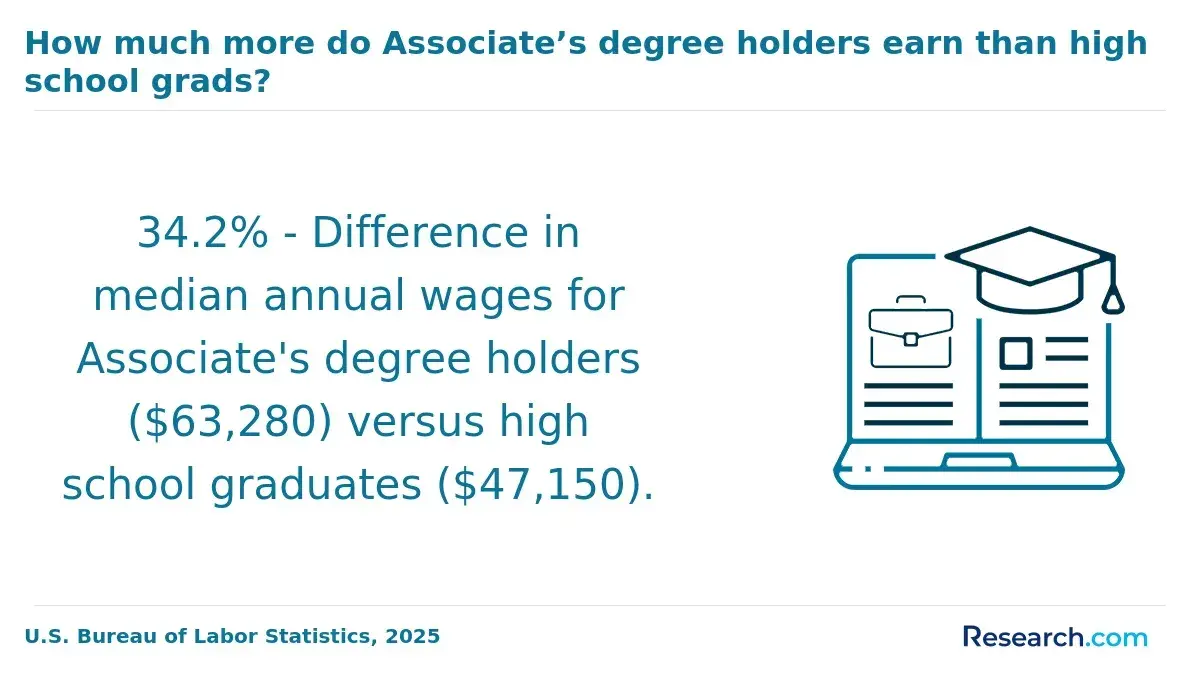
Accreditation is the first filter because it affects credit transfer, federal financial aid eligibility, graduate school recognition, employer confidence, and teacher licensure pathways. For online physics degrees, the most important credential is institutional accreditation from an accreditor recognized by the U.S. Department of Education or the Council for Higher Education Accreditation. This is often called regional accreditation, though federal terminology has changed in recent years.
Physics is different from fields such as nursing, social work, or engineering because there is no single required programmatic accreditor for most physics bachelor's degrees. That does not mean program quality is unregulated; it means you must look more closely at the institution, curriculum, faculty, labs, and outcomes.
Some applied physics, engineering physics, or physics-heavy engineering programs may have ABET accreditation, but standard physics degrees often do not.
Use this sequence before you submit an application or deposit. It helps you verify accreditation without relying only on marketing language from the school.
- Confirm that the institution appears in the U.S. Department of Education's Database of Accredited Postsecondary Institutions and Programs or an equivalent recognized accreditation directory.
- Check the exact institution name, campus, and online division, because similarly named schools or separate branch campuses may not have the same status.
- Verify that the degree title on the school's website matches the degree title that will appear on your transcript and diploma.
- Ask whether online physics students are eligible for the same faculty advising, library services, tutoring, disability services, and career resources as campus students.
- If you plan to teach, contact your state education agency before enrolling to confirm whether the program can support licensure in your state.
- If you plan to attend graduate school, compare the curriculum with prerequisites listed by target master's or PhD programs, especially advanced mechanics, electromagnetism, quantum mechanics, and laboratory coursework.
Red flags include vague claims such as "internationally recognized," no clear accreditor listed, pressure to enroll immediately, unclear credit-transfer policies, missing faculty credentials, or a curriculum that lacks upper-division physics labs. A low price is not a bargain if the credits will not transfer or the degree will not support your next step.
The following table separates accreditation terms that students often confuse. Understanding the difference can prevent you from overvaluing a label that does not actually protect your academic or career plans.
| Quality marker | What it tells you | How much it matters for physics |
| Institutional accreditation | The college or university meets broad academic, financial, and governance standards | Essential for federal aid, credit transfer, and broad recognition |
| Programmatic accreditation | A specific program meets standards in a regulated or professionally governed field | Not common for traditional physics, but relevant for some engineering physics or education pathways |
| State authorization | The school is permitted to offer distance education to students in your state | Important for online enrollment, internships, field placements, and licensure-related programs |
| Professional society alignment | The curriculum reflects expectations from physics or teaching communities | Helpful quality signal, but not a substitute for recognized accreditation |
What criteria should you use to choose a high-quality online physics program?
A high-quality online physics program should make difficult material learnable without watering it down. The strongest programs are transparent about prerequisites, course sequencing, lab delivery, faculty interaction, exam expectations, and post-graduation outcomes. They also give students a realistic view of how much time physics coursework requires each week.
Start by deciding what outcome matters most: graduate school, teaching, technical employment, career change, or personal advancement. A program that is excellent for physics education may not be the best option for a student who wants a research-heavy PhD path. Likewise, an accelerated completion program may be efficient for a transfer student but too compressed for someone still building calculus skills.
When comparing programs, focus on evidence rather than slogans. These criteria will help you separate convenient online delivery from a genuinely strong physics education.
- Curriculum depth: Look for calculus-based physics, modern physics, classical mechanics, electromagnetism, quantum mechanics, thermodynamics or statistical mechanics, computational physics, and upper-division lab work.
- Lab model: Ask how experiments are completed, what equipment is used, whether lab reports are graded by physics faculty, and whether any campus visits or local placements are required.
- Faculty qualifications: Review whether instructors have graduate training in physics or closely related fields and whether full-time faculty teach advanced courses.
- Math support: Strong programs offer tutoring or review resources for calculus, linear algebra, differential equations, probability, and numerical methods.
- Student interaction: Physics learning improves with problem-solving discussion, so look for live recitations, office hours, peer forums, and timely instructor feedback.
- Transfer policy: Confirm how many credits can transfer, whether upper-division physics credits are accepted, and whether transfer students can still finish required labs on schedule.
- Career and graduate outcomes: Ask where recent graduates work, how many apply to graduate programs, and what advising is available for research, teaching, or industry paths.
- Scheduling predictability: Make sure advanced physics courses are offered often enough that part-time students do not wait a year for a required class.
One common mistake is choosing the cheapest or fastest program without checking course rotation. Physics has long prerequisite chains, so a missed class can delay graduation. Another mistake is assuming that "online" means asynchronous; some rigorous programs require live sessions, proctored exams, synchronous labs, or short residencies.
The table below highlights features that often distinguish stronger online physics programs from weaker ones. It is not a ranking system, but it can help you interpret what schools disclose during your search.
| Program feature | Stronger signal | Weaker signal |
| Upper-division physics | Clear sequence of advanced theory, lab, and computational courses | Mostly introductory science courses with limited advanced physics |
| Lab delivery | Documented experiments, equipment lists, reports, safety rules, and faculty assessment | Unclear lab substitutions or generic virtual demonstrations only |
| Faculty access | Regular office hours, live problem sessions, and named physics faculty | No visible faculty list or limited instructor contact |
| Graduate-school preparation | Advising for research experience, recommendation letters, and advanced electives | No explanation of how online students prepare for graduate admissions |
| Student success support | Physics tutoring, math support, academic planning, and career advising | Generic online support with little STEM specialization |
How do online physics degrees compare with on-campus programs for rigor and recognition?
An online physics degree can be academically rigorous and widely recognized when it comes from an accredited institution and includes the same core physics expectations as the campus version. Employers and graduate schools usually care more about the institution, degree title, transcript, coursework, research preparation, skills, and recommendations than whether every course meeting happened in a classroom.
However, online students must pay closer attention to labs, research access, and networking because these elements are harder to replicate remotely.
The biggest advantage of online study is access. Students who work full time, live far from a university, serve in the military, or have family responsibilities may be able to complete a degree that would otherwise be impossible. The trade-off is that physics requires consistent practice, and online students must be proactive about asking questions, forming study groups, and using office hours.
The comparison below explains where online and campus physics programs typically differ. Use it to decide whether flexibility is worth the potential loss of in-person lab and research access for your goals.
| Factor | Online physics degree | On-campus physics degree |
| Course rigor | Can be equivalent if calculus-based courses, proctored assessments, and advanced labs are required | Often easier to verify through established department structures and campus course sequences |
| Lab experience | May use kits, simulations, remote instruments, local labs, or short residencies | Usually offers direct access to equipment, lab partners, and supervised lab spaces |
| Research access | Possible but less automatic; may require remote data projects or summer research elsewhere | Often easier through faculty labs, campus seminars, and undergraduate research programs |
| Flexibility | Usually stronger for working adults and geographically limited students | Usually less flexible but may provide more structured daily support |
| Recognition | Strongest when the transcript does not signal a lower-standard online track | Often familiar to employers and graduate admissions committees |
If your goal is graduate research in experimental physics, an on-campus program with faculty labs may offer a clearer path. If your goal is physics teaching, technical analysis, computational work, or completing a degree while employed, an online program can be a strong fit when it has documented rigor and advising.
Current technology trends make online physics more credible than it was a decade ago. Remote instrumentation, simulation software, coding notebooks, and cloud-based collaboration tools now allow students to collect, model, and analyze data in ways that resemble modern scientific work. Still, technology does not replace the need for clear lab standards and expert feedback.
What courses, labs, and specializations are typically included in an online physics curriculum?
A strong online physics curriculum moves from foundational math and introductory mechanics into advanced theory, lab methods, computation, and electives. The sequence matters because later courses assume fluency in calculus, vectors, differential equations, and mathematical reasoning. Students who skip or rush the math foundation often struggle even if they performed well in high school science.
Most bachelor's programs include general education courses, mathematics, computer programming, and supporting science courses in chemistry or astronomy. Upper-division physics usually includes more abstract modeling and longer problem sets. Master's programs go deeper into theoretical or applied areas and may require a capstone, project, comprehensive exam, or thesis.
The table below shows common curriculum components and why they matter. It can help you compare whether a program offers the depth needed for your intended next step.
| Curriculum area | Common courses or activities | Why it matters |
| Mathematics foundation | Calculus I-III, differential equations, linear algebra, probability, mathematical methods | Physics problems are expressed through mathematical models, not just concepts |
| Introductory physics | Mechanics, electricity and magnetism, waves, optics, modern physics | Builds the base for advanced theory and laboratory analysis |
| Advanced theory | Classical mechanics, electrodynamics, quantum mechanics, thermodynamics, statistical mechanics | Signals whether the degree is truly physics-focused and graduate-school relevant |
| Laboratory work | Measurement, uncertainty analysis, electronics, optics, modern physics experiments, lab reports | Develops experimental reasoning and scientific communication |
| Computational physics | Python, numerical methods, simulations, data visualization, modeling | Supports careers in research, engineering, data science, finance, and technology |
| Electives or specializations | Astronomy, materials, optics, medical physics preparation, geophysics, physics education, applied physics | Helps align the degree with a specific career or graduate pathway |
Lab delivery deserves special scrutiny in online programs. A legitimate lab experience should include measurement, uncertainty, error analysis, scientific writing, and interpretation of real or simulated data. A program that replaces most labs with passive videos may not provide enough preparation for graduate school or technical work.
Ask schools to explain the lab sequence in practical terms before enrolling. The details below are especially important because they affect time, cost, and whether you can complete the program from your location.
- Whether lab kits are included in tuition or billed separately
- Whether students must attend campus intensives during summer or weekends
- Whether labs require a local partner institution, employer site, or approved proctor
- Whether experiments use physical equipment, remote instruments, simulations, or a combination
- Whether lab reports are graded for data quality, uncertainty analysis, and scientific writing
- Whether upper-division labs are available online every year or only in limited rotations
Specializations should support a real outcome. Computational physics is useful for students considering data, software, modeling, or analytics. Physics education is useful for future teachers. Optics, materials, or medical physics preparation may support graduate study or technical roles, but students should verify whether additional credentials are required.
What are the admission requirements and math preparation needed for an online physics degree?
Admission requirements depend on degree level, transfer status, and school selectivity. Bachelor's programs usually require a high school diploma or equivalent, transcripts, and placement into college-level math. Transfer-completion programs may require prior credits in calculus, general physics, chemistry, or general education. Master's programs usually expect a bachelor's degree in physics or a closely related field, plus evidence of advanced coursework.
Math readiness is the biggest predictor of whether an online physics student will feel prepared. Physics is not just conceptual science; it uses calculus, vectors, differential equations, linear algebra, and computational tools to model real systems. If you have been away from math for several years, a slower entry plan may be smarter than jumping directly into calculus-based physics.
Before applying, compare your preparation with the expectations below. These items are not universal requirements, but they reflect the preparation most students need to succeed.
- For an associate or early bachelor's pathway: College algebra, trigonometry, precalculus readiness, and comfort with graphs and functions
- For a full bachelor's in physics: Calculus I readiness at minimum, with a plan to complete multivariable calculus and differential equations
- For transfer into upper-division physics: Prior calculus-based physics, lab science, and math credits that match the receiving school's sequence
- For a master's program: Upper-division mechanics, electromagnetism, quantum mechanics, thermodynamics, lab experience, and mathematical methods
- For physics education: Science content coursework plus any state-required pedagogy, classroom fieldwork, and testing requirements
Students often underestimate the time commitment. A single upper-division physics course can require many hours of problem-solving each week beyond lectures and readings. Online learners should plan for consistent study blocks, not last-minute review before exams.
Common admissions mistakes include applying without checking prerequisite sequences, assuming transfer credits will automatically count toward the major, and choosing a program that starts too far above your current math level. A better strategy is to request a degree audit before enrolling and ask exactly which courses remain, when they are offered, and what math you should refresh before the first term.
If your math background is weak, you do not necessarily need to abandon physics. You may need a bridge plan: take precalculus or calculus at a community college, use free or low-cost math review resources, start part time, or choose a program with structured tutoring. The right pace can protect your GPA and your confidence.
How long does an online physics degree take and what does it typically cost?
An online bachelor's degree in physics usually takes about four years of full-time study for first-time students. Transfer students may finish faster if prior credits apply cleanly to general education, math, and science requirements. Part-time students often need five to six years because physics courses must be taken in sequence. Online master's programs often take two years full time or longer part time, depending on whether the program includes a thesis, project, or teacher-focused sequence.
Cost depends on institution type, residency, transfer credits, lab fees, course load, and financial aid. College Board's 2024-25 published tuition and fee averages provide a useful benchmark for comparing sticker prices across four-year institutions, but your net price after grants, scholarships, employer aid, military benefits, or transfer credits may be lower.
- Public four-year, in-state average published tuition and fees: $11,610
- Public four-year, out-of-state average published tuition and fees: $30,780
- Private nonprofit four-year average published tuition and fees: $43,350
For online physics students, total cost can differ from tuition because labs and technology may add expenses. You should budget for lab kits, software, graphing tools, proctoring, textbooks, travel for any residency, and potential repeat courses if prerequisites are not planned well.
The table below summarizes cost and timeline variables that commonly affect online physics students. Reviewing these factors helps you compare the real cost of completion, not just the advertised per-credit rate.
| Factor | How it can change cost or time | Why physics students should pay attention |
| Transfer credits | Can reduce total credits required if accepted toward the major | Physics sequences are strict, so older or algebra-based physics credits may not apply |
| Residency status | Public universities may charge different rates for in-state and out-of-state students | Some online programs offer special distance-learning rates, while others do not |
| Lab requirements | May add kit, equipment, travel, or residency costs | Labs are essential for credibility and may not be optional |
| Course rotation | Limited offerings can delay graduation | Upper-division physics courses may be offered only once per year |
| Part-time enrollment | Can make tuition manageable but extend the calendar timeline | Long gaps between math-heavy courses can make advanced physics harder |
| Financial aid eligibility | Accredited degree programs may qualify for federal aid if other criteria are met | Non-degree or unaccredited options may leave students with fewer protections |
To reduce cost, prioritize accredited public programs, maximize transfer credits before enrolling, ask about employer tuition assistance, compare net price rather than sticker price, and avoid taking advanced physics before you are mathematically ready. The most expensive mistake is not high tuition by itself; it is paying for credits that do not move you toward the credential or outcome you need.
What careers can you pursue with an online physics degree and what jobs are most common?
A physics degree builds quantitative reasoning, modeling, measurement, programming, and problem-solving skills. That makes it versatile, but it also means the job title "physicist" is not the only outcome and may not be the most common outcome for bachelor's graduates. Many students use physics as a foundation for engineering support, software, analytics, education, technical sales, finance, defense, energy, aerospace, optics, or graduate study.
Students who want a broader environmental or sustainability pathway may find that physics overlaps with climate modeling, energy systems, atmospheric science, and instrumentation. If your interests are more policy, conservation, or field-science oriented, compare physics with what can you do with an environmental studies degree before choosing a major.
The table below shows common career directions for physics graduates and the kind of preparation that supports each one. It is especially useful because job titles vary widely by employer and industry.
| Career direction | Common responsibilities | Preparation that helps |
| Research assistant or laboratory technician | Collect data, maintain equipment, run experiments, document results, support senior scientists | Upper-division labs, statistics, instrumentation, scientific writing |
| Engineering or test technician | Test components, analyze performance, troubleshoot systems, assist engineers | Electronics, mechanics, materials, coding, hands-on lab experience |
| Data analyst or computational analyst | Model data, write scripts, visualize results, support business or scientific decisions | Python, numerical methods, statistics, databases, machine learning basics |
| Secondary physics teacher | Teach physics, design labs, assess student learning, manage classroom instruction | Physics content, pedagogy, student teaching, state licensure requirements |
| Technical sales or applications specialist | Explain scientific products, support customers, translate technical requirements | Communication, optics or instrumentation knowledge, customer-facing experience |
| Graduate student in physics or related field | Complete advanced coursework, conduct research, publish or present findings | Advanced theory, strong GPA, research experience, faculty recommendations |
Employers increasingly value computational skills alongside physics knowledge. AI, automation, and simulation tools are changing how technical teams work, but they do not eliminate the need for people who understand physical systems, measurement limits, and model assumptions.
Students who combine physics with coding, statistics, and communication often have more flexible options than students who complete only the minimum degree requirements.
Common career-planning mistakes include assuming the degree alone will identify a job path, waiting until senior year to build programming skills, ignoring internships, and failing to translate physics coursework into employer-friendly language.
A better approach is to build a portfolio of lab reports, simulations, coding projects, data visualizations, tutoring or teaching experience, and technical writing samples.
What salary ranges and job outlook can physics graduates expect in different industries?
Salary outcomes for physics graduates vary by degree level, industry, location, security clearance requirements, programming ability, and whether the role is truly a physicist position or a related technical job. The most important point is that a bachelor's in physics can lead to many fields, but the highest physics-specific research roles often require a master's or PhD.
BLS May 2024 wage data lists the median annual wage for physicists at $166,290, while the 2024-34 BLS projection for physicists and astronomers shows 7% employment growth. For students, that means the field has strong high-skill potential, but the number should not be read as a typical starting salary for every physics bachelor's graduate.
The table below groups salary and outlook expectations by broad pathway rather than promising a single number. This is more realistic because physics graduates often compete for jobs under many different occupational titles.
| Pathway | Typical credential expectation | Salary context | Outlook considerations |
| Physicist or research scientist | Often master's or PhD, especially for independent research | Highest physics-specific salary potential; BLS median for physicists was $166,290 in May 2024 | Research funding, specialization, publications, and lab experience matter |
| Engineering-adjacent technical roles | Bachelor's plus lab, instrumentation, coding, or testing experience | Can be competitive, especially in aerospace, defense, energy, optics, and manufacturing | Some employers prefer engineering degrees, so applied projects help |
| Data, modeling, and analytics | Bachelor's or master's plus programming, statistics, and portfolio evidence | Often strong for graduates who can translate physics modeling into business or technical analysis | Demand is tied to software, AI, analytics, and industry-specific data needs |
| Education | Bachelor's plus state licensure for K-12; graduate degree often preferred for college teaching | Varies by state, district, and institution type | Physics teachers may benefit from shortages in some regions, but licensure rules control eligibility |
| Technical sales, product support, or applications | Bachelor's plus communication and product knowledge | May include base pay plus commission or performance incentives | Best fit for students who enjoy explaining complex tools to customers |
Physics can also pair well with graduate study in data science, especially for students who enjoy modeling, computation, and large datasets. If your career goal is primarily analytics rather than physics research, comparing a physics pathway with a master of data science online can help you decide whether to specialize sooner.
To evaluate return on investment, compare your likely total cost with the job family you are targeting, not with the highest salary in the entire physics field. A student aiming for doctoral research, a licensed teaching role, and a data analyst position will need different credentials, timelines, and skill portfolios.
How can an online physics degree support pathways to teaching, research, or graduate school?
An online physics degree can support teaching, research, and graduate school, but the pathway must be planned early. Physics has gatekeeping points: advanced math, lab experience, faculty recommendations, research exposure, licensure requirements, and sometimes standardized or department-specific graduate admissions expectations. Online students can meet many of these expectations, but they may need to be more intentional than campus students.
For teaching, the main issue is state licensure. A physics degree alone may demonstrate content knowledge, but public school teaching usually requires an approved educator preparation program, student teaching, background checks, and state exams. Requirements vary by state, so students should verify rules before choosing a program, especially if the school is located outside their state.
For research or graduate school, online students should build evidence beyond grades. Admissions committees often value advanced coursework, strong letters, research experience, writing ability, and a clear fit with faculty interests. If your program has limited research options, look for summer research experiences, remote data projects, local university collaborations, national lab internships, or computational projects supervised by faculty.
Use the steps below to strengthen an online physics degree for advanced pathways. They are practical because they focus on evidence you can show to employers, licensing boards, or graduate programs.
- Map your target outcome first, including graduate prerequisites, teacher licensure rules, or employer expectations.
- Choose electives that match the outcome, such as computational physics for analytics, optics for photonics, or education courses for teaching.
- Build relationships with faculty through office hours, research conversations, and feedback on advanced projects.
- Create a portfolio with lab reports, code repositories, simulations, data analyses, presentations, or teaching materials.
- Pursue internships, summer research, tutoring, teaching assistant work, or industry projects before your final year.
- Ask for recommendation letters from instructors who can describe your problem-solving, writing, lab, and independent-learning abilities.
Degree value also depends on whether the credential matches the profession. The same ROI question appears in other education fields, such as when students ask is a library science degree worth it; the answer depends on accreditation, role requirements, salary expectations, and the student's target job market. Physics is similar: the degree can be powerful, but only when paired with a realistic plan.
A good online physics program should not leave you to figure out these pathways alone. Before enrolling, ask admissions and faculty advisors how online students prepare for graduate school, how they complete labs, how they obtain recommendations, and what recent graduates have done. If the school cannot answer those questions clearly, keep looking.
Other Things You Should Know About Physics
In 2027, accreditation, faculty qualifications, and curriculum alignment with industry standards are pivotal for respect. Employers value programs with robust laboratory components, internships, and strong alumni networks to ensure graduates are well-prepared for the workforce.
Some technical and research support jobs are open to bachelor's graduates, but many physicist roles, especially independent research positions, prefer or require a master's or PhD. A bachelor's degree is often the starting point rather than the final credential.
Strong programs usually require labs through kits, simulations, remote instruments, local arrangements, or short campus sessions. You should avoid programs that cannot clearly explain how lab skills, data analysis, and scientific reporting are assessed.
The content can be equally difficult, but online study requires more self-discipline. Students who schedule regular problem-solving time, use office hours, join study groups, and refresh math skills before advanced courses are more likely to manage the workload.
References
- Top jobs with a physics degree https://www.surrey.ac.uk/news/top-jobs-physics-degree
- Online Physics Degrees: Are They Useful in Today’s Scenario? https://www.allassignmenthelp.com/blog/online-physics-degrees-in-todays-scenario/
- Are Online Degrees Accredited? How to Identify Quality Distance Learning Programs https://www.umassglobal.edu/blog-news/online-degrees-accredited-identify-quality-distance-learning-programs
- 2025 Best Online Degrees in Physics https://www.onlineu.com/degrees/physics
- How to Check if an Online Degree Is Real | Find Trusted Courses https://dsuonline.com/resources/blogs/how-to-check-if-an-online-degree-is-real/
- Bachelor’s degree in education for teaching physics https://www.trevecca.edu/academics/program/physics-education
- Physics II - Accelerated Sciences Online https://acceleratedsciences.scuhs.edu/course-listing/physics-ii/
- Online Physics Course: 6 Helpful Considerations - Prereqcourses https://www.prereqcourses.com/online-physics-course/
- What are the best online physics courses? https://www.physicsforums.com/threads/what-are-the-best-online-physics-courses.1052174/
- Physics II Lecture & Lab https://online.une.edu/science-prerequisites/online-physics-ii/