2027 Online Physics Degrees That Help Build Career-Ready Physics Skills

Co-Founder and Chief Data Scientist
Choosing an online physics degree is a high-stakes decision because the field rewards rigorous math, lab experience, and computational skill. The U. S. Bureau of Labor Statistics projects employment for physicists and astronomers to grow 7% from 2024 to 2034, faster than the average for all occupations.
This guide is for students, transfer applicants, working adults, and career changers who want flexible study without sacrificing credibility. You will learn how online physics programs work, what they cost, which careers they support, and how to choose a program that fits your goals.
Key Things You Should Know
- Online physics degrees can be respected when they come from institutionally accredited U.S. colleges and include rigorous calculus, laboratory, and computational coursework; programmatic accreditation is less common for physics than for engineering.
- College Board's 2024 pricing data lists average published tuition and fees at $11,610 for in-state public four-year students, $30,780 for out-of-state public students, and $43,350 for private nonprofit four-year students.
- BLS May 2024 median pay was $149,530 for physicists and astronomers, while related paths such as data science, engineering, teaching, and technical analysis may require different electives, internships, certifications, or graduate study.
What is an online physics degree and how does it build career-ready physics skills?
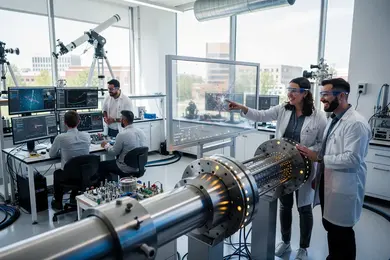
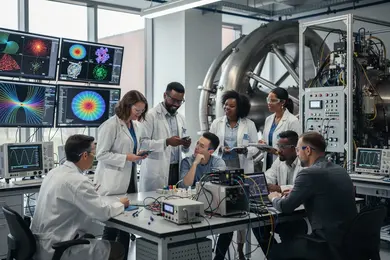
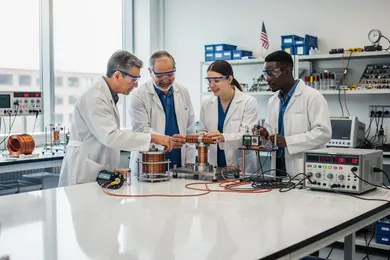
An online physics degree is a college program that teaches the mathematical, experimental, and computational principles used to understand matter, energy, motion, fields, waves, particles, and complex systems. In an online format, lectures, problem sets, simulations, exams, advising, and many programming assignments are delivered through a learning platform. Laboratory work may be completed through at-home lab kits, remote instrumentation, simulation-based labs, short campus residencies, approved local labs, or hybrid sessions.
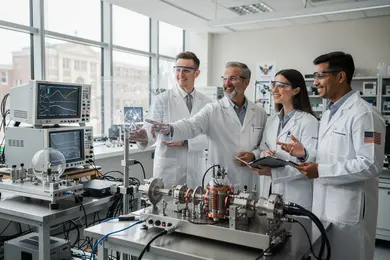
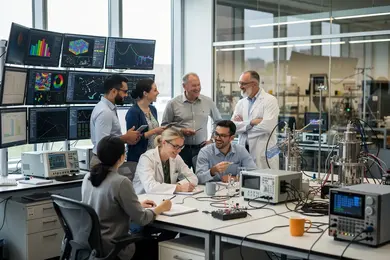
The strongest online physics programs do more than cover theory. They help students build transferable skills employers recognize: quantitative reasoning, modeling, coding, uncertainty analysis, technical communication, instrumentation literacy, and the ability to solve open-ended problems. Those skills can be useful in research labs, aerospace and defense contractors, semiconductor firms, energy companies, data teams, medical technology organizations, and education.
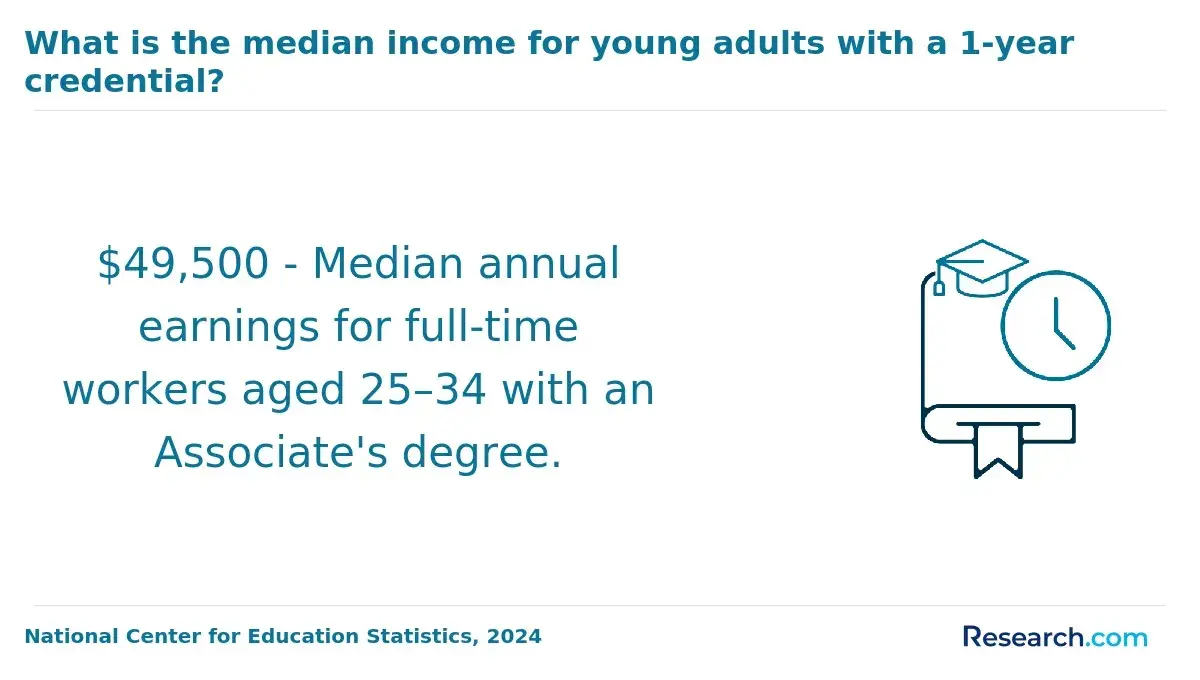
Online physics is best understood as a skills-building pathway rather than a single job credential. A bachelor's degree can prepare students for entry-level technical roles, teaching pathways, graduate school, or adjacent fields such as analytics and engineering support. However, many research physicist roles require a master's degree or PhD, so students should choose electives and projects with their intended next step in mind.
Career-ready online physics programs usually develop four kinds of competence. The table below shows how each skill area translates into practical work settings, which can help you evaluate whether a curriculum is broad enough for your goals.
| Career-ready skill area | What students practice | Where it can be used |
| Mathematical modeling | Calculus, differential equations, linear algebra, probability, and approximation methods | Research support, engineering analysis, finance-adjacent quantitative work, operations modeling |
| Experimental reasoning | Measurement, calibration, error analysis, optics, electronics, and lab reporting | Quality control, instrumentation, testing labs, materials analysis, manufacturing support |
| Computational physics | Python, numerical methods, simulation, data visualization, and algorithmic problem-solving | Data science, scientific computing, software-adjacent roles, modeling teams |
| Scientific communication | Technical writing, presentations, literature review, and collaborative project documentation | Research teams, education, technical sales, policy support, product documentation |
Are online physics degrees respected by employers and properly accredited in the United States?
Online physics degrees are most likely to be respected when the school is institutionally accredited, the transcript does not signal a weaker curriculum, and the program includes real quantitative and laboratory expectations. Employers generally care less about whether lectures were online and more about whether the student can solve problems, use tools, communicate results, and meet the technical demands of the role.
In the United States, the most important accreditation checkpoint is institutional accreditation from an agency recognized by the U.S. Department of Education or the Council for Higher Education Accreditation. Physics programs do not usually rely on a single required programmatic accreditor in the way nursing, social work, or some engineering programs do. ABET accreditation may matter for engineering or applied science programs, but a traditional physics major at a reputable university may not have ABET accreditation and can still be academically legitimate.
Before applying, students should verify several credibility markers. These checks reduce the risk of enrolling in a program that looks flexible but lacks employer recognition or transfer value.
- Confirm the institution's accreditation status through official accreditation databases, not only the school's marketing page.
- Review whether the online degree name, transcript, and diploma match the campus program or clearly explain the delivery format.
- Look for upper-division physics courses such as quantum mechanics, electromagnetism, statistical mechanics, advanced laboratory, and computational physics.
- Ask how laboratory requirements are completed and whether graduate schools or employers have accepted past students from the program.
- Check faculty qualifications, research activity, advising access, and student support for internships or graduate applications.
A major red flag is a program that advertises physics as mostly general science, avoids calculus-based coursework, or has no credible lab plan. That may be acceptable for science literacy or teacher preparation in some cases, but it is not the same as a rigorous physics major designed for technical careers or graduate study.
How does an online physics degree compare to a campus-based physics program?
The main trade-off is flexibility versus immersion. Online programs can be excellent for self-directed students, working adults, military learners, and transfer students who cannot relocate. Campus programs may offer easier access to research labs, peer study groups, physics clubs, teaching assistant roles, and specialized equipment.
The table below compares the two formats across the decision factors that matter most for physics students. Use it to identify which format supports your learning style, schedule, and career plan.
| Factor | Online physics degree | Campus-based physics program |
| Flexibility | Often better for working adults and students with fixed schedules | Less flexible but may provide more structured academic routines |
| Laboratory access | May use kits, simulations, remote labs, hybrid labs, or short residencies | Typically stronger access to physical labs and specialized instruments |
| Research opportunities | Possible, but students may need to be proactive and may rely on remote projects | Usually easier to join faculty labs, seminars, and undergraduate research groups |
| Networking | Depends on advising, virtual events, cohort design, and internship support | Often stronger informal networking through classmates, faculty, and campus events |
| Best fit | Students who need flexibility and can manage advanced independent study | Students seeking intensive lab exposure, research immersion, or direct faculty interaction |
An online degree may be the better choice if relocation is unrealistic, if you already have access to local technical work, or if you are completing transfer credits while employed. A campus program may be better if your goal is a competitive PhD program in experimental physics, a lab-heavy specialization, or a research assistantship that requires hands-on equipment access.
The key is not to assume one format is automatically superior. A well-designed online physics program from an accredited university can be more useful than a poorly supported campus option, while a strong campus department can offer opportunities that are difficult to replicate online.
What types of online physics degrees are available and which is right for me?
Online physics options are less common than online business, computer science, or psychology degrees, so students often compare physics with adjacent programs. The right choice depends on whether you want a full physics foundation, a teaching pathway, a technical support role, or preparation for graduate study.
The table below summarizes common online and hybrid options. It can help you avoid choosing a degree that sounds close to physics but does not match your intended career.
| Program type | Typical level | Best for | Important limitation |
| Associate degree with physics transfer coursework | Two-year | Students planning to transfer into a bachelor's program after completing calculus, chemistry, and introductory physics | Usually not enough for professional physics roles by itself |
| Bachelor of Science in Physics | Four-year | Students targeting technical careers, graduate school, research support, or quantitative roles | Requires substantial math and lab readiness |
| Bachelor of Arts in Physics | Four-year | Students combining physics with education, policy, communication, business, or interdisciplinary study | May include fewer advanced technical electives than a BS |
| Physics education or physical science education degree | Four-year | Students preparing for middle or high school science teaching | State licensure requirements vary and must be checked before enrollment |
| Applied physics or engineering physics | Four-year or graduate | Students interested in devices, materials, instrumentation, optics, or engineering-adjacent work | May require hybrid labs or campus components |
| Graduate certificate or master's in physics-related specialization | Post-bachelor's | Working professionals who need focused knowledge in optics, medical physics, materials, or computation | May require a prior physics, engineering, or math-heavy degree |
Students interested in planetary science, environmental monitoring, geophysics, or earth systems may also compare physics with a geologist degree online, especially if they want fieldwork and earth science applications rather than a broad physics curriculum.
Choose a physics BS if you want the most technical undergraduate foundation. Choose a physics BA if you want flexibility to pair physics with teaching, communication, policy, or another major. Consider an adjacent degree if your real target is engineering licensure, data science, geology, astronomy outreach, or education rather than physics research.
What core courses and specialized tracks are typically offered in online physics programs?
A serious online physics degree should be built around calculus-based physics, advanced mathematics, experimental methods, and computational tools. Course names vary by school, but the core should prepare students to reason quantitatively rather than memorize formulas.
Most bachelor's programs include a progression like the one below. This sequence matters because upper-division courses depend heavily on earlier math and physics foundations.
- Calculus I through III, differential equations, linear algebra, and sometimes complex variables or mathematical methods for physicists.
- University physics with calculus, usually covering mechanics, electricity and magnetism, waves, optics, thermodynamics, and modern physics.
- Intermediate and advanced courses such as classical mechanics, electrodynamics, quantum mechanics, statistical mechanics, and solid-state or condensed matter physics.
- Laboratory courses focused on measurement, electronics, optics, instrumentation, uncertainty analysis, and formal technical reports.
- Computational coursework using Python, MATLAB, Mathematica, C++, or similar tools for modeling, simulation, and data analysis.
Specialized tracks can make the degree more career-ready. For example, students aiming for analytics or scientific computing should prioritize programming, numerical methods, and statistics; students aiming for hardware or materials roles should prioritize electronics, optics, materials, and advanced lab work. A physics student who wants a more structured analytics route can compare electives with a data science learning path to see where additional statistics, machine learning, and database skills may be needed.
Common specialization areas include computational physics, astronomy and astrophysics, optics and photonics, materials science, medical physics preparation, physics education, energy systems, and engineering physics. Not every online program offers all of these, so students should read the course rotation carefully. A specialization that appears in a catalog but is rarely offered can delay graduation or limit preparation for a target career.
What are the typical admission requirements for online physics bachelor's programs?
Admission requirements depend on whether the student is applying as a first-year applicant, transfer student, returning adult learner, or second-degree student. Physics is more sequence-dependent than many majors, so math placement and transfer credit evaluation can matter as much as general admission.
Most online physics bachelor's programs review academic readiness in the following areas. These requirements help schools determine whether students can start major coursework immediately or need prerequisites first.
- High school diploma, GED, or equivalent credential for first-year applicants.
- Official transcripts from high school and all previously attended colleges.
- College algebra, trigonometry, precalculus, or calculus readiness, often verified through prior coursework or placement testing.
- Introductory science preparation, especially chemistry and calculus-based physics for transfer students.
- Minimum GPA requirements that vary by school and may be higher for transfer admission into upper-division standing.
- Application form, fee or fee waiver, personal statement, and possibly letters of recommendation.
- English proficiency documentation for applicants whose prior education was not in English.
Transfer students should be especially careful. A general physics course without calculus may not substitute for a calculus-based physics sequence required by a physics major. Similarly, community college lab credits may transfer as elective science credits but not satisfy major requirements unless the receiving university has an articulation agreement.
Applicants can strengthen their readiness before enrolling by completing precalculus or calculus, learning basic Python, reviewing algebra-based mechanics, and building disciplined study habits. Physics courses often require sustained weekly problem-solving, so time management is a real admissions-to-completion factor even when it is not listed as a formal requirement.
How long do online physics degrees take to complete and what do they cost?
A full online bachelor's degree in physics usually takes about four years of full-time study, but transfer students with the right math and science credits may finish faster. Part-time students often take longer because physics courses are sequential: delaying calculus or introductory physics can push back advanced courses by a full term or year.
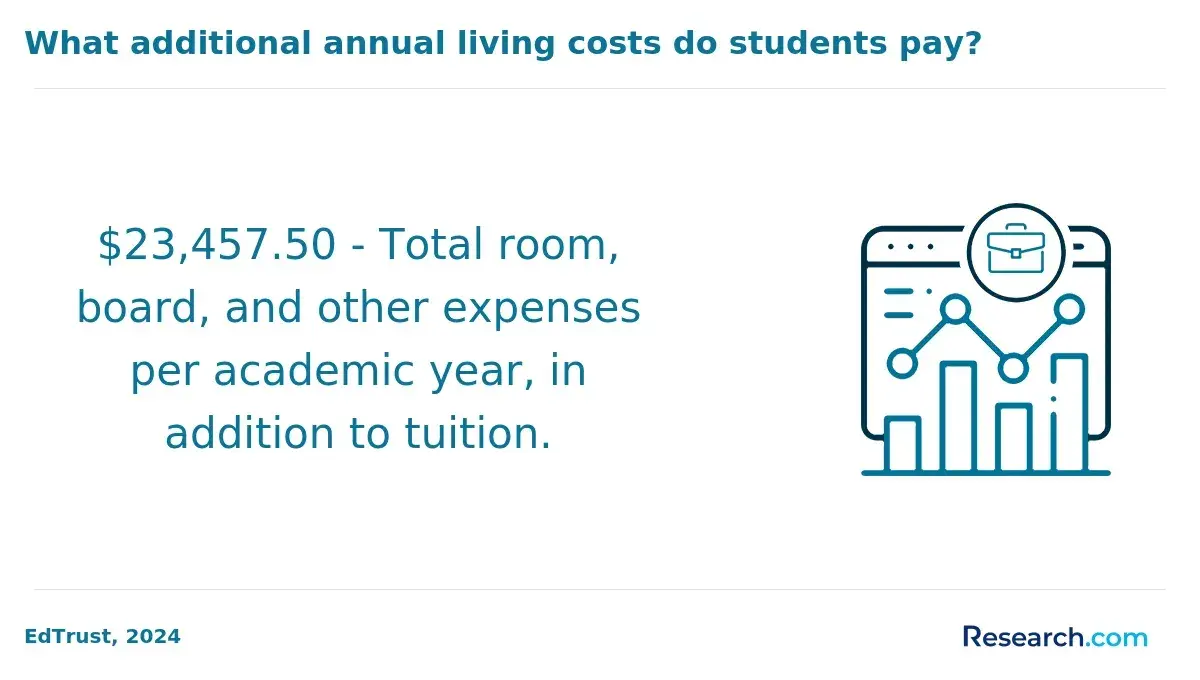
Cost is harder to estimate because online tuition models vary. Some schools charge the same tuition as campus programs, some offer separate online rates, and some add technology, lab-kit, proctoring, or residency fees. College Board's 2024 data lists average published tuition and fees at $11,610 for in-state public four-year students, $30,780 for out-of-state public students, and $43,350 for private nonprofit four-year students. Those figures are not online-specific, but they help students understand the scale of tuition differences before adding fees, books, equipment, and living costs.
When comparing total cost, look beyond the per-credit rate. The items below can change the real price of an online physics degree.
- Tuition per credit and whether online students qualify for in-state rates.
- Number of credits required after transfer evaluation, especially for math and lab science courses.
- Lab kits, software licenses, graphing calculators, electronics kits, and remote lab fees.
- Campus residency costs, including travel, lodging, meals, and time away from work.
- Textbooks, exam proctoring, technology fees, graduation fees, and course repeat costs.
- Availability of federal financial aid, employer tuition assistance, military benefits, scholarships, and payment plans.
Students comparing online tuition across fields may find it useful to review how other programs break down total costs, such as guides that explain MLIS degree cost. The same cost-checking logic applies to physics: tuition is only one part of the investment, and hidden lab or residency expenses can affect affordability.
To reduce costs, prioritize regionally or institutionally accredited public universities with strong transfer policies, complete lower-division math and general education at an accredited community college when appropriate, and ask whether online students are eligible for departmental scholarships. Avoid choosing the cheapest program if it lacks the upper-division courses or lab structure needed for your goal.
What physics-related careers can graduates pursue and what skills will they use?
Physics graduates can pursue several career directions, but the degree is not a one-size-fits-all job ticket. Some roles are open to bachelor's graduates with strong programming, lab, or technical communication skills. Others require teacher licensure, engineering credentials, a master's degree, or a PhD.
The table below connects common career paths with the skills students should build while in school. This is useful because choosing electives and internships early can make the degree more marketable.
| Career path | Typical responsibilities | Skills from a physics degree | Common extra preparation |
| Research assistant or laboratory technician | Run experiments, maintain equipment, collect data, write reports, and support senior scientists | Lab methods, uncertainty analysis, electronics, optics, documentation | Undergraduate research, internships, instrumentation experience |
| Data analyst or junior data scientist | Clean data, build models, visualize results, and explain quantitative findings | Programming, statistics, modeling, numerical methods | SQL, machine learning, portfolio projects, industry tools |
| Engineering or test support specialist | Assist engineers with testing, validation, simulations, and technical troubleshooting | Mechanics, electromagnetism, materials, problem-solving | CAD, quality systems, manufacturing experience, engineering electives |
| High school physics teacher | Teach physics, design labs, assess student learning, and meet state standards | Conceptual physics, lab design, communication, quantitative reasoning | State teacher licensure, supervised teaching, education coursework |
| Medical physics or health technology pathway | Support imaging, radiation, instrumentation, or health physics teams | Radiation physics, instrumentation, statistics, safety awareness | Graduate study, clinical training, certification depending on role |
| Technical writer or scientific communicator | Translate technical information into manuals, reports, proposals, or educational content | Scientific literacy, writing, data interpretation, visual explanation | Writing samples, domain specialization, communication coursework |
Physics also overlaps with other science-based pathways. For example, a student drawn to biomechanics, sports technology, rehabilitation devices, or human performance may compare physics with an exercise science degree online, because that route may offer more direct coursework in anatomy, physiology, and applied movement science.
To improve career readiness, students should not wait until graduation to specialize. Build a portfolio of lab reports, coding projects, simulations, data visualizations, or technical writing samples. Seek internships in industries that hire quantitative problem-solvers, and ask faculty which electives best support your target role.
What salary ranges and job outlook can physics degree graduates expect in key U.S. industries?
Salary outcomes vary by role, degree level, location, security clearance, industry, and experience. A physics degree can lead to high-paying work, but the strongest outcomes usually come when students combine physics with marketable skills such as programming, instrumentation, engineering analysis, data modeling, or graduate-level specialization.
The table below uses U.S. Bureau of Labor Statistics May 2024 median wage data and 2024 to 2034 employment projections for selected roles that may be relevant to physics graduates or physics-adjacent pathways. These figures describe occupations, not guaranteed outcomes for any specific graduate.
| Occupation or pathway | BLS median annual wage, May 2024 | BLS projected growth, 2024 to 2034 | How physics graduates may connect |
| Physicists and astronomers | $149,530 | 7% | Often requires graduate study for research roles; bachelor's graduates may start in support roles |
| Data scientists | $112,590 | 34% | Strong fit for students who add statistics, Python, machine learning, and portfolio projects |
| Computer and information research scientists | $140,910 | 20% | Usually requires advanced study; computational physics can be relevant preparation |
| Mechanical engineers | $99,510 | 9% | Physics graduates may qualify for analysis or test roles, while licensed engineering roles may require engineering education |
| Electrical and electronics engineers | $114,050 | 9% | Relevant for students with electromagnetism, electronics, optics, and hardware experience |
| High school teachers | $64,580 | -1% | Requires state teacher certification; physics teachers may remain locally important even when national growth is limited |
The strongest current trend affecting physics graduates is the blending of scientific training with computation. AI, automation, and simulation tools are changing how teams model systems, process experimental data, and design products. This does not make physics training obsolete; it raises the value of students who can understand the underlying science, evaluate model limitations, and explain results responsibly.
Students should treat salary data as a planning tool, not a promise. If a desired occupation typically requires graduate education or licensure, calculate the time and cost of that next step before deciding whether the bachelor's degree alone is enough.
How can I choose a reputable online physics program aligned with my career goals?
The best online physics program is not simply the cheapest, fastest, or highest-ranked option. It is the program that gives you the right mix of accreditation, rigorous coursework, lab access, advising, transfer value, affordability, and career alignment.
Use the following steps to compare programs in a practical way. This process helps you move from marketing claims to evidence you can verify.
- Define your target outcome first: graduate school, teaching, data science, engineering support, research assistance, medical physics preparation, or general quantitative training.
- Verify institutional accreditation through recognized databases and confirm the school participates in federal student aid if you plan to use aid.
- Map the curriculum against your goal, checking for calculus-based physics, advanced math, upper-division physics, labs, coding, and electives.
- Ask exactly how labs work, including kits, simulations, remote instruments, in-person requirements, safety rules, and extra fees.
- Request a transfer credit evaluation before enrolling, especially for calculus, physics, chemistry, and lab courses.
- Compare total cost of attendance, not only tuition, and include software, travel, equipment, fees, and lost work time.
- Review student support, including tutoring, faculty office hours, career services, undergraduate research access, internship help, and graduate school advising.
- Ask for outcome evidence such as graduate school placements, internship examples, employer partnerships, alumni roles, or capstone project samples.
Common mistakes can be costly in physics because course sequences are strict and lab access matters. Avoid enrolling before checking whether the program offers the upper-division courses you need, assuming online labs are automatically accepted by graduate programs, ignoring transfer policies, choosing a non-accredited provider, or relying only on rankings without reviewing curriculum details.
A reputable program should be transparent when answering hard questions. If admissions staff cannot explain lab requirements, course rotation, transfer rules, or career support, consider that a warning sign and compare other options before committing.
Other Things You Should Know About Physics
Some programs can be completed mostly or fully online, but physics often requires lab work. Check whether labs are handled through kits, simulations, remote instruments, local approvals, or short campus residencies.
It can be worth it if the program is accredited, academically rigorous, affordable for your budget, and aligned with your target career. It may not be worth it if you need intensive in-person research access and the program cannot provide it.
Online physics degrees in 2027 focus on integrating theoretical concepts with practical applications through virtual labs, simulations, and real-world projects. These programs emphasize critical-thinking and problem-solving skills, making graduates career-ready by equipping them for roles in industries like technology, engineering, and academia.
Prioritize algebra, trigonometry, precalculus or calculus, basic programming, and scientific problem-solving. Strong math preparation can make the first year much more manageable.
References
- 2025 Best Online Degrees in Physics https://www.onlineu.com/degrees/physics
- How To Choose The Best Online Degree Program For Your Career Goals - Time Education https://timeeducation.in/blog/how-to-choose-the-best-online-degree-program-for-your-career-goals/
- Physics Degree Online - Edubrain https://edubrain.ai/blog/physics-degree-online/
- Top 20 Online Universities in the USA https://www.euroamerican.eu/top-20-online-universities-in-the-usa
- Online Physics Course: 6 Helpful Considerations - Prereqcourses https://www.prereqcourses.com/online-physics-course/
- Why Study Physics? Top 7 Careers in Physics https://isc.surrey.ac.uk/blog/why-study-physics
- How Credible Are Online Degrees? And are they worth it? https://potomac.edu/are-online-degrees-taken-seriously-by-employers/
- Any good online physics degrees? Bachelors or Masters https://www.physicsforums.com/threads/any-good-online-physics-degrees-bachelors-or-masters.318426/
- Physics https://www.ualberta.ca/en/undergraduate-programs/bachelor-of-science-with-major-physics.html