2027 Physics Careers That Reward Strong Analytical Thinking

Co-Founder and Chief Data Scientist
Choosing a physics career is really a decision about how you want to use complex problem-solving: in research, technology, finance, engineering, health, or data. The timing is strong for analytical thinkers; the U.S. Bureau of Labor Statistics projects data scientist employment to grow 34% from 2024 to 2034.
This guide is for students, career changers, and physics majors comparing practical options. You will learn which roles fit different degree levels, what they pay, how online programs compare, and how to build a path with realistic career value.
Key Things You Should Know
- Physics-heavy analytical careers are not limited to academia, high-demand options include data science, aerospace engineering, computational modeling, medical physics, operations research, quantitative finance, and research computing.
- According to BLS May 2024 wage data, physicists had a median annual wage of $155,680, while data scientists had a median annual wage of $112,590. These figures describe occupations, not guaranteed outcomes for graduates.
- A bachelor's degree can open entry-level technical, data, engineering support, and analyst roles, but research scientist, medical physicist, and university faculty paths usually require a master's, PhD, residency, licensure, or specialized certification.
What are the most in-demand physics careers for people with strong analytical thinking?
The most in-demand physics careers are often roles where employers need people who can model uncertainty, interpret data, test assumptions, and solve unfamiliar technical problems. A physics degree is valuable because it trains students to reduce messy real-world systems into measurable variables and defensible conclusions.
The table below compares career paths where physics training is especially useful. It focuses on the kind of analytical work each role involves and the typical education level needed to compete.
| Career path | How analytical thinking is used | Typical entry preparation | Common hiring sectors |
| Data scientist | Builds models, tests hypotheses, interprets large datasets, and communicates uncertainty | Bachelor's with strong coding and statistics; master's often preferred | Technology, healthcare, finance, energy, government |
| Computational physicist | Simulates physical systems, develops numerical models, and validates results against experiments | Master's or PhD for research-heavy roles | National labs, defense, advanced manufacturing, universities |
| Aerospace engineer | Analyzes fluid dynamics, structures, propulsion, controls, and performance trade-offs | Bachelor's in aerospace, mechanical engineering, physics, or related field | Aviation, space systems, defense, robotics |
| Medical physicist | Applies radiation physics, imaging science, quality assurance, and safety analysis | Graduate degree plus clinical training for many roles | Hospitals, cancer centers, imaging companies |
| Operations research analyst | Optimizes systems, logistics, schedules, risk models, and resource allocation | Bachelor's with math, statistics, programming, and modeling | Supply chain, airlines, defense, consulting, public agencies |
| Quantitative analyst | Models markets, risk, pricing, and probability under uncertainty | Bachelor's for some analyst roles; master's or PhD common in competitive firms | Banking, hedge funds, insurance, fintech |
| Research scientist | Designs experiments, builds theory, analyzes measurements, and publishes findings | PhD usually required for independent research roles | Universities, national laboratories, private R&D |
For students who want broad employability, data science, operations research, and engineering-adjacent roles usually offer more entry points than traditional academic physics. For students who want to discover new knowledge or lead advanced technical research, graduate study is usually the more realistic route.
How does a physics degree develop analytical skills valued in today's job market?
A physics degree develops analytical thinking by forcing students to connect theory, measurement, computation, and evidence. Instead of memorizing fixed procedures, physics students learn how to define a problem, choose assumptions, build a model, test it, and revise it when the data disagrees.
Employers value that process because many modern jobs involve incomplete data and ambiguous problems. In AI, cybersecurity, climate modeling, imaging, finance, and robotics, the most useful employees are often the ones who can ask whether a result is meaningful, biased, noisy, or physically plausible.
Physics programs usually build these abilities through several repeated skill cycles:
- Mathematical modeling: translating motion, energy, probability, fields, or systems behavior into equations that can be tested.
- Experimental reasoning: designing measurements, estimating error, calibrating instruments, and identifying sources of uncertainty.
- Computational problem-solving: using programming, simulation, numerical methods, and visualization to solve problems that cannot be handled by hand.
- Data interpretation: deciding whether results support a conclusion, require more evidence, or reflect a flawed assumption.
- Technical communication: explaining complex findings clearly to scientists, engineers, managers, clients, or policy teams.
The key career advantage is transferability. A graduate who understands differential equations, statistical uncertainty, coding, and experimental design can move into many fields, especially if they add industry-specific experience through internships, projects, or graduate coursework.
What education and degree levels are typically required for analytical physics careers?
The right degree level depends on whether you want to apply physics in industry, conduct original research, or work in a licensed or clinically regulated setting. A bachelor's degree can be enough for many analyst and technical roles, but advanced physics careers often require graduate study.
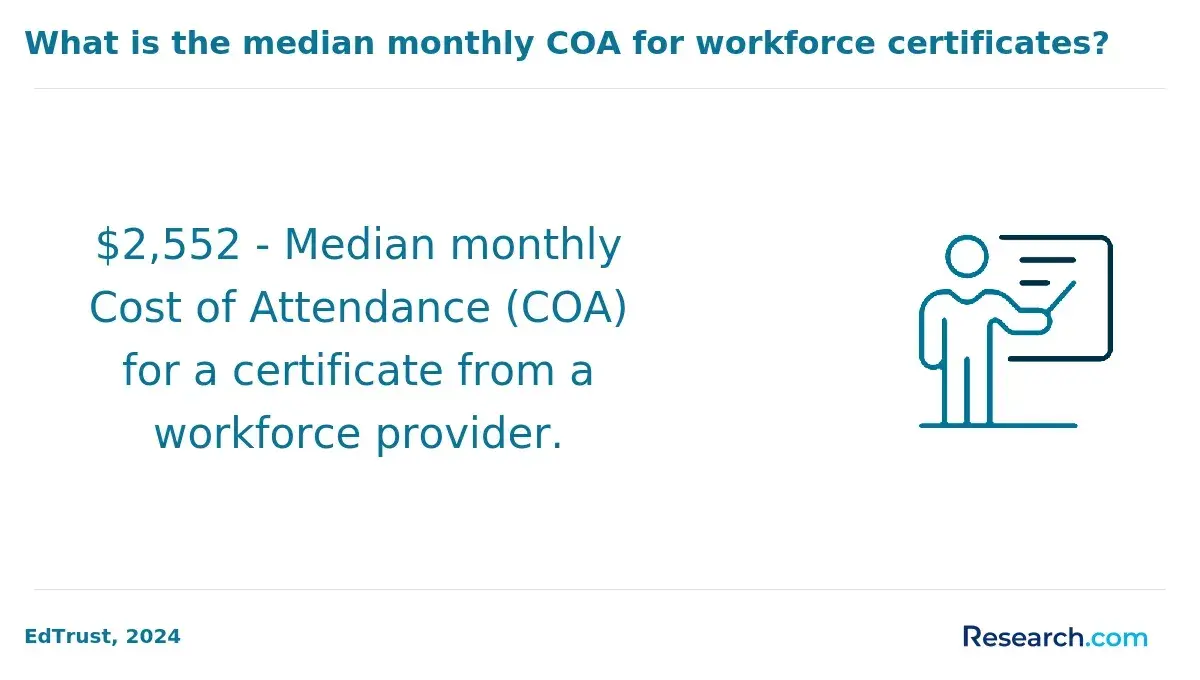
Cost should be part of the decision. College Board data for 2024-25 lists average published tuition and fees of $11,610 for in-state students at public four-year institutions and $43,350 at private nonprofit four-year institutions. Those figures do not include every living or program-specific cost, but they show why comparing total cost, transfer credit, assistantships, and career outcomes matters.
The table below summarizes the usual degree expectations by career goal. Requirements can vary by employer, state, funding source, and specialization.
| Education level | Best fit | Typical career options | When it may not be enough |
| Associate degree or certificate | Students seeking technical support roles or a lower-cost start | Lab technician, electronics technician, quality control assistant | Usually not enough for physicist, engineer, or research scientist titles |
| Bachelor's in physics | Students who want broad analytical training and flexible career options | Data analyst, research assistant, test engineer, technical consultant, operations analyst | May need added coding, engineering, statistics, or domain experience for competitive roles |
| Master's in physics or related field | Students seeking specialization without committing to a PhD | Computational analyst, applied physicist, data scientist, systems engineer | May not qualify for independent academic research or certain clinical roles |
| PhD in physics | Students aiming for research leadership, national labs, or faculty pathways | Research scientist, principal investigator, professor, advanced R&D scientist | Can be longer than necessary for many industry analyst roles |
| Professional or clinical pathway | Students pursuing medical physics, radiation safety, or regulated technical work | Medical physicist, health physicist, radiation safety officer | Often requires specialized accreditation, residency, board certification, or state-specific compliance |
Students should also compare adjacent degrees when their interests are more applied than theoretical. For example, someone drawn to radiation, imaging, metabolism, or health technology may decide that a physics major, biomedical engineering path, or best online nutrition degree supports a better long-term fit depending on the role they want.
Which physics-heavy careers offer the highest salaries and earning growth potential?
The highest-paying analytical careers for physics-trained professionals are usually those with advanced technical barriers, strong quantitative demand, or direct business value. Salary depends heavily on degree level, industry, region, security clearance, programming ability, and whether the role is research, product, clinical, or management oriented.
The table below uses BLS May 2024 median annual wage data for relevant U.S. occupations. Use these numbers as labor-market benchmarks, not as promises for any individual graduate.
| Occupation | BLS May 2024 median annual wage | Why physics training can help | Common growth lever |
| Physicist | $155,680 | Advanced modeling, experimentation, computation, and theory | PhD, publications, federal lab experience, specialized instrumentation |
| Computer and information research scientist | $140,910 | Mathematical abstraction, algorithms, simulation, and AI-related research | Graduate degree, machine learning, high-performance computing |
| Aerospace engineer | $134,830 | Mechanics, fluids, controls, thermodynamics, and systems analysis | Engineering experience, clearance, propulsion, spacecraft, leadership |
| Nuclear engineer | $125,460 | Radiation physics, reactor physics, safety analysis, and modeling | Licensure, plant experience, regulatory knowledge, advanced degree |
| Data scientist | $112,590 | Statistical reasoning, coding, uncertainty analysis, and model validation | Python, SQL, cloud tools, machine learning, domain expertise |
| Medical scientist | $100,590 | Experimental design, measurement science, imaging, and quantitative analysis | Graduate degree, clinical research experience, regulatory knowledge |
| Operations research analyst | $91,290 | Optimization, probability, simulation, and decision modeling | Industry specialization, analytics platforms, management exposure |
The strongest earning growth often comes from combining physics with a marketable second skill. Examples include physics plus machine learning, physics plus aerospace systems, physics plus radiation medicine, physics plus finance, or physics plus product development.
A smart salary strategy is to compare the role's education cost with the credential actually required. A PhD may be essential for a national-lab research role, but it may be unnecessary for a data analyst role where a strong portfolio, internship, and master's-level analytics training could be more efficient.
What is the current job outlook for physics majors in data, tech, and research roles?
The job outlook is strongest when physics majors translate their training into applied skills that employers can immediately use. The clearest examples are data science, computational research, software-adjacent modeling, operations analytics, engineering simulation, semiconductor work, energy systems, and AI evaluation.
BLS employment projections for 2024 to 2034 show especially strong demand for data scientists at 34% growth, while computer and information research scientists are projected at 20% growth. For physics majors, this means the broadest opportunity may be in roles that use physics-style reasoning but are titled with data, AI, software, research, or engineering language.
Traditional physics research remains important, but it is more specialized. BLS projects physicists and astronomers to grow 7% from 2024 to 2034, which suggests continued demand but fewer openings than large tech or analytics occupations. Students who want research careers should plan early for graduate school, research assistantships, publications, and strong faculty references.
Several trends are shaping the market for analytical physics graduates:
- AI is changing expectations: employers increasingly value people who can evaluate model outputs, not just run tools.
- Scientific computing is becoming a core skill: Python, numerical methods, cloud computing, and reproducible workflows are now useful across research and industry.
- Semiconductors, energy, and defense remain physics-intensive: these sectors need people who understand materials, devices, radiation, sensors, and complex systems.
- Hybrid roles are growing: many jobs combine physics, coding, statistics, engineering, and communication rather than fitting a single academic label.
Do not search only for jobs with "physicist" in the title. Search for analyst, scientist, engineer, modeler, simulation, imaging, quantum, data, algorithm, reliability, and research computing roles as well.
How do online physics and related programs compare with campus options for career preparation?
Online and campus programs can both support analytical physics careers, but they prepare students differently. Campus programs are usually stronger for laboratory work, faculty research, instrumentation, and peer collaboration. Online programs can be stronger for flexibility, working adults, lower relocation costs, and career changers building computational or data skills.
The table below compares the practical trade-offs. The best choice depends less on format alone and more on whether the program provides the experiences your target career requires.
| Factor | Online option | Campus option | Best fit |
| Laboratory training | May use home kits, simulations, short residencies, or transfer labs | Usually offers direct access to labs and instruments | Campus for experimental physics, optics, materials, or medical physics preparation |
| Scheduling | Often better for working adults and caregivers | More structured and time-bound | Online for flexibility; campus for students who need routine and direct support |
| Research access | Varies widely and may be limited | Usually easier to join faculty labs | Campus for PhD preparation or lab-based research careers |
| Computing and analytics | Can be very effective if projects are portfolio-based | Strong when combined with research, seminars, and mentoring | Either format if the curriculum includes coding, statistics, and applied projects |
| Networking | Requires more intentional outreach | More built-in through labs, clubs, seminars, and internships | Campus for students needing structured professional networks |
Online study may be especially practical after a physics bachelor's degree. For example, a graduate who wants to move into machine learning or analytics could compare an online master in data science with a physics master's that has computational research opportunities.
Before enrolling online, ask whether the program includes proctored exams, lab requirements, research options, career services, internship support, and access to faculty. For regulated or clinical fields, confirm whether the program meets the relevant educational expectations before you commit.
What core courses and specializations best support analytical, data-driven physics careers?
The most useful physics curriculum for analytical careers combines theory, computation, experimentation, and communication. Students should avoid treating the major as a collection of isolated courses, employers care about whether you can apply the concepts to real problems.
Core courses usually provide the foundation for advanced work. The following course areas are especially valuable because they appear repeatedly across physics-heavy careers:
- Classical mechanics: supports modeling, simulation, dynamics, controls, robotics, and aerospace applications.
- Electricity and magnetism: supports electronics, optics, telecommunications, sensors, plasma physics, and device physics.
- Quantum mechanics: supports semiconductors, photonics, quantum information, materials, and advanced research.
- Statistical mechanics and thermodynamics: supports energy systems, materials, climate modeling, chemistry-adjacent fields, and complex systems.
- Mathematical methods: strengthens differential equations, linear algebra, probability, transforms, and applied modeling.
- Computational physics: turns theory into code through simulation, numerical analysis, data visualization, and reproducible research.
- Advanced laboratory: develops measurement, calibration, uncertainty analysis, instrumentation, and technical documentation.
Specializations should match the type of career you want. A student interested in Earth systems, energy exploration, seismic analysis, or climate-related modeling might compare physics coursework with a best online geology degree to see which path better supports geophysics or environmental analytics goals.
For data-driven careers, prioritize electives in statistics, machine learning, scientific programming, databases, optimization, signal processing, and high-performance computing. For medical or radiation careers, look for radiation physics, imaging, anatomy-adjacent coursework, dosimetry exposure, and clinical research opportunities.
How can students evaluate accredited physics and related programs in the United States?
Accreditation matters because it affects credit transfer, federal financial aid eligibility, graduate school recognition, and employer confidence. For most U.S. physics programs, students should first confirm institutional accreditation from an agency recognized by the U.S. Department of Education or the Council for Higher Education Accreditation.
Programmatic accreditation is more role-specific. Physics itself does not have the same universal licensure structure as nursing or accounting, but engineering, medical physics, and some clinical or technical paths may have specialized expectations. If your goal is engineering licensure, clinical medical physics, or radiation safety, check the requirements for that pathway before choosing a program.
Use the following steps to evaluate a physics or related analytical program before applying:
- Confirm the school's institutional accreditation through official accreditation databases, not only the school's marketing pages.
- Compare the curriculum with your target career and check whether it includes labs, computation, statistics, and advanced electives.
- Ask where recent graduates go, including graduate school placement, internships, research roles, industry jobs, and technical positions.
- Review faculty research areas to see whether students can join projects related to your interests.
- Calculate total cost, including tuition, fees, equipment, software, housing, commuting, health insurance, and lost work time.
- Check transfer credit policies, especially if you plan to start at a community college or change institutions later.
- Ask whether online or hybrid labs are accepted by graduate programs, employers, or licensing pathways relevant to your goal.
Common red flags include vague career outcome claims, limited lab access, unclear accreditation language, no published curriculum, poor advising access, and pressure to enroll quickly. A strong program should be transparent about requirements, costs, student support, and realistic outcomes.
Which certifications, exams, or licenses can strengthen a physics graduate's career prospects?
Physics graduates do not usually need a single universal license, but targeted credentials can help when they align with a specific career. The best credential is one that proves readiness for the work you want, not just one that adds letters after your name.
The table below summarizes credentials and exams that may be relevant depending on the path. Requirements can change, so students should verify current rules with the relevant board, employer, graduate program, or state agency.
| Credential or exam | Best suited for | How it may help | Important limitation |
| GRE Physics Subject Test | Applicants to some physics graduate programs | May strengthen applications where the exam is accepted or recommended | Many programs are test-optional or do not require it |
| Engineer-in-Training or Fundamentals of Engineering exam | Physics graduates moving toward engineering licensure | Can support a path toward Professional Engineer licensure in some states | Eligibility rules vary by state and degree type |
| American Board of Radiology certification pathway | Medical physicists | Supports clinical credibility and advancement in medical physics | Usually requires specific graduate education and clinical residency preparation |
| Certified Health Physicist | Radiation safety and health physics professionals | Signals expertise in radiation protection and safety practice | Experience and exam requirements apply |
| Cloud, data, or analytics certifications | Data science, AI, and technical analytics roles | Can demonstrate applied skills in tools employers use | Not a substitute for projects, statistics, and coding ability |
| Project management credentials | Technical leads, lab managers, and R&D coordinators | Can help with advancement into management roles | Most useful after some professional experience |
Some physics graduates also move into scientific information, data stewardship, research support, archives, or technical knowledge management. For those roles, a library degree or information science credential may be more relevant than an additional physics credential.
Avoid collecting certifications without a strategy. Before paying for an exam or course, compare job postings in your target field and identify which credentials employers actually request.
How can aspiring physics professionals build experience, portfolios, and networks while in school?
Physics careers reward evidence. Grades matter, but employers and graduate programs also want proof that you can solve problems, write code, work in teams, analyze data, use instruments, and explain results. The earlier you build that evidence, the easier it becomes to compete for internships, research roles, and first jobs.
Students can build career momentum through a deliberate sequence of academic, technical, and professional experiences:
- Choose one primary career direction, such as data science, engineering, medical physics, research, finance, energy, or teaching, so your electives and projects form a coherent story.
- Learn Python early, then add tools such as NumPy, pandas, Matplotlib, Jupyter, Git, SQL, and a statistics or machine learning library.
- Join a research group, lab course project, observatory team, robotics group, engineering design club, or computational modeling project.
- Build a portfolio with clean code, short explanations, visualizations, uncertainty analysis, and conclusions written for non-specialists.
- Apply for summer research programs, internships, national lab opportunities, defense contractor internships, hospital physics observation, or industry analytics roles.
- Attend department seminars and ask faculty which skills distinguish strong applicants in your target field.
- Practice translating physics experience into employer language, such as modeling, testing, simulation, optimization, instrumentation, data analysis, and technical reporting.
A strong portfolio does not need dozens of projects. Three well-documented projects can be more convincing than ten unfinished notebooks. Good examples include simulating orbital motion, analyzing public astronomical data, modeling heat flow, building a detector circuit, forecasting energy demand, or comparing machine learning models with clear error analysis.
Common mistakes include waiting until senior year to seek experience, assuming a physics degree automatically explains your skills, ignoring internships because you plan to attend graduate school, and applying only to jobs titled "physicist." The better approach is to connect every project, course, and work experience to the analytical problems employers need solved.
Other Things You Should Know About Physics
Yes, but many bachelor's-level physics graduates work under titles such as data analyst, research assistant, test engineer, software associate, lab technician, or operations analyst rather than "physicist." Internships, coding skills, and applied projects are important for improving entry-level competitiveness.
Physics is an excellent major for analytical thinkers. It hones skills in problem-solving, logical reasoning, and data analysis, applicable in diverse fields such as finance, engineering, and technology. In 2027, these skills are highly valued, opening pathways to lucrative careers in emerging industries and traditional roles alike.
Data scientist, computational physicist, operations research analyst, quantitative analyst, and machine learning researcher are strong options. The best choice depends on whether you prefer business problems, scientific simulation, finance, AI systems, or research-heavy technical work.
References
- Physics Degree Online - Edubrain https://edubrain.ai/blog/physics-degree-online/
- Frequently Asked Questions https://www.saintmarys.edu/academics/departments/physics/why
- How Portfolios and Conferences Transformed My AP Science Classroom — Grow Beyond Grades https://growbeyondgrades.org/blog/science-portfolios-and-conferencing
- Universities must reform how they evaluate students so that assessment is integral to learning – Physics World https://physicsworld.com/a/universities-must-reform-how-they-evaluate-students-so-that-assessment-is-integral-to-learning/
- M.Sc. Physics Career Paths: Top 12 High-Paying Jobs https://www.jagannathuniversityncr.ac.in/blogs/msc-physics-career-paths-top-high-paying-jobs
- Career Cornerstone Center: Careers in Science, Technology, Engineering, Math and Medicine https://www.careercornerstone.org/physics/physprep.htm
- Licenses and Certs for Physics Major? https://www.physicsforums.com/threads/licenses-and-certs-for-physics-major.679518/
- How to Build a Science Research Portfolio for College Applications https://www.futureforward.app/blog/how-to-build-a-science-research-portfolio-for-college-applications
- Physics https://www.careerpilot.org.uk/job-sectors/subject/physics
- Online Physics Course: 6 Helpful Considerations - Prereqcourses https://www.prereqcourses.com/online-physics-course/