2027 Online Physics Degrees That Help Build Numerical Analysis Skills

Co-Founder and Chief Data Scientist
Choosing an online physics degree is really a question of fit: will the program give you enough mathematics, coding, simulation, and lab experience to solve quantitative problems at work or in graduate study? The need is timely because BLS projections released in 2025 show data scientist employment growing 34% from 2024 to 2034, far faster than average. This guide is for students comparing online physics options, career changers, and working adults. You'll learn which degrees build numerical analysis skills, what to check before enrolling, and how to weigh cost against outcomes.
Key Things You Should Know
- For numerical analysis, the strongest online physics options are usually bachelor's degrees with substantial calculus-based physics, applied math, programming, and computational physics; master's programs are better for research, modeling, and technical leadership roles.
- Cost varies widely: College Board's 2024-25 data places average published tuition and fees at $11,610 for in-state public four-year colleges, $30,780 for out-of-state public colleges, and $43,350 for private nonprofit four-year colleges, before grants or scholarships.
- Career outcomes depend on the role more than the word "physics" on the diploma; BLS 2024 wage data reports a $112,590 median annual wage for data scientists and a $166,290 median annual wage for physicists and astronomers, but many research physicist roles require graduate study.
What are the best online physics degrees for numerical analysis skills?
The best online physics degree for numerical analysis is the one that matches the level of math, computing, and scientific modeling required for your target role. Numerical analysis means using algorithms to approximate solutions to mathematical problems, estimate error, model physical systems, and solve equations that are too complex for hand calculation.
Because fully online physics degrees are less common than online degrees in computing or engineering, students should compare program structure rather than rely only on labels. The table below summarizes the main degree types and when each one makes sense.
| Online degree type | Best fit | Numerical analysis strength | Watch for |
| Bachelor's in Physics | Students who want a broad physics foundation for graduate school, technical jobs, teaching preparation, or interdisciplinary work | Strong if it includes differential equations, linear algebra, computational physics, statistics, and coding | Some online programs may have limited lab access or fewer upper-division electives |
| Bachelor's in Applied Physics | Students interested in engineering-adjacent roles, instrumentation, materials, optics, or industry applications | Often strong because coursework may emphasize modeling, measurement, and applied computation | Confirm whether the degree supports your intended graduate program or employer requirements |
| Bachelor's in Physics Education | Students planning to teach middle school or high school physics | Moderate; useful for conceptual modeling, but may not go as deep into numerical methods | Teacher licensure rules vary by state and may require student teaching in person |
| Master's in Physics or Applied Physics | Students seeking advanced technical roles, doctoral preparation, or research-oriented work | Very strong when electives include numerical methods, computational physics, quantum mechanics, statistical mechanics, and research computing | Many programs require a prior physics or engineering background |
| Graduate certificate in computational science, data science, or applied math | Physics graduates who need targeted skill upgrades without another full degree | Strong for coding, simulation, optimization, and machine learning, but narrower than a degree | May not substitute for a physics degree when employers require one |
If your goal is technical employment soon after graduation, prioritize a bachelor's program with project-based computational courses and internship support. If your goal is research physics, national laboratory work, or advanced modeling, a master's or doctorate pathway is usually more realistic.
Students who already have a physics or engineering background and want to move into high-level analytics may also compare physics graduate programs with an online data science doctorate, especially if their long-term interests are machine learning, scientific computing, or quantitative research outside traditional physics departments.
Before choosing a program, use this sequence to test whether it truly builds numerical analysis skills rather than only offering general science coursework.
- Check whether the curriculum requires calculus I-III, differential equations, linear algebra, probability or statistics, and at least one programming course.
- Look for upper-division physics courses that use computation, such as computational physics, numerical methods, mathematical physics, fluid dynamics, electromagnetism, quantum mechanics, or statistical mechanics.
- Ask whether students use Python, MATLAB, Mathematica, C++, R, or similar tools in graded assignments, not just optional tutorials.
- Review lab delivery carefully; strong online programs use lab kits, remote instrumentation, simulations, local lab arrangements, or intensive campus sessions.
- Ask for examples of capstone projects, research projects, or portfolios that show simulation, error analysis, modeling, and data interpretation.
How do online physics programs compare with campus programs?
Online and campus physics programs can teach the same equations, theory, and programming concepts, but they differ in how students experience labs, peer collaboration, research access, and scheduling. The right choice depends on whether you need flexibility or direct access to instruments, faculty labs, and in-person research groups.
The comparison below shows the trade-offs that matter most for a student trying to build numerical analysis skills through physics.
| Factor | Online physics program | Campus physics program | Decision guidance |
| Schedule | Best for working adults, military students, caregivers, and students far from campus | Best for students who can attend fixed-time lectures, labs, and study groups | Choose online if persistence depends on flexibility; choose campus if structure helps you stay on track |
| Labs | May use home kits, virtual labs, remote labs, local partnerships, or short residencies | Usually offers regular access to teaching labs and equipment | Ask exactly how labs are completed before enrolling |
| Research | Possible, but often requires extra initiative, remote data projects, or summer research | Usually easier to join faculty labs or undergraduate research groups | Campus can be better if you want a research-heavy graduate school application |
| Numerical analysis practice | Can be excellent if the program has coding-heavy assignments and remote projects | Can be excellent if computing is integrated into labs and upper-division courses | Course design matters more than delivery format |
| Networking | Often depends on discussion boards, virtual office hours, project teams, and career services | More informal access to classmates, clubs, seminars, and faculty | Online students should intentionally build relationships early |
Online physics is a strong option when the program is accredited, transparent about labs, and intentional about computational work. It may be a weaker fit if you need frequent access to specialized equipment, want a traditional residential research experience, or struggle without scheduled in-person accountability.
Students drawn to electromagnetics, signal processing, controls, or hardware-adjacent simulation should also compare physics with an online master's in electrical engineering degree. Electrical engineering may be more directly aligned with industry roles in communications, embedded systems, power, robotics, and applied computational modeling.
Common mistakes in this comparison include assuming "online" means easier, assuming campus automatically means better, and ignoring how labs work. A better approach is to ask admissions advisors and faculty for a sample syllabus, required software list, lab policy, and examples of student computational projects.
Which accreditation should an online physics degree have?
Accreditation is one of the first things to verify because it affects credit transfer, graduate school eligibility, employer recognition, and access to federal financial aid. For most online physics degrees, the key requirement is institutional accreditation from an agency recognized by the U.S. Department of Education or the Council for Higher Education Accreditation.
Physics does not have one universal programmatic accreditation requirement in the way some professional fields do. ABET accreditation may matter for certain applied science, engineering, or engineering physics programs, but it is not required for every legitimate physics degree. If your goal is engineering licensure, applied engineering work, or a role with strict employer requirements, programmatic accreditation may become more important.
Use the following checks before applying, especially if you plan to transfer credits or use the degree for graduate study.
- Confirm the institution's accreditation status through official accreditation databases, not only the school's marketing pages.
- Ask whether the online degree has the same transcript and diploma wording as the campus version, if a campus version exists.
- Verify whether physics, lab, and math credits transfer to other institutions, especially if you may later pursue a campus-based graduate program.
- If you plan to teach, check your state's teacher licensure requirements before assuming a physics education degree will qualify you.
- If you plan to work in engineering-regulated roles, ask employers or licensing boards whether a physics degree meets their education expectations.
A major red flag is a program that avoids clear answers about accreditation, lab requirements, faculty credentials, or transfer policies. Another red flag is a school promising that an online physics degree will automatically qualify you for any research job, engineering license, or teaching credential. Those outcomes vary by employer, state, and graduate program.
What physics courses build numerical analysis skills?
Numerical analysis grows out of both mathematics and physics. A strong program should not treat computation as an add-on; it should use numerical tools to solve real physical problems, test models, and interpret uncertainty.
The table below lists courses that are especially useful for students who want to turn a physics degree into practical quantitative skill.
| Course area | What it teaches | Why it matters for numerical analysis |
| Calculus sequence | Limits, derivatives, integrals, multivariable functions, vector calculus | Forms the language of mechanics, electromagnetism, optimization, and continuous models |
| Differential equations | Ordinary and partial differential equations, boundary conditions, dynamic systems | Central to simulations of motion, waves, heat, fields, fluids, and quantum systems |
| Linear algebra | Matrices, eigenvalues, vector spaces, transformations, numerical linear systems | Essential for quantum mechanics, data analysis, finite methods, and machine learning |
| Computational physics | Numerical integration, Monte Carlo methods, finite difference methods, simulations | Directly builds the ability to approximate physical systems with code |
| Mathematical physics | Special functions, Fourier analysis, tensors, complex variables | Connects abstract math to solvable physics models |
| Statistics and uncertainty | Probability, regression, error propagation, experimental uncertainty | Helps students judge model reliability instead of only producing numbers |
| Classical mechanics | Lagrangian and Hamiltonian methods, oscillations, nonlinear systems | Provides rich problems for numerical integration and stability analysis |
| Electromagnetism | Fields, potentials, Maxwell's equations, boundary-value problems | Builds modeling skills used in optics, electronics, antennas, and simulation work |
| Quantum mechanics | Wave functions, operators, eigenvalue problems, approximation methods | Strengthens matrix methods, numerical eigenvalue work, and probabilistic interpretation |
Students should also look for assignments that require them to explain numerical error, not just submit code. In numerical analysis, a solution is not useful unless you understand convergence, stability, assumptions, and the difference between a model artifact and a physical result.
To build a portfolio while enrolled, focus on projects that show both physics reasoning and computational execution. The following project types are especially useful for internships, graduate applications, and technical interviews.
- Simulate projectile motion with drag and compare numerical methods for accuracy and runtime.
- Model heat diffusion or wave propagation using finite difference methods and discuss stability limits.
- Use Monte Carlo simulation to estimate uncertainty in experimental measurements.
- Solve a quantum eigenvalue problem numerically and visualize the resulting wave functions.
- Analyze sensor or astronomy data with regression, filtering, and error propagation.
What admission requirements do online physics programs usually ask for?
Admission requirements vary by level, but online physics programs usually want evidence that you can handle calculus-based science and independent technical work. The more advanced the program, the more important prior math and physics preparation becomes.
The table below summarizes common requirements by program level so you can judge whether you are ready now or need bridge coursework first.
| Program level | Typical admission requirements | Preparation that helps |
| Online bachelor's in physics | High school diploma or equivalent, transcripts, math placement, possible ACT or SAT depending on school policy, application essay in some cases | Precalculus, calculus readiness, high school physics, chemistry, and basic programming |
| Transfer-completion bachelor's | Prior college credits, minimum GPA, completed general education, prerequisite math or science courses | Calculus I-II, university physics, introductory programming, and strong grades in STEM courses |
| Online master's in physics or applied physics | Bachelor's degree, transcripts, GPA threshold, prerequisite physics and math courses, statement of purpose, recommendations, possible GRE depending on school policy | Upper-division mechanics, electromagnetism, quantum mechanics, thermodynamics, linear algebra, differential equations, and coding |
| Graduate certificate | Bachelor's degree or current graduate standing, transcripts, sometimes prerequisite math or computing courses | Calculus, statistics, programming, and comfort with technical problem-solving |
If you are missing prerequisites, do not assume you must abandon the path. Many students start with community college calculus, online programming courses, or nondegree physics courses before applying to a full program.
Before submitting applications, take these practical steps to reduce surprises.
- Ask whether math placement can delay your first physics course, because a delayed calculus sequence can extend the degree timeline.
- Request a transfer credit evaluation before enrolling if you already have college credits.
- Confirm whether labs require shipped kits, local proctors, synchronous meetings, or short campus visits.
- Ask whether the program supports undergraduate research, internships, or capstone projects in computational physics.
- For graduate programs, ask whether students without a physics bachelor's degree can enter with engineering, math, computer science, or related backgrounds.
How long does an online physics degree take?
An online physics degree usually takes about the same number of credits as a campus degree, but the calendar can be more flexible. The actual timeline depends on transfer credits, course sequencing, lab availability, math placement, and whether you study full time or part time.
The following table gives a practical timeline comparison. Use it as a planning tool rather than a promise, because schools structure terms and prerequisites differently.
| Path | Common timeline | Best for | Main timeline risk |
| Full-time bachelor's from the start | About four academic years | Students beginning college or changing direction early | Falling behind in calculus can delay physics sequences |
| Transfer-completion bachelor's | Often about two to three years after transfer, depending on accepted credits | Students with an associate degree or prior STEM credits | Physics and lab credits may not transfer cleanly |
| Part-time bachelor's | Often longer than four years | Working adults and students with family responsibilities | Upper-division courses may be offered only once per year |
| Online master's | Often about two years full time or longer part time | Students with prior physics, engineering, math, or related preparation | Research or thesis requirements can add time |
| Graduate certificate | Often under two years | Students who need focused computational skills | Credits may or may not apply later to a full degree |
Students who want to finish faster should be careful with accelerated promises. Physics depends heavily on sequential learning; taking too many hard technical courses at once can lead to weak fundamentals, lower grades, and fewer portfolio-quality projects.
A smart pacing plan usually follows this order.
- Complete calculus and introductory physics early, because later courses depend on them.
- Add programming before computational physics so coding does not become the bottleneck.
- Balance theory-heavy courses with labs or applied courses to avoid overload.
- Reserve time for a capstone, internship, or research project during the final year.
- If working full time, ask whether the school has a recommended part-time course map for STEM students.
How much do online physics degrees cost?
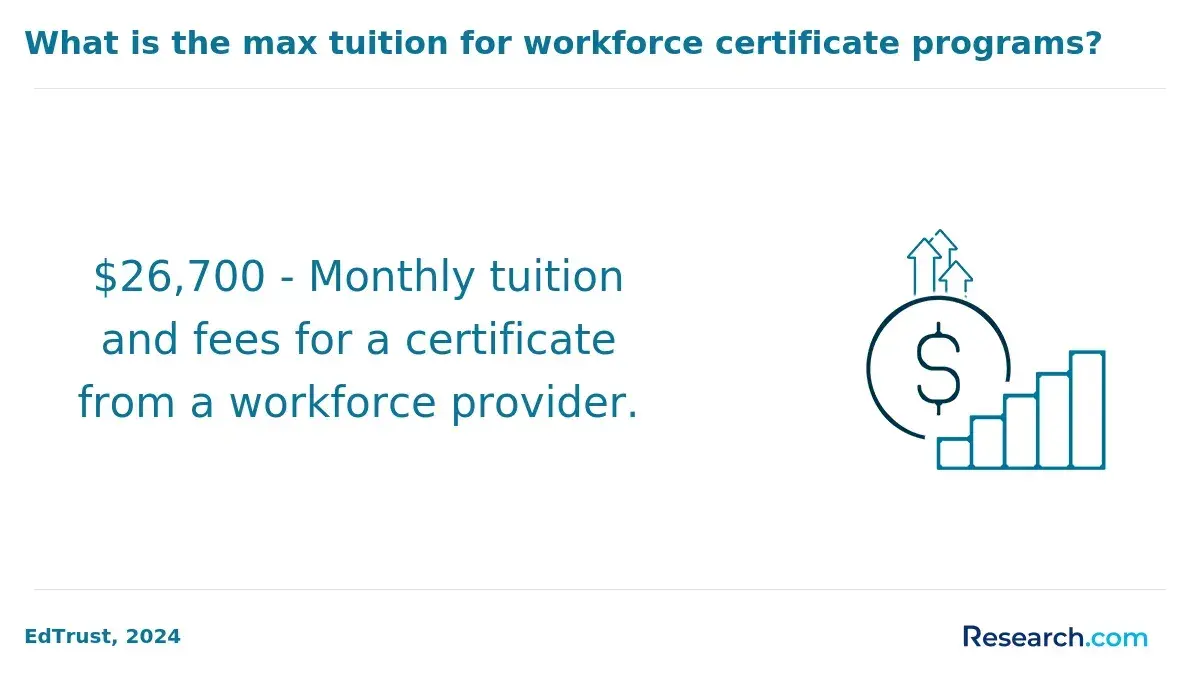
Online physics degree costs vary by institution, residency, transfer credits, course load, technology fees, lab fees, textbooks, software, and whether the program requires any campus visits. Published tuition is only the starting point; the real cost is the total amount you pay after grants, scholarships, employer benefits, transfer credits, and living expenses.
College Board's 2024-25 data is a useful benchmark for comparing sticker prices across institution types. It reports average published tuition and fees of $11,610 for in-state students at public four-year institutions, $30,780 for out-of-state students at public four-year institutions, and $43,350 at private nonprofit four-year institutions.
- In-state public four-year tuition and fees: $11,610 on average for 2024-25
- Out-of-state public four-year tuition and fees: $30,780 on average for 2024-25
- Private nonprofit four-year tuition and fees: $43,350 on average for 2024-25
Those figures are not physics-specific and do not include every student's aid package, but they help you see why residency status and transfer credit can change return on investment. Online programs sometimes charge a separate distance-learning rate, so verify whether you pay in-state, out-of-state, flat online tuition, or per-credit tuition.
Beyond tuition, physics students should budget for costs that are easy to overlook. These may not be large in every program, but they can affect affordability and planning.
- Lab kits, experimental equipment, or shipping costs for remote lab courses
- Graphing calculator, computer hardware, or upgraded internet access
- Software licenses if the school does not provide access to required tools
- Proctoring fees, technology fees, graduation fees, or transcript fees
- Travel and lodging if the program has campus intensives or required in-person labs
To reduce cost without weakening the degree, start with accredited transfer-friendly coursework in calculus, general education, and introductory science. Then confirm in writing that credits will apply to the physics major, not just to electives.
One common mistake is choosing the lowest tuition without checking course availability. If required upper-division physics courses are offered infrequently, a cheaper program can become more expensive by delaying graduation. Another mistake is ignoring aid renewal rules; scholarships may require a minimum GPA or full-time enrollment that is difficult to maintain in a rigorous STEM program.
Which careers use physics and numerical analysis skills?
Physics plus numerical analysis can lead to several career families, but the best route depends on degree level, portfolio, internships, and whether the role is primarily scientific, engineering-adjacent, data-focused, or education-focused. A bachelor's degree can open technical and analytical roles, while many physicist research roles require a master's or doctorate.
The table below connects common career directions with the kind of physics and numerical analysis preparation employers may value.
| Career direction | How physics and numerical analysis apply | Typical preparation |
| Data scientist or scientific data analyst | Builds models, analyzes data, tests assumptions, and communicates uncertainty | Physics degree plus statistics, Python or R, machine learning, databases, and portfolio projects |
| Computational physicist or simulation specialist | Models physical systems such as fluids, materials, plasma, optics, or particles | Often graduate-level physics, numerical methods, high-performance computing, and research experience |
| Operations research analyst | Uses optimization, probability, and modeling to improve decisions and systems | Physics, applied math, statistics, programming, and business or logistics context |
| Software developer in technical domains | Builds tools for simulation, instrumentation, imaging, scientific workflows, or analytics | Physics degree plus software engineering, algorithms, version control, and projects |
| Aerospace, defense, or engineering analyst | Uses mechanics, electromagnetism, signals, and numerical models for technical problem-solving | Physics or engineering background, simulation tools, security clearance in some roles |
| Physics teacher | Uses modeling, measurement, and quantitative reasoning to teach science | Physics education pathway plus state-approved teacher preparation and licensure |
AI and automation are changing these roles, but they do not remove the need for physics-based judgment. Employers increasingly value people who can use computational tools responsibly, understand uncertainty, and explain why a model is or is not physically meaningful.
Students considering interdisciplinary paths can also connect physics with fields such as biomechanics, sports analytics, rehabilitation technology, and sensor-based performance analysis. In those cases, comparing physics preparation with online exercise science degrees may help clarify whether the better fit is physical modeling, human movement, health science, or applied performance work.
To prepare for a career while enrolled, do not wait until the final semester. Build evidence of skill through code repositories, lab reports, technical writing samples, internships, research posters, or capstone projects. Employers rarely hire based on coursework titles alone; they want proof that you can solve problems, document methods, and communicate results.
What salaries do physics graduates with numerical analysis skills earn?
Salaries vary widely because physics graduates enter many different occupations. Degree level, location, clearance eligibility, programming ability, graduate study, industry, and portfolio quality can all affect pay. Use salary data as a market signal, not a guarantee.
BLS 2024 wage data provides a helpful comparison for roles where physics and numerical analysis may be relevant. The figures below are national medians, so they do not capture regional differences, bonuses, or entry-level versus senior-level variation.
| Occupation | Median annual wage from BLS 2024 data | How to interpret it |
| Physicists and astronomers | $166,290 | Often requires graduate study for research roles; bachelor's graduates may enter related technical jobs first |
| Data scientists | $112,590 | Strong option for physics graduates who add statistics, programming, databases, and machine learning |
| Operations research analysts | $91,290 | Good fit for students who enjoy optimization, modeling, logistics, and decision support |
| Software developers | $133,080 | Possible path for students who turn computational physics skills into strong software engineering ability |
| Postsecondary physics teachers | $94,320 | Usually requires graduate education; academic roles can be competitive and institution-dependent |
The salary takeaway is that numerical analysis skills can broaden the value of a physics degree. A student who can code simulations, analyze data, and explain mathematical assumptions may be competitive for more roles than a student who has only completed theory coursework.
Return on investment is strongest when the program's cost, timeline, and career preparation line up. A lower-cost bachelor's degree with strong computational projects may be a better investment for data-oriented roles than an expensive program with weak career support. Conversely, a higher-cost graduate program may make sense if it provides research access, employer connections, or specialized training that directly supports your target field.
What certifications or licenses matter after a physics degree?
Most physics careers do not require a single universal license, but certain paths do involve credentials, state approval, or employer-specific requirements. The right credential depends on whether you want to teach, work in engineering-adjacent roles, handle regulated technology, enter data science, or move into specialized research.
The table below summarizes credentials that may matter after a physics degree. Requirements can vary, so always confirm details with the relevant state board, employer, or certifying organization.
| Credential or license | Who may need it | Why it matters |
| State teacher licensure | Students who want to teach public school physics | Public school teaching generally requires state-approved preparation, exams, and supervised teaching |
| Engineer-in-Training or Professional Engineer pathway | Students moving into regulated engineering work | Some roles require an engineering-accredited background or board-approved education and experience |
| Data science, cloud, or analytics certifications | Physics graduates targeting data, machine learning, or technical analytics roles | Can document tool-specific skills, but should complement projects rather than replace them |
| Health physics or radiation safety credentials | Students interested in radiation protection, nuclear facilities, medical physics support, or safety roles | May support specialized employment where safety standards and regulatory knowledge matter |
| Graduate degree | Students pursuing research physics, postsecondary teaching, or advanced computational science | Often more important than a short certification for research-intensive positions |
Certifications are most valuable when they close a specific gap. For example, a cloud certificate may help a physics graduate deploy simulations or data pipelines, while a teaching credential is essential for many public school roles. A generic certificate with no connection to your target job is less useful.
Physics graduates who enjoy scientific information systems, data stewardship, archives, or research infrastructure may also explore adjacent graduate paths such as a masters of library science, especially when their interests include research data management, digital repositories, or technical information services.
Before paying for any certification, ask three questions: does my target job request it, does it teach skills I cannot demonstrate otherwise, and will it help me produce stronger work samples? If the answer is no, a portfolio project, internship, or graduate course may be a better use of time and money.
Other Things You Should Know About Physics
The biggest red flag in an online physics program is the lack of accreditation. Accredited programs ensure that the curriculum meets industry standards and that the degree is recognized by employers. Always verify the accreditation status of the program through recognized agencies or education boards.
Yes, but you should choose a physics program with strong requirements in calculus, differential equations, linear algebra, programming, and computational physics. If those courses are missing, consider electives or a certificate in applied math, data science, or scientific computing.
For many research physicist roles, graduate study is common or expected. However, bachelor's graduates can pursue technical roles in data analysis, software, engineering support, operations research, education, instrumentation, and laboratory work if they build marketable skills.
References
- Physics Degree Careers and Salary in Europe - StudyinEurope.eu https://www.studyineurope.eu/physics/physics-degree-careers-salary-europe/
- Accreditation, Validation and Recognition of Physics Degrees https://telescoper.blog/2022/09/19/accreditation-validation-and-recognition-in-physics-degrees/
- 2025 Best Online Degrees in Physics https://www.onlineu.com/degrees/physics
- Online Physics Degrees: Are They Useful in Today’s Scenario? https://www.allassignmenthelp.com/blog/online-physics-degrees-in-todays-scenario/
- Licenses and Certs for Physics Major? https://www.physicsforums.com/threads/licenses-and-certs-for-physics-major.679518/