2027 Best Online Bachelor's in Physics With Hybrid Lab Requirements

Co-Founder and Chief Data Scientist
Choosing an online physics degree is harder than picking a typical online major because real lab work still matters. The Bureau of Labor Statistics reports that physicists and astronomers had a median annual wage of $149,530 in 2024, but many physics bachelor's graduates also move into engineering, data, education, software, and technical roles.
This guide is for students who want online flexibility without sacrificing credible lab training. You will learn how hybrid labs work, what to check before enrolling, what the degree may cost, and how to judge whether the investment fits your goals.
Key Things You Should Know
- Online bachelor's degrees in physics are uncommon, so the strongest options are usually regionally accredited programs that combine online theory courses with clearly documented in-person, campus-based, or approved local lab experiences.
- Hybrid lab requirements matter because graduate schools, employers, and teaching licensure pathways may expect hands-on experience with instrumentation, measurement, uncertainty analysis, and formal lab reporting.
- Cost comparisons should include more than tuition: College Board's 2024 data lists average published tuition and fees at $11,610 for in-state public four-year colleges and $43,350 for private nonprofit four-year colleges, before travel, lab fees, housing, and materials.
What is an online bachelor's in physics with hybrid lab requirements?
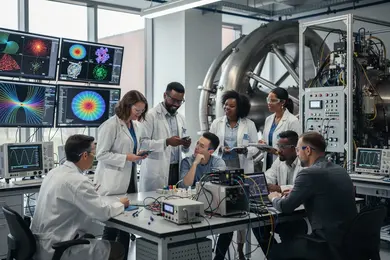
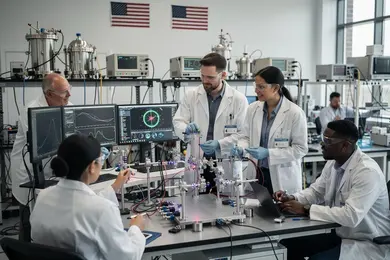
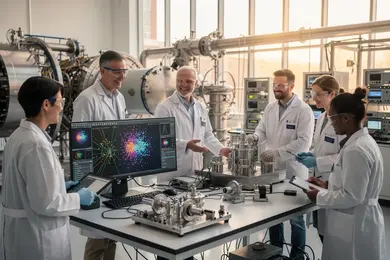
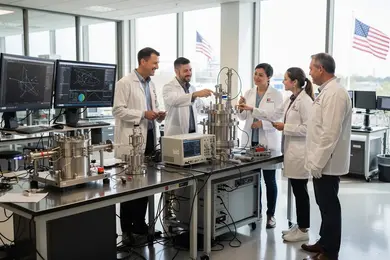
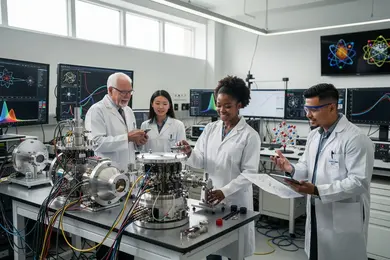
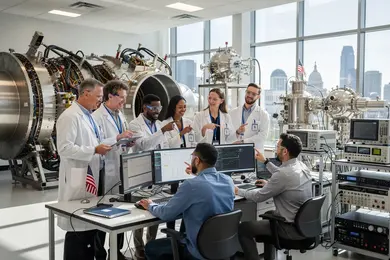
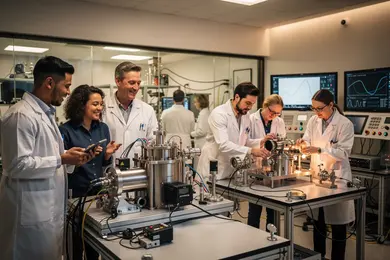
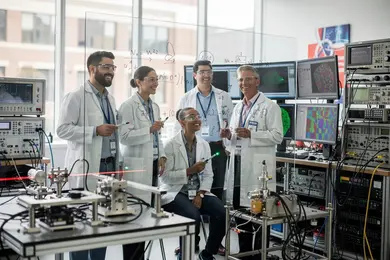
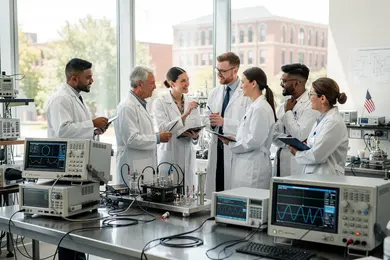
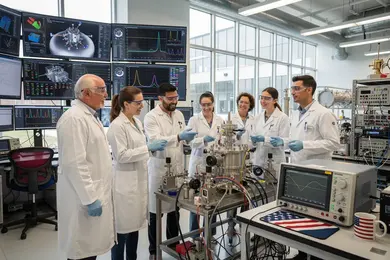
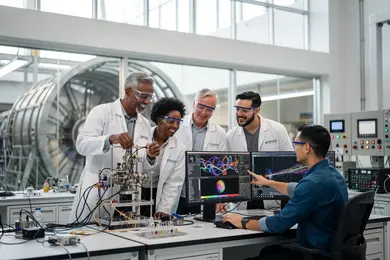
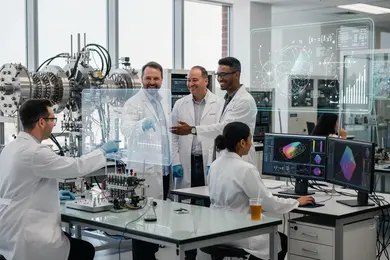
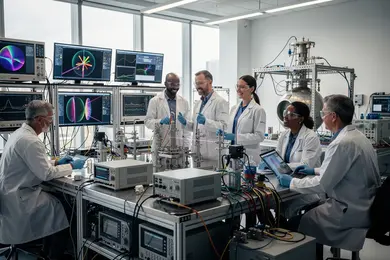
An online bachelor's in physics with hybrid lab requirements is a bachelor's degree in which lectures, problem sets, exams, advising, and some simulations may be completed online, while selected laboratory courses require physical participation. That participation may happen during short campus residencies, summer intensives, weekend lab blocks, approved local college labs, or supervised experiments using institution-approved equipment.
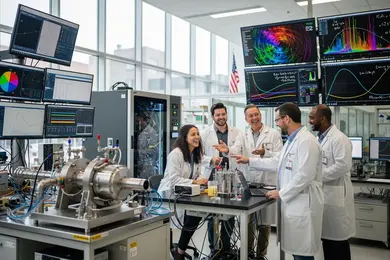
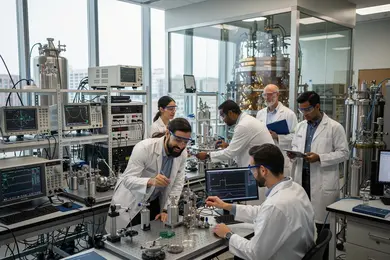
The hybrid part is not a minor detail. Physics is built around measuring physical systems, testing models, handling uncertainty, and learning how instruments behave in real conditions. A fully virtual course can explain mechanics, electromagnetism, thermodynamics, quantum physics, or optics, but it may not fully replace the experience of calibrating equipment, troubleshooting signals, collecting imperfect data, and defending results in a lab report.
This degree is usually a better fit for students who want a rigorous science foundation but need scheduling flexibility. It may work well for working adults, military-affiliated students, community college transfer students, future teachers, and students who live far from a campus but can travel occasionally.
It is less ideal for students who cannot attend any in-person lab sessions, students who need daily access to research facilities, or students targeting highly selective physics PhD programs that strongly prefer substantial undergraduate research experience.
Because program availability is limited, "best" should not mean the most advertised option. In this field, the best online physics program is the one that is accredited, transparent about labs, honest about transfer credits, strong in upper-division math and physics, and aligned with your next step after graduation.
How do hybrid lab requirements work in online physics bachelor's programs?
Hybrid lab requirements vary widely, so students should ask exactly where, when, and how each required lab is completed. Lower-division labs may use at-home kits or simulations for selected experiments, but upper-division physics labs often require more specialized equipment.
Most programs use one or more of the following lab models. Understanding the model before enrollment helps you budget time, travel, and family or work obligations.
- Campus intensives: Students travel to campus for several days or weeks to complete concentrated lab sessions in mechanics, electricity and magnetism, optics, electronics, or modern physics.
- Weekend or evening lab blocks: Students attend scheduled in-person sessions during the term while completing lecture content online.
- Approved local lab sites: A school may allow students to complete lab work at a partner institution, community college, or approved testing facility under defined supervision.
- At-home lab kits: Some introductory experiments may use mailed equipment, sensors, smartphone-based measurement tools, or basic electronics kits, though these are usually not enough for the entire major.
- Remote instrumentation and simulations: Students may operate real equipment remotely or use simulations to model systems, usually as a supplement rather than a full replacement for advanced lab work.
A strong hybrid lab plan should tell you which courses require attendance, how often you must travel, whether attendance dates are fixed, who pays for equipment, and what happens if you miss a required lab window. If a school describes labs vaguely, that is a red flag.
The table below summarizes common lab formats and the trade-offs students should consider when comparing programs.
| Lab format | Best for | Main trade-off |
| Short campus residency | Students who can travel once or twice per year | Travel and lodging can raise the total cost |
| Weekly or weekend campus labs | Students living within commuting distance | Less flexible than fully online coursework |
| Approved local lab | Transfer students or students near another college | Approval rules can be strict and slow |
| At-home kit | Introductory experiments and flexible learners | May not satisfy advanced lab expectations |
| Remote or simulated lab | Concept reinforcement and data analysis practice | May not provide enough hands-on instrumentation practice |
Are online bachelor's in physics with hybrid labs respected and accredited?
Online bachelor's degrees in physics can be respected when they come from an institutionally accredited college or university and include legitimate lab training. The delivery format is less important than whether the program teaches the same core physics, mathematics, and laboratory competencies expected in a campus-based degree.
For most physics bachelor's programs, the key quality marker is institutional accreditation from an accreditor recognized by the U.S. Department of Education or the Council for Higher Education Accreditation. Programmatic accreditation is not as universal in physics as it is in fields such as nursing, engineering, or education. Some applied physics or engineering physics programs may have specialized accreditation, but many traditional physics majors do not.
Students should evaluate respectability using evidence, not marketing language. Before applying, check these quality indicators:
- The institution is accredited and in good standing with its recognized accreditor.
- The degree title, transcript, and catalog clearly identify the physics major and required lab courses.
- Upper-division courses include advanced mechanics, electromagnetism, quantum physics, thermodynamics or statistical physics, and advanced laboratory or research methods.
- Faculty teaching upper-level physics courses have relevant graduate training or research experience.
- The program explains how online students access advising, tutoring, lab support, research opportunities, and career services.
- The school publishes transfer credit, residency, and graduation requirements before you enroll.
If your goal is teacher licensure, graduate school, military advancement, patent work, or technical employment, ask how the degree is recognized in that pathway. Requirements can vary by state, school, employer, and graduate department, so a program that is credible for one goal may not be the best choice for another.
What admission requirements do online physics bachelor's programs typically have?
Admission requirements for online physics bachelor's programs usually resemble those for campus-based STEM degrees. Schools want evidence that applicants can handle calculus-based science, abstract reasoning, and sustained quantitative work.
Typical requirements include the items below, but exact rules vary by institution and by whether you apply as a first-year or transfer student.
- High school diploma, GED, or equivalent credential for first-year applicants.
- Official transcripts from high school and any colleges previously attended.
- College algebra, precalculus, trigonometry, or calculus readiness; stronger programs may expect calculus early in the degree plan.
- Prior coursework in physics, chemistry, computer science, or engineering, especially for transfer applicants.
- Minimum GPA requirements, which may be higher for direct admission into the physics major than for general university admission.
- Placement testing or prerequisite review in mathematics and science.
- Optional or required personal statement, resume, recommendation letters, or military and professional experience documentation.
Transfer students should pay special attention to physics lab equivalencies. A lecture course without a matching lab may not satisfy the major requirement, and algebra-based physics may not replace calculus-based physics for a physics major.
Military-affiliated learners should also ask about credit for training, deployment flexibility, and lab attendance accommodations. Students comparing STEM options with military support may find useful context in resources on an electrical engineering degree online for veterans, since many of the same questions about transfer credit, accreditation, and lab scheduling apply to physics programs.
How does studying physics online with hybrid labs compare to fully on-campus programs?
Online physics programs with hybrid labs offer flexibility, but they are not simply campus programs delivered through a screen. The biggest differences involve access to equipment, research culture, peer collaboration, and scheduling predictability.
The comparison below shows when online-hybrid and fully on-campus formats tend to make sense. Use it to match the format to your constraints rather than assuming one is automatically better.
| Factor | Online physics with hybrid labs | Fully on-campus physics |
| Flexibility | Better for students balancing work, family, military service, or distance from campus | Better for students who can attend classes and labs on a fixed weekly schedule |
| Lab access | Concentrated or scheduled access; may require travel | Regular access to teaching labs, equipment, and faculty offices |
| Research opportunities | Possible, but may require proactive planning or summer participation | Often easier to join faculty labs, seminars, and research groups |
| Peer network | Depends heavily on online discussion, group projects, and residency design | Usually stronger daily interaction with classmates and faculty |
| Best fit | Self-directed students who need flexibility and can meet lab attendance windows | Students seeking immersive campus research, frequent lab access, and in-person mentoring |
The choice also depends on your career direction. If you want engineering licensure or a more direct engineering curriculum, compare physics with ABET-accredited engineering options and review lists of the best online electrical engineering programs USA. Physics can lead to technical careers, but it is not the same credential as an engineering degree.
Online-hybrid physics can be a smart path when you value flexibility and can verify the lab structure. A campus program may be stronger if you want frequent research involvement, close faculty mentorship, or a smoother route into competitive graduate physics programs.
What courses and lab experiences are included in an online physics bachelor's curriculum?
A bachelor's in physics is mathematically intensive. Students should expect a sequence that builds from calculus and introductory mechanics into advanced theory, computational modeling, and experimental methods.
Most programs combine core physics, advanced math, lab work, and electives. The exact mix depends on whether the degree is a BA, BS, applied physics major, teacher-preparation track, or interdisciplinary science program.
- Mathematics foundation: Calculus I through III, differential equations, linear algebra, and sometimes mathematical methods for physics.
- Introductory physics: Calculus-based mechanics, electricity and magnetism, waves, optics, and thermodynamics with labs.
- Intermediate theory: Classical mechanics, electromagnetic theory, modern physics, quantum mechanics, and statistical physics or thermodynamics.
- Laboratory sequence: Introductory labs, electronics or instrumentation, optics, modern physics lab, advanced lab, and experimental design or data analysis.
- Computational work: Programming, numerical methods, simulation, data visualization, and possibly machine learning or scientific computing.
- Electives: Astronomy, materials science, biophysics, geophysics, nanoscience, engineering physics, education methods, or research credits.
AI and automation are changing what physics students need to know. Employers increasingly value graduates who can write code, analyze large data sets, use modeling tools, and explain technical results clearly. That does not reduce the importance of physics fundamentals; it raises the value of combining theory, experimentation, and computation.
Students considering graduate study should choose the most rigorous math and theory sequence available. Students aiming for industry may benefit from electives in programming, electronics, instrumentation, statistics, materials, or engineering applications.
How long does it take to finish an online bachelor's in physics and what does it cost?
A bachelor's degree typically requires about 120 credits. Full-time students usually need four years, while transfer students or part-time learners may finish faster or slower depending on accepted credits, lab scheduling, course sequencing, and whether upper-division physics courses are offered every term.
Cost varies widely by institution and residency status. College Board's 2024 pricing report lists average published tuition and fees for public four-year in-state students at $11,610 and private nonprofit four-year students at $43,350 for one academic year. Those figures are useful benchmarks, but online physics students also need to account for costs that do not appear in tuition alone.
When estimating the true cost of a hybrid physics degree, include the following categories:
- Tuition per credit and whether online students pay in-state, out-of-state, or special distance-learning rates.
- Mandatory university fees, technology fees, online course fees, and lab fees.
- Travel, lodging, meals, and missed work during required campus lab residencies.
- Lab kits, calculators, software, electronics supplies, textbooks, and safety materials.
- Transfer credit limits, repeat course policies, and whether prerequisites extend the timeline.
- Financial aid eligibility, employer tuition assistance, military benefits, scholarships, and payment plan options.
The table below shows how timeline and cost factors often differ by student type. It is not a price quote; it is a planning tool for asking better questions.
| Student situation | Likely timeline consideration | Cost issue to verify |
| First-time full-time student | Often around four years if courses are sequenced well | Total annual cost, not just per-credit tuition |
| Community college transfer student | May shorten time if calculus, physics, and general education credits transfer cleanly | Whether prior labs count toward calculus-based physics requirements |
| Working adult student | Part-time enrollment may extend completion time | Course rotation and whether required labs conflict with work |
| Military-affiliated student | Deployment or relocation can affect lab attendance | Benefit eligibility, residency rules, and make-up lab policies |
Avoid choosing a program based only on the lowest advertised tuition. A cheaper program with poorly timed lab residencies, limited transfer credit, or infrequent upper-level courses can cost more in the long run if it delays graduation.
What careers can you pursue with an online bachelor's in physics?
A physics bachelor's degree is versatile, but it is not a direct ticket to every job with "physicist" in the title. Many professional physicist roles require a master's or doctorate, while bachelor's graduates often enter applied technical, analytical, engineering-adjacent, education, software, or laboratory roles.
Common career directions include the following. The best path depends on your electives, internships, programming skills, lab experience, and whether you pursue graduate study or certification.
- Laboratory technician or research assistant: Supports experiments, maintains equipment, collects data, and documents results in academic, government, or private-sector labs.
- Data analyst or scientific programmer: Uses modeling, statistics, coding, and visualization skills to interpret technical or operational data.
- Engineering technician or test engineer pathway: Works with product testing, measurement systems, quality assurance, or instrumentation, often with additional engineering coursework or experience.
- Physics or science teacher: Teaches secondary science when the degree is paired with state-approved teacher preparation and licensure requirements.
- Technical sales or applications specialist: Explains scientific products, sensors, software, optical systems, or laboratory equipment to customers and teams.
- Graduate or professional school pathway: Prepares for physics, engineering, astronomy, materials science, medical physics, patent law, or other advanced study.
Students who like science but prefer health, food systems, or wellness applications may find an online bachelor's degree in nutrition more aligned with their interests. Physics is strongest for students who enjoy math-heavy modeling, problem-solving, experimentation, and technical systems.
To improve employability with a physics bachelor's, build a portfolio beyond coursework. Strong additions include Python or MATLAB projects, electronics experience, lab reports, research posters, internships, data analysis samples, CAD or instrumentation exposure, and clear evidence that you can communicate complex results to non-specialists.
What salary expectations and job outlook are associated with physics bachelor's graduates?
Salary outcomes for physics bachelor's graduates vary because many do not work under the job title "physicist." Some enter data, software, engineering support, education, or laboratory roles, while others continue to graduate school before entering research-intensive positions.
The Bureau of Labor Statistics reported a 2024 median annual wage of $149,530 for physicists and astronomers. That figure is useful for understanding the upper professional physics labor market, but it often reflects roles requiring advanced degrees, specialized research training, or significant experience. Bachelor's graduates should compare that number with salaries for the specific occupations they are targeting.
The job outlook is shaped by federal research funding, defense and aerospace demand, semiconductor and materials work, climate and energy technology, medical physics, data science, and computing. AI is also changing expectations: physics graduates who can code, automate analysis, validate models, and understand measurement limits may be better positioned than those with theory coursework alone.
The table below connects common bachelor's-level directions with the skills that tend to influence early career options.
| Career direction | Skills that improve competitiveness | Education note |
| Technical laboratory work | Instrumentation, safety procedures, uncertainty analysis, documentation | A bachelor's may be sufficient for some entry-level roles |
| Data or computational roles | Python, statistics, numerical modeling, visualization, databases | Projects and internships can matter as much as course titles |
| Engineering-adjacent roles | Electronics, CAD, testing, materials, quality systems | Some employers may prefer engineering degrees for engineering-titled jobs |
| Teaching | Pedagogy, classroom management, state science standards | Public school teaching usually requires state licensure |
| Research physicist pathway | Advanced theory, research methods, publications or posters | Graduate study is commonly expected |
If you are drawn to research, archives, data organization, and information access rather than experimental or computational physics, a librarian degree online may support a different type of knowledge-focused career, including science librarianship after the right academic preparation.
The safest way to evaluate return on investment is to start with your target job, then work backward. Identify whether employers in that role want a physics degree, an engineering degree, a computer science degree, teacher licensure, a graduate degree, or a portfolio of technical projects.
How can you choose a reputable online physics program with required hybrid labs?
Because online physics bachelor's programs are limited and lab requirements are complex, choosing carefully is more important than finding the fastest application. A reputable program should make its accreditation, curriculum, lab schedule, faculty qualifications, transfer policies, and student support easy to verify.
Use the following steps before you commit. They are designed to uncover hidden costs, weak lab structures, and mismatches between the degree and your career goal.
- Confirm institutional accreditation through the accreditor's official directory or the U.S. Department of Education database.
- Ask for a degree plan showing every required physics, math, lab, and general education course from entry to graduation.
- Request written details about each hybrid lab requirement, including location, dates, equipment, fees, travel expectations, and make-up policies.
- Check whether lower-division and upper-division physics courses are calculus-based and appropriate for your goal.
- Ask how many transfer credits can apply to the major and whether previous labs must be repeated.
- Review faculty profiles, tutoring options, research access, career services, and graduate school advising.
- Compare the total cost of attendance, not just tuition, including travel and required materials.
- Ask employers, graduate programs, or licensing boards whether the degree structure supports your intended next step.
Several red flags should make you pause. Be careful with schools that avoid naming the accreditor, promise unrealistic job outcomes, cannot explain lab logistics, rely entirely on simulations for advanced experimental courses, pressure you to enroll quickly, or refuse to provide a written transfer evaluation before you start.
Also compare the degree with adjacent options. If your real goal is engineering practice, computer science, science teaching, health science, or information work, another degree may fit better. The best program is not just credible; it is credible for your specific outcome.
Other Things You Should Know About Physics
Students often overlook the importance of hybrid lab components. A strong physics program should offer practical lab experience, which is crucial for understanding complex physical concepts and gaining hands-on skills. Ensure the program incorporates on-campus or local labs to enhance theoretical learning.
They may, especially if the institution is accredited and the curriculum includes rigorous upper-level physics, advanced math, and real lab work. However, competitive graduate programs may also expect research experience, strong faculty recommendations, and advanced coursework.
A BS is usually more intensive in math, lab work, and advanced physics, making it better for graduate study or technical roles. A BA may offer more flexibility for education, interdisciplinary careers, or double majors, but students should compare course requirements carefully.
References
- General Physics I Lab https://www.straighterline.com/online-college-courses/general-physics-i-lab/
- Is an Online Degree in Physics Right for Me? https://www.physicsforums.com/threads/is-an-online-degree-in-physics-right-for-me.976843/
- Three Benefits of Virtual Labs in College Science Courses - Every Learner Everywhere® https://www.everylearnereverywhere.org/blog/three-benefits-of-virtual-labs-in-college-science-courses/
- 2025 Best Online Degrees in Physics https://www.onlineu.com/degrees/physics
- Online Science Courses with Lab that Transfer: A Helpful Guide - Prereqcourses https://www.prereqcourses.com/online-science-courses/