2027 How to Choose an Online Physics Degree for Research Careers

Co-Founder and Chief Data Scientist
Choosing an online physics degree is really a research-readiness decision: Will the program prepare you for labs, graduate school, coding-heavy analysis, and scientific problem-solving? The stakes are high because the U. S. Bureau of Labor Statistics reported a May 2024 median annual wage of $166,290 for physicists, but many research roles require advanced training.
This guide is for students comparing online physics programs, transfer options, and research careers. You will learn how to evaluate curriculum, accreditation, cost, school fit, and career outcomes before enrolling.
Key Things You Should Know
- For research careers, prioritize regionally accredited programs with calculus-based physics, advanced math, programming, lab access, faculty mentorship, and a clear path to undergraduate research or graduate study.
- Cost varies widely: College Board's 2024 pricing data lists average published tuition and fees at $11,610 for in-state public four-year colleges and $43,350 for private nonprofit four-year colleges, before grants and aid.
- A bachelor's degree can support technical, data, teaching, or lab roles, but many physics, astronomy, and academic research positions commonly expect a master's degree or PhD.
What makes an online physics degree good for research careers?
A good online physics degree for research careers does more than deliver lectures remotely. It should build the same foundation expected of campus physics majors: mathematical modeling, experimental reasoning, computational analysis, scientific writing, and evidence-based problem solving.
For students aiming at graduate research, the best program is usually the one that helps them produce a strong academic record, secure research experience, and get credible faculty recommendations. Online flexibility is valuable, but it should not come at the expense of rigorous labs, upper-division physics, or mentorship.
The table below summarizes the features that matter most when comparing online physics programs for research preparation:
| Program feature | Why it matters for research careers | Red flag to watch for |
| Calculus-based core | Graduate physics and research labs expect mechanics, electromagnetism, quantum physics, thermodynamics, and modern physics built on calculus. | The program relies mainly on algebra-based survey physics courses. |
| Advanced mathematics | Differential equations, linear algebra, statistics, and numerical methods help students model physical systems and analyze data. | Math requirements stop before upper-division coursework. |
| Laboratory pathway | Research careers require comfort with measurement, uncertainty, instrumentation, and lab documentation. | The school cannot clearly explain how online students complete labs. |
| Programming and computation | Python, MATLAB, C++, or similar tools are now common in simulation, astronomy, materials science, and data-heavy physics work. | Computing appears only as an optional elective. |
| Faculty research access | Faculty mentorship can lead to projects, conference posters, graduate school references, and research assistant experience. | Online students are excluded from undergraduate research opportunities. |
Use a short decision checklist before you request information from a school. These questions reveal whether the program is built for research preparation or mainly for general science education.
- Ask whether online physics majors can join faculty research groups, remote computational projects, or summer research experiences.
- Confirm how upper-division labs are delivered, including whether they require campus visits, local proctoring, mailed kits, or partner sites.
- Review whether the degree title is physics, applied physics, physical science, or general science, because graduate programs may view them differently.
- Check whether graduates have entered physics, engineering, astronomy, data science, medical physics, or related graduate programs.
- Request sample syllabi for advanced courses so you can verify the math level and assessment style.
The strongest choice is not always the most convenient program. If your goal is experimental physics, instrumentation, or laboratory-based graduate research, a hybrid or campus option may be worth the added scheduling burden.
Is the program regionally and programmatically accredited?
For online physics degrees, regional accreditation is the essential quality check. It means the institution has been reviewed by an approved accreditor for academic standards, governance, student support, and financial stability. Graduate schools, employers, and transfer institutions are far more likely to recognize credits and degrees from regionally accredited colleges.
Physics does not have a single required programmatic accreditor for all research careers. That makes it different from some engineering programs, where ABET accreditation can matter for licensure-oriented roles.
If you are comparing physics with engineering pathways, reviewing accredited online electrical engineering programs can help you understand why program-level accreditation is more central in engineering than in traditional physics.
The table below explains how different accreditation signals should influence your decision.
| Accreditation type | What it means | How to use it when choosing |
| Regional institutional accreditation | The whole college or university meets recognized academic and administrative standards. | Treat this as non-negotiable for transfer credit, federal financial aid eligibility, and graduate school recognition. |
| National institutional accreditation | Often used by career, vocational, or specialized institutions. | Review carefully because credits may not transfer as easily to regionally accredited universities. |
| Programmatic accreditation | A specific program is reviewed by a field-specific accreditor. | Not typically required for physics, but may matter for engineering physics, medical physics pathways, or engineering licensure goals. |
| State authorization | The institution is allowed to offer distance education to students in your state. | Confirm this before enrolling, especially if labs, internships, or proctored exams involve your location. |
Accreditation mistakes can be expensive because they affect transfer credits, aid, and graduate admission. Before you apply, verify the school's status through the U.S. Department of Education's accreditation database or the accreditor's own site.
Which online physics schools prepare students for graduate research?
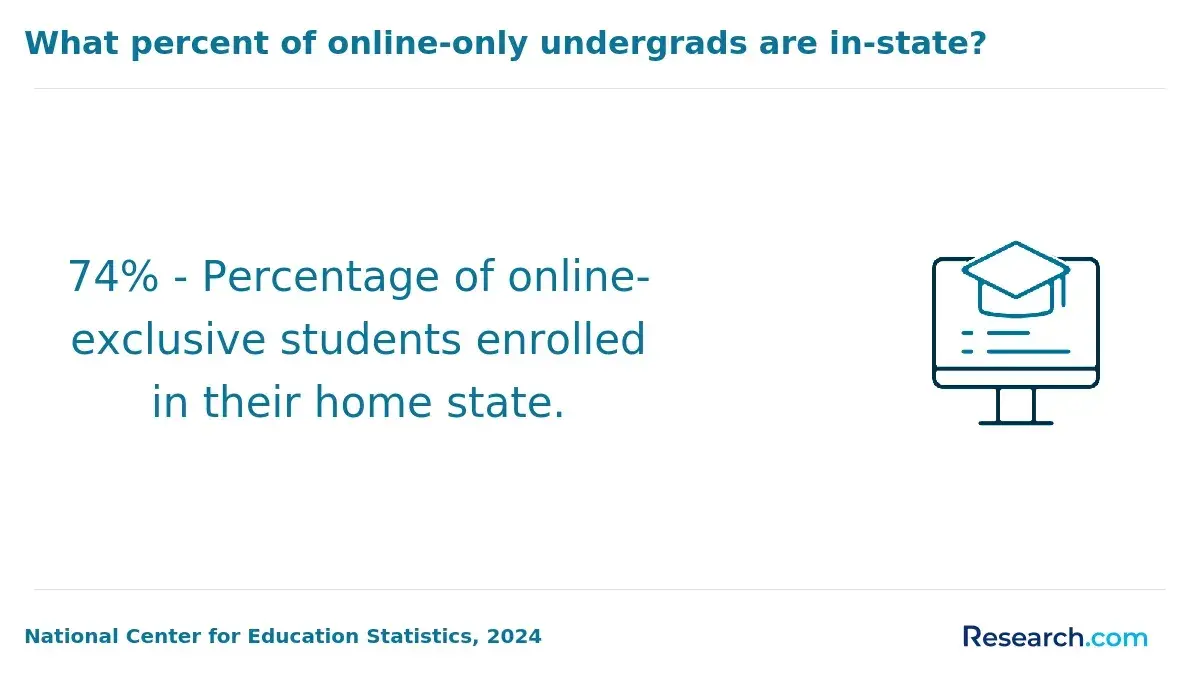
The best online physics schools for graduate research preparation are usually research-active institutions that give online students access to rigorous upper-division coursework, research mentoring, and credible lab experiences. Because fully online physics bachelor's programs are less common than online business or computer science programs, students should compare both degree title and research infrastructure carefully.
Use the categories below to understand which type of school may fit your research goal. This is more useful than relying on a ranking alone because physics outcomes depend heavily on coursework depth, faculty access, and lab format.
| School or program type | Best fit | Potential limitation |
| Research university with online physics options | Students who want graduate school preparation, faculty research exposure, and advanced electives. | May require synchronous sessions, summer labs, or campus visits. |
| Public university online completion program | Transfer students who have already completed lower-division physics and math at a community college. | May offer fewer electives than the campus major. |
| Applied physics or physical science program | Students aiming for technical roles, teaching preparation, or interdisciplinary graduate study. | May be less ideal for a traditional theoretical or experimental physics PhD. |
| Hybrid physics program | Students who need online lectures but can travel for labs, exams, or short residencies. | Less flexible than fully online formats. |
| Related STEM degree with strong physics content | Students focused on engineering, environment, materials, energy, or computation. | May shift the career path away from physics research and toward applied research. |
If your research interests are applied rather than theoretical, a related STEM path may be more practical. For example, an environmental engineering bachelor's degree online may make more sense for students interested in climate systems, water resources, energy infrastructure, or environmental modeling.
When comparing schools, look for evidence that online students are treated as research-capable majors rather than as a separate, less rigorous group. The most useful evidence is specific, not promotional.
How do online physics degrees compare with campus programs?
Online physics degrees can work well for motivated students who need flexibility, already have transfer credits, or plan to focus on computational, theoretical, teaching, or data-oriented research pathways. Campus programs may be better for students who need daily lab access, frequent faculty contact, or experimental research in specialized facilities.
The comparison below shows where online and campus physics programs typically differ. Use it to decide which format supports your specific research goal rather than assuming one format is automatically better.
| Decision factor | Online physics degree | Campus physics degree |
| Flexibility | Stronger for working adults, military students, caregivers, and transfer students. | Stronger for students who can attend full time on a fixed schedule. |
| Laboratory access | Depends on kits, simulations, local sites, residencies, or hybrid requirements. | Usually easier access to instruments, teaching labs, and research facilities. |
| Research networking | Possible, especially in computational projects, but requires proactive outreach. | Often easier through hallway contact, seminars, lab meetings, and student clubs. |
| Graduate school preparation | Strong if the curriculum is rigorous and faculty mentorship is available. | Strong if students use campus research and advising opportunities well. |
| Cost control | May reduce commuting, housing, and relocation costs. | May offer more assistantships, local lab jobs, or campus research stipends. |
Lab format is not only a physics issue. Students comparing science majors, such as an online animal science bachelor degree, should ask similar questions about hands-on requirements, local placements, and whether remote students receive comparable academic support.
Choose online if you are self-directed, comfortable learning advanced math independently, and willing to communicate often with faculty. Choose campus or hybrid if your target field requires complex instrumentation, wet labs, vacuum systems, lasers, detectors, or frequent supervised experimentation.
A common mistake is choosing an online program only because it is convenient. For research careers, convenience matters only if the degree still gives you the preparation needed for your next step.
What courses are required in an online physics curriculum?
An online physics curriculum should build from foundational math and science into advanced physics, computation, and research methods. The exact course list varies by school, but research-focused students should look for depth rather than a broad collection of introductory science courses.
The table below outlines common curriculum areas and why each one matters for students who may pursue research, graduate school, or technical roles:
| Curriculum area | Typical courses | Research value |
| Mathematics foundation | Calculus I-III, differential equations, linear algebra, probability or statistics | Supports modeling, quantum mechanics, electromagnetism, and data analysis. |
| Core physics | Classical mechanics, electricity and magnetism, waves, optics, thermodynamics, modern physics | Forms the base expected for upper-division physics and graduate coursework. |
| Advanced physics | Quantum mechanics, statistical mechanics, relativity, nuclear physics, solid-state physics, particle physics | Helps students specialize and prepare for research seminars or graduate admissions. |
| Laboratory and methods | Experimental physics, electronics, instrumentation, measurement uncertainty, scientific writing | Builds the habits required for credible research documentation and analysis. |
| Computing | Python, numerical methods, simulation, data analysis, machine learning electives | Prepares students for modern physics research, where computation and automation are increasingly important. |
| Capstone or research | Senior thesis, independent study, research practicum, computational project | Creates evidence of research readiness for employers or graduate committees. |
Artificial intelligence and automation are changing how physics students work, but they do not replace physics reasoning. Strong programs teach students to use computational tools responsibly: checking assumptions, validating models, documenting code, and understanding the physical meaning behind results.
Before enrolling, compare the upper-division catalog against the prerequisites for graduate programs that interest you. If a degree lacks quantum mechanics, advanced electromagnetism, or serious lab work, it may still be useful for some technical roles but weaker for a physics PhD track.
What admissions requirements do online physics programs usually ask for?
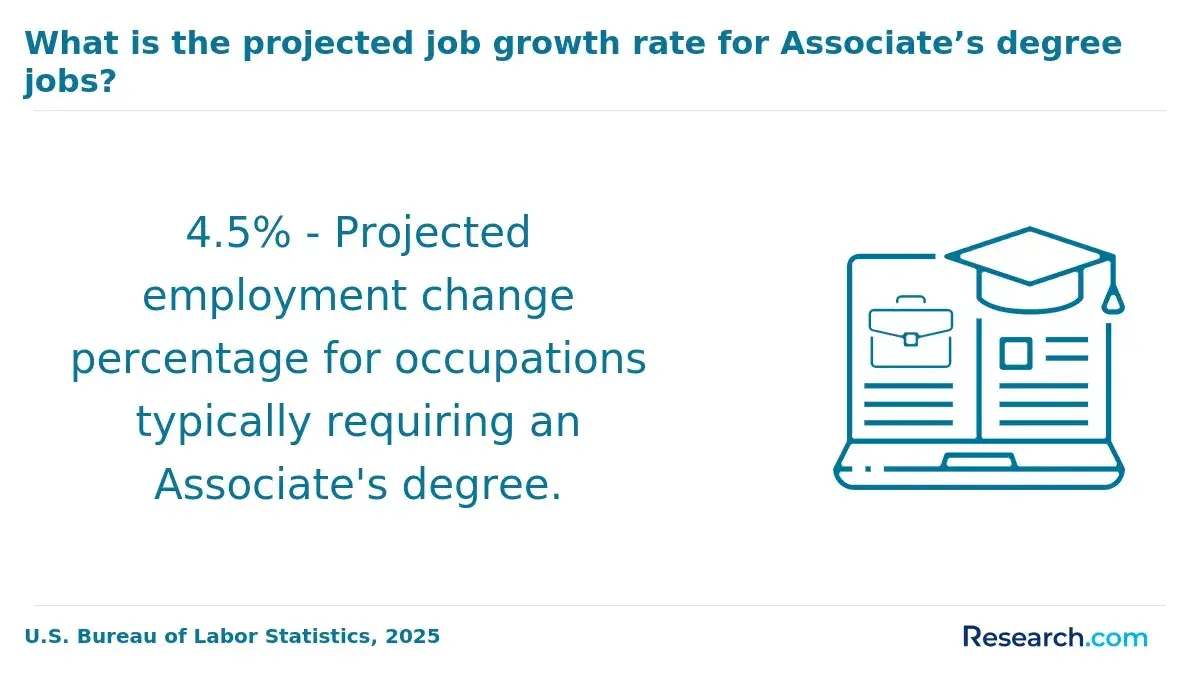
Admissions requirements vary by institution and degree level, but online physics programs usually look for evidence that students can handle calculus, laboratory science, and sustained quantitative work. Transfer-friendly programs may admit students after they complete general education and lower-division science courses elsewhere.
The table below summarizes common admissions requirements and how they affect your readiness.
| Requirement | What schools commonly ask for | Why it matters |
| High school or prior college record | Diploma, GED, or college transcripts | Shows academic eligibility and determines transfer placement. |
| Math preparation | Precalculus, calculus readiness, placement test, or completed college calculus | Physics majors move quickly into calculus-based problem solving. |
| Science background | High school physics and chemistry or college science prerequisites | Helps students avoid falling behind in lab and mechanics sequences. |
| Transfer credits | Official transcripts and course descriptions for prior credits | Can reduce time and cost if courses match degree requirements. |
| Application materials | Application form, fee, personal statement, and sometimes recommendations | Selective programs may use these to assess fit and motivation. |
If your math background is rusty, do not rush into upper-division physics. A slower start in calculus and programming can be a better long-term strategy than repeating failed courses later.
Students preparing to apply should take a practical sequence of steps before submitting applications. This helps prevent admission, transfer, and scheduling surprises.
- Request an unofficial transfer evaluation before committing to a school.
- Ask whether online students can complete required labs without relocating.
- Compare math placement rules and retake policies.
- Check whether the program offers tutoring for calculus, differential equations, and physics problem solving.
- Confirm whether courses are asynchronous, synchronous, accelerated, or cohort-based.
The biggest admissions mistake is assuming acceptance means readiness. Physics is cumulative, so weak preparation in calculus or mechanics can affect several later courses.
How long does an online physics degree take and what does it cost?
A bachelor's degree in physics usually takes about four years of full-time study, but online timelines vary. Transfer students with an associate degree or completed calculus and general education requirements may finish faster, while part-time students may need five to six years depending on course availability and lab scheduling.
Cost depends on tuition, fees, books, technology, lab requirements, transfer credits, and whether you pay in-state or out-of-state rates. College Board's 2024 data shows average published tuition and fees of $11,610 for in-state public four-year institutions and $43,350 for private nonprofit four-year institutions, which means school type and residency can significantly affect the starting price before financial aid.
The table below breaks down cost factors that matter specifically for online physics students:
| Cost factor | Why it matters | What to ask the school |
| Tuition rate | Online programs may charge per credit, flat-rate tuition, or separate resident and nonresident rates. | Is online tuition the same for in-state and out-of-state students? |
| Lab expenses | Physics may require lab kits, equipment deposits, software, travel, or short residencies. | Are lab kits, travel, or campus visits included in the published cost? |
| Transfer credit | Accepted credits can reduce total cost and time. | How many physics, math, and general education credits can transfer? |
| Course availability | Infrequent upper-division courses can extend the timeline. | Are required courses offered every term, annually, or only in a fixed sequence? |
| Financial aid | Accredited degree programs may qualify for federal aid, grants, scholarships, or employer tuition benefits. | What is the average net price after grants for students like me? |
To reduce cost without weakening research preparation, focus on credits that actually apply to the physics major. Cheap credits are not useful if they transfer only as electives.
What research careers can you pursue with a physics degree?
A physics degree can lead to research careers, but the exact path depends on education level, research experience, and technical specialization. A bachelor's degree may qualify you for technician, analyst, software, teaching, or engineering-adjacent roles, while independent research scientist positions often require graduate study.
The table below connects physics-related career paths with typical preparation and responsibilities. Use it to decide whether an online physics degree is enough or whether you should plan for a master's degree, PhD, or specialized training.
| Career path | Typical education level | Common responsibilities |
| Research assistant or laboratory technician | Bachelor's degree, sometimes with lab or coding experience | Prepare experiments, collect data, maintain equipment, document results, and support senior researchers. |
| Computational physics or data analyst | Bachelor's or master's degree with strong programming | Build simulations, analyze large datasets, automate workflows, and visualize results. |
| Physicist | Often PhD for independent research roles | Develop models, design experiments, publish findings, and work in government, academia, or industry labs. |
| Astronomy or astrophysics researcher | Usually graduate degree | Analyze telescope data, model celestial systems, and contribute to observational or theoretical research. |
| Medical physics pathway | Graduate degree and specialized clinical training | Support radiation therapy, imaging, dosimetry, and safety in healthcare settings. |
| Materials, semiconductor, or optics specialist | Bachelor's, master's, or PhD depending on role | Study material properties, photonics, sensors, lasers, or device performance. |
Physics also supports adjacent research careers where scientific reasoning and information skills matter. If you prefer managing scientific literature, archives, data repositories, or research information systems, an online library science degree may fit better than a traditional physics graduate path.
Students who want research careers should build evidence of skill while earning the degree. Grades matter, but research supervisors and graduate committees also look for initiative and technical proof.
What salary and job outlook do physics careers offer?
Physics-related careers can offer strong earnings, but salaries vary widely by degree level, employer, location, funding source, and specialization. Federal labs, defense contractors, semiconductor companies, software firms, universities, hospitals, and energy organizations may all value physics training differently.
The table below uses recent U.S. Bureau of Labor Statistics wage data to give salary context for common physics-related directions. Treat these figures as labor-market benchmarks, not as guaranteed outcomes for any individual degree program.
| Occupation | Recent U.S. wage benchmark | How to interpret it |
| Physicists | May 2024 median annual wage: $166,290 | This reflects a specialized occupation where many research roles require advanced degrees. |
| Astronomers | May 2024 median annual wage: $132,170 | This is relevant for students considering astrophysics, observatories, space science, or data-heavy astronomy work. |
| Data scientists | May 2024 median annual wage: $112,590 | Physics graduates with strong coding and statistics skills may compete for some data-oriented roles. |
Job outlook also depends on specialization. The BLS Occupational Outlook Handbook projected employment for physicists and astronomers to grow 7% from 2023 to 2033, which was faster than the average for all occupations at the time of publication. For students, this means the field has demand, but competition can still be intense for permanent academic and high-profile research positions.
The smartest salary strategy is to pair physics with marketable tools. Programming, electronics, numerical methods, machine learning, vacuum systems, optics, and scientific communication can broaden your options beyond one narrow job title.
A common mistake is judging the degree only by the median physicist salary. Many graduates do not become physicists immediately after a bachelor's degree; some enter engineering support, software, teaching, data, or graduate school first.
Do physics research careers require licensure or certifications?
Most physics research careers do not require a state license. You generally do not need licensure to work as a physicist, research assistant, data analyst, computational modeler, or laboratory technician. However, specialized roles can require certifications, clinical credentials, security clearances, or employer-specific training.
The table below explains where credentials may matter. Requirements can vary by employer, state, clinical setting, and job responsibility, so always verify expectations for the exact role you want.
| Credential area | Where it may matter | What students should know |
| Medical physics certification | Clinical radiation therapy, imaging, dosimetry, and hospital-based physics roles | Many roles require graduate education, residency or clinical training, and board certification. |
| Health physics certification | Radiation safety, nuclear facilities, environmental monitoring, and regulatory settings | Certification can strengthen credibility for radiation protection roles, especially with relevant experience. |
| Professional Engineer license | Engineering roles involving public responsibility or regulated practice | A physics degree alone may not meet engineering licensure education requirements; engineering coursework or an accredited engineering degree may be needed. |
| Security clearance | Defense, aerospace, national laboratory, and some government contractor roles | Clearance is not a degree credential, but citizenship, background checks, and employer sponsorship may affect eligibility. |
| Software and data credentials | Data science, simulation, machine learning, and technical computing roles | Certificates can help demonstrate tools, but portfolios and project evidence often matter more. |
Before choosing a program, work backward from the role you want. If you are considering medical physics, engineering physics, or nuclear safety, ask whether the bachelor's degree satisfies prerequisites for the next credential or graduate program.
Other Things You Should Know About Physics
Yes, but the degree must be rigorous and research-oriented. For independent physicist or academic research roles, you should usually plan for graduate school and build research experience during the bachelor's program.
No. Physics is lab-intensive, so fully online bachelor's programs are less common than online degrees in fields such as business or computer science. Many strong options use hybrid labs, transfer pathways, or computational research projects.
Ask how labs work, whether online students can do research with faculty, how many credits transfer, which upper-division physics courses are offered online, and where graduates have gone after completing the program.
References
- Physics I Lecture & Lab https://online.une.edu/science-prerequisites/online-physics-i/
- Accreditation: The Basics https://www.learnhowtobecome.org/accreditation/
- Careers - Vault https://vault.com/professions/physicists/requirements
- Eligibility Criteria https://careers.cern/eligibility-criteria/
- Programmatic Accrediting Organizations https://www.chea.org/programmatic-accrediting-organizations
- General Physics I https://www.straighterline.com/online-college-courses/general-physics-i/
- 2025 Best Online Degrees in Physics https://www.onlineu.com/degrees/physics
- Explore online physics courses and programs | edX https://www.edx.org/learn/physics
- Regional Accreditation vs National: Understanding Key Differences and Benefits - The Scholarship System https://thescholarshipsystem.com/blog-for-students-families/regional-accreditation-vs-national-understanding-key-differences-and-benefits/