2027 Best Physics Degrees for Transfer Students With Strong Math Backgrounds

Co-Founder and Chief Data Scientist
Transferring into physics can save time and money, but only if your calculus, lab science, and programming credits line up with the major. College Board's 2024 data shows average published tuition and fees reached $11,610 for in-state public four-year colleges, making efficient credit transfer a real financial decision. This guide is for community college and four-year transfer students with strong math backgrounds. You'll learn which physics degree options fit different goals, how schools review prior coursework, what costs to expect, and which career paths can make the degree worthwhile.
Key Things You Should Know
- The best physics degree for a math-strong transfer student is usually a BS in Physics, Applied Physics, Engineering Physics, Computational Physics, or Astrophysics, depending on whether the goal is graduate school, industry, teaching, or data-intensive work.
- Credit fit matters as much as school reputation: students who transfer with calculus I-III, differential equations, calculus-based physics, chemistry, and programming are more likely to finish in about two additional years.
- Cost varies sharply by institution type; College Board's 2024 figures list average published tuition and fees at $11,610 for in-state public four-year colleges, $30,780 for out-of-state public colleges, and $43,350 for private nonprofit colleges.
What are the best physics bachelor's degree options for transfer students with strong math skills?
The best physics bachelor's degree for a transfer student is the one that accepts the most relevant prior coursework while still preparing the student for the intended outcome. A strong math background opens several options, but the right choice depends on whether you want research, engineering-adjacent industry work, quantitative finance, teaching, graduate school, or data science.
The table below compares common physics degree options by transfer fit and career direction. Use it to identify which major best matches your completed credits and long-term plan.
| Degree option | Best for transfer students who have | Typical strength | Potential limitation |
| BS in Physics | Calculus sequence, calculus-based physics, lab science, and programming | Strongest general preparation for graduate physics, research, and technical roles | Can be sequential; missing modern physics or lab prerequisites may delay graduation |
| BA in Physics | Math and science credits plus interest in teaching, law, policy, business, or interdisciplinary work | More elective flexibility and easier double-major planning | May require extra coursework for competitive physics PhD admission |
| Applied Physics | Physics, calculus, and interest in industry applications | Good fit for optics, materials, semiconductors, instrumentation, and technical product roles | Course content varies widely by school |
| Engineering Physics | Advanced math and interest in engineering systems | Strong bridge between physics theory and engineering design | May have stricter course sequencing and lab requirements |
| Computational Physics | Calculus, linear algebra, and programming experience | Strong preparation for modeling, simulation, AI-adjacent roles, and graduate computational science | Not offered at every institution |
| Astrophysics | Physics and math foundation plus astronomy interest | Best fit for space science, astronomy research, and graduate study | Often requires research experience to be competitive after graduation |
For most math-strong transfer students, a BS in Physics or Computational Physics is the most versatile choice. A BA can be smarter if you want to pair physics with computer science, economics, education, or public policy without adding extra semesters.
Students comparing physics with other applied STEM pathways should also consider whether their interests are more theory-heavy or infrastructure-focused. For example, an environmental engineering degree may be a better fit for students who want physics and math applied directly to water systems, climate resilience, pollution control, and public infrastructure.
How do transfer-friendly physics programs evaluate prior coursework and math preparation for admission?
Transfer-friendly physics programs usually evaluate two things at the same time: whether you meet university transfer admission standards and whether your previous courses satisfy major prerequisites. A student can be admitted to the university but still lose time if key physics, math, or lab courses transfer only as electives.
Admissions offices and physics departments commonly review these areas before deciding how your credits apply. Checking them early helps you avoid repeating expensive coursework.
- Calculus readiness: Most BS-level physics tracks expect calculus I, calculus II, calculus III, and often differential equations or linear algebra.
- Physics course type: Calculus-based general physics is usually preferred over algebra-based physics for the major.
- Lab equivalency: Separate lab credits may be required, and some departments reject lab courses that do not match their instrumentation or learning outcomes.
- Modern physics prerequisite: Some programs expect transfer students to complete modern physics before upper-division quantum mechanics or statistical mechanics.
- Programming preparation: Python, MATLAB, C++, or scientific computing experience can strengthen readiness for computational methods.
- Minimum grades: Many departments require a C or higher for major courses, while competitive programs may expect stronger performance in calculus and physics.
A common mistake is assuming an associate degree automatically covers the first two years of a physics major. Associate degrees can help with general education, but physics is highly sequenced; one missing course can push back upper-division enrollment by a semester or more.
Before committing, ask for a written degree audit, not just a verbal estimate. The audit should show which courses meet major requirements, which count as electives, and which prerequisites remain.

What should transfer students look for when choosing an accredited physics program in the U.S.?
Accreditation should be the first filter when comparing physics programs in the U.S. For most physics bachelor's degrees, the key requirement is institutional accreditation from a recognized accrediting agency; specialized programmatic accreditation is less common in physics than in engineering, nursing, or education.
The table below summarizes the program features that matter most for transfer students. It is designed to help you compare schools beyond rankings or name recognition.
| Selection factor | Why it matters | What to ask before applying |
| Institutional accreditation | Supports credit transfer, graduate admission, employer recognition, and federal aid eligibility | Is the institution accredited by an agency recognized by the U.S. Department of Education? |
| Transfer articulation | Determines whether community college or previous university credits apply to the major | Does the school have course equivalency guides or transfer agreements? |
| Upper-division course rotation | Physics courses may be offered once per year, so timing affects graduation | When are quantum mechanics, electrodynamics, thermodynamics, and advanced labs offered? |
| Research access | Research experience is important for graduate school and many technical roles | Can transfer students join labs in their first semester? |
| Computational training | Employers increasingly value modeling, simulation, coding, and data analysis | Which programming languages and computational tools are used in required courses? |
| Career outcomes | Physics graduates enter diverse roles, so broad placement support matters | Where do recent graduates work or attend graduate school? |
Strong programs make transfer pathways transparent. Red flags include vague credit policies, no published physics course sequence, limited lab access, or advisors who cannot explain how your completed math courses apply to the major.
Students should also weigh faculty access and class size. Physics is a field where mentoring can affect research opportunities, recommendation letters, and graduate school readiness.
How do online physics degrees compare to campus-based programs for transfer students?
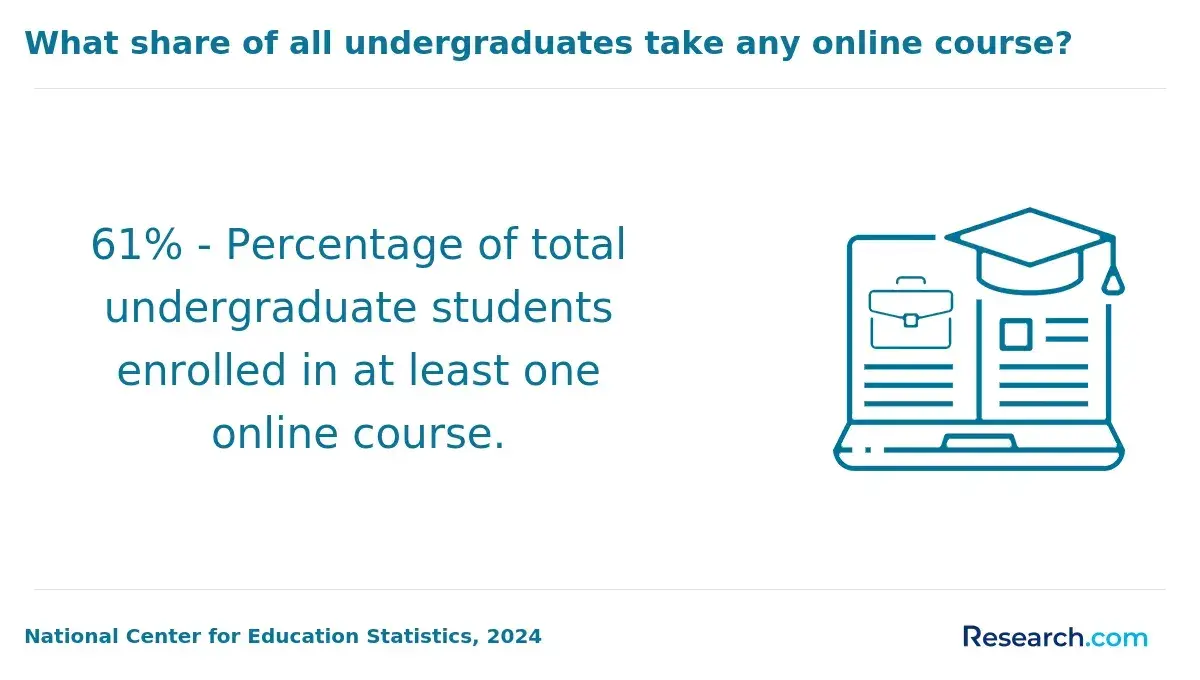
Fully online physics bachelor's degrees are less common than online programs in many other fields because physics requires lab work, advanced problem-solving, and often research or instrumentation experience. Hybrid programs, online general education, online math courses, and remote computational electives are more common than fully online upper-division physics majors.
The table below compares online and campus-based formats for transfer students. It highlights where flexibility helps and where physics still benefits from in-person access.
| Format | Best fit | Strength | Trade-off |
| Campus-based physics BS | Students targeting graduate physics, research, national labs, optics, materials, or instrumentation | Strong access to labs, faculty mentoring, and research groups | Less flexible for working students or students who live far from campus |
| Hybrid physics program | Students who can attend labs on campus but want online lectures or general education courses | Balances flexibility with hands-on requirements | Scheduling lab sections can still be difficult |
| Online-heavy applied physics or physical science degree | Students seeking technical literacy, teaching preparation, or interdisciplinary careers | May work well for students with prior lab credits | May be weaker for research-intensive graduate admission |
| Online math or computing electives paired with campus physics | Students strengthening quantitative skills while completing physics labs in person | Efficient way to add Python, data analysis, statistics, or numerical methods | Requires careful advisor approval so credits count toward graduation |
Online coursework can be useful when it fills general education, math, statistics, coding, or elective gaps. However, students who want a traditional physics PhD, experimental research role, or laboratory-intensive industry job should be cautious about programs with limited in-person lab depth.
This is different from some health, education, or applied science programs that can move more coursework online. For comparison, an online nutritionist degree may offer broader online availability because its laboratory and supervised practice requirements are structured differently from upper-division physics labs.
What core physics and math courses do transfer students typically complete after enrolling?
After enrolling, transfer physics majors usually move into upper-division theory, laboratory, and computational courses. The exact sequence varies, but most programs build from classical mechanics and electromagnetism toward quantum mechanics, statistical physics, and advanced lab work.
The courses below are common in a BS-level physics pathway. They matter because missing one prerequisite can delay multiple later courses.
- Classical mechanics: Covers Newtonian, Lagrangian, and Hamiltonian approaches used in advanced physics and engineering modeling.
- Electricity and magnetism: Develops mathematical treatment of fields, waves, circuits, and Maxwell's equations.
- Quantum mechanics: Introduces wave functions, operators, measurement, and atomic-scale systems.
- Thermal and statistical physics: Connects thermodynamics, probability, entropy, and many-particle systems.
- Modern physics: Often bridges lower-division physics with relativity, quantum concepts, and atomic physics.
- Advanced laboratory: Builds experimental design, instrumentation, uncertainty analysis, and scientific reporting skills.
- Mathematical methods for physics: Applies differential equations, linear algebra, complex variables, and Fourier analysis to physical problems.
- Computational physics: Uses programming to model systems, analyze data, solve differential equations, and simulate physical behavior.
Strong math students should not underestimate writing and communication. Lab reports, research posters, technical documentation, and code explanations are central to physics training and often influence internships or graduate school recommendations.
If you have room for electives, prioritize courses that extend your target path: machine learning or numerical methods for data work, materials science for semiconductor roles, optics for photonics, or education courses for teaching licensure.
How long does it usually take transfer students to finish a physics bachelor's degree, and what does it cost?
Many well-prepared transfer students can finish a physics bachelor's degree in about two years after transferring, but that timeline depends on course sequencing, credit acceptance, and whether required labs are offered every term. Students missing calculus-based physics, differential equations, or modern physics may need extra semesters even if they have many total credits.
Cost depends on tuition, fees, housing, lost work hours, lab fees, books, transportation, and whether transferred credits reduce total enrollment time. College Board's 2024 figures show a wide tuition gap: average published tuition and fees were $11,610 for in-state public four-year colleges, compared with $43,350 at private nonprofit four-year colleges.
The table below explains the cost factors that most affect transfer students. It can help you estimate the real price of finishing, not just the sticker tuition.
| Cost factor | Why it affects physics transfer students | How to control it |
| Accepted major credits | Physics sequences are tightly ordered, so lost credits can add semesters | Request a department-level transfer evaluation before enrolling |
| Residency status | Public universities often charge much higher tuition to out-of-state students | Compare in-state options and residency rules carefully |
| Course rotation | Upper-division physics courses may not be offered every term | Ask for a two-year course plan before accepting admission |
| Research or internship timing | Paid research can reduce costs, while unpaid summer opportunities may add expenses | Ask about paid undergraduate research, REU support, and departmental assistant roles |
| Housing and commuting | Campus-based lab schedules can limit remote attendance | Compare total attendance cost, not only tuition |
To reduce cost and delay, follow a sequence-focused transfer strategy rather than simply maximizing credits. The steps below are practical before you deposit.
- Collect syllabi for calculus, differential equations, linear algebra, physics, chemistry, programming, and lab courses.
- Ask the physics department to confirm which courses meet major requirements, not just university electives.
- Map the next four semesters using the school's actual course rotation.
- Compare financial aid packages using total cost of attendance after grants and scholarships.
- Ask whether transfer students can join research groups, tutoring jobs, or paid lab assistant roles during the first term.
What physics-related careers are available to graduates with strong math backgrounds?
A physics degree with strong math preparation can lead to several career directions because the major trains students to model complex systems, analyze uncertainty, write code, interpret data, and solve open-ended problems. Many graduates work outside job titles that say "physicist," especially at the bachelor's level.
The table below groups common physics-related career paths by how they use math and physics. It can help you connect degree choices and electives to realistic job targets.
| Career path | How physics and math are used | Helpful preparation |
| Research assistant or laboratory technician | Runs experiments, maintains equipment, analyzes results, and documents procedures | Advanced lab, electronics, instrumentation, Python, uncertainty analysis |
| Data analyst or data scientist | Builds models, analyzes large datasets, tests hypotheses, and communicates findings | Statistics, machine learning, SQL, Python, computational physics |
| Optics or photonics technician | Works with lasers, imaging systems, sensors, fiber optics, and measurement tools | Optics, electromagnetism, lab methods, electronics |
| Semiconductor or materials role | Applies physics to devices, thin films, testing, process control, or failure analysis | Solid-state physics, materials science, lab experience, statistical process control |
| Quantitative analyst track | Uses probability, modeling, numerical methods, and coding to analyze financial systems | Linear algebra, probability, stochastic processes, Python, internships |
| Secondary physics teacher | Teaches physics and physical science, often with strong math integration | State-approved teacher preparation and licensure requirements |
| Graduate school pathway | Prepares for research careers in physics, astronomy, engineering, materials, or applied math | Research experience, strong GPA, advanced coursework, recommendation letters |
Students aiming for data-intensive roles should build a portfolio, not just complete the degree. Projects in simulation, signal processing, image analysis, computational physics, or uncertainty modeling can make the physics background easier for employers to understand.
If your long-term target is advanced analytics, you may eventually compare physics graduate study with the best data science master's programs. That route can make sense for physics graduates who want a clearer professional credential in machine learning, business analytics, or large-scale data systems.
What are typical salary ranges and earning growth for physics majors in math-intensive roles?
Physics majors can see very different earnings depending on whether they enter research, engineering-adjacent industry, software, analytics, teaching, or graduate school. The degree is mathematically strong, but salary outcomes depend heavily on job title, location, internships, programming ability, and whether the role requires graduate education.
The table below uses recent U.S. labor market wage benchmarks from the Bureau of Labor Statistics' May 2024 Occupational Employment and Wage Statistics where available. These figures describe occupations, not guaranteed outcomes for physics graduates.
| Occupation | Relevant connection to physics | May 2024 median annual wage |
| Physicists | Research, modeling, experimentation, instrumentation, and applied physics roles | $155,680 |
| Data scientists | Statistical modeling, coding, machine learning, and scientific data analysis | $112,590 |
| Software developers | Simulation software, scientific computing, technical platforms, and algorithmic tools | $133,080 |
| Operations research analysts | Optimization, decision modeling, logistics, risk analysis, and quantitative planning | $91,290 |
| Actuaries | Probability, risk modeling, financial mathematics, and exam-based advancement | $125,770 |
The key takeaway is that "physics major" is not a single salary category. Students who pair physics with coding, statistics, electronics, engineering electives, or research experience often have more direct access to math-intensive roles than students who complete only the minimum major requirements.
For earning growth, focus on skill stacking. A physics graduate who can explain Maxwell's equations is academically strong; a physics graduate who can also build Python models, clean datasets, automate measurements, and present results to non-specialists is easier to place in a wide range of technical jobs.
How does the job market and graduate school demand look for physics majors today?
The job market for physics majors is broad but not always obvious. Bachelor's-level graduates often compete for roles in data, engineering support, software, education, technical sales, quality analysis, and research support, while physicist-titled research roles more often prefer or require graduate education.
Current labor market trends make math-heavy physics training valuable, especially where employers need people who can combine modeling, computation, and physical reasoning. AI is part of that shift: physics students who understand numerical methods, uncertainty, and real-world measurement can be strong candidates for roles where models must be tested against physical systems.
Graduate school demand remains relevant for students targeting research-intensive positions. A physics PhD is usually expected for university faculty roles and many advanced research scientist positions, while master's programs can support transitions into applied physics, engineering, data science, medical physics preparation, or computational science.
Students should be realistic about competition. A physics degree alone may not be enough for specialized AI, semiconductor, aerospace, or finance roles without internships, projects, or graduate coursework. The smartest approach is to choose electives and summer experiences that point clearly toward a target sector.
Some physics graduates also move toward scientific information management, research data curation, or technical knowledge systems. In those cases, an online library science masters can be relevant if the goal is managing technical collections, research data services, or academic science information rather than laboratory work.
Are there licenses, certifications, or professional exams physics majors with strong math should consider?
Most physics bachelor's graduates do not need a general license to work in private-sector technical roles. However, certain career directions do require state licensure, professional exams, or specialized credentials. Requirements vary by state, employer, and role, so students should verify rules before choosing electives or graduate programs.
The list below summarizes credentials that may matter depending on your target path. They are optional for many physics graduates but important in specific fields.
- Teacher licensure: Students who want to teach physics in public secondary schools typically need a state-approved teacher preparation pathway, exams, student teaching, and state certification.
- Fundamentals of Engineering exam: Engineering physics students who want professional engineering pathways may consider the FE exam, but eligibility and later PE licensure rules vary by state and engineering discipline.
- Medical physics certification pathway: Clinical medical physicist roles usually require graduate-level medical physics education, residency training, and board certification rather than only a bachelor's degree.
- Actuarial exams: Physics majors with strong probability and statistics backgrounds may pursue actuarial exams for insurance, pension, risk, and finance careers.
- Data and cloud certifications: Vendor or platform certifications can help for analytics, software, or technical computing roles, but they work best when paired with projects and coding evidence.
A common mistake is collecting certifications without a career target. Before paying for an exam or certificate, check job postings in your desired location and identify which credentials employers repeatedly request.
For transfer students, the better first move is often to strengthen the degree plan: complete computational coursework, pursue research or internships, and build a technical portfolio. Credentials are most useful when they support a clear role rather than substitute for missing experience.
Other Things You Should Know About Physics
The biggest mistake transfer students can make is not aligning their previous coursework with their new institution's requirements, particularly in foundational courses like calculus or linear algebra. Ensuring compatibility can save time and money, and facilitate a smoother academic transition.
Choose a BS if you want graduate physics, research, engineering-adjacent technical roles, or a more rigorous science pathway. Choose a BA if you want flexibility for teaching, policy, business, data, law, or a double major.
Some coursework can be completed online, especially general education, math, programming, and computational electives. Fully online physics bachelor's degrees are less common because advanced labs and research experiences often require campus access.
References
- Where Can I Find a Physics Online Course for Credit? 5 Great Options - Prereqcourses https://www.prereqcourses.com/physics-online-course-for-credit/
- Can I apply for transfer admission if I haven’t completed all the recommended coursework? | MIT Admissions https://mitadmissions.org/help/faq/transfer-will-my-application-be-reviewed-if-i-have-not-completed-all-the-recommended-course-work/
- The Transfer Student's Guide to Choosing the Right College https://www.umassglobal.edu/blog-news/transfer-students-guide-choosing-right-college
- Top Careers in Math and Science https://www.learner.com/blog/10-interesting-careers-in-math-and-science
- How Long to Get a Physics Degree? | ValidGrad https://validgrad.com/blog/physics-degree-timeline/
- Advice for a transfer student that is a physics major? - Transfer Students - College Confidential Forums https://talk.collegeconfidential.com/t/advice-for-a-transfer-student-that-is-a-physics-major/2092984