2027 AI Associate Degrees in Washington: Best Online and On-Campus Options

Co-Founder and Chief Data Scientist
Professionals with unrelated undergraduate degrees often struggle to find flexible, accredited pathways into the artificial intelligence field. Many face challenges balancing work, family, and education while seeking credible credentials that demonstrate their skills to employers. The landscape of AI associate degrees can be confusing, especially when choosing between online and on-campus options in Washington.
This article examines available programs designed for those aiming to pivot into AI efficiently and effectively. It highlights practical factors including accessibility, curriculum, and accreditation to help readers make informed decisions aligned with their career goals.
Key Things You Should Know
- Washington offers a growing number of AI associate degrees both online and on-campus, with over 15 programs available as of 2025, reflecting rising demand in the tech sector.
- Many programs emphasize hands-on skills in machine learning, data analytics, and automation, aligning with 22% projected job growth for AI-related fields by 2030 in Washington state.
- Tuition ranges widely, with community colleges averaging $4,000 annually, making AI associate degrees an affordable entry for diverse student populations pursuing STEM careers.
What is an AI associate degree, and what can you do with it in Washington?
An AI associate degree program in Washington state offers a focused two-year curriculum that equips students with practical skills in artificial intelligence technologies, data analysis, and machine learning fundamentals. Graduates can access career opportunities with an AI associate degree in Washington including roles such as AI support technicians, junior data analysts, machine learning assistants, or automation specialists. These positions provide valuable entry points into the tech sector, combining hands-on experience with AI systems and processes.
Industry data shows a 42% rise in AI-related job postings across the U.S., with Washington's tech and manufacturing sectors demanding professionals skilled in managing AI-driven workflows and interpreting complex data outputs. Curriculum highlights often include programming languages like Python, foundational machine learning techniques, data structures, and AI ethics. Programs frequently offer practical labs and cloud-based AI platforms to prepare students for immediate employment.
Many programs also provide internship or apprenticeship opportunities with local employers, helping graduates enter the workforce quickly. For working professionals, this associate degree serves as an effective pathway to upgrade skills or pivot toward AI-focused roles without pursuing a four-year degree.
Prospective students interested in accelerated pathways might explore a computer science degree accelerated to complement AI training and broaden career options.
Which Washington colleges offer accredited AI associate degrees online or on campus?
Several Washington colleges offer accredited associate degrees focusing on artificial intelligence both online and on campus. Notable institutions include Seattle Central College, Tacoma Community College, and Bellevue College, which provide pathways in AI-related applied computing fields. These programs blend core computing fundamentals with AI topics like machine learning and data analytics, preparing students for entry-level positions or transfer to four-year degrees.
Seattle Central College's Associate in Applied Science in Computing integrates AI modules and is available fully online. Tacoma Community College offers an on-campus Associate degree with AI electives embedded in the Computer Science curriculum, ideal for students seeking hands-on lab experience and local industry connections. Bellevue College delivers a hybrid format combining online lectures with in-person workshops, accommodating working professionals needing flexibility alongside direct faculty interaction.
The Washington State Board for Community & Technical Colleges reported community and technical colleges served about 290,000 students, highlighting these institutions as the state's largest on-ramp for applied computing and artificial intelligence pathways. Students should verify program accreditation, course content, delivery format, and internship opportunities to align with their career goals.
Many colleges also support transfer agreements with four-year universities for continued study in AI or computer science. Prospective students looking for affordable options may explore data science degrees, which often overlap with AI training in Washington's educational landscape.
How do online and on-campus AI associate programs in Washington compare?
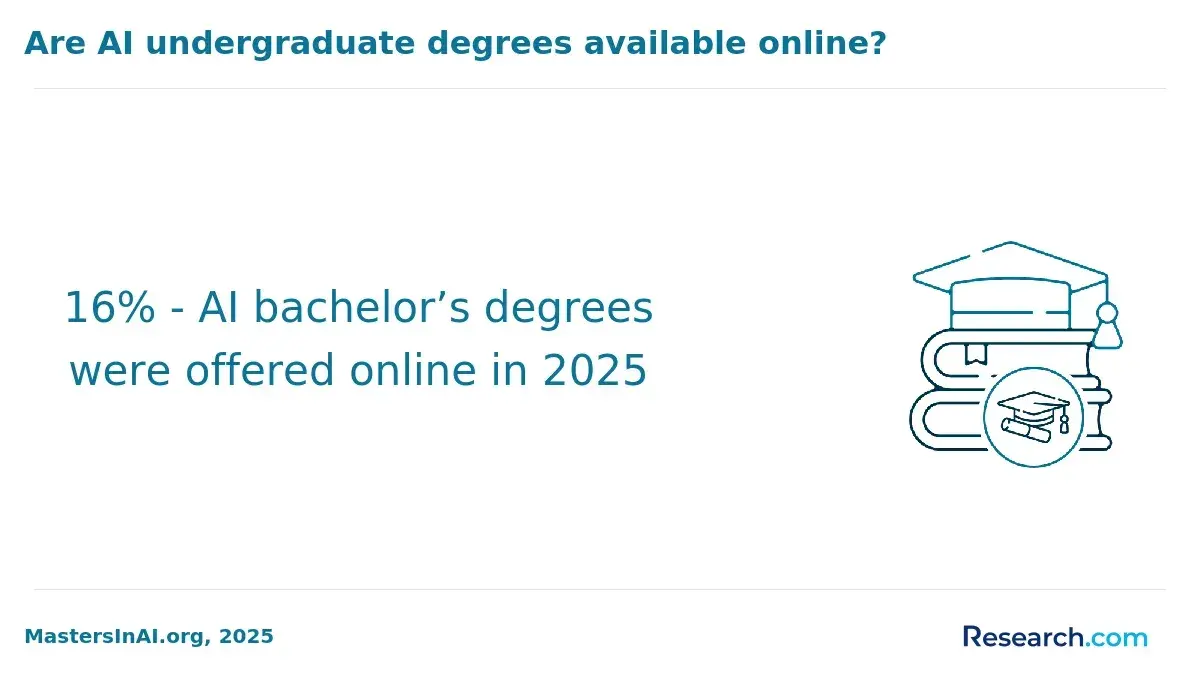
Online and on-campus artificial intelligence associate degrees in Washington offer different benefits based on student needs and preferences. Online programs provide scheduling flexibility ideal for balancing work or family, as well as access for those who do not live near campuses. These programs often include virtual labs and interactive tools, though they require self-discipline and technical proficiency. On-campus programs emphasize hands-on learning through labs and group projects, offering direct guidance from faculty and immediate access to resources. Regional colleges like Bellevue College and Spokane Community College excel in this experiential approach.
Nationwide, 25% of postsecondary students took exclusively online courses, reflecting growing acceptance of fully online education. Washington's institutions mirror this trend, offering accredited AI associate degrees covering core areas like machine learning, data analysis, and programming. Prospective students seeking guidance on finding the best online AI degree programs will find options aligned with diverse learning styles and career objectives.
What prerequisites and admission requirements do AI associate programs in Washington have?
AI associate degree admission requirements in Washington generally include a high school diploma or equivalent, such as a GED, along with submission of official transcripts. Many community colleges apply Washington's common placement reform, which uses multiple measures-like high school GPA, coursework, or prior college credits-to place students directly into college-level math and English courses, rather than relying solely on high-stakes placement tests. This system helps reduce barriers and allows students to begin their studies sooner.
Prerequisites for online and on-campus AI programs in Washington often include foundational knowledge in subjects such as mathematics, computer science, or programming. Some programs also require proficiency in algebra and basic programming concepts, sometimes verified through placement tests or assessments. Students are encouraged to prepare accordingly to demonstrate readiness for technical coursework.
Application steps usually involve submitting an application through the college's admissions portal, providing official transcripts and test scores if applicable, participating in orientation or advising sessions, and meeting with an academic advisor to confirm prerequisites based on prior education.
Several colleges offer preparatory courses or bridge programs to help students lacking adequate math or programming backgrounds, smoothing the transition into specialized AI classes. Prospective students should reach out to specific institutions for detailed requirements. For those considering alternative but related paths, an accelerated cyber security degree online might be a suitable option as well.
What classes and hands-on projects are covered in an AI associate curriculum?
Associate degree programs in Washington focusing on artificial intelligence often emphasize foundational courses like programming fundamentals, data structures, machine learning basics, and introductory data science. Python is a key programming language due to its dominant role in AI development. According to GitHub's 2024 Octoverse report, Python remains the most-used language on the platform, highlighting its importance for students developing AI skills. Students gain hands-on experience with Python syntax and popular libraries such as TensorFlow and PyTorch to implement algorithms effectively.
Practical projects often involve building chatbots, image recognition systems, or predictive models, providing real-world coding and evaluation experience. Some programs also introduce cloud computing basics through platforms such as Google Colab and AWS, alongside collaboration tools like Git for version control. This integrated approach equips graduates with skills relevant for entry-level AI roles or continued education.
How long does an AI associate degree take, and how many credits is it?
An associate degree in artificial intelligence in Washington typically requires completion of 90 quarter credits, aligning with the state's community and technical college standards (Washington SBCTC / CTC degree standards and advising guidance, 2024). This credit framework ensures consistent academic expectations across institutions and covers foundational subjects such as programming, data analysis, machine learning, and ethics.
Full-time students usually complete the degree in about two years, spanning 6 to 8 academic quarters (approximately 18 to 24 months). Part-time enrollment can extend the timeframe to three years or more, depending on course availability and individual circumstances.
Advisors recommend considering personal workload and commitments when planning the duration of study, as balancing work or family can impact progress. The 90-credit standard supports student readiness for entry-level roles or further study in artificial intelligence fields.
This degree structure supports alignment with industry and academic requirements throughout Washington, offering a comprehensive pathway into the evolving AI sector.
What is the total cost of an AI associate degree in Washington, including fees?
The total cost of earning an ai associate degree in Washington generally falls between $7,500 and $10,000, covering tuition and mandatory fees. This estimate derives from average annual in-district tuition and fees at U.S. public two-year colleges, which was about $3,990 per year. Since most programs take two years, tuition is the main expense.
Additional fees, such as technology, lab, and activity charges, can add several hundred dollars each year. Some Washington community colleges levy $200-$400 per semester in fees, resulting in $800-$1,600 across two years.
Costs vary based on residency status: out-of-district or out-of-state students often pay higher tuition-sometimes twice as much-raising total expenses to $15,000 or more. While online programs may reduce campus-related fees, tuition rates often remain the same for residents.
Students should also budget $1,000-$1,500 for books, software licenses, and specialized materials required for ai courses. Living expenses differ widely by location and are not included here.
Verifying specific tuition and fees with each college is crucial. Financial aid and scholarships are important resources that can substantially lower these costs.
What jobs can you get with an AI associate degree in Washington?
An AI associate degree in Washington prepares graduates for various entry-level roles in technology, especially in software development, data analysis, and technical support. Job titles may include software developer assistants, AI technician support specialists, data analysts, and machine learning operations technicians. Typically, these roles involve supporting senior developers, managing datasets, implementing AI models, and maintaining AI systems.
Many entry positions emphasize practical skills, such as Python coding, training machine learning algorithms, and deploying AI-powered solutions to business challenges. AI integration with cloud platforms like AWS and Azure or robotic process automation also offers valuable hands-on experience. For instance, graduates might help develop chatbots for customer service or support automated decision-making in healthcare settings.
Washington hosts a substantial tech workforce, with around 71,800 employed software developers according to the U.S. Bureau of Labor Statistics. This robust environment creates strong demand for AI-related jobs in startups, tech companies, and public sector initiatives focusing on innovation. Graduates benefit from supplementing their degrees with certifications in AI tools and cloud computing frameworks like TensorFlow or PyTorch.
Building a portfolio through real-world projects and engaging with local AI communities enhances career prospects. With continuous learning and skill development, those with an AI associate degree can progress to advanced roles such as AI developer, data scientist, or AI engineer.
What salaries can AI associate graduates earn in Washington?
AI associate degree graduates in Washington typically find competitive entry-level salaries, especially in roles supporting ai systems. The median annual wage for Computer User Support Specialists, a common position for those with associate-level technical skills in ai, was $69,820 according to the U.S. Bureau of Labor Statistics, OEWS. This salary provides a solid benchmark for new graduates entering the workforce.
Wages vary widely depending on factors such as the industry, employer size, and geographic location. Urban centers like Seattle generally offer higher pay to offset costs of living and due to stronger demand for ai-skilled professionals. Common employers include technology companies, healthcare organizations, and government agencies, some of which may offer bonuses or additional benefits.
Graduates often move into related fields, including database administration, technical support, or junior data analysis, where salaries typically fall between the mid-$60,000s and low $80,000s annually. Certifications in programming, machine learning, or cloud technologies can boost earning potential and career advancement.
Job seekers are encouraged to research employer pay scales and develop portfolios showcasing ai projects. Washington's thriving tech sector presents many opportunities, but ongoing skill development remains key to maximizing salary growth for associate degree holders.
What certifications pair best with an AI associate degree for entry-level roles?
Certifications that complement an AI associate degree significantly improve job prospects in entry-level roles by strengthening skills in data management, security, and cloud computing. CompTIA certifications-such as Data+, Security+, and Cloud+-are especially valuable, offering foundational knowledge employers prioritize. Research from CompTIA highlights that 91% of employers consider IT certifications a key factor when making hiring decisions, emphasizing their importance alongside an AI degree.
CompTIA Data+ confirms competence in data analytics and management, essential for handling machine learning datasets and evaluating AI models. Security+ equips candidates with cybersecurity expertise needed to safeguard AI infrastructures from cyber threats. Cloud certifications, including CompTIA Cloud+ and vendor-specific credentials like AWS Certified Cloud Practitioner, reveal skills in deploying AI solutions on cloud platforms.
These certifications demonstrate a commitment to continuous learning and help close the gap between theoretical knowledge and practical skills. Graduates aiming for roles like data analyst, AI technician, or junior machine learning engineer benefit from coupling their AI associate degree with these credentials to enhance career readiness across multiple industries.
Other Things You Should Know About Artificial Intelligence
Washington’s State Board for Community and Technical Colleges oversees most public two-year colleges, while degree authority is ultimately tied to the Northwest Commission on Colleges and Universities for accreditation. Students should confirm the program is accredited and listed by the college as an approved associate degree before enrolling.
In Washington, AI associate degree programs typically require students to complete between 60-70 credit hours. This includes a mix of core AI courses, electives, and general education classes to ensure a comprehensive educational experience.
Faculty expertise in AI programs for associate degrees in Washington in 2027 typically includes professors with advanced degrees and industry experience in AI fields. Many have published research in machine learning and data science, ensuring students learn from knowledgeable and experienced educators.
References
- Best Artificial Intelligence Degree Programs in Washington — 2026 Rankings https://hakia.com/degrees/artificial-intelligence/washington/
- Certified Artificial Intelligence Associate https://skillfloor.com/artificial-intelligence-associate
- Automation Developer https://academy.uipath.com/learning-plans/specialized-ai-associate-training
- 10 AI Courses to Master Artificial Intelligence in 2025 | DigitalOcean https://www.digitalocean.com/resources/articles/ai-courses
- AI Certification Programs: Which Ones Matter for Your Career https://www.businessplusai.com/blog/ai-certification-programs-which-ones-matter-for-your-career
- Online AI Degrees vs On-Campus: Which Is Right for You in 2026? https://aidegreeonline.com/online-ai-degrees-vs-on-campus-which-is-right-for-you-in-2026/
- 16 Artificial Intelligence Career Paths https://www.calmu.edu/news/artificial-intelligence-career-paths
- What are the core topics covered in an AI certification cour... https://forums.h2kinfosys.com/community/main-category-artificial-intelligence/what-are-the-core-topics-covered-in-an-ai-certification-course/
- What AI certification options are best for professionals transitioning into AI roles? https://dev.to/georgiaweston/what-ai-certification-options-are-best-for-professionals-transitioning-into-ai-roles-20gp
- Top 15 AI Agents Courses [Free & Paid] https://learnprompting.org/blog/ai-agents-courses