2027 Best Online Master's Degrees in Artificial Intelligence

Co-Founder and Chief Data Scientist
Many professionals with degrees in unrelated fields face challenges when seeking to enter the growing artificial intelligence sector. The demand for AI skills is rapidly increasing, yet traditional educational paths can be rigid and time-consuming. Balancing work, family, and education often complicates pursuing advanced degrees. Online master's programs in artificial intelligence offer a flexible, accredited solution for those aiming to pivot into this dynamic industry without relocating or pausing their careers. This article examines the best online master's degrees in artificial intelligence available in 2026, guiding prospective students toward informed decisions that align with their goals and schedules.
Key Things You Should Know
- Online master's degrees in artificial intelligence offer flexible study options aligned with the rising 40% job growth projected in AI fields through 2030, per U.S. labor data.
- Programs increasingly emphasize practical skills in machine learning, natural language processing, and ethics to meet industry demand for well-rounded AI specialists.
- Top-tier degrees combine interdisciplinary coursework and real-world projects, with average tuition ranging from $20,000 to $50,000, making them accessible for diverse learners.
What are the top-ranked online master's degrees in artificial intelligence offered by accredited universities?
Several accredited universities offer top-ranked online master's degrees in artificial intelligence, known for their rigorous curricula and industry relevance. Carnegie Mellon University ranks #1 nationally with its online Master of Science in Artificial Intelligence, enrolling over 3,000 students. This program covers machine learning, robotics, and data analytics through a multidisciplinary approach, leveraging Carnegie Mellon's strong history in AI research and innovation.
Stanford University provides an online Master of Science in Computer Science with an artificial intelligence specialization, balancing theoretical foundations and practical applications. This program suits professionals looking to connect AI research with real-world solutions. Other notable programs include the Massachusetts Institute of Technology's online computer science master's with AI tracks and Georgia Institute of Technology's affordable Online Master of Science in Computer Science (OMSCS) featuring an AI specialization designed for working professionals.
For those exploring the best accredited online master's programs in artificial intelligence, it is important to evaluate accreditation, curriculum richness, faculty expertise, and research access. Programs that incorporate hands-on projects, AI ethics, and emerging subjects like natural language processing and reinforcement learning provide a comprehensive learning experience.
The variety of online programs allows students to tailor their education, whether focusing on theory for PhD preparation or applied AI for immediate industry use. Prospective candidates can also review support services such as career counseling and networking events to ensure alignment with their goals. For further insights into career opportunities with an artificial intelligence degree, exploring trusted resources can be valuable.
What are the admission requirements and prerequisites for enrolling in an online master's program in artificial intelligence?
Admission requirements for enrolling in an online master's degree admission requirements for artificial intelligence programs typically include a bachelor's degree from an accredited institution, preferably in computer science, mathematics, engineering, or related fields. A 2024 survey by the Council of Graduate Schools found that 78% of online AI master's programs expect applicants to have completed undergraduate coursework in mathematics, computer science, or similar disciplines to ensure the foundational knowledge needed for advanced AI topics.
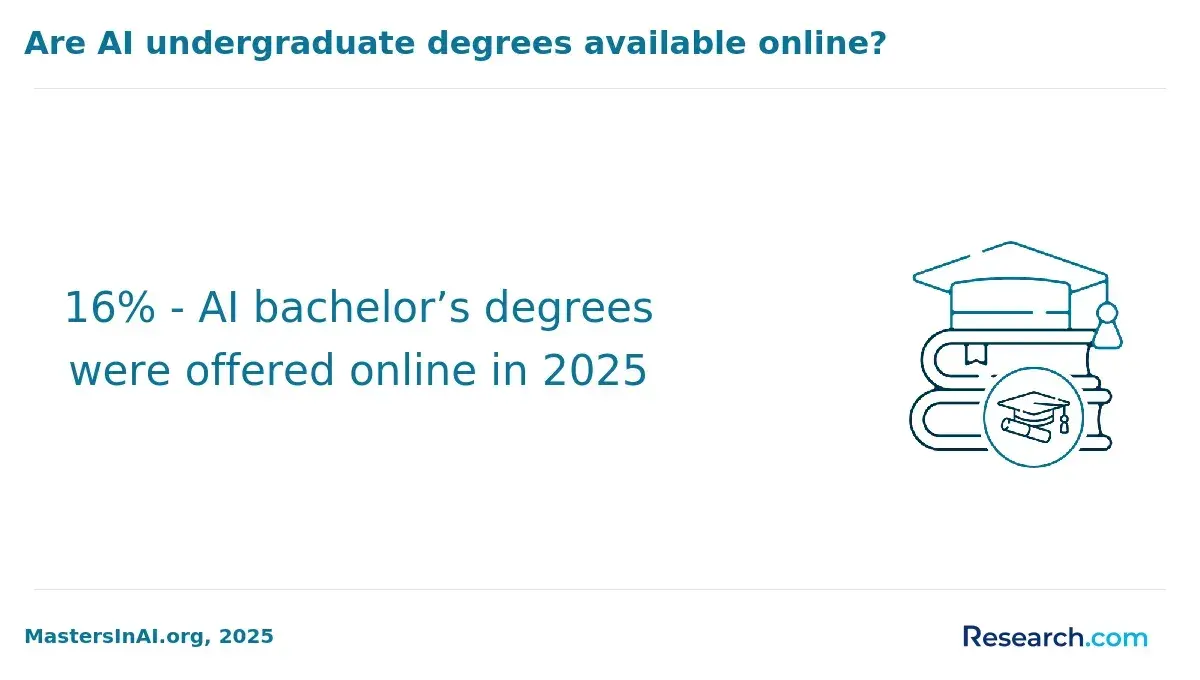
Most programs require a minimum GPA around 3.0 on a 4.0 scale. GRE scores may still be requested, although many schools have waived this requirement due to evolving admission policies. Relevant professional experience in technology or data science can enhance applications, particularly when the undergraduate background is not directly related to AI.
Prerequisites for enrolling in an artificial intelligence master's program often include courses in linear algebra, calculus, probability, statistics, programming languages such as Python, Java, or C++, and data structures. Applicants missing these foundational courses might be asked to complete prerequisite classes before or during the program. For instance, some programs require an online algorithms course if a candidate lacks formal training in that area.
Additional components typically include two or three letters of recommendation and a statement of purpose detailing the applicant's interest in AI and career objectives. Certain programs may also require an interview or a portfolio showcasing relevant projects or research.
Understanding these requirements helps prospective students prepare for rigorous graduate studies and can guide decisions about managing costs or commitments compared to other disciplines, such as a mechanical engineering degree online cost alternatives.
How much do online master's degrees in artificial intelligence cost, and what financial aid options are available?
The cost of online master's degrees in artificial intelligence programs varies widely, typically from $15,000 to $60,000 in total tuition. For instance, Carnegie Mellon University's program costs about $46,000, reflecting a top-tier offering. In comparison, Georgia Tech's Online Master of Science in Computer Science (OMSCS) with an AI focus is priced near $10,000, representing a more affordable choice based on recent program data. These differences often stem from institutional prestige, curriculum scope, and program flexibility.
Financial aid options for online master's in artificial intelligence students include federal student loans, grants, scholarships, employer tuition reimbursement, and assistantships when available. Completing the Free Application for Federal Student Aid (FAFSA) is a crucial first step for government funding eligibility. Many institutions also provide merit-based scholarships targeting graduate STEM students, which can significantly reduce costs.
Employer sponsorship is another important funding source, especially for working professionals. Companies in technology sectors frequently support advanced degrees to enhance their workforce skills. Payment plans or deferred tuition options are often offered to alleviate financial pressures.
Since the investment can be substantial, prospective students should verify financial aid and scholarship availability through official university resources. Research from the National Center for Education Statistics shows that combining scholarships and employer support may cut out-of-pocket expenses by up to 50%. For those considering the best online master's in artificial intelligence, careful financial planning is key to making advanced AI education attainable.
Online Delivery of AI Programs, by Institution Type

What is the typical curriculum and core coursework structure in an online AI master's degree program?
Typical curriculum structure in an online artificial intelligence master's program emphasizes core coursework that builds expertise in machine learning, deep learning, and natural language processing. These subjects appear in nearly all programs and form the foundation for real-world AI applications like predictive modeling and language understanding.
Core courses cover advanced machine learning techniques including supervised, unsupervised, and reinforcement learning. Deep learning focuses on neural networks and architectures for image and speech recognition, while natural language processing teaches algorithms essential for chatbots and AI assistants. This core curriculum structure in an online artificial intelligence master's program ensures students master critical skills across relevant AI domains.
Supporting mathematical courses in linear algebra, probability, and statistics often precede programming classes, which emphasize Python or R for practical projects. Electives or specialization tracks, such as computer vision, robotics, or AI ethics, allow students to tailor their studies toward specific career goals. Capstone projects or theses integrate theory with applied problem-solving and innovation in AI.
Programs usually require 30 to 36 credit hours and one to two years of full-time study. Part-time options are common for working professionals balancing education with careers. Understanding data engineering and cloud computing frameworks is also highlighted to meet industry needs for scalable AI model deployment.
For those exploring related fields, resources on affordable online cybersecurity degrees may provide additional career pathways.
How long does it take to complete an online master's degree in artificial intelligence, and what is the typical time commitment?
Online master's degrees in artificial intelligence typically require about 24 months for full-time students to complete, while part-time students often need between 36 and 48 months. This variation depends on individual schedules, employer support, and the intensity of the course load. Full-time learners generally undertake 12 to 15 credit hours per semester, equating to approximately 30 to 40 hours a week spent on coursework and projects. Part-time students usually enroll in 6 to 9 credit hours per semester, dedicating around 15 to 20 hours weekly, which suits those balancing work and family commitments.
Some programs offer accelerated tracks that reduce completion time to 18 months by using intensive schedules or summer courses. On the other hand, flexible program formats can extend beyond four years, giving students the option to pause or adjust their pace. Cohort-based programs may have fixed timelines but often provide structured pacing and peer support, which can improve efficiency for some learners.
Applicants should assess their current obligations and preferred learning styles when choosing a program format. Confirming expectations about weekly study hours and available semesters can help prevent underestimating the workload. Median completion times serve as useful benchmarks, but students should be prepared for variability depending on course choices and external factors.
What career paths and job roles are available to graduates with an online master's degree in artificial intelligence?
Graduates with an online master's degree in artificial intelligence can pursue rapidly growing career paths in various industries. According to LinkedIn's 2024 Jobs on the Rise report, the fastest-growing roles include AI specialist, machine learning engineer, and AI research scientist. AI specialist positions increased by 74% year-over-year, highlighting strong demand across technology, healthcare, finance, and automotive sectors.
AI specialists design, deploy, and maintain AI-driven applications that solve practical business challenges like automating customer service or improving predictive analytics. Machine learning engineers build algorithms and models that enable systems to learn from data, often working with large datasets in areas such as natural language processing, computer vision, and robotics. AI research scientists focus on theoretical advancements and innovative AI architectures, frequently collaborating with universities or corporate R&D teams.
Other career options include data scientists who analyze complex datasets using AI, AI product managers responsible for guiding AI solutions from development to market, and robotics engineers who create autonomous systems for manufacturing and logistics. Professionals interested in leadership can advance to roles like AI strategy consultants or chief AI officers, directing organizational AI adoption.
Online master's programs equip students with essential technical skills in Python, TensorFlow, and cloud platforms, preparing them for direct industry entry. Mastery of deep learning, ethical AI practices, and large-scale system deployment further enhances career prospects.
What is the average salary range for professionals with a master's degree in artificial intelligence?
Professionals with a master's degree in artificial intelligence in the U.S. can expect an average base salary near $156,000, according to Glassdoor's salary data. Early- to mid-career roles demand strong skills in machine learning, data analysis, and algorithm development, but salaries vary depending on industry, location, and job complexity.
Senior AI experts, including architects, lead machine learning engineers, and research scientists, often earn over $250,000 due to their advanced responsibilities such as designing AI systems and leading teams. Industries like tech, finance, healthcare, and automotive provide some of the highest compensation because of their reliance on sophisticated AI applications.
Entry-level roles for master's holders typically start around $120,000, with rapid growth possible by gaining expertise in areas like natural language processing, reinforcement learning, and AI ethics compliance. Certifications in cloud AI platforms or data engineering can also enhance salary prospects.
Regions such as Silicon Valley and New York command higher salaries driven by competitive markets and living costs. Reliable salary data from sources like Glassdoor help prospective students and professionals set realistic expectations and align education with market needs.
What is the job outlook and demand for AI professionals in the current job market?
The job outlook for AI professionals is exceptionally strong, with the U.S. Bureau of Labor Statistics projecting a 21% growth in computer and information research scientist roles-including AI experts-from 2023 to 2033. This growth rate significantly surpasses the average for all occupations, reflecting a high demand for experts in machine learning, natural language processing, and robotics.
Industries like technology, finance, healthcare, automotive, and government actively seek professionals skilled in AI to build systems for automation, data analysis, and decision-making. For instance, healthcare relies on AI-driven diagnostic tools requiring specialists to transform clinical challenges into algorithmic solutions. In finance, AI experts design fraud detection and automated trading algorithms.
Graduates holding a master's degree in AI have a competitive advantage, as employers value their advanced theoretical knowledge and practical experience. Career opportunities extend beyond technical roles to areas such as AI ethics, policy advising, and project management, where understanding AI's societal impact is vital.
Continuous learning is essential to stay current with evolving AI technologies and tools. Hands-on experience with widely used AI frameworks and programming languages is critical for success. High starting salaries and swift career advancement are common due to the shortage of qualified candidates.
Overall, the growing integration of AI technologies across diverse sectors ensures strong employment prospects for those with specialized master's education in artificial intelligence.
What professional certifications or credentials complement a master's degree in artificial intelligence?
Professional certifications that complement a master's degree in artificial intelligence significantly boost practical expertise and enhance job market competitiveness. Employers increasingly seek candidates with both advanced academic credentials and specialized, industry-recognized certifications. A report from the Indeed Hiring Lab showed a 43% rise in job postings requiring a master's degree paired with certifications like AWS or Google Cloud compared to the previous year, emphasizing the importance of cloud credentials in AI careers due to the demand for scalable cloud infrastructure.
Certifications such as AWS Certified Machine Learning Specialty and Google Professional Machine Learning Engineer validate skills in deploying AI models on cloud platforms, managing workflows, and handling data engineering. The Microsoft Certified: Azure AI Engineer Associate also equips professionals with expertise in implementing AI services within enterprises.
Beyond cloud certifications, credentials in data science and programming deepen AI knowledge. The Certified Data Scientist credential from the Data Science Council of America (DASCA) verifies proficiency in data analytics and machine learning, while the TensorFlow Developer Certificate confirms hands-on ability to build and optimize AI models.
Security and ethics are critical in AI development. Certifications like (ISC)² Certified Information Systems Security Professional (CISSP) and Certified Ethical Emerging Technologist (CEET) demonstrate awareness of AI governance and ethical concerns, which are increasingly important for regulated industries.
Aligning certifications with career goals-whether in development, deployment, management, or governance-strengthens both theoretical and practical competencies, meeting growing employer demands in artificial intelligence fields.
How should prospective students evaluate and compare online AI master's programs to find the best fit?
Program reputation and accreditation are vital when selecting an online AI master's degree. Accreditation by recognized agencies, such as ABET or regional bodies, ensures the curriculum meets high academic standards and that the degree is valued by employers. Prospective students often prioritize these factors to confirm educational quality and credibility.
Career outcomes data is equally important. Reliable programs share clear employment rates, salary progress, and job placement statistics. For example, some programs report that 90% of graduates find AI-related positions within six months. Accessing this data through official channels helps gauge potential return on investment.
Curriculum quality should focus on practical skills, including machine learning, natural language processing, and robotics, supported by hands-on projects or internships. Flexibility in learning modality, such as fully asynchronous or hybrid options, allows students to balance studies with professional commitments. Optional concentrations or dual degrees can provide specialized expertise.
Faculty expertise influences the depth of learning and networking. Investigating faculty research activities, publications, and industry ties can reveal opportunities for mentorship and access to cutting-edge knowledge.
Cost and financial support matter too. Compare tuition fees alongside available scholarships, assistantships, and program length to make a decision aligned with your career goals and financial situation.
Other Things You Should Know About Artificial Intelligence
AI master's programs in 2027 integrate coursework on ethical AI development, emphasizing bias detection and prevention techniques. Students learn through case studies and projects that illustrate real-world challenges and solutions, ensuring future AI professionals are equipped to create fair and unbiased AI systems.
Most online master's degrees in AI for 2027 take about 1.5 to 2 years to complete, depending on the program structure and whether students attend part-time or full-time. Programs usually require around 30 to 36 credit hours for completion.
Prospective students typically need a foundational background in computer science, mathematics, and statistics. Key prerequisite courses often include calculus, linear algebra, probability, and programming skills in languages like Python, ensuring readiness for advanced AI coursework in 2027 online master's programs.
Many 2027 online AI master’s programs require a capstone or final project instead of a thesis. A thesis track usually appears in research-focused programs and may require 6 to 12 credit hours, faculty supervision, and a written defense or presentation before graduation.
References
- Best AI Masters Online & On-Campus - AIDegreePrograms.org https://aidegreeprograms.org/rankings/best-ai-masters-programs/
- Best Online AI Master's Programs https://www.itcareerfinder.com/program-rankings/best-artificial-intelligence-masters-programs.html
- AI Engineer Job Outlook 2025: Trends, Salaries, and Skills – 365 Data Science https://365datascience.com/career-advice/career-guides/ai-engineer-job-outlook-2025/
- What can I do with a master's in artificial intelligence? | edX https://www.edx.org/resources/what-can-you-do-with-a-masters-in-artificial-intelligence
- How to Evaluate a Student Information System in an AI-First Era https://moderncampus.com/blog/how-to-evaluate-a-student-information-system-in-an-ai-first-era.html
- 2026 Best Online Master's in AI Programs https://www.mastersinai.org/degrees/online-masters-in-artificial-intelligence/
- Top AI Certifications for 2026: A Guide to Advancing Your Tech Career | DataCamp https://www.datacamp.com/blog/top-ai-certifications
- Online Master's Degree in Artificial Intelligence (AI) & Machine Learning | CSU Global | Accredited https://csuglobal.edu/academic-programs/graduate-degrees/masters-science-degree-artificial-intelligence-machine-learning
- What Can I Do With a Master’s Degree in Artificial Intelligence (AI)? https://wp.wpi.edu/catalyst/2024/04/03/what-can-i-do-with-a-masters-degree-in-artificial-intelligence-ai/
- How to Choose the Best Online Master’s in Artificial Intelligence for Your Career Goals https://aifolks.org/blogs/how-to-choose-the-best-online-masters-in-artificial-intelligence-for-your-career-goals