2027 Affordable Online AI Associate Degrees by State

Co-Founder and Chief Data Scientist
Many working professionals with unrelated undergraduate degrees aim to enter the rapidly growing artificial intelligence industry but face time and financial constraints. Traditional on-campus programs can be costly, inflexible, and geographically restrictive. Affordable online AI associate degrees offer a practical solution by combining flexibility with accreditation, enabling learners to gain relevant skills without sacrificing current job commitments.
This article examines affordable online AI associate degree options by state in 2027, helping prospective students identify accessible programs tailored to their location and career goals. It aims to guide informed decisions for flexible, cost-effective educational pathways into AI careers.
Key Things You Should Know
- In 2026, over 40 states offer affordable online AI associate degrees, with average tuition ranging from $3,500 to $7,000 annually, making tech careers more accessible nationwide.
- Programs emphasize practical skills like machine learning, data analysis, and programming languages, preparing students for entry-level AI jobs or further study.
- Several states, including California and Texas, provide financial aid and scholarships specifically for AI-related programs to encourage diversity in technology fields.
What are affordable online AI associate degrees and how do they differ from bachelor's programs?
Affordable online AI associate degrees in the United States offer focused, two-year programs that develop practical skills in machine learning, data analysis, and foundational programming. These degrees differ from bachelor's programs by emphasizing technical skills suitable for entry-level roles such as AI technician or data support specialist. In contrast, bachelor's degrees cover broader theoretical topics, including advanced algorithms, ethics, and interdisciplinary applications, preparing students for research and development positions.
Differences between online AI associate degrees and bachelor's programs by state include variations in cost, curriculum focus, and hands-on tools like Python and TensorFlow. Many programs incorporate interdisciplinary subjects such as AI ethics or cloud computing, and some have transfer agreements allowing smooth continuation toward a bachelor's degree.
The U.S. Bureau of Labor Statistics notes that associate degree holders in AI fields earn about 40% less than those with bachelor's degrees but complete their education two years sooner. This trade-off affects decisions for students balancing immediate employment with long-term career growth, often influencing debt and salary potential.
Students considering online associate options should assess accreditation, support services, and job market demand. Those interested in career paths can explore applied ai degree jobs for practical insights and opportunities.
Which states offer the most affordable online AI associate degree programs with regional accreditation?
Texas, Florida, and California lead the way in offering some of the most affordable online AI associate degrees by state through regionally accredited community colleges. These institutions provide tuition rates ranging from $6,000 to $8,000 annually, which is significantly lower than many traditional on-campus programs that can cost between $15,000 and $25,000 per year, as reported in the College Board's 2024 Trends in College Pricing.
Colleges like Austin Community College and Lone Star College in Texas focus on AI technologies with flexible online formats, while Florida's Miami Dade College offers accredited, affordable AI associate degrees aligned with workforce demands in technology sectors. California's Sacramento City College also provides cost-effective, regionally accredited online options that appeal to budget-conscious students.
When evaluating states with regionally accredited online AI associate degree programs, confirming the accreditation status is essential to ensure credit transferability and access to federal financial aid. Lower tuition in these states can ease financial burdens by reducing reliance on student loans, making online education accessible for working adults and those with family responsibilities. Additionally, prospective students should verify residency requirements since some community colleges offer capped tuition rates for in-state students only.
For those researching affordable pathways in AI education, consulting data science rankings can provide valuable insights into cost-effective programs nationwide.
What are the admission requirements and prerequisites for online AI associate degree programs?
Admission requirements for online AI associate degree programs in the US typically include a high school diploma or equivalent, such as a GED. Many institutions ask for official transcripts to verify academic history, while some require prerequisite courses or placement tests to confirm readiness, especially since about 72% of community college students need at least one developmental education course before beginning college-level work. These prerequisites for affordable online AI associate degree programs in the US often include college-level algebra, basic programming, or introductory computer science.
Some programs insist these foundation courses be completed prior to enrollment, while others offer remedial classes during the first semester. For instance, students without prior coding experience may need to finish an introductory programming course before advancing to AI-specific courses. Additionally, some colleges request standardized test scores or placement exams, although many have relaxed SAT or ACT requirements to increase access.
Applicants with nontraditional backgrounds or returning adults may receive extra advising to determine necessary developmental coursework. Advising offices help select courses that build skills essential for AI studies. Access to reliable computers and internet connections is often expected due to the fully online format. Those exploring admission requirements for online AI associate degrees by state can find useful guidance and details.
Prospective students considering further education might also explore related opportunities, such as an ai masters degree, as part of their long-term career planning.
How long does it take to complete an online AI associate degree and what is the average cost?
Completing an online ai associate degree typically takes between 18 and 24 months when attending full time, though accelerated options allow completion in as little as 12 months. Part-time students may take up to three years, depending on course load and scheduling flexibility. These timeframes can vary due to state regulations, institutional curriculum, and individual pacing, so it's essential to consider affordable online AI associate degrees by state when planning.
The average total cost for these online programs in the US ranges from $15,000 to $20,000, including tuition, fees, and course materials. Cost variations occur based on the institution's location and type, with community colleges often offering more affordable tuition compared to private or out-of-state options. Students should verify expenses for specific programs and consider transferability and accreditation. For cost comparisons and degree options, exploring resources like cybersecurity masters online can provide helpful insights.
According to National Center for Education Statistics data, students pursuing online associate degrees have a 15% higher completion rate compared to traditional programs, reflecting the benefits of format flexibility for many working adults and those with family responsibilities. Evaluating program length, cost, and support services will aid in aligning educational choices with career and personal goals.
What core coursework and technical skills are covered in an online AI associate degree curriculum?
Core coursework in an online Artificial Intelligence associate degree centers on programming, data management, and machine learning principles. Python is a key focus due to its versatility and popular AI libraries like TensorFlow and PyTorch. SQL skills are critical for managing and querying databases essential to large data handling. Machine learning frameworks teach pattern recognition, supervised and unsupervised learning, plus model evaluation.
Students develop technical abilities in Python scripting, SQL database querying, and building machine learning pipelines. Many programs emphasize practical projects with real-world data, honing skills in data preprocessing, feature engineering, and AI model deployment. Foundational computer science topics such as data structures, algorithms, and software engineering best practices are also included. Some curricula introduce cloud computing basics, increasingly vital for scalable AI solutions.
Employers cite that 68% of AI job openings demand proficiency in Python, SQL, and machine learning frameworks, underscoring the importance of these competencies for entry-level roles. Electives in natural language processing, computer vision, or robotics help customize expertise for specific industries. Prospective students should seek programs with hands-on labs, internships, or capstone projects that connect theory to practice and bolster career readiness.
Access to software tools and virtual labs is essential for online students to fully develop the skills AI employers expect in technician and developer roles.
What career paths and job titles are available to graduates with an AI associate degree?
Graduates holding an AI associate degree have numerous career paths available in technology and data-driven fields. Typical roles include AI support specialist, machine learning technician, data analyst, automation technician, and junior AI programmer. These positions emphasize developing, maintaining, and testing AI systems, managing data for machine learning, and supporting AI software projects. For instance, machine learning technicians assist with algorithm training, while data analysts evaluate AI-generated data to guide business strategies.
Additional opportunities include AI testing specialists who ensure AI applications meet reliability and ethical standards, as well as entry-level AI implementers integrating AI solutions in healthcare, finance, and manufacturing. Skills in programming languages like Python and R, commonly covered in associate degree programs, are essential.
The U.S. Bureau of Labor Statistics forecasts a 35% growth rate for AI and machine learning specialists through 2032, highlighting the strong market demand for foundational AI expertise. Building experience in AI model deployment, cloud computing, and automation tools can open doors to higher-paying roles. Specializing in AI ethics or cybersecurity related to AI systems further expands professional opportunities.
Those with an associate degree in AI play key roles in designing, operating, and advancing smart systems critical across rapidly evolving industries. .
What is the average salary and job outlook for AI associate degree graduates by state?
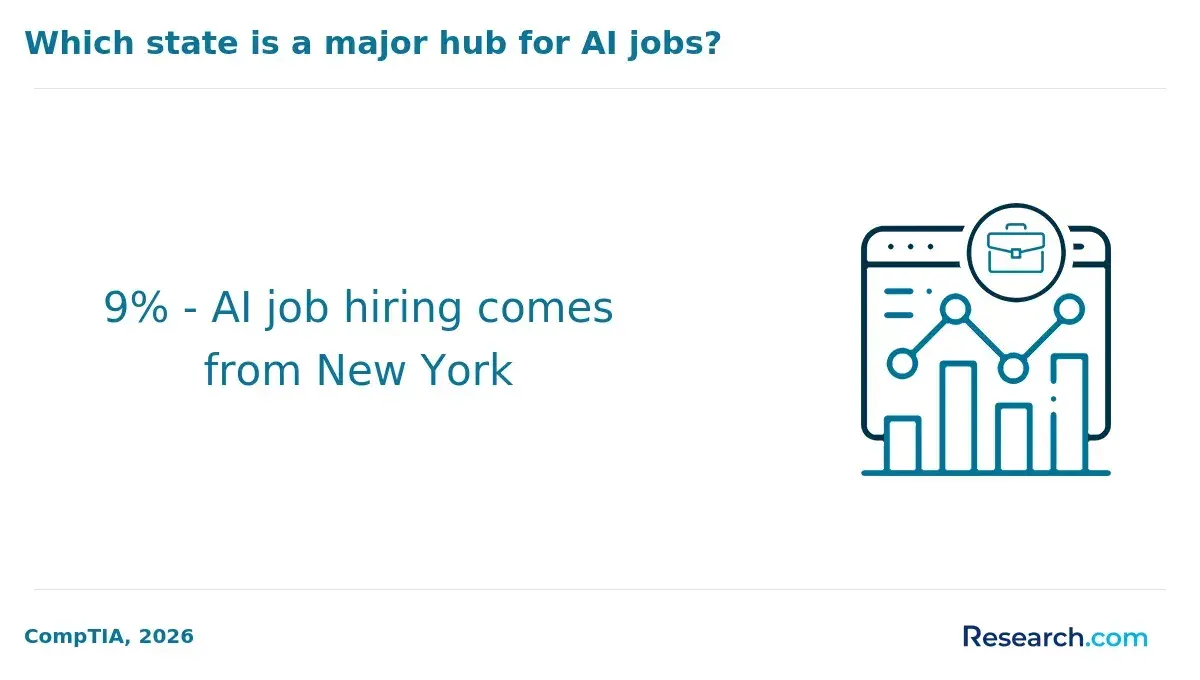
The average salary for graduates holding an associate degree in artificial intelligence and machine learning typically falls between $65,000 and $75,000 annually in the United States. Entry-level positions include roles such as AI technician, data analyst, and machine learning assistant. Salaries rise significantly in tech hubs like California and New York, where starting offers often range from $85,000 to $95,000. This reflects a competitive market driven by a high demand for skilled professionals, as highlighted by Glassdoor's 2024 Salary Report.
Job growth is concentrated in states with strong tech industries and innovation centers, including Washington, Massachusetts, and Texas. These regions benefit from increased investments in automation and software development. Conversely, rural areas and less tech-focused states generally provide fewer opportunities, although remote work options help bridge some gaps.
When evaluating salary offers, candidates should consider cost of living differences. For example, a $90,000 salary in California may translate to a lower standard of living than $70,000 in states like Arizona. Employers are placing greater emphasis on hands-on skills, portfolios, and certifications alongside formal credentials. Programs that include practical experience and local industry partnerships often lead to higher job placement rates and better starting salaries.
Without industry exposure, career advancement may be slower despite growing demand for AI expertise. University-community college alliances that support AI internships enhance graduate outcomes and hiring potential.
Are there professional certifications or industry credentials that complement an online AI associate degree?
Workers who combine an online AI associate degree with professional certifications tend to earn significantly more-23% higher wages-than those holding only the degree, according to the 2024 Coursera and LinkedIn Learning Workforce Development Report. Certifications from platforms like Google Cloud, AWS, and Microsoft Azure enhance practical skills in cloud computing, machine learning, and AI deployment, areas often covered broadly in associate degree programs.
Certifications such as the Google Professional Data Engineer, AWS Certified Machine Learning - Specialty, and Microsoft Certified: Azure AI Engineer Associate emphasize hands-on expertise for managing AI models within cloud environments. These credentials demonstrate to employers that candidates possess relevant, up-to-date knowledge beyond entry-level concepts, increasing competitiveness in the job market.
Additional industry-recognized credentials in data analysis, cybersecurity, and programming languages like Python further bolster an AI associate degree holder's profile. Credentials like the Certified Analytics Professional (CAP) or CompTIA Security+ provide access to specialized roles intersecting with AI.
Prospective students and recent graduates should align their certifications with career goals and technical strengths. Merging theoretical learning with targeted certifications accelerates skill development and ensures graduates meet employer expectations for practical AI implementation.
How should prospective students evaluate the quality and reputation of online AI associate degree programs?
Verifying institutional accreditation is crucial when evaluating online AI associate degree programs. Accredited institutions by recognized bodies like ACBSP or ABET maintain rigorous educational standards and relevant curricula. According to the Accrediting Commission for Community and Junior Colleges 2024 outcomes data, community colleges with these accreditations report a 91% job placement rate within six months of graduation, compared to 78% for non-accredited programs. This highlights clear career benefits from choosing accredited options.
Program curriculum should include foundational AI topics such as machine learning, data analysis, programming languages, and ethical considerations. Courses offering hands-on labs, industry projects, or internships often provide stronger practical training. Faculty credentials also matter; instructors with advanced degrees and industry experience bring valuable insights.
Graduate outcomes beyond placement rates are important. Look for programs tracking alumni employment sectors, salary levels, or bachelor's degree transfer opportunities. Support services like academic advising, tutoring, and career counseling are essential for online learners and impact completion success.
Reviews and testimonials from current students or graduates offer additional perspective on program strengths and weaknesses. Alignment with regional or national AI job markets boosts employability. Finally, consider the cost and flexibility of programs, balancing them with quality to suit individual needs.
What financial aid options and scholarships are available for online AI associate degree students?
Federal Pell Grants provide critical funding for online AI associate degree students, covering up to $7,395 for the 2024-2025 academic year. When combined with state grants and institutional scholarships, eligible students may cover 60% to 100% of community college tuition. For example, a student in California can pair the Pell Grant with the Cal Grant to reduce tuition costs significantly.
State aid programs vary widely and often depend on residency, income, or merit. Students should check their state's higher education website for programs like New York's Tuition Assistance Program (TAP) or Texas's Texas Grant Program. These grants usually require FAFSA completion and sometimes additional applications.
Institutional scholarships targeting STEM and AI-related fields are commonly available, with awards ranging from $500 to $2,000 for academic merit or demonstrated interest. Work-study programs from federal and state sources offer part-time jobs with flexible schedules to help cover education expenses.
Some employers in technology sectors provide tuition reimbursement for degrees related to AI, which can lessen financial burdens. Early FAFSA application and submitting any required state forms improve chances of timely aid. Professional AI organizations may offer scholarships aimed at underrepresented groups, further supporting funding diversity.
- Federal Pell Grants cover up to $7,395 annually.
- State aid programs like TAP and Texas Grant assist many students.
- Merit-based scholarships in AI/STEM range from $500 to $2,000.
- Work-study and employer tuition reimbursement options are available.
Other Things You Should Know About Artificial Intelligence
In 2027, the affordability of online AI associate degrees varies significantly by state. Some states offer more budget-friendly options due to state funding and local educational policies. It's essential to research specific schools in each state to determine the total costs, which typically include tuition, fees, and any technology-related expenses.
Many online AI associate degree programs are designed with transferability in mind, allowing students to apply completed credits toward a related bachelor's degree. However, transfer policies vary by institution, so it's important to verify with the receiving school if your associate coursework in AI and related subjects will be accepted. Proper planning can reduce redundancy and accelerate degree completion.
Yes, online AI associate degrees from regionally accredited institutions are widely recognized by employers, especially in technology and data-driven industries. Accreditation assures a standard level of curriculum quality and rigor. Additionally, practical, hands-on projects typical in these programs help graduates demonstrate relevant skills to potential employers.
Students enrolling in online AI associate degrees need reliable high-speed internet, a modern computer capable of running AI development tools, and relevant software such as Python or other programming environments. Some programs may require specific hardware specifications or access to cloud computing resources. It's advisable to review each program's technology prerequisites before enrollment.
References
- Associate Degree in Artificial Intelligence https://aidegreeguide.com/degrees/ai-associate-degree-and-certificate-programs/
- 2025 Most Affordable Online IT Associate Degrees https://www.onlineu.com/most-affordable-colleges/information-technology-associate-degrees
- The US states rewarding specialist AI skills, revealed https://www.internationalaccountingbulletin.com/news/the-us-states-rewarding-specialist-ai-skills-revealed/
- AI Data Specialist https://www.wctc.edu/WCTC/Academics/Program-List/AI-Data-Specialist
- Associate Degree vs. Bachelor's Degree | SNHU https://www.snhu.edu/about-us/newsroom/education/associate-degree-vs-bachelor-degree
- Top 10 Cheapest Online Associate in Information Technology Degrees - Computer Science Degree Hub https://www.computersciencedegreehub.com/best/affordable-online-associates-information-technology/
- What Do You Learn In an Artificial Intelligence Course? | CompSci https://www.computerscience.org/resources/artificial-intelligence/
- How Long Does It Take to Complete an AI Course https://www.epw.com/blog/courses/how-long-is-ai-course
- Best Artificial Intelligence and Machine Learning Scholarships https://aifwd.com/education/best-artificial-intelligence-scholarships/
- Can I get financial aid for an online degree? | edX https://www.edx.org/resources/can-i-get-financial-aid-for-an-online-degree