2027 AI Associate Degrees in Virginia: Best Online and On-Campus Options

Co-Founder and Chief Data Scientist
Career changers and working professionals often face challenges when seeking a flexible, accredited pathway into the AI field without extensive prior experience. Recognizing the barrage of options, program formats, and varying institution reputations can overwhelm prospective students. Many desire a balance between online convenience and on-campus rigor to suit their unique schedules and learning preferences.
Choosing the right associate degree can be pivotal for securing entry-level roles or further education in AI. This article explores the best online and on-campus AI associate degrees available in Virginia, helping readers identify programs that align with their goals and circumstances effectively.
Key Things You Should Know
- Virginia offers diverse AI associate degrees both online and on-campus, with several accredited community colleges providing flexible formats suited for working students.
- By 2026, AI-related jobs in Virginia are projected to grow 15% faster than the average, highlighting strong local industry demand for graduates.
- Programs emphasize practical skills in machine learning, data analysis, and automation, aligning curricula with evolving employer needs and emerging technologies.
What is an AI associate degree, and what can it prepare you to do?
An AI associate degree provides essential knowledge and technical skills that prepare students for entry-level roles in artificial intelligence development, data analysis, automation, and intelligent system support. Core subjects include programming languages like Python and Java, machine learning fundamentals, data management, and AI ethics. Graduates often qualify for positions such as AI technician, data analyst, or junior machine learning specialist.
AI associate degree programs in Virginia career outcomes emphasize practical skills like building simple AI models, neural networks, and applying algorithms to solve real-world challenges. Students might develop chatbots or analyze data patterns to enhance business operations. These competencies are increasingly valued across sectors such as healthcare, finance, and manufacturing.
Employers expect proficiency in both technical and problem-solving skills. Hands-on experience with AI software tools, cloud computing platforms, and database querying improves job readiness. Coursework in mathematical concepts such as statistics and linear algebra supports the understanding of sophisticated AI algorithms.
Given this demand, students can pursue further specialization or certifications or enter the workforce directly. This flexibility benefits recent high school graduates, career changers, and working professionals seeking practical AI credentials. Many also opt for a 2-year computer science degree online to complement their studies.
Online and on-campus AI associate degrees in Virginia curriculum are designed to keep pace with evolving industry requirements. According to the World Economic Forum's Future of Jobs Report 2025, 86% of employers expect AI and information-processing technologies to transform their business by 2030, highlighting the critical role of AI skills in the future job market.
Which Virginia colleges offer accredited AI associate degrees online or on campus?
Several Virginia community colleges offer accredited associate degrees with a focus on artificial intelligence or related computing fields. The Virginia Community College System (VCCS) consists of 23 colleges providing the primary pathway for AI-oriented associate degrees (State Council of Higher Education for Virginia (SCHEV), 2024-2025). These programs include options for students seeking Virginia colleges offering accredited associate degrees in artificial intelligence online or through on-campus programs.
Colleges like Northern Virginia Community College (NOVA) and Tidewater Community College provide AI-adjacent degrees in computer science, data analytics, and software development. These programs cover AI fundamentals, machine learning basics, and necessary programming skills. For instance, NOVA's Computer Programming and Development associate degree includes coursework on algorithms and scripting languages relevant to AI applications.
Many VCCS schools such as Virginia Peninsula Community College and John Tyler Community College offer flexible online options with virtual labs, meeting the same accreditation standards as on-campus programs. These on-campus associate degree programs in artificial intelligence available in Virginia accommodate diverse student schedules and locations.
Prospective students should confirm that their chosen associate degree is regionally accredited and aligns with AI career goals by consulting course catalogs and academic advisors. Hands-on projects using AI programming tools prepare students for transfer to four-year institutions or entry-level tech roles. Practical factors like internship availability and faculty expertise in emerging AI technologies vary across the 23 colleges.
For more insights on affordable programs related to this field, explore data science programs that may complement AI studies and career paths.
How do you choose a reputable AI associate program in Virginia?
Choosing among the best AI associate degree programs in Virginia involves evaluating accreditation status to ensure the degree meets recognized educational standards. Look for regional accreditation recognized by the U.S. Department of Education or the Council for Higher Education Accreditation, as it supports credit transfer and further study opportunities.
Curriculum relevance is essential. A quality AI associate degree covers machine learning, data analysis, programming languages like Python, and the ethical dimensions of AI. Programs aligned with current workforce demands and industry certifications enhance career readiness.
Employment outcomes further distinguish strong programs. Virginia associate degree graduates receiving federal aid report median annual earnings near $40,000, according to the U.S. Department of Education College Scorecard. Seek programs with proven graduate placement rates or internship partnerships that offer real-world experience and networking.
Delivery format and flexibility matter, especially for working students. Many accredited AI associate degrees Virginia institutions offer online learning with adaptable schedules to accommodate diverse needs.
Faculty expertise and industry connections are vital for up-to-date instruction and professional networking. Additionally, consider tuition transparency, financial aid availability, and student support services like career counseling and tutoring to manage costs effectively.
You may also explore related fields such as a game design degree, which shares relevant technical skills and creative applications in technology.
What accreditation should Virginia AI associate programs and colleges have?
Virginia AI associate degree programs must be offered by colleges with institutional accreditation to guarantee quality and access to federal aid. The Southern Association of Colleges and Schools Commission on Colleges (SACSCOC) is the primary regional accreditor recognized by the Council for Higher Education Accreditation (CHEA) and the U.S. Department of Education for associate-degree-granting institutions in Virginia. This institutional accreditation, rather than programmatic accreditation, is crucial for students pursuing AI associate degrees in Virginia.
Prospective students should confirm accreditation status on the college's official website or via the CHEA database. Institutional accreditation ensures that credits transfer smoothly, degrees qualify for licensure, and employers recognize the credential. Many state and federal financial aid programs also require enrollment in accredited schools.
When choosing the best accredited colleges for AI associate programs in Virginia, keep these points in mind:
- Colleges must hold institutional accreditation from SACSCOC or a CHEA-recognized agency
- Programmatic accreditation has limited relevance for associate-level AI degrees
- Verification of accreditation status is essential to avoid barriers in career advancement or continuing education
For working professionals or students considering further education, exploring options like a master data science online can be a valuable next step after completing an AI associate degree.
What courses and hands-on labs are typical in an AI associate curriculum?
AI associate degree programs blend core subjects like programming, mathematics, and data analysis with practical lab experiences to prepare students for entry-level roles in the AI sector. Key foundational courses cover Python programming, data structures, and discrete mathematics, which form the backbone of AI technologies.
Students deepen their skills through specialized classes such as machine learning fundamentals, neural networks, natural language processing, and computer vision. These programs rely heavily on tools like Jupyter Notebooks, widely recognized as a leading environment for data science and machine learning workflows, as evidenced by the GitHub Octoverse 2024 data.
Hands-on labs replicate real-world challenges, requiring students to:
- Build supervised and unsupervised learning models for classification and regression
- Implement neural networks using TensorFlow or PyTorch frameworks
- Analyze datasets with Python libraries like pandas and NumPy
- Create chatbots or sentiment analysis applications using natural language APIs
- Execute image recognition projects with convolutional neural networks
Workshops and capstone projects foster collaborative problem-solving and often integrate cloud computing for AI model deployment, teaching scalability. Students also learn to assess model performance using accuracy, precision, recall, and F1 score metrics, ensuring robust and reliable results.
This comprehensive approach equips graduates with hands-on skills aligned with employer needs in Virginia's expanding AI job market.
What are the admission requirements for AI associate programs in Virginia?
Admission requirements for AI associate degree programs in Virginia typically require a high school diploma or GED. Applicants must often submit official transcripts to confirm completion of prerequisite courses, especially in math and computer science fundamentals. Placement tests or proof of prior coursework in English and math may be required to assess readiness for college-level studies.
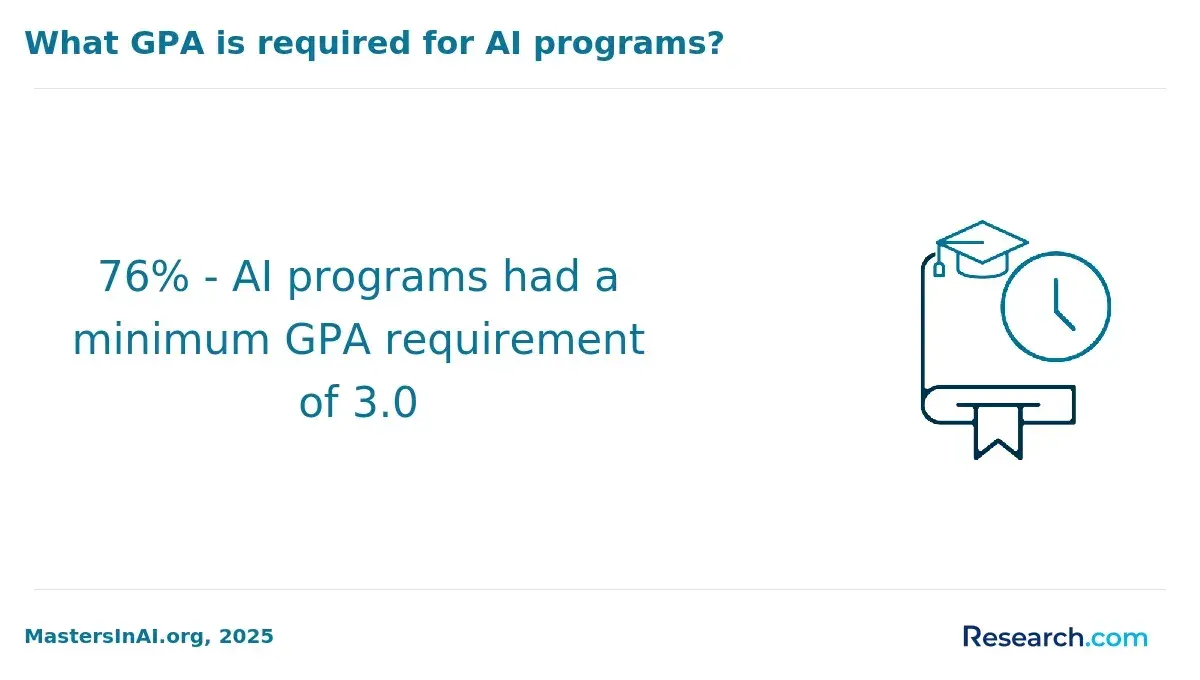
Many colleges in the Virginia Community College System (VCCS) set minimum GPA expectations, usually around 2.0 on a 4.0 scale, though this varies by institution. Flexible admission options, such as provisional or conditional acceptance, support the substantial number of part-time and working adult students entering college for the first time.
Additional requirements may include assessments of basic computer skills or introductory programming knowledge to ensure students are prepared for AI coursework. International students must provide proof of English proficiency through exams like TOEFL or IELTS, alongside other standard application materials.
Applicants are encouraged to consult individual college websites for deadlines, documentation, and any priority admission procedures due to seat limitations. Early communication with admissions offices and careful planning are essential, especially for nontraditional students balancing work and study commitments.
- High school diploma or GED
- Official transcripts for prerequisites
- Placement tests or prior coursework verification
- Minimum GPA around 2.0 (varies)
- Provisional or conditional acceptance options
- English proficiency exams for international students
How long does an AI associate degree take, and what does it cost?
An AI associate degree in Virginia usually requires two years of full-time study, blending foundational computer science skills with specialized AI topics like machine learning, data analytics, and robotics. Some students may accelerate completion by taking summer courses, while part-time learners might extend the program to three or more years.
Tuition and fees generally total around $8,000 for the two years at Virginia community colleges, aligning with the typical $4,000 annual cost reported for U.S. public two-year colleges. Additional expenses for textbooks, software, and necessary hardware can add $1,000 to $2,000. Financial aid options, scholarships, and employer tuition reimbursement programs often reduce these out-of-pocket costs. For example, local tech firms frequently collaborate with Virginia community colleges to provide scholarships targeting AI and STEM students.
Many programs offer both online and on-campus formats. Online courses help students balance studies with work but demand strong self-discipline, while on-campus instruction provides valuable hands-on lab experience essential for mastering AI programming and toolkits.
Transfer opportunities also exist; completing an associate degree can be a stepping stone towards a four-year bachelor's in AI or computer science, which may extend study time but improve career prospects.
What online AI associate options exist for Virginia residents, and how do they work?
Virginia offers a variety of online associate degrees in artificial intelligence through both public community colleges and private institutions. These programs blend foundational computer science with specialized AI topics like machine learning, data analytics, and automation. Designed for busy students, many courses provide asynchronous lectures, interactive labs, and virtual collaboration tools.
Typically lasting two years, these programs have flexible pacing options. Students complete general education alongside AI-specific coursework, ensuring a balanced academic experience. Despite the remote format, online labs and simulated projects enable hands-on practice with languages such as Python and common AI frameworks.
Institutions like Northern Virginia Community College and Tidewater Community College emphasize applied skills aligned with Virginia's local industries. Support services include virtual tutoring, academic advising, and career placement tailored for online learners.
The National Center for Education Statistics (NCES) Digest of Education Statistics highlights that nearly half of undergraduates at public two-year colleges take at least one distance course, demonstrating the growing acceptance of online study. Prospective students should confirm accreditation, technology needs, transfer options to four-year schools, and understand how online assessments are conducted to ensure they meet their educational goals.
What jobs can you get with an AI associate degree in Virginia?
An associate degree focused on artificial intelligence in Virginia leads to various entry-level roles in the state's rapidly expanding tech sector. Data from the Virginia Employment Commission and O*NET for 2024-2025 highlights that software developers, data scientists, and information security analysts rank among the fastest-growing occupations linked to AI fields. Graduates typically qualify for positions such as quality assurance/test technicians, junior software developers, data technicians, and IT support specialists who concentrate on automation.
Jobs frequently available to those with this degree include:
- Junior AI Developer - assisting with coding and implementing machine learning models under supervision
- Data Technician - managing and preparing datasets for AI applications
- Quality Assurance/Test Analyst - testing AI systems for defects and performance
- IT Support Specialist with Automation Focus - maintaining automated workflows and troubleshooting AI software
- Cybersecurity Assistant - aiding information security analysts through monitoring and risk assessment tasks
These roles build a strong foundation for advancing into higher-level AI careers. Junior developers often progress to full software developer roles, while data technicians may pursue further education to become data scientists. Virginia's labor market stresses tech and AI integration, presenting robust employment opportunities as companies increase automation. This degree equips graduates with practical skills crucial for AI system development, testing, and maintenance within technical teams.
What salaries and job outlook can AI associate graduates expect in Virginia?
Graduates holding an associate degree with a focus on artificial intelligence in Virginia typically start with entry-level roles paying between $50,000 and $75,000 annually. Common positions include AI technician, data analyst assistant, or junior software developer. These roles provide foundational experience for advancing into more specialized tech careers. However, professionals with advanced skills or further education in Virginia's AI and software fields command significantly higher salaries.
In the Washington-Arlington-Alexandria metro area, which includes parts of Virginia, the median annual salary for software developers exceeds $120,000 according to U.S. Bureau of Labor Statistics data. This highlights the substantial earning potential in AI-related occupations when supplemented by additional education or experience beyond an associate degree.
Job growth for AI-adjacent roles is strong, fueled by the region's growing tech industry and increasing demand for automation and data expertise. Pursuing further certifications or a bachelor's degree in computer science or machine learning can improve promotion opportunities and income.
- Start with entry-level roles to gain practical experience in AI-supporting tasks.
- Seek internships or apprenticeships with technology companies in Virginia.
- Consider advanced education to qualify for higher-paying positions like AI software developer or machine learning engineer.
These insights help graduates set realistic expectations and craft effective career strategies within Virginia's AI ecosystem.
Other Things You Should Know About Artificial Intelligence
In 2027, the average cost of an AI associate degree program in Virginia can vary widely depending on the institution. Generally, in-state tuition for community colleges may range from $4,500 to $8,000 per year, while out-of-state costs can be significantly higher. It's crucial to consider additional fees and living expenses.
Many Virginia colleges and universities accept transfer credits from accredited AI associate degree programs, especially within the community college system. Transfer policies vary by institution, so students should consult advisors to ensure their credits apply toward a related bachelor's degree in computer science or AI. Proper planning can facilitate a seamless transition to a four-year program.
Associate programs focus on programming languages widely used in AI, such as Python, Java, and R. Python is particularly emphasized due to its extensive libraries and community support for machine learning and data analysis. Students also learn basics of algorithms and data structures crucial for AI development.
Many AI associate degree programs in Virginia include internships or cooperative education as part of their curriculum. These opportunities allow students to gain hands-on experience with industry tools and real-world AI applications. Partnerships between colleges and local tech companies often facilitate access to such practical training.
References
- Ultimate Guide: How to Choose the Right AI Training Course to Boost Your Career - ONLC https://www.onlc.com/blog/how-to-choose-ai-training-courses/
- AI classes in Virginia | AI Training https://www.agitraining.com/ai-classes/virginia
- Artificial Intelligence Classes - MyWorkforce https://nvcc.augusoft.net/index.cfm
- Activate Your AI Potential https://virginiahasjobs.com/ai/
- Top Artificial Intelligence Courses: Fees and Duration https://collegevidya.com/blog/artificial-intelligence-course-fees-structure-duration/
- Artificial Intelligence (AI) & Machine Learning Course Fees https://www.mygreatlearning.com/artificial-intelligence/courses/fees
- AGTU | Global Degree Online https://agtu.us/en/programs/undergraduate-programs/computer-science/associate-artificial-inteligence/
- Understanding AI: AI tools, training, and skills https://ai.google/learn-ai-skills/
- Online Artificial Intelligence Program | AI & Machine Learning Courses – EVCC https://evcc.edu/artificial-intelligence/