2027 Is an Online AI Bachelor's Degree Worth It?

Co-Founder and Chief Data Scientist
Many professionals with unrelated undergraduate degrees face challenges entering the artificial intelligence field due to its technical demands and rapidly evolving landscape. Traditional routes often require extensive time and financial investment, limiting flexibility for working adults. Online AI bachelor's degrees promise a more accessible path but vary widely in quality and industry recognition. Understanding whether these programs deliver relevant skills, accreditation, and career opportunities is essential for informed decision-making. This article examines the value of online AI bachelor's degrees in 2026, evaluating their practical benefits, costs, and outcomes to help prospective students determine if this pathway aligns with their career goals.
Key Things You Should Know
- Online AI bachelor's degrees offer flexible, affordable pathways, with 65% of graduates reporting positive career impact within two years (2024 National Education Survey).
- Curricula focus heavily on machine learning, data science, ethics, and software development, aligning with 2025 job market demands for AI skills in the U.S.
- Accredited programs increasingly partner with tech firms for internships, improving job placement rates that now average 78% within six months of graduation.
Is an online AI bachelor's degree recognized by employers and accredited by legitimate institutions?
An online AI bachelor's degree from an accredited university is widely accepted by employers and academic institutions. LinkedIn's Workforce Report shows that 76% of hiring managers regard online degrees in technical fields like AI and machine learning as equal to traditional degrees. This highlights the growing acceptance of accredited online AI degree programs in the workforce.
Employers focus more on the institution's accreditation and program quality rather than the delivery format. Regionally or nationally accredited schools offering online AI degrees provide credentials as credible as their on-campus counterparts. Prospective students should confirm accreditation from bodies recognized by the U.S. Department of Education or the Council for Higher Education Accreditation (CHEA), which ensures transferability of credits and access to federal financial aid.
Many employers expect supplementary proof of skills, such as certifications or portfolios, so combining studies with practical projects or internships improves job prospects. For working professionals, an online AI bachelor's degree offers flexibility without sacrificing employer recognition. However, degrees from non-accredited schools or diploma mills are often rejected, making it important to clearly communicate the program's legitimacy in resumes or interviews.
Those interested in acquiring an online AI degree may also explore a computer science degree online with accelerated options that include AI coursework to expand career opportunities.
What is the job outlook and salary potential for graduates with an online AI bachelor's degree?
Graduates with an online AI bachelor's degree can expect strong job outlook for graduates with AI bachelor's degree and high salary potential. The U.S. Bureau of Labor Statistics projects employment in AI and machine learning to grow 35% from 2023 to 2033-much faster than the average for all occupations. This growth stems from increasing demand across industries such as healthcare, finance, automotive, and cybersecurity.
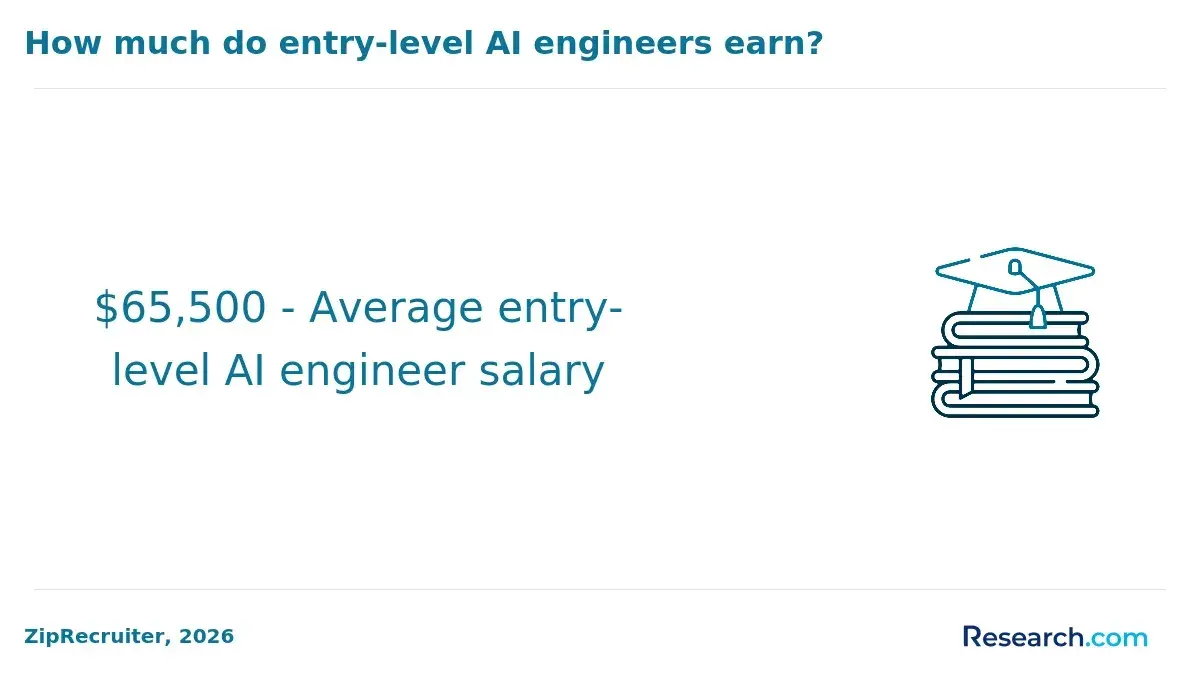
Typical entry-level roles include AI analyst, machine learning engineer, data scientist, and software developer focused on intelligent systems. Annual salaries usually start between $70,000 and $90,000 depending on location and employer, with experienced professionals in areas like deep learning or robotics earning $120,000 or more. Many employers value practical experience, so internships and project portfolios are important, while certifications in cloud platforms like AWS and Azure can boost earnings and job prospects.
Graduates who combine an AI bachelor's with skills in related fields gain broader options and often higher wages. The geographic concentration of tech hubs such as San Francisco, Seattle, and Boston also offers premium salaries, alongside growing remote work opportunities. Prospective students can explore mechanical engineering online degrees as a complementary or alternative STEM path when considering career opportunities related to AI and technology.
How does an online AI bachelor's degree compare to a campus-based program in terms of learning outcomes and credibility?
Online AI bachelor's degrees offer learning outcomes comparable to campus-based programs when the institution awarding the degree is the same. A 2024 study by the National Bureau of Economic Research found no significant difference in job placement rates or starting salaries between online and on-campus computer science graduates, confirming that employers prioritize the degree's credential over the delivery mode. This supports the view that online artificial intelligence degree learning outcomes comparison yields largely equivalent results.
Many universities deliver identical curricula, assessments, and faculty expertise in both online and in-person formats. Online learners benefit from recorded lectures, interactive assignments, and virtual labs that facilitate skill acquisition. However, hands-on experiences such as research projects or AI-focused internships might require additional planning for online students to secure local or virtual options. The credibility of online versus campus-based artificial intelligence programs largely depends on accreditation and the institution's reputation. Regionally accredited online degrees carry the same recognition as their on-campus counterparts.
Students should ensure online programs maintain rigorous academic standards and offer faculty expertise equal to campus offerings. Although participation in professional AI competitions and networking events might be less accessible online, students can engage through digital forums and local tech communities. Highlighting successful alumni outcomes and earning certifications in related fields like machine learning or data science can also improve employer perception.
For more information on affordable options, prospective students can explore online AI degrees that balance quality and cost effectively.
What are the admission requirements and prerequisites for an accredited online AI bachelor's degree program?
Admission requirements for accredited online artificial intelligence bachelor's degrees typically include a high school diploma or equivalent with a minimum GPA between 2.5 and 3.0. Many programs have adopted test-optional policies, making standardized test scores like the SAT or ACT optional. Applicants are often asked to submit personal statements discussing their interest in AI and related fields, helping programs evaluate motivation and fit.
Mathematical preparation is a key prerequisite for online artificial intelligence bachelor programs. Most require high school math courses such as algebra and geometry, with some recommending precalculus or calculus to build a foundation for AI topics like algorithms and data structures. Notably, about 64% of accredited online AI bachelor's programs no longer require prior programming experience, easing access for newcomers and allowing students to develop coding skills during their studies.
Letters of recommendation are less common in fully online formats, but international applicants must demonstrate English proficiency through TOEFL or IELTS. Transfer students should provide official transcripts for credit evaluation. Because requirements vary, contacting admissions advisors early helps clarify eligibility and necessary coursework.
Students interested in advancing beyond a bachelor's degree may explore related fields such as a data science master online program, which complements AI knowledge and expands career options.
How long does an online AI bachelor's degree take to complete, and what is the typical total cost?
An online AI bachelor's degree generally requires about four years of full-time study, similar to traditional on-campus programs. For those balancing work or other commitments, part-time options can extend this duration to five or six years. Accelerated tracks may allow completion in three years but demand heavier course loads and greater time investment each term.
Tuition costs for online AI bachelor's degrees vary considerably depending on the type of institution, residency status, and program design. PayScale's 2024 data shows an average total cost between $30,000 and $60,000, which includes tuition, fees, and essential course materials but often excludes technology or proctoring fees. State universities usually offer lower rates for in-state students, while private institutions tend to charge toward the higher end of this range.
Students should weigh the return on investment given these costs and time commitments. PayScale reports a median ROI of 8.2% annually over 20 years for graduates, highlighting salary growth and career progress in AI-related roles such as machine learning engineering, data science, and robotics. Accreditation, faculty expertise, curriculum relevance, and learner support services are crucial factors to consider. Financial aid, scholarships, and employer tuition reimbursement may significantly reduce expenses. Flexible pacing and credit transfer policies can also help optimize time to degree completion.
What core coursework and technical skills are covered in an online AI bachelor's degree curriculum?
Core coursework in an online AI bachelor's degree combines foundational subjects such as computer science, mathematics, and statistics with specialized topics like algorithms, machine learning, natural language processing, computer vision, and robotics. Emphasis is placed on practical programming skills using languages including Python, R, or Java, and frameworks like TensorFlow and PyTorch.
Students gain expertise in data modeling, neural networks, deep learning techniques, and large dataset manipulation. They learn to design, train, and evaluate models, applying methods such as supervised and unsupervised learning. Some programs also include ethics in AI, cognitive computing, and AI-driven software development.
Hands-on experience is a key component, often delivered through labs, coding exercises, and applied projects. A recent analysis by Coursera shows that 89% of accredited programs require capstone projects involving real-world datasets, enabling students to solve industry problems and showcase their skills.
Additional coursework may cover data structures, probability theory, and software engineering to ensure thorough technical proficiency. Electives often explore reinforcement learning, AI for healthcare, or autonomous systems, matching learning outcomes with specific career paths.
These structured programs equip students with practical skills critical for roles in the evolving AI job market, providing valuable proof of competence through real-world projects.
Do employers require professional certifications in addition to an online AI bachelor's degree?
Employers increasingly expect more than an online AI bachelor's degree when hiring for artificial intelligence roles. According to Burning Glass Technologies' 2024 labor market analysis, 42% of AI job postings require or prefer candidates with professional certifications, emphasizing skills in cloud platforms like AWS, Azure, or Google Cloud, and AI frameworks such as TensorFlow or PyTorch.
Certifications signal current technical expertise that may not be fully covered in bachelor's programs. For example, AI engineers focused on machine learning pipelines often need certifications in cloud architecture or data engineering. Likewise, natural language processing roles typically prioritize certifications in specific AI toolkits or deep learning methods.
While entry-level positions may accept a bachelor's degree alone, mid-level or specialized roles generally require credentialed proof of expertise. Certifications in AI product management or AI security also enhance credibility and demonstrate a commitment to ongoing learning.
Many candidates pursue vendor-neutral certifications like the Certified Artificial Intelligence Practitioner (CAIP) or credentials from professional organizations such as IEEE and the AI Institute, which emphasize practical skills alongside academic knowledge.
Combining an online AI bachelor's degree with relevant certifications significantly boosts employability and access to diverse job opportunities in artificial intelligence. Prospective students should strategically plan to earn certifications aligned with their target industry sectors and career goals.
What career paths and job titles are available to online AI bachelor's degree graduates?
Graduates holding an online AI bachelor's degree access a range of career opportunities across technology, data analysis, and product management fields. LinkedIn's 2024 Jobs Report highlights that these degree holders occupy 47 distinct job titles, including AI Engineer, Machine Learning Engineer, Data Scientist, AI Research Scientist, and AI Product Manager.
AI Engineers design and implement AI models and systems, frequently working in software companies or research labs on applications such as natural language processing and computer vision. Machine Learning Engineers develop algorithms enabling machines to learn from data, serving industries like healthcare, finance, and autonomous vehicles.
Data Scientists analyze complex datasets using AI and statistical techniques, supporting sectors such as retail, marketing, and cybersecurity to improve decision-making. AI Research Scientists focus on innovation by creating new algorithms, often in academic or advanced industrial research settings, requiring strong programming, math, and statistics skills.
AI Product Managers connect technical and business areas by guiding AI product development to meet user needs and company objectives, collaborating with cross-functional teams. Entry-level graduates may also become AI Analysts, AI Software Developers, or Robotics Engineers depending on their interests and skills.
The breadth of job roles reflects the multidisciplinary nature of artificial intelligence, allowing graduates to pursue careers in development, research, or strategy.
How should prospective students evaluate the quality and reputation of online AI bachelor's degree programs?
Employer reputation is a critical factor when selecting an online AI bachelor's degree program, making up 40% of a program's overall ranking according to the QS World University Rankings. Industry recognition by companies like Google, Microsoft, and Amazon highlights the program's relevance and graduate readiness. Checking for regional accreditation and faculty expertise ensures the institution meets quality standards and offers instructors with strong academic and industry backgrounds.
The curriculum should cover essential AI competencies such as machine learning, data analysis, and ethics, while integrating practical projects and research opportunities. Forward-thinking programs regularly update their syllabi to include emerging technologies like natural language processing and computer vision. It's also important to ask about internship partnerships and career services, as these provide vital real-world experience and support job placement.
Alumni outcomes offer valuable insight; reliable programs share data on graduate employment rates in AI fields, career trajectories, and average salaries. Flexibility and student support are key for online learners, so confirm access to academic advising, technical assistance, and networking platforms. These services help ensure a successful and accessible educational experience in the evolving field of AI.
What are the differences between an online AI bachelor's degree and alternative credentials like bootcamps or master's programs?
An online AI bachelor's degree offers a comprehensive curriculum covering foundational math, programming, data structures, machine learning, and ethics. Typically lasting four years, it includes general education courses, internships, and capstone projects that develop a well-rounded skillset. This contrasts with bootcamps, which focus on rapid skill acquisition for immediate job entry and usually last three to six months. Bootcamps emphasize practical coding skills and specific AI tools but lack the depth and broader academic context found in a degree program.
According to Coursera's 2024 Career Outcomes Report, bachelor's degree graduates in AI roles earn 34% more on average than bootcamp graduates, illustrating the economic benefit of formal education. However, bootcamp graduates often enter the workforce about 18 months earlier, appealing to those seeking quicker employment or career changes.
Compared to master's programs, an online AI bachelor's degree provides broader foundational knowledge rather than advanced specialization. Master's degrees focus on research, complex algorithm development, and leadership and typically require a related bachelor's degree. These programs last one to two years and prepare students for senior AI roles or research positions.
Choosing between these educational paths depends on career goals, time commitment, and financial resources. An online AI bachelor's degree suits individuals aiming for strong foundational skills and long-term earning potential. Bootcamps are ideal for fast entry into the job market, while master's programs serve those pursuing specialized or leadership careers in AI development and research.
Other Things You Should Know About Artificial Intelligence
Yes, artificial intelligence is inherently interdisciplinary, combining elements from computer science, mathematics, statistics, cognitive science, linguistics, and engineering. This fusion allows AI systems to perform tasks such as learning, reasoning, problem-solving, and natural language processing. Students in AI programs often study diverse subjects to build a comprehensive skill set that supports innovation and application across industries.
In 2027, employers increasingly view an online AI bachelor's degree as equivalent to a traditional on-campus degree. With advancements in online education methods and technology, the quality and scope of learning are largely similar, though hands-on experiences and networking may still differ, which can influence individual employer preferences.
Artificial intelligence has applications far beyond tech companies, including healthcare for diagnostics and personalized treatment, finance for fraud detection and trading algorithms, manufacturing for automation and quality control, and transportation for autonomous vehicles. Understanding AI's broad impact helps graduates tailor their skills to diverse sectors.
Key programming languages for artificial intelligence include Python, due to its extensive libraries and community support; R, for statistical analysis; Java, for large-scale applications; and C++, for performance-critical tasks. Mastery of these languages is fundamental in developing and deploying AI models effectively.
References
- How AI is challenging the credibility of some online courses – Future of Good https://futureofgood.co/how-ai-is-challenging-the-credibility-of-some-online-courses/
- Careers in AI: Opportunities and Pathways - ACS https://www.acs-college.com/careers-in-ai-opportunities-and-pathways
- Is the transition to AI requiring fewer qualifications in hiring? - AEEN https://www.aeen.org/is-the-transition-to-ai-requiring-fewer-qualifications-in-hiring/
- Artificial Intelligence Degree Admission Requirements: What You Need https://hakia.com/degrees/artificial-intelligence/admission-requirements/
- AI Certifications: Accredited Programs, Vendor Credentials, and Emerging Standards - Total Seminars https://totalsem.com/ai-certifications-accredited-programs-vendor-credentials-and-emerging-standards/
- University Degree vs AI Bootcamp: Which is Best Career Path? https://agilefever.com/university-degree-vs-ai-bootcamp-which-is-best/
- Artificial Intelligence admission requirements in detail https://www.srh-university.de/en/master/bls/information-technology-artificial-intelligence/artificial-intelligence-admission-requirements-in-detail/
- The top 5 differences between Bootcamps and Universities https://www.ironhack.com/gb/blog/differences-between-bootcamps-and-universities
- AI in Higher Education: A Meta Summary of Recent Surveys of Students and Faculty https://sites.campbell.edu/academictechnology/2025/03/06/ai-in-higher-education-a-summary-of-recent-surveys-of-students-and-faculty/
- A Complete 4-Year Course Plan for an Artificial Intelligence Undergraduate Degree https://www.mihaileric.com/posts/complete-artificial-intelligence-undergraduate-course-plan/