2027 Online AI Bachelor's Degrees for Working Adults

Co-Founder and Chief Data Scientist
Many working adults with undergraduate degrees in unrelated fields face significant challenges when seeking to transition into the growing field of artificial intelligence. Time constraints, inflexible schedules, and the need for accredited credentials often impede their ability to pursue traditional education paths. Balancing work, family, and education can make advancing in AI seem out of reach.
This article explores the top online AI bachelor's degree programs available in 2027 that cater specifically to working professionals. It highlights flexible options designed to help individuals gain relevant skills and credentials without compromising existing commitments.
Key Things You Should Know
- Online AI bachelor's degrees offer flexible schedules fit for working adults, with 75% of programs allowing part-time study and asynchronous coursework as of 2025.
- Curricula focus on practical skills like machine learning, data analysis, and ethical AI, aligning with the projected 20% job growth in AI-related fields by 2030.
- Tuition for online AI degrees averages $15,000 to $30,000 annually, often lower than on-campus costs, increasing accessibility for professionals balancing work and education.
What are the best accredited online AI bachelor's degrees available to working adults in 2027?
Accredited online artificial intelligence bachelor's degrees for working adults focus on combining flexibility with a rigorous curriculum. Top online AI bachelor's degree programs for adult learners often include studies in machine learning, data science, and computer programming to meet increasing industry demands. Programs from institutions like Oregon State University, Arizona State University, and Florida International University offer asynchronous schedules.
Graduates benefit from programs that emphasize real-world applications, ethics in AI, and hands-on projects, preparing them for a rapidly growing job market. The LinkedIn Jobs Report 2024 highlights a 74% increase in artificial intelligence job postings year-over-year, underscoring the value of recognized accreditation from bodies approved by the U.S. Department of Education or CHEA. This accreditation ensures credit transferability and access to federal financial aid.
Many schools provide part-time options extending degree completion to 4-6 years, with online labs and virtual internships enabling experiential learning without relocation. Students should research faculty credentials and corporate partnerships, as these enhance curriculum relevance and career outcomes. For those exploring related educational paths, resources like computer science degree online programs offer complementary skills valuable in AI fields.
What are the admission requirements and prerequisites for online AI bachelor's degree programs?
Admission requirements for online artificial intelligence bachelor's programs vary widely but typically require a high school diploma or equivalent. Many programs expect completion of math and science courses like algebra, calculus, and introductory computer science. However, 62% of working adults pursuing online degrees lack these traditional prerequisites, leading many schools to offer more flexible admissions.
Competency-based admissions, accepted by 45% of accredited online bachelor's programs according to the CHLOE Report 2024, allow applicants to demonstrate relevant skills or past learning instead of relying strictly on academic transcripts. Minimum GPA requirements generally range from 2.5 to 3.0, and some schools may request SAT or ACT scores, though many waive these tests for adult learners with professional experience.
For working adults, prerequisites for online AI bachelor's degree programs often include familiarity with programming languages such as Python or Java, as well as foundation knowledge in statistics and linear algebra. Some programs provide bridge courses or conditional admissions to help address any gaps.
Portfolio submissions, statements of purpose, and letters of recommendation showcasing AI-related projects or technical skills are often required for competitive programs. Schools like Western Governors University use a competency model, allowing students to begin their AI degree after proving proficiency rather than completing all standard coursework upfront.
Confirming specific admission criteria on each program's website is essential due to these variations. Applicants comparing options might also explore alternatives like a mechanical engineering online program to diversify their engineering credentials and career paths.
How long does it take to complete an online AI bachelor's degree while working full-time?
Completing an online artificial intelligence bachelor's degree while working full-time typically takes around 4.2 years, which is slightly longer than the usual 4 years for full-time students. This reflects the challenges working adults face when balancing job responsibilities with academic commitments. About 38% of programs include accelerated pathways, enabling students to shorten their time to degree through intensive coursework or credit for prior learning.
Programs with accelerated options may offer summer and winter sessions or more frequent classes, allowing some to finish in as little as 3 years if they maintain a rigorous schedule and have transferable credits. Conversely, part-time students or those without accelerated options might require up to 5 years. The duration of part-time artificial intelligence bachelor's degree programs for working adults varies based on course load and program flexibility.
Many degrees intended for working adults provide asynchronous classes and part-time study options to avoid conflicts with work hours, which can extend completion time. Transfer credits based on prior experience in computing can reduce semesters needed, and strategic planning of course sequences is essential to avoid delays.
Institutions supporting working adults often offer advising to help optimize pacing and shorten timelines. For those interested in related fields, exploring a game development degree can present additional career opportunities along with AI studies.
What is the typical curriculum and core coursework in an online AI bachelor's degree?
An online AI bachelor's degree curriculum often centers on a rigorous blend of foundational computer science and specialized AI topics. Core coursework in online AI bachelor's programs typically begins with programming, data structures, algorithms, and mathematics, including linear algebra, calculus, and statistics. These classes provide essential skills to understand AI models and their functions.
About 89% of programs integrate machine learning and neural networks extensively, covering supervised and unsupervised learning, deep learning architectures, and reinforcement learning. Hands-on labs and projects help reinforce these concepts. Many curricula extend beyond technical skills to include data science, natural language processing, and computer vision, highlighting AI's wide-ranging applications.
Courses in AI ethics and responsible AI are offered by only 34% of programs, addressing critical topics like algorithmic bias, privacy, and societal impact. Potential students should prioritize programs offering strong ethical training. Additional electives may cover robotics, human-computer interaction, or cloud computing, preparing students for diverse AI environments.
Capstone projects or internships provide practical experience essential for career readiness. For those comparing technical degrees, a detailed look at options like a cybersecurity masters online may also prove useful. Overall, online ai bachelor's degree curriculum balances theory, practice, and ethical awareness, equipping graduates for a variety of roles in the evolving ai industry.
What is the average cost and what financial aid options are available for online AI degrees?
The average total cost for an online AI bachelor's degree in 2026 is about $32,400, reflecting a significant 28% savings compared to traditional campus programs. This affordability makes online education especially attractive for working adults balancing studies with career and family obligations.
Employer tuition reimbursement remains the most common financial aid source, with 71% of working adults using it to fund their online AI degrees, according to College Board 2024 data. This support can cover much or all of the cost, but amounts vary by employer, so confirming details with human resources is essential.
Federal aid is also a critical resource. Completing the FAFSA can unlock access to Pell Grants, federal loans, and work-study opportunities. Many institutions provide internal grants and scholarships targeted at online learners and those pursuing AI fields, reducing costs without requiring repayment.
Additional private scholarships from technology foundations, professional bodies, and AI-focused organizations may further ease financial burdens. These often prioritize returning students or professionals shifting careers toward AI and data science.
Some programs offer payment plans or income-share agreements to reduce upfront expenses. Exploring and combining all these options can maximize the return on investment in an online AI bachelor's degree.
What career paths and job titles are available to graduates of online AI bachelor's programs?
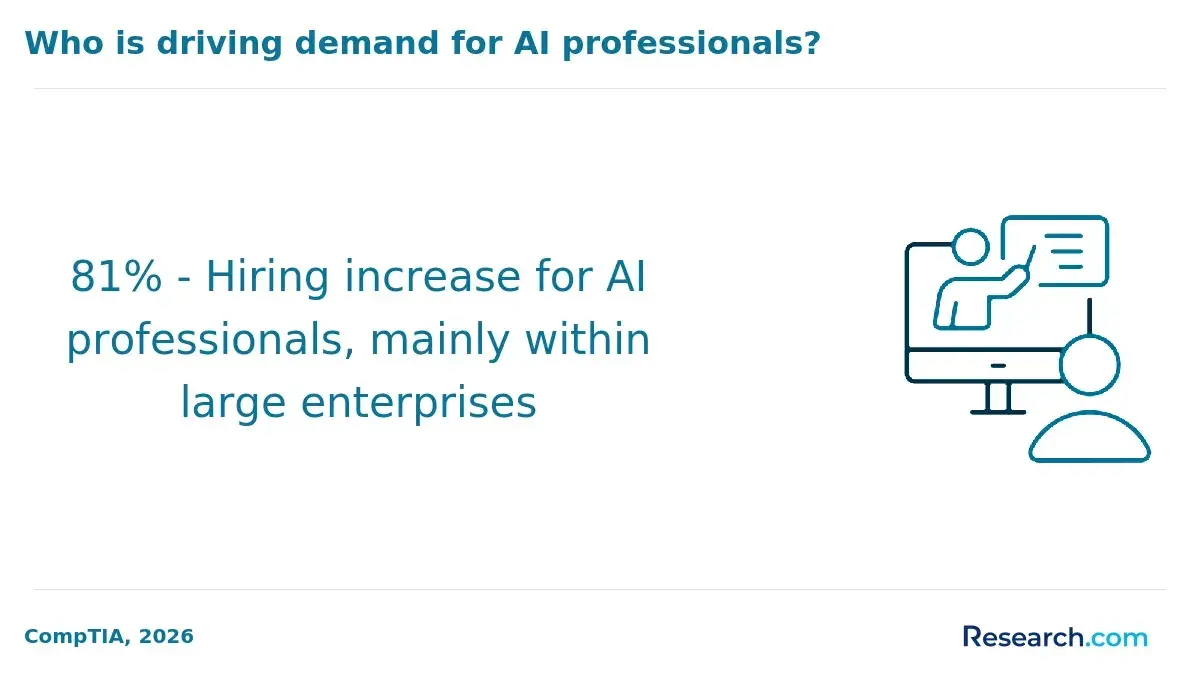
Graduates equipped with online AI bachelor's degrees can pursue a wide array of careers across technology, business, healthcare, finance, and beyond. Data from the Bureau of Labor Statistics highlights that individuals with AI degrees fill roles in 47 distinct job categories. Approximately 61% find employment within six months as machine learning engineers, AI analysts, or data scientists, reflecting high market demand in these areas.
Machine learning engineers focus on designing and optimizing algorithms that enable AI systems to learn from data. These roles demand strong programming skills, especially in Python, knowledge of neural networks, and familiarity with frameworks such as TensorFlow. Employers commonly include tech companies, startups, and research institutions.
AI analysts bridge AI outputs and business strategy, specializing in risk assessment and trend analysis. Such positions suit those interested in AI's role in business intelligence and are often found in consulting and finance sectors. Data scientists apply AI techniques to derive meaningful insights from large datasets, emphasizing statistical analysis, predictive modeling, and data visualization. Key employers span healthcare organizations, marketing firms, and government agencies.
Emerging roles include AI software developers, robotics engineers, natural language processing specialists, and AI ethicists, often requiring additional skills like hardware understanding or legal knowledge. Opportunities also exist in AI project management and technical sales, where leadership and communication complement AI expertise. Staying updated with new AI tools and certifications will strengthen career prospects.
What is the job outlook and salary potential for AI bachelor's degree holders?
AI-related occupations are projected to grow 35% through 2032, significantly outpacing the average growth rate for all jobs, according to the U.S. Bureau of Labor Statistics. This surge reflects the rising demand for AI expertise across sectors such as technology, healthcare, finance, and manufacturing. Graduates with a bachelor's degree in AI often pursue careers as machine learning engineers, data scientists, AI software developers, and research analysts.
The average starting salary for AI bachelor's degree holders is approximately $78,500, which is 34% higher than salaries for those with general computer science degrees. This wage premium highlights the specialized skills AI professionals bring to the workforce, including developing intelligent systems and automating complex processes. Salary levels can vary by geographic region, industry, and hands-on experience with AI frameworks and programming languages like Python and TensorFlow.
Professionals who combine AI skills with expertise in data analysis, cloud computing, or robotics generally see even higher earnings. For working adults, online AI bachelor's programs provide flexible options that maintain strong earning potential without disrupting employment. Programs with industry partnerships may offer better job placement and internship access, aiding career growth in this fast-evolving field.
Do AI bachelor's degrees require professional certifications or industry credentials?
In 2026, 51% of AI bachelor's programs include certifications like AWS Certified Solutions Architect or Google Cloud Professional Data Engineer as part of their curriculum. This integration offers students a significant edge, as employers view combined degree-plus-certification credentials as 23% more effective than degrees alone, according to the Coursera Skills Index 2024.
Bundled certification programs simplify the path for working adults by allowing the simultaneous acquisition of academic knowledge and recognized technical skills. For instance, earning a degree with embedded cloud computing certifications equips graduates with both theoretical understanding and practical abilities valued by technology recruiters. This approach reduces the expenses and time needed to obtain certifications after graduation.
Students in programs without integrated certifications should consider pursuing credentials from providers like Microsoft, IBM, and AWS independently. These certifications demonstrate hands-on expertise and are particularly beneficial for roles in machine learning engineering, data science, and AI infrastructure management. Industries such as finance, healthcare, and automotive place high value on these credentials.
While not all employers require certifications, many see them as proof of applied skills. For working professionals balancing study and career, choosing programs with built-in certification options improves alignment with industry demands and can enhance salary prospects. Prospective students are advised to check if their programs offer such pathways or plan additional certification efforts after earning their degree.
How do online AI programs compare to campus-based programs in terms of flexibility and learning outcomes?
Online AI programs provide exceptional flexibility, a crucial benefit for working adults managing professional and personal responsibilities. According to EDUCAUSE, 89% of online AI bachelor's students appreciate flexible scheduling, enabling them to access lectures, complete assignments, and participate in discussions at convenient times. This adaptability minimizes conflicts with work and family commitments, an advantage less common in fixed campus schedules.
In terms of learning outcomes, students in online AI programs perform equally well or better on standardized tests compared to campus students. This challenges the misconception that online education lacks rigor. Quality online programs feature interactive components like virtual labs, real-time coding, and AI simulations that match or exceed traditional hands-on experiences, fostering strong skill development.
Employers generally show no hiring bias between online and campus AI graduates, focusing instead on demonstrated skills and practical knowledge. Firms emphasize portfolio projects, internships, and certification exams over the mode of education when evaluating candidates for AI roles.
Prospective students should carefully review online programs for accreditation, curriculum quality, and support services such as tutoring and career counseling. Programs combining asynchronous materials with occasional live sessions tend to benefit working adults the most by reinforcing learning without rigid schedules.
What should working adults look for when choosing a reputable online AI bachelor's program?
Specialized accreditation, curriculum relevance, and flexible learning options are critical factors when selecting an online AI bachelor's program. Only 18% of these programs hold specialized ABET accreditation in computing, yet 67% of employers prefer candidates with ABET-accredited degrees over non-accredited ones. This accreditation ensures the program meets rigorous industry and academic standards, enhancing job prospects.
Check for up-to-date coursework covering machine learning, data structures, ethical AI, and programming skills. Programs with hands-on projects, internships, and partnerships with tech companies offer valuable practical experience. Flexibility in asynchronous learning or part-time enrollment helps working adults balance education with career demands. Additional support, like tutoring, career counseling, and technical assistance for remote learners, is essential.
Faculty expertise matters; instructors involved in current AI research or industry consulting provide cutting-edge knowledge and networking benefits. Graduation rates and alumni employment in AI or software development are important indicators of program quality.
Consider cost-effectiveness by reviewing tuition, fees, and financial aid or employer tuition reimbursement options. Transparency in pricing aids budgeting. Finally, verify the institution's reputation through rankings or peer reviews to ensure alignment with your career goals. Choose a program combining accreditation, strong curriculum, flexibility, qualified faculty, and proven career outcomes for the best return on investment.
Other Things You Should Know About Artificial Intelligence
Success in an online AI bachelor's program typically requires strong analytical and mathematical skills, particularly in areas like calculus, linear algebra, and statistics. Proficiency in programming languages such as Python or Java is also important. Additionally, effective time management and self-motivation are critical due to the independent nature of online learning.
Many online AI programs offer virtual or local internship options to help students gain practical experience. Some schools partner with companies to provide remote internships or project-based learning that can be completed while working. Internships allow students to apply theoretical knowledge to real-world problems, enhancing employment prospects after graduation.
Most online AI bachelor's programs include courses or modules covering ethics, privacy, and societal impacts of artificial intelligence technologies. Students learn about responsible AI design, bias in algorithms, and regulatory considerations. This prepares graduates to develop AI systems that prioritize fairness, transparency, and accountability in diverse applications.
Ensure the program is accredited by recognized agencies, like the Accrediting Commission for Community and Junior Colleges or a similar regional body. This guarantees educational quality and acceptance by employers. For advanced knowledge, consider an AI governance graduate degree.
References
- Cost to Study Artificial Intelligence in 2026 https://checkmateittech.com/cost-to-study-artificial-intelligence-usa/
- A Complete 4-Year Course Plan for an Artificial Intelligence Undergraduate Degree https://www.mihaileric.com/posts/complete-artificial-intelligence-undergraduate-course-plan/
- Tuition Plans | Maestro https://maestro.org/tuition-plans
- AI Online Learning: The Future of Flexible Education https://www.elearningcollege.com/elearning-blog/ai-online-learning-flexible-education
- Artificial Intelligence (procedure for non-EU students) https://apply.unipv.eu/enter/295
- Most Affordable Online Master's in AI for 2025 https://www.mastersinai.org/degrees/affordable-online-masters-in-ai/
- Artificial Intelligence | Università degli Studi di Milano Statale https://www.unimi.it/en/education/bachelor/artificial-intelligence
- Undergraduate https://ai.seas.upenn.edu/academics/undergraduate/
- Careers in AI: Opportunities and Pathways - ACS https://www.acs-college.com/careers-in-ai-opportunities-and-pathways
- AI Certificate vs. Degree: Which One Is Right for You - IABAC https://iabac.org/blog/ai-certificate-vs-degree-which-one-is-right-for-you