2027 Online AI Degrees for Students Interested in AI Policy and Governance

Co-Founder and Chief Data Scientist
Many professionals with non-technical backgrounds face challenges entering the rapidly evolving field of AI policy and governance. The complexity of regulatory frameworks, combined with ethical and societal implications, complicates career pivots without specialized education.
With the demand for experts who understand both the technology and its broader impacts rising, flexible learning options become critical. Online AI degrees tailored to policy and governance offer accessible pathways for students balancing work and study.
This article explores the top online programs, highlighting accredited, flexible options to help students acquire the skills needed to shape AI's future responsibly and effectively.
Key Things You Should Know
- Online AI policy and governance degrees emphasize ethical frameworks, compliance, and regulatory impacts, reflecting rising demand in government and corporate sectors overseeing AI integration.
- Programs increasingly incorporate interdisciplinary coursework blending AI technology, law, ethics, and public policy, with enrollment growth exceeding 25% annually since 2024.
- Graduates typically secure roles influencing AI legislation, corporate governance, and ethical AI development, with median salaries around $95,000 for early-career professionals in the U.S.
What are the best online AI degrees for students focused on policy and governance?
The best online artificial intelligence degrees for policy and governance combine technical AI knowledge with regulatory, ethical, and societal perspectives.
Programs such as a master's in artificial intelligence policy, an online master of public administration specializing in AI governance, or dual degrees in computer science and public policy offer strong preparation. These curricula focus on AI's impact on laws, privacy, ethics, and national security.
Top accredited AI programs focused on governance and ethics now integrate core computer science courses with studies in AI ethics, data privacy laws, and international AI policy frameworks. Students learn machine learning fundamentals alongside technology regulation and ethical deployment topics, equipping them to create policies managing AI's risks and benefits.
Faculty experienced in AI policy research and access to real-world case studies or internships enhance learning. Capstone projects addressing governance challenges like algorithmic bias and automated decision accountability develop practical skills for policy advisory roles.
Market demand supports these paths; the U.S. Bureau of Labor Statistics projects a 23% growth rate for computer and information research scientists from 2023 to 2033.
For prospective students interested in foundational studies, exploring a 2 year computer science degree online can provide a strong technical base that supports advancement into AI-focused policy fields.
What skills and knowledge do AI policy and governance professionals need?
Professionals working in AI policy analysis and governance frameworks require a broad set of skills that blend technical knowledge, legal expertise, and ethical insight. They must understand core AI concepts such as machine learning algorithms, data privacy, and system transparency to assess how AI systems function and their societal impacts.
Expertise in the ethical and legal aspects of AI regulation is vital. Familiarity with domestic and international laws around data protection, intellectual property, and specific regulations like the EU's AI Act enables these professionals to navigate complex legal environments.
Additionally, understanding policy-making processes equips them to influence and develop regulations that keep pace with technological advances.
Ethical reasoning fosters decisions that promote AI fairness, accountability, and bias mitigation. Analyzing case studies, such as algorithmic discrimination in hiring tools, sharpens the ability to recognize potential harms and design safeguards.
Communication skills are equally important to translate complex AI technicalities for varied audiences, supporting informed discussions among lawmakers, corporations, and the public.
A LinkedIn report highlights AI governance and responsible AI as among the fastest-growing job sectors, with hiring growth of over 74% year-over-year. This surge underlines the demand for professionals who combine knowledge of policy and ethics with technical AI skills.
For prospective students and professionals aiming to enter this field, exploring programs featured in the data science master degree ranking can provide a strong educational foundation.
How do online AI degree programs differ from campus-based options in structure and delivery?
Online AI degree program structure and delivery differences are significant compared to traditional campus-based options. Online programs primarily offer asynchronous coursework, enabling students to access lectures, readings, and assignments on their own schedules.
Some programs add synchronous components like live discussions or group projects to maintain student interaction despite physical distance.
Flexibility and interaction in online versus campus-based ai degrees also show contrast in curriculum delivery. Online degrees often use multimedia, interactive simulations, and virtual labs focused on AI policy and governance topics, while campus programs emphasize face-to-face seminars, debates, and networking events that foster direct peer and faculty engagement.
Student support differs as well: online learners rely on virtual advising, digital libraries, and forums, whereas campus students benefit from in-person mentoring and facilities.
STEM graduate education online is growing rapidly, with its fields representing 31% of online graduate students and a 13% increase in enrollment from 2021 to 2023. This reflects better infrastructure and acceptance of online formats for technical disciplines.
When considering AI degrees, prospective students should weigh their preference for interaction and networking against the greater self-discipline online programs demand. Hybrid options balance flexibility with live engagement.
For those exploring cost-effective pathways, reviewing the engineering degree online can provide additional insights into affordable, high-quality STEM education.
What are the typical admission requirements and prerequisites for online AI policy programs?
Admission requirements for online AI policy and governance programs in the United States generally include a bachelor's degree from an accredited institution, often in fields related to social sciences, political science, computer science, or engineering.
Many programs expect a minimum GPA of 3.0, though this may vary. Relevant professional experience in technology, policy, or regulatory roles enhances applications.
Foundations in programming, data analysis, or ethics may serve as prerequisites, especially for those pursuing artificial intelligence governance degrees in North America. Some programs provide preparatory courses to support candidates without technical backgrounds.
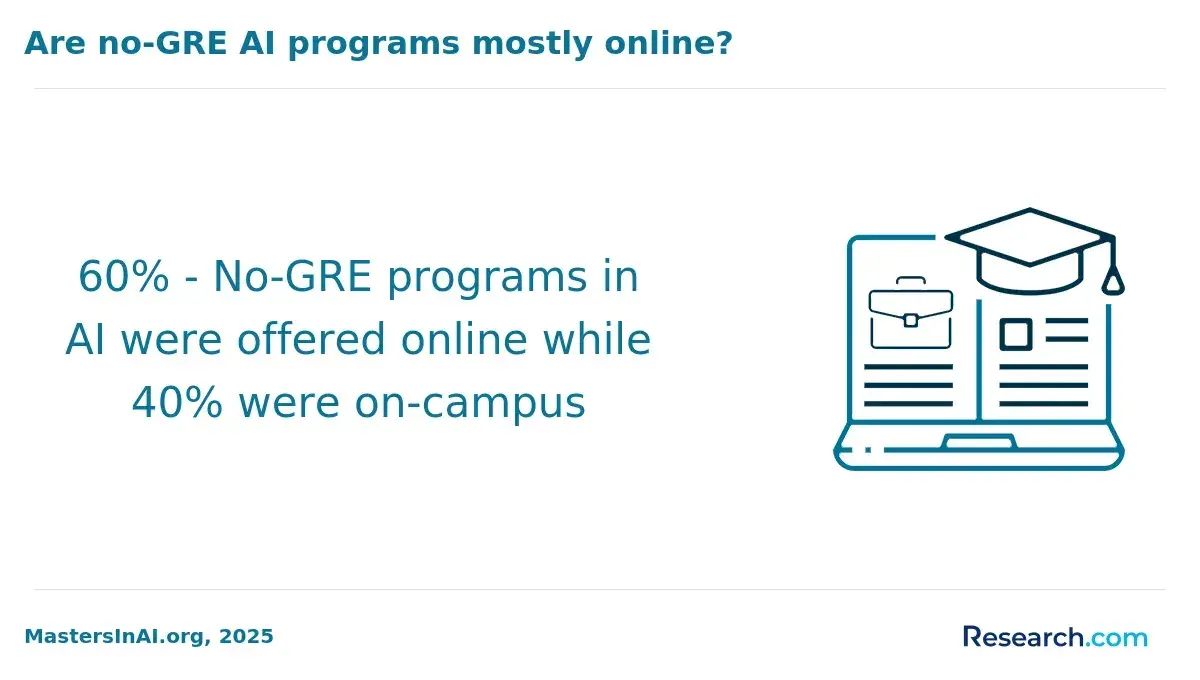
Standardized test scores such as the GRE or GMAT have become increasingly optional. A survey by the Graduate Management Admission Council (GMAC) found that 67% of graduate business and technology programs no longer require these tests, benefiting applicants with strong portfolios but limited test experience.
Letters of recommendation verifying academic or professional suitability and a statement of purpose outlining interest in AI policy and governance challenges are typically required. Resumes highlighting technological skills and AI-related projects may also be requested. International students usually need to demonstrate English proficiency through exams like TOEFL or IELTS.
Some institutions require prerequisite coursework in areas such as statistics, ethics, or machine learning, while online programs often offer bridging modules for flexibility.
Prospective students should confirm specific admission criteria with advisors. Those considering an accelerated cyber security degree online may find complementary skills valuable alongside AI policy expertise.
How long does it take to complete an online AI degree, and what is the typical cost?
Completing an online master's degree in artificial intelligence generally takes one to two years, with some accelerated programs finishing in as little as 12 months. Part-time options extend the timeline to three or more years. Bachelor's degrees in AI or related fields often require four years. The duration depends on credit requirements, program structure, and individual pacing.
The average cost of a master's degree in artificial intelligence or computer science from reputable online programs ranges between $20,000 and $45,000. Bachelor's degrees tend to cost between $40,000 and $70,000. These amounts typically include tuition and fees but may exclude textbooks and tech expenses.
According to PayScale data, graduates with online master's degrees in AI-related fields earn approximately 28% more than those holding only a bachelor's degree within five years.
Students should weigh cost, duration, and program reputation when selecting an online AI degree. Some programs offer modular courses to help balance time and expenses.
Employer tuition assistance and scholarships, especially for policy and governance-focused AI students, can significantly lower costs. Since online study allows maintaining employment, this flexibility can offset financial burdens and alter the timeline.
What coursework and specializations are covered in AI policy and governance curricula?
AI policy and governance education integrates multidisciplinary coursework essential for addressing the intersections of technology, law, and society. Core subjects include regulatory frameworks covering global and U.S. AI laws, compliance standards, and emerging protocols for managing AI deployment.
Courses on algorithmic bias focus on systemic discrimination resulting from data or model design, teaching students practical strategies for fairness audits and bias mitigation.
Engagement with diverse stakeholders is a critical skill, preparing students to collaborate with policymakers, industry leaders, civil rights groups, and the public. This fosters consensus-building for responsible AI use.
Electives often cover data privacy, AI cybersecurity, and ethical decision-making models, equipping learners with tools to navigate public concerns.
Specialized tracks in AI audit and accountability develop expertise in transparency, explainability, and impact assessments. Another path emphasizes policy design and evaluation through case studies, highlighting regulatory effectiveness and challenges.
Recent analysis by the AI Policy Institute shows that 78% of new AI governance programs include regulatory frameworks, algorithmic bias, and stakeholder engagement modules.
This reflects the rising demand for professionals skilled in both policy and technical domains, essential for careers in AI oversight, advising government entities, or shaping future legislation.
Which accreditation bodies and quality standards should prospective students verify for AI programs?
Prospective students seeking programs in artificial intelligence should ensure these programs hold accreditation from recognized bodies such as ABET (Accreditation Board for Engineering and Technology) and regional accrediting agencies.
ABET accreditation confirms that computer science and engineering curricula meet rigorous academic quality standards, which is crucial for credibility and industry acceptance.
Graduates from ABET-accredited programs earn about 19% higher starting salaries compared to those from non-accredited schools (ABET, 2024). This underscores the tangible advantage of enrolling in accredited programs.
Regional accreditation, provided by entities like the Higher Learning Commission or the Middle States Commission on Higher Education, validates institutional legitimacy and eligibility for federal financial aid.
It is also important to seek programmatic accreditation specifically related to artificial intelligence, data science, or engineering disciplines, ensuring curriculum relevance to AI policy and governance.
Quality curriculum standards are key; verify if programs incorporate ethical, legal, and policy frameworks addressing AI governance, privacy, and societal impact. Transparency about faculty qualifications and research involvement signals academic rigor.
Additionally, look for experiential learning opportunities such as internships or partnerships with AI policy organizations. Accreditation alone does not guarantee comprehensive quality, but combining it with these factors promotes an education aligned with current AI governance challenges.
Finally, confirm the institution provides clear post-graduation outcomes, including job placement rates in AI policy sectors or pathways for advanced study. Data-driven comparisons, facilitated through accredited program listings, help optimize career readiness and prevent costly educational mistakes in an evolving AI landscape.
What career paths and job titles are available for AI policy and governance graduates?
Graduates holding online AI degrees with a focus on policy and governance have diverse career opportunities in both public and private sectors. Key roles include AI policy specialists, who advise lawmakers and organizations on the ethical, legal, and social impacts of AI. They create regulations and frameworks that align AI-driven innovation with societal values.
Algorithmic auditors evaluate AI systems for bias, fairness, transparency, and compliance, collaborating with data scientists and legal teams to reduce automation risks.
The position of AI ethics officer centers on overseeing corporate governance in AI development and deployment. These experts enforce ethical guidelines, lead impact assessments, and manage stakeholder engagement to ensure accountability. They commonly work in tech firms, consultancies, or nonprofits.
According to the World Economic Forum's 2024 Future of Jobs Report, demand for these roles is rising sharply, with a 45% increase in job postings across OECD countries. Other relevant careers include data privacy advisors, AI governance analysts, and technology policy researchers, each addressing distinctive regulatory and societal challenges linked to AI.
Students seeking success should blend AI policy knowledge with law, ethics, or public administration and pursue internships in government, think tanks, or corporate ethics boards. Familiarity with international AI standards and interdisciplinary communication skills are essential in this evolving field.
What is the job outlook and salary potential for AI policy professionals in 2027?
The job market for AI policy professionals is expanding rapidly, with roles in AI policy and governance growing by 156% over the past three years, according to Glassdoor's Emerging Jobs Report. This outpaces most technology sectors, highlighting strong demand from organizations across government, private, and think tank sectors.
Salary prospects are promising, with median annual earnings ranging from $95,000 to $165,000. Senior advisors and strategic leaders tend to be at the higher end of this scale, reflecting the critical importance of expertise in AI ethics, regulation, and public policy.
Prospective students and professionals interested in online AI degrees focused on policy and governance should emphasize interdisciplinary skills. Combining technical literacy in AI with an understanding of legal and ethical frameworks improves job opportunities and compensation potential.
For instance, those proficient in machine learning algorithms and regulatory compliance are highly sought after in sectors like government technology oversight and corporate responsibility.
Careers in AI policy also involve navigating complex issues such as data privacy, algorithmic bias, and global collaboration. Practical training and ongoing education are key to adapting in this fast-evolving field.
Candidates displaying adaptability and deep insights into AI's societal effects are positioned for sustained growth and competitive salaries.
What professional certifications or credentials complement an online AI policy degree?
Professional certifications significantly boost the value of an online AI policy degree by validating expertise in areas like data ethics, AI governance, and compliance frameworks.
Key recognized certifications include the Certified Information Privacy Professional (CIPP), Certified Ethical Emerging Technologist (CEET), and credentials from organizations such as IEEE or the AI Ethics Certification Program by the University of Helsinki.
These certifications equip graduates with practical skills to handle regulatory challenges, ethical dilemmas, and risk mitigation strategies essential in AI policy roles.
Employers increasingly prefer candidates combining academic credentials with targeted certifications. Analysis from the Indeed Hiring Lab found AI job postings that require both a degree and professional certification offer 22% higher average salaries than those requiring only a degree.
This highlights the market premium on combined qualifications, especially in positions focusing on AI accountability, fairness, and transparency.
Certificates in data privacy laws such as GDPR or CCPA compliance, along with technology governance frameworks like COBIT, complement AI policy degrees by adding legal and organizational insights.
For example, Certified Information Systems Auditor (CISA) training helps professionals understand auditing and control processes related to AI regulation.
AI ethics certifications are increasingly important for developing responsible AI strategies within public and private sectors, enabling graduates to demonstrate proficiency in ethical AI deployment.
Integrating these certifications with an online AI policy degree enhances career advancement opportunities in highly regulated environments.
Other Things You Should Know About Artificial Intelligence
Online AI policy and governance degrees typically include capstone projects involving policy analysis or governance frameworks specific to artificial intelligence. These projects allow students to apply theoretical knowledge to real-world issues, often involving collaboration with institutions or regulatory bodies in the field.
Most online AI policy and governance degrees are accredited through the university’s regional accreditor, such as Middle States, HLC, SACSCOC, or WSCUC. Programs in public policy or law may also list specialized review by NASPAA or ABA-related standards, but those usually apply to the parent school, not the AI curriculum itself.
Prerequisites typically include a bachelor's degree in a related field and proficiency in mathematics and computer science. Some programs may also require prior coursework in ethics or public policy to ensure readiness for this focused study area.
References
- LSE AI Law, Policy, and Governance Course https://www.getsmarter.com/products/lse-ai-law-policy-and-governance-online-certificate-course
- AI Governance, Standards and Policy https://executive.graduateinstitute.ch/programmes/ai-governance-standards-policy
- Artificial Intelligence and Accreditation: Does It Really Help Us? https://nac-us.org/2025/11/25/artificial-intelligence-and-accreditation-does-it-really-help-us/
- Best AI Compliance Courses and Certifications in 2025 https://learnprompting.org/blog/ai-compliance-courses-and-certifications
- Market Analysis of 146 AI Governance Job Postings https://axialsearch.com/insights/ai-governance-jobs/
- Artificial Intelligence in Governance and Policy Design https://govcentre.org/course/artificial-intelligence-in-governance-and-policy-design/
- How Long Do AI Courses Take? https://www.nobledesktop.com/learn/ai/how-long-do-ai-courses-take
- Certified AI Ethics and Governance Professional (CAEGP) from Tonex, Inc. | NICCS https://niccs.cisa.gov/training/catalog/tonex/certified-ai-ethics-and-governance-professional-caegp
- AI Technology, Policy and Governance online course - Diplo Academy https://www.diplomacy.edu/course/ai-tech-policy-governance/
- AI Policy Jobs: A Complete Career Guide https://www.peopleinai.com/blog/ai-policy-jobs-guide