2027 Is an Online AI Master's Degree Worth It?

Co-Founder and Chief Data Scientist
Many professionals with unrelated undergraduate degrees face uncertainty about transitioning into the growing artificial intelligence field without interrupting their careers. Traditional master's programs often require relocation or full-time study, limiting accessibility for working adults. Online AI master's degrees present a flexible alternative, but doubts remain about their value and recognition. Deciding whether the investment in time and money will lead to meaningful career advancement is challenging.
This article explores the current landscape of online AI master's programs in 2026, examining their credibility, curriculum quality, career outcomes, and cost-effectiveness to help readers make an informed decision.
Key Things You Should Know
- Online AI master's degrees offer flexibility and growing industry relevance, with 65% of graduates reporting improved career prospects by 2025 according to recent labor market studies.
- Programs increasingly integrate practical skills in machine learning and data ethics, addressing employer demand for proficiency in these areas.
- Tuition varies widely, averaging $20,000 to $50,000, but many offer scholarships or part-time options, making them accessible for working professionals aiming to upskill.
How do online AI master's degrees compare to campus-based programs in terms of quality and recognition?
Online ai master's degree accreditation and recognition have advanced significantly, with many online programs now matching campus-based counterparts in quality and employer perception. A 2024 Coursera survey found that 76% of employers regard online master's degrees as equally credible as traditional, on-campus degrees. This shift reflects improvements in curriculum design, faculty expertise, and interactive learning technologies. Quality differences hinge more on program accreditation and institutional reputation than on delivery mode.
Top-tier universities offering both online and campus ai master's programs, such as Georgia Tech and the University of Illinois, maintain identical coursework and assessments to ensure students develop comparable skills. Employers often prioritize practical project portfolios and hands-on experience, which many online programs incorporate through internships and lab access. However, some research-focused roles may still favor campus-based graduates for their direct mentorship and networking opportunities.
Those comparing quality between campus-based and online ai master's programs should consider accreditation status, curriculum relevance, industry connections, and practical learning options. Online degrees typically offer flexible pacing that benefits working professionals, while traditional programs might appeal more to students seeking immersive environments. Prospective students can explore a range of options, including online computer science degree programs, to find the best fit for their goals.
What are the typical admission requirements and prerequisites for an online AI master's degree program?
Typical admission requirements for an online artificial intelligence master's program often include a bachelor's degree in computer science, mathematics, or a related STEM field, with around 68% of programs requiring this. Applicants usually submit official transcripts, letters of recommendation, a statement of purpose, and standardized test scores like the GRE, though some schools waive GRE requirements based on professional experience or undergraduate GPA. Prerequisites for enrolling in an online artificial intelligence master's degree frequently include a strong foundation in programming languages such as Python or Java, along with coursework in linear algebra, statistics, and data structures.
Some institutions accept applicants from non-STEM backgrounds, like economics or physics, if they complete prerequisite or bridge courses to ensure readiness for core AI topics. Work experience in technology or related areas may help offset gaps in academic qualifications, particularly in programs aimed at working professionals. However, foundational knowledge of algorithms and machine learning remains essential. International students must also provide proof of English proficiency through exams like TOEFL or IELTS.
Applicants should carefully verify specific program prerequisites, as requirements vary widely and some programs value research experience or published projects, especially for thesis options. Early communication with admissions offices and thorough preparation of application materials can improve admission chances and help meet the program's technical demands. For those exploring further educational paths, related fields such as a mechanical engineer degree online may also offer career opportunities.
How much does an online AI master's degree cost, and what financial aid options are available?
Online AI master's degree programs generally cost between $10,000 and $60,000 in total tuition, with top-tier programs averaging $35,000 to $45,000. This variation depends on factors such as school reputation, program length, and curriculum depth. Public universities often offer lower tuition rates, particularly for in-state students, while private institutions tend to charge higher fees. Some programs feature accelerated tracks that may reduce overall expenses by shortening study duration. Students seeking a cost of online AI master's degree programs should carefully compare these variables.
Financial aid options for online AI graduate studies include federal student loans, scholarships, grants, and employer tuition reimbursement. Federal loans typically provide fixed interest rates and deferment options, making them a popular choice. Many universities offer merit-based scholarships or awards targeted at students with research potential. Additionally, need-based grants may be available through institutions or private STEM-focused foundations. Tech companies often support upskilling through employer tuition assistance, lowering the financial burden for working professionals.
Prospective students should complete the Free Application for Federal Student Aid (FAFSA) early to maximize funding opportunities. Some schools also provide payment plans to spread tuition over multiple semesters, reducing upfront costs. Online learners might find assistantships or research positions providing stipends or tuition waivers, though these options are more common on campus. For information on affordable options in related engineering fields, explore the cheapest engineering degree.
Evaluating total costs alongside available financial aid is essential for making an informed investment in AI education. Clear tuition disclosures and transparent guidance on aid options help students avoid unexpected expenses and plan effectively.
What is the typical curriculum and core coursework covered in an online AI master's program?
Typical core subjects in an online artificial intelligence master's program include a balance of theoretical foundations and practical applications. Machine learning and deep learning feature prominently in 94% of programs, covering algorithms, neural networks, supervised and unsupervised learning, and reinforcement learning methods. Students engage with programming assignments using Python and popular libraries like TensorFlow or PyTorch, enhancing hands-on skills.
Common curriculum components in online AI graduate degrees often incorporate data structures, probability theory, and statistics, providing essential mathematical rigor. Many also offer courses in natural language processing and computer vision to prepare students for specialized AI fields.
Ethics in AI is gaining emphasis, with 62% of programs including dedicated coursework on bias mitigation, transparency, privacy, and societal impacts. Prospective students should ensure ethical studies align with their interests and career goals.
Capstone projects and research partnerships enable application of knowledge to real-world challenges, with some programs favoring theoretical depth and others prioritizing applied learning through labs and internships. Those targeting research or doctoral paths may prefer theory-heavy tracks, while working professionals often benefit from practical, job-ready experiences.
Choosing among various online AI master's curricula can be guided by comparing these core subjects and program focus. For students also interested in data analytics, exploring online data science programs may offer useful complementary skills.
How long does it take to complete an online AI master's degree, and what is the time commitment per week?
Completing an online AI master's degree typically takes between two and three years when pursued part-time. Students generally commit 15-20 hours weekly to studying lecture materials, completing assignments, engaging in discussions, and working on projects or research. This timeline can vary depending on program structure and personal availability.
Accelerated programs may allow finishing in about two years but often require full-time enrollment or increased weekly hours. Those balancing full-time work or family responsibilities might extend their studies to three years or more at a manageable pace. Time commitment also fluctuates with course difficulty and individual learning speed. Foundational courses like machine learning or statistics often demand more initial study time, while later stages tend to focus on applied projects and research, including capstone work or theses.
Prospective students should realistically assess their weekly availability, treating the program similarly to a part-time job to stay on track. Some programs offer flexible deadlines or self-paced options, which can lower weekly hours but may lengthen total completion time. Careful planning and clear communication with academic advisors help tailor course loads, minimize burnout, and improve the chances for timely graduation.
What accreditation standards should you verify when choosing an online AI master's program?
When selecting an online AI master's program, verifying specialized accreditation is essential. Accreditation from bodies like ABET (Accreditation Board for Engineering and Technology), the Computing Accreditation Commission (CAC), or the Accreditation Council for Business Schools and Programs (ACBSP) demonstrates that the curriculum meets industry standards for artificial intelligence, computer science, and related fields. Only 42% of online AI master's programs have such specialized accreditation; most rely solely on institutional accreditation, which verifies overall quality but not specific AI content.
Specialized accreditation ensures rigorous course content, qualified faculty, and access to necessary technological resources. It also influences employer recognition, eligibility for certifications, and credit transferability. For instance, many technology companies and research institutions prefer degrees from ABET-accredited programs. Key curriculum components like machine learning, data ethics, and software engineering are typically emphasized in these accredited programs.
To confirm a program's accreditation, prospective students can consult the U.S. Department of Education's Database of Accredited Postsecondary Institutions and Programs or the Council for Higher Education Accreditation's (CHEA) Database. This verification safeguards educational investments and supports career growth in the competitive AI job market.
What career roles and job titles can you pursue after earning an online AI master's degree?
Graduates with an online AI master's degree secure diverse roles across industries like healthcare, finance, automotive, and technology. According to LinkedIn's Jobs on the Rise report for 2024, 38% obtain positions as machine learning engineers, focusing on designing algorithms that enable systems to learn from data. Other frequent roles include AI researchers, who innovate AI methodologies, and data scientists who analyze complex datasets to inform business strategies.
AI product managers also represent a key career path, combining technical expertise with strategic planning to oversee AI-driven products and services. Specializations such as computer vision engineers, natural language processing experts, and robotics specialists reflect the varied directions within AI studies.
Employers prioritize candidates with advanced AI skills, hands-on project experience, and proficiency with platforms like TensorFlow or PyTorch, alongside knowledge of cloud-based AI services. These competencies significantly improve employability and enable graduates to bridge software engineering with AI theory and ethics effectively.
Highlighting relevant technical skills and project experience is essential for applicants targeting these roles. The flexibility of an AI master's degree supports a wide-ranging career landscape across multiple sectors.
What is the salary potential and job outlook for AI master's degree graduates in the current job market?
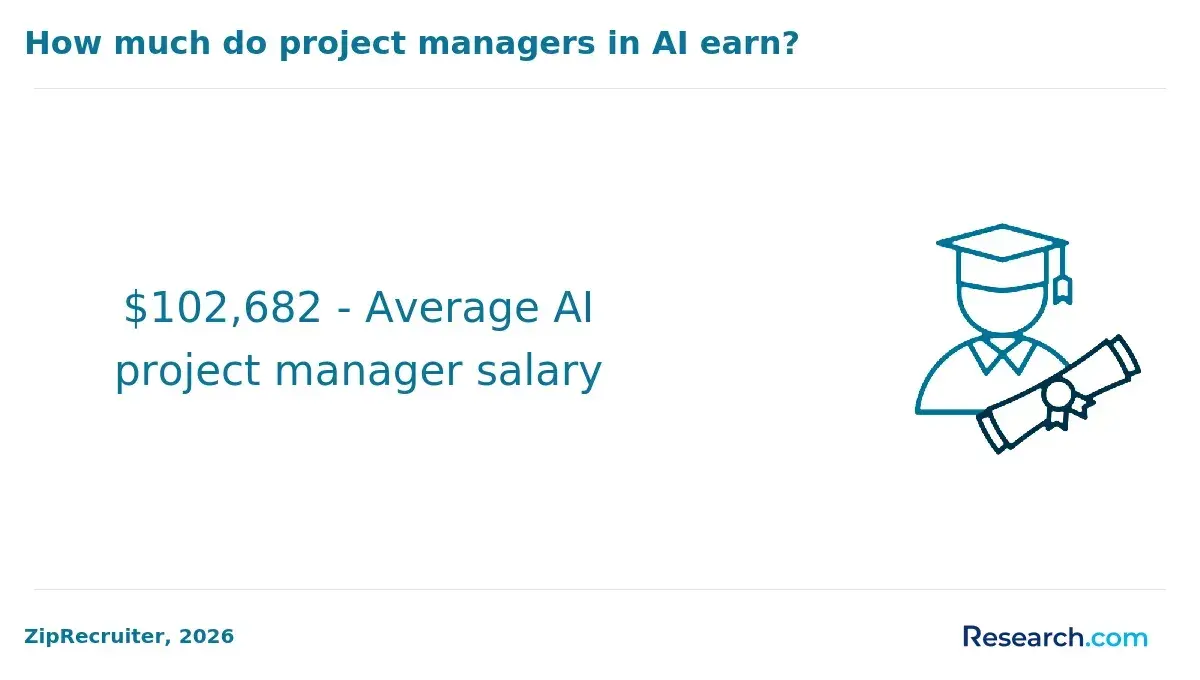
Graduates holding a master's degree in artificial intelligence can expect strong salary potential and promising job prospects. Entry-level professionals typically start with median salaries between $110,000 and $130,000, according to data from the Bureau of Labor Statistics and Levels.fyi. Experienced AI specialists, especially machine learning engineers and AI architects, often earn annual salaries above $180,000.
The demand for AI talent is rapidly increasing, with job growth projected at 35% through 2032-significantly faster than the average for all occupations. AI expertise is sought after not only by tech companies but also by industries like finance, healthcare, automotive, and government for applications such as automation, predictive analytics, and intelligent systems.
Career opportunities include roles like data scientist, AI researcher, and software engineer specializing in AI. Candidates with skills in natural language processing, computer vision, and reinforcement learning have an edge in hiring and compensation. Employers look for a balance of strong theoretical knowledge and hands-on experience with Python, TensorFlow, and cloud platforms.
Geographic location plays a role in salary variations, with tech hubs like Silicon Valley, New York, and Seattle offering higher pay alongside greater living costs. Remote positions are expanding, providing competitive pay across different regions.
Ultimately, a master's in artificial intelligence positions graduates well for a lucrative, fast-growing job market with diverse career paths.
Are there professional certifications or industry credentials that complement an online AI master's degree?
Professional certifications can greatly enhance the value of an online AI master's degree and improve employment prospects. Research from Indeed Hiring Lab shows that 63% of employers hiring for AI roles now prefer or require industry certifications alongside or instead of advanced degrees. Well-known certifications include AWS Machine Learning Specialty, Google Cloud Professional Data Engineer, and Microsoft Azure AI certifications.
These certifications verify practical skills in cloud platforms, machine learning pipelines, and AI deployment, areas often only covered theoretically in master's coursework. For example, the AWS Machine Learning Specialty certification validates expertise in building and deploying machine learning models on the AWS cloud, a critical skill for many AI engineering positions.
Graduates aiming for data engineering roles gain from Google's Professional Data Engineer certification, which focuses on data processing, analysis, and security in Google Cloud. Microsoft Azure AI certifications stress applied AI solutions and enterprise integration, valuable for deploying real-world AI products.
Combining an online master's degree with relevant certifications addresses employer demands for current, verifiable technical skills. It helps professionals pivot within AI specialties or accelerate career growth by demonstrating commitment to continuous learning. Prospective students should plan to earn at least one industry certification during or soon after their degree program to optimize both foundational knowledge and practical expertise.
How do you evaluate and select a reputable online AI master's program that fits your goals?
Choosing a reputable online AI master's program involves focusing on factors that align with your career goals and lifestyle. Program reputation is critical, accounting for 34% of decision weight, as noted by Graduate Management Admission Council data. Look for accreditation, faculty expertise, and partnerships with leading research institutions or companies-these often reflect program quality and networking opportunities.
Career outcomes and alumni success also heavily influence decisions, representing 28% of prospective students' priorities. Investigate employment rates, employer connections, and mentoring or internship services. Programs reporting, for example, 90% employment within six months post-graduation offer compelling evidence of value.
Flexibility matters too, especially for working professionals. Programs offering asynchronous courses, part-time options, or multiple annual start dates help accommodate varying schedules. Assess if hybrid formats with live sessions are available if interaction is important to you.
Curriculum depth in machine learning, natural language processing, and computer vision is vital. Ensure the program aligns with your focus area and provides hands-on projects, access to AI labs, or cloud computing resources. Such features enhance practical skills and readiness for AI careers.
Other Things You Should Know About Artificial Intelligence
Online AI master's degree programs focus on developing technical skills such as machine learning, data analysis, natural language processing, and robotics. Students also enhance problem-solving abilities and learn to implement AI algorithms using programming languages like Python. Additionally, many programs emphasize ethical considerations and real-world applications of artificial intelligence.
Yes, an online AI master's degree can prepare graduates for roles in research and development. The coursework often includes projects and thesis components that encourage innovation and exploration of new AI techniques. Graduates may qualify for positions in academic or corporate R&D labs focused on advancing artificial intelligence technologies.
While requirements vary by institution, most AI master's programs expect students to have some prior programming experience, usually in languages like Python, Java, or C++. This background is important because programming is essential for building and testing AI models. Some programs may offer preparatory courses if students need to strengthen their coding skills before starting the core curriculum.
Continuing education is critical in the rapidly evolving AI field due to constant technological advancements and emerging methodologies. Professionals often pursue additional certifications, workshops, or specialized courses to stay current. Ongoing learning helps maintain competitive skills, adapt to new tools, and access advanced career opportunities in artificial intelligence.
References
- Is a master's degree in artificial intelligence worth it? | edX https://www.edx.org/resources/is-a-masters-in-artificial-intellience-worth-it
- 6 High-Paying Jobs With a Master’s in AI | University of Bridgeport https://www.bridgeport.edu/news/high-paying-jobs-with-a-masters-in-ai/
- 11 Best AI Certifications in 2025 to Deepen Your Technical Knowledge | DigitalOcean https://www.digitalocean.com/resources/articles/ai-certifications
- Top 10 Careers You Can Pursue With an Online Master’s in AI https://www.ucumberlands.edu/blog/careers-you-can-pursue-with-an-online-masters-in-ai
- Artificial Intelligence (AI) https://ai-master.org/requirements
- How to Choose the Best Online Master’s in Artificial Intelligence for Your Career Goals https://aifolks.org/blogs/how-to-choose-the-best-online-masters-in-artificial-intelligence-for-your-career-goals
- Best AI Masters Online & On-Campus - AIDegreePrograms.org https://aidegreeprograms.org/rankings/best-ai-masters-programs/
- MSc Artificial Intelligence-career prospects University of Hull Online https://online.hull.ac.uk/courses/msc-artificial-intelligence/careers
- Ultimate Guide: How to Choose the Right AI Training Course to Boost Your Career - ONLC https://www.onlc.com/blog/how-to-choose-ai-training-courses/
- Master's in AI: US Job Market & Salary Outlook (2024) https://drrajus.com/masters-in-ai-career-outlook-and-salary-trends/