2027 Online AI Associate Degrees With Open Enrollment

Co-Founder and Chief Data Scientist
Many professionals with unrelated undergraduate degrees face challenges transitioning into the fast-growing field of artificial intelligence without disrupting careers or relocating. Traditional degree programs often demand lengthy commitments and rigid schedules that do not accommodate working adults. The lack of flexible, accessible options can delay or derail career pivots into AI, limiting opportunities in this dynamic industry. This article explores 2027 online AI associate degree programs with open enrollment, designed for those seeking accredited, adaptable pathways into artificial intelligence. Readers will find guidance on programs that balance quality education with the flexibility needed for professional advancement and career change.
Key Things You Should Know
- In 2026, over 40 U.S. colleges offer fully online AI associate degrees with open enrollment, increasing accessibility for diverse learners and working adults nationwide.
- These programs emphasize foundational skills in programming, data analysis, and ethics, aligning curricula with projected 19% job growth in AI-related tech fields through 2032.
- Tuition costs for online AI associate degrees average $4,500-$8,000, often lower than traditional programs, with flexible pacing supporting part-time study and career advancement.
What is an online AI associate degree and how does it differ from a bachelor's degree in artificial intelligence?
An online AI associate degree is a two-year program that focuses on foundational knowledge and practical skills in artificial intelligence. It typically includes subjects like programming basics, machine learning principles, data analytics, and AI applications across industries. These programs prepare students for entry-level roles such as AI technicians, data analyst positions, or software developer assistants. In contrast, bachelor's degree programs span four years and provide deeper theoretical understanding, advanced mathematical modeling, and specialized electives such as robotics, natural language processing, and computer vision.
The difference between AI associate and bachelor's programs is significant in terms of depth and career outcomes. Associate degrees prioritize hands-on skills and quicker entry into the workforce, making them suitable for those seeking lower tuition costs and faster completion. Bachelor's degrees require higher academic rigor and are preferred for mid- to senior-level roles such as AI engineers or data scientists. Bachelor's students also engage more in research projects, software engineering, and AI ethics.
With AI-related job postings growing 74% between 2022 and 2024, LinkedIn's 2024 Jobs Report highlights strong demand for entry-level positions. This trend supports the value of associate degrees as accessible pathways into the AI workforce. Prospective students exploring the online AI associate degree vs bachelor's degree should consider their career goals, budget, and timeline. For those uncertain about committing to four years, an associate degree offers a cost-effective way into AI and can serve as a stepping stone to further study. More information about artificial intelligence degree jobs can be found at artificial intelligence degree jobs.
Which schools offer accredited online AI associate degrees with open enrollment policies?
Several accredited U.S. community colleges offer online associate degrees in artificial intelligence with open enrollment, welcoming all applicants in 2027. Institutions like Northern Virginia Community College and Houston Community College provide fully online AI or data science-related associate programs that do not require prior academic records or standardized test scores. These programs cater to working adults and career changers seeking flexible pathways by eliminating traditional barriers such as entrance exams or limited application windows.
As of recent data, about 68% of U.S. community colleges offer online degree programs, including growing numbers focused on AI and data science. Examples include Miami Dade College's Associate in Science in artificial intelligence and San Jacinto College's AI-centered technical pathways. These accredited online artificial intelligence associate programs accepting all applicants typically cover AI fundamentals, machine learning, and programming languages like Python, preparing students for technical roles or transfers to four-year institutions.
Prospective students should confirm regional accreditation and verify open enrollment status, as some programs may involve placement tests or prerequisites. Program lengths and costs vary, so reviewing college catalogs is essential. Many community colleges with strong tech partnerships enhance learning through internships and workshops. For those seeking accessible paths into AI careers, exploring an affordable data science degree can be a strategic step forward.
What are the typical admission requirements and prerequisites for enrolling in an online AI associate degree?
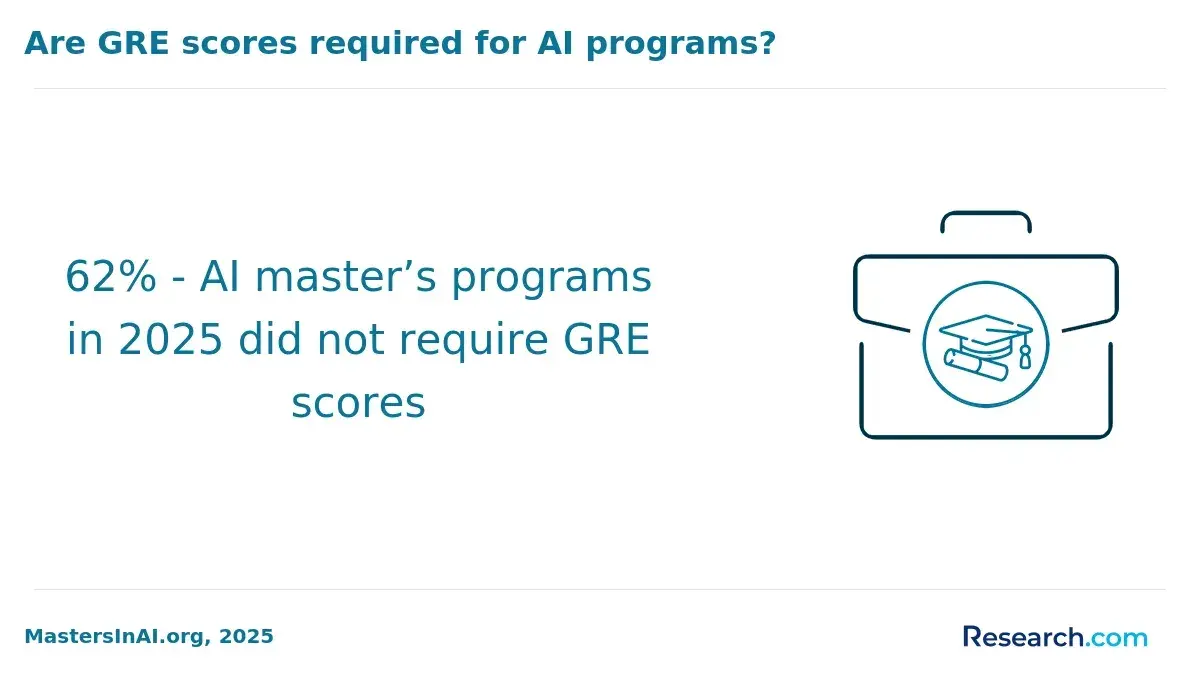
Typical admission requirements for enrolling in an online AI associate degree emphasize accessibility with minimal foundational qualifications. Most programs accept a high school diploma or GED, and some open enrollment programs do not require minimum GPAs or standardized test scores. This reduces entry barriers and reflects the increase of such schools from 12% to 31% of accredited postsecondary institutions between 2020 and 2024, according to the National Association for College Admission Counseling.
For prerequisites for enrolling in open enrollment AI programs, applicants may need to submit an application form, proof of high school completion, and possibly a personal statement. Some programs require placement tests in math and English to confirm academic readiness. Basic algebra skills and computer literacy are often expected due to the technical course content. Institutions sometimes offer remedial courses online for students needing skill enhancement.
Work experience in technology may substitute formal prerequisites for adult or professional learners. Many online AI associate degree programs allow flexible start dates and continuous enrollment. International students typically must provide credential evaluations and demonstrate English proficiency via tests like TOEFL or IELTS. Those uncertain about specific requirements should contact admissions directly to clarify.
Accessibility-focused admissions open new pathways to advanced studies. For students exploring related fields, a game design and development degree can be another accessible option in technology education.
What coursework and technical skills will you learn in an online AI associate degree program?
Students in an online AI associate degree program gain essential programming skills, with Python being fundamental-it appears in 87% of AI job listings, according to the Bureau of Labor Statistics. The curriculum emphasizes machine learning programming courses, teaching Python syntax, data structures, and libraries like NumPy and TensorFlow. Applied data analysis skills in AI are developed through coursework on manipulating and visualizing datasets using Pandas and Matplotlib.
Machine learning fundamentals cover supervised and unsupervised algorithms, classification, regression, and clustering techniques. Training in statistics and probability underpins the mathematical framework needed for AI algorithms. Computer science basics, including algorithms, data structures, and software development principles, form another vital component of the program.
Students explore database management with relational and NoSQL systems, and ethical AI considerations, focusing on responsible technology use and data privacy. Hands-on projects strengthen coding, model training, and deployment expertise. Specialized topics may include natural language processing (NLP), robotics, and computer vision, preparing graduates for roles like AI technician, junior data analyst, or machine learning assistant.
For those interested in advancing beyond the associate level, information about affordable graduate programs is available, such as an online master in data science that builds on these foundational skills.
How long does it take to complete an online AI associate degree and what is the typical cost?
Completing an online AI associate degree generally requires about two years of full-time study. Some programs offer accelerated tracks that shorten this to 18 months, while part-time students balancing work or other commitments may take up to three years. The duration depends heavily on the program structure and course load each term, with part-time study providing greater flexibility.
In-state tuition for community college associate degrees averages around $3,570 annually, which is roughly a 62% savings compared to public four-year institutions, making these programs an affordable option. Additional fees such as technology or lab fees, typically ranging from $100 to $300 per semester, may apply for specialized AI software access. Textbook expenses usually range between $500 and $1,000 annually, though digital or rental options can help reduce this cost.
Financial aid and scholarships targeted at STEM or AI fields can further offset expenses. Students planning to transfer credits toward a bachelor's degree should confirm credit transfer policies to optimize time and cost efficiency.
Overall, pursuing an online AI associate degree can cost approximately $7,000 in tuition for in-state students, plus additional fees, offering a cost-effective and time-efficient pathway into AI careers.
What career roles and job titles can you pursue with an online AI associate degree?
An online AI associate degree equips graduates for technical and analytical roles in the fast-growing artificial intelligence sector. Positions such as machine learning technician, AI data analyst, AI support specialist, and AI systems operator focus on developing models, analyzing data, implementing machine learning workflows, and supporting AI software deployment in organizations.
Job titles differ across industries and employers, including Junior Machine Learning Engineer, Data Science Assistant, AI Operations Coordinator, and Automation Technician. These roles typically require skills in programming, statistics, and AI principles, all covered in associate degree programs.
Demand for AI-related roles has surged, with machine learning technician and AI data analyst positions growing by 156% over two years. Glassdoor's Emerging Jobs Report notes median starting salaries for these roles range from $62,000 to $68,000 annually, reflecting increased investment in entry-level AI talent.
Graduates often collaborate with data scientists, software developers, and IT teams to deploy AI tools, requiring proficiency in Python, R, TensorFlow, and database systems. Employers also value problem-solving skills and adaptability due to rapid technological advancement.
Associate degrees open paths for specialization or career growth, combining hands-on AI applications with roles in quality assurance, technical support for AI-driven systems, and AI product testing. These expanding opportunities cater to diverse professional interests within the AI workforce.
What is the job outlook and salary potential for AI associate degree graduates in the current job market?
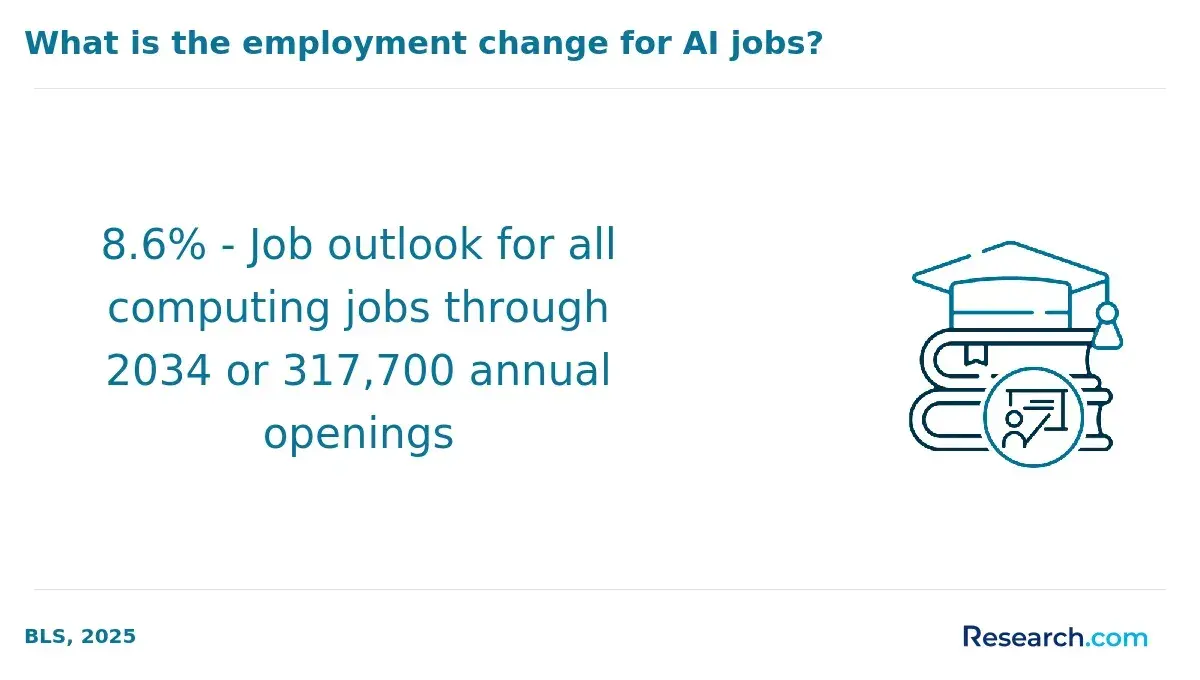
Graduates with an AI associate degree benefit from strong job prospects backed by rapid growth in the industry. The U.S. Bureau of Labor Statistics projects a 35% rise in demand for AI and machine learning specialists through 2032, significantly outpacing the average 3.5% growth across all occupations. This increase fuels opportunities in areas like data analysis, software development, and AI systems implementation.
Entry-level salaries generally range from $55,000 to $75,000 annually, with higher wages often found in tech hubs or for those with specialized skills in machine learning algorithms and data processing. Gaining practical experience or certifications in widely used AI frameworks can further improve earning potential.
Career paths commonly include roles such as AI technician, data analyst, and support specialist in AI-driven projects. Employers highly value hands-on skills gained through associate degree programs, especially when complemented by internships or project portfolios. Continual skill development is important to adapt to evolving AI technologies.
Flexible online AI associate degrees with open enrollment support those balancing work and education, responding quickly to employer demand. AI integration across industries like healthcare, finance, and manufacturing broadens job options beyond traditional technology firms.
Prospective students should prioritize programs that emphasize applied learning with industry-standard tools, as this approach enhances job placement and salary outcomes. Awareness of regional industry trends and certification paths remains crucial to maximizing the value of an AI associate degree.
Are there professional certifications or industry credentials you should pursue alongside an online AI associate degree?
Professional certifications paired with an online AI associate degree offer a significant boost to career opportunities in artificial intelligence and data science. Industry certifications can increase earning potential by 18-25%, with AWS, Google Cloud, and Microsoft Azure certifications delivering the highest salary premiums, according to PayScale's Certification ROI Report. These certifications confirm specialized skills and commitment to ongoing learning in essential areas such as cloud computing, machine learning, and data management.
Students and graduates benefit from foundational certifications like the AWS Certified Machine Learning - Specialty and Google Professional Data Engineer, which provide valued practical knowledge. Microsoft Azure AI Engineer certifications also enable targeted expertise for deploying AI solutions on cloud platforms. Complementary skills-based certifications in Python programming, TensorFlow, and data analytics enhance an associate degree by highlighting critical technical competencies relevant to AI development.
The fast-changing nature of AI can make it challenging for professionals to stay current. Certifications address this through structured, up-to-date curricula tested by rigorous exams. This benchmarking helps job seekers distinguish themselves in competitive markets, as many employers prefer or require certifications for roles focusing on AI model deployment, data pipeline design, and automation systems.
When selecting certifications, candidates should prioritize those aligned with their career goals, relevance to their associate degree studies, and industry demand to maximize their market value and practical expertise.
How do you evaluate the quality and reputation of online AI associate degree programs?
Accreditation is crucial when evaluating online AI associate degree programs. Recognized bodies like ACBSP and ABET guarantee academic rigor and industry relevance. According to the Distance Education Accrediting Commission 2024 study, graduates from accredited programs achieve a 94% job placement rate within six months, versus 73% from non-accredited programs. This clearly shows how employers value accredited credentials.
Check if the curriculum covers essential AI skills such as machine learning, data analysis, and programming languages like Python. Programs collaborating with tech companies or offering real-world AI projects provide stronger career preparation.
Faculty expertise also matters. Instructors with advanced degrees and practical experience enhance the learning environment. Student support services-like career counseling, internships, and tech assistance-play a vital role in student success.
Review graduate outcomes and employer feedback as well. Many institutions publish placement stats and alumni career paths. Independent online reviews and rankings from education-focused organizations help identify consistent strengths or weaknesses.
Finally, consider program flexibility and cost-effectiveness. Some offer open enrollment and rolling admissions, accommodating diverse schedules. A well-rounded online AI associate degree balances accreditation, curriculum relevance, faculty quality, support services, and graduate success.
Can you transfer credits from an online AI associate degree to a bachelor's degree program?
Credits from an online AI associate degree can often be transferred to a bachelor's degree program if the institutions have formal articulation agreements. Roughly 72% of four-year U.S. institutions hold transfer agreements with community colleges for AI and STEM-related associate degrees, up from 51% in previous years, according to the American Association of University Registrars and Admissions Officers. These agreements help ensure key coursework counts toward bachelor's degree requirements, saving students time and avoiding redundant classes.
Transfer policies differ by university and program, so students should check credit acceptance before enrolling. For instance, an online associate degree featuring courses in machine learning, data structures, and programming fundamentals may transfer directly to related bachelor's programs in computer science or AI. Some colleges provide transfer guides or pathway maps to clarify credit applicability.
Students switching schools or aiming for bachelor's degrees outside formal transfer agreements might face challenges with credit acceptance. In these cases, official course equivalency evaluations or academic advisor approvals can help. Requirements usually include minimum grades and comparable course content. Promptly submitting transcripts and consulting admissions offices are practical steps to facilitate credit review.
Effective use of articulation agreements combined with proactive communication can significantly enhance degree progression for students pursuing online AI associate degrees.
Other Things You Should Know About Artificial Intelligence
No, most open-enrollment online AI associate degrees do not require prior programming experience. Schools usually ask for a high school diploma or GED, basic computer skills, and internet access. Introductory courses often begin with Python, data literacy, and AI fundamentals before more advanced coursework.
Online AI associate degrees from accredited institutions are generally recognized by employers, especially when the program includes relevant technical training. However, job competitiveness can increase with practical experience, certifications, or further education. Employers often value demonstrated skills and portfolio projects alongside formal education.
Credits earned in a 2027 online AI associate degree with open enrollment can typically be transferred to a bachelor's program, provided the institution is regionally accredited. Students should confirm specific transfer agreements with the receiving university to ensure compatibility.
In 2027, the cost for online AI associate degrees with open enrollment varies widely, from around $3,000 to $15,000 annually, depending on the institution and location. For those considering future specialization, a financial AI master’s degree may offer additional insight into potential career paths.
References
- Top AI Job Roles You Can Land with an AI Certification https://www.h2kinfosys.com/blog/top-ai-job-roles-you-can-land-with-an-ai-certification/
- How to Go from an Associate’s Degree to a Bachelor’s Degree | George Fox University https://www.georgefox.edu/adult-degree/articles/associate-to-bachelor-degree.html
- Top AI Certifications for 2026: A Guide to Advancing Your Tech Career | DataCamp https://www.datacamp.com/blog/top-ai-certifications
- AI Certification Programs: Which Ones Matter for Your Career https://www.businessplusai.com/blog/ai-certification-programs-which-ones-matter-for-your-career
- What Is The Best Degree for Artificial Intelligence? https://campus.edu/blog/artificial-intelligence/what-is-the-best-degree-for-artificial-intelligence
- Online Associate Degrees | American InterContinental University https://www.aiuniv.edu/degrees/associate
- The Prerequisites for Artificial Intelligence- IABAC - IABAC https://iabac.org/blog/what-are-the-prerequisites-for-artificial-intelligence-a-modern-approach
- How long will the courses take? https://www.elementsofai.com/ie/faq/how-long-will-the-courses-take
- Careers in AI: Opportunities and Pathways - ACS https://www.acs-college.com/careers-in-ai-opportunities-and-pathways
- Best Online AI Degrees: 2025 Rankings & Program Directory - MastersInAI.org https://www.mastersinai.org/degrees/online-artificial-intelligence-degrees/