2027 Best AI Master's Degrees for AI Governance Careers

Co-Founder and Chief Data Scientist
Choosing a master’s degree for an AI governance career is not the same as choosing a general AI or data science program. The right program must help you understand how AI systems work, but it also needs to train you to evaluate risk, interpret regulation, address bias, document decisions, and work across legal, technical, policy, and business teams.
This is especially important for professionals entering AI from law, public policy, compliance, ethics, business, healthcare, cybersecurity, or other nontechnical fields. You do not always need to become a machine learning engineer to work in AI governance, but you do need enough technical fluency to ask the right questions, identify weak controls, and translate regulatory or ethical requirements into practical oversight.
This guide explains what AI governance professionals do, which master’s programs and specializations best support governance roles, what accreditation U.S. employers tend to value, what admissions requirements to expect, how online and on-campus formats compare, and what jobs, salaries, and outlook graduates can pursue.
Key Things You Should Know
- Master's degrees focusing on AI governance emphasize ethics, policy development, and regulatory frameworks essential for the multidisciplinary challenges professionals face in AI implementation.
- Programs frequently combine computer science, law, and social sciences, reflecting a 28% growth in interdisciplinary curricula from 2024 to 2025.
- Graduates report a 35% higher likelihood of securing roles in compliance, risk management, and policy advisory within AI-driven industries.
What is an AI governance career, and what do AI governance professionals do?
An AI governance career focuses on making sure artificial intelligence systems are developed, purchased, deployed, and monitored responsibly. Professionals in this field create policies, review risks, define approval processes, and help organizations comply with laws, industry standards, privacy rules, and internal ethical commitments.
The work is interdisciplinary. AI governance professionals often sit between technical teams, executives, lawyers, compliance officers, product managers, security teams, and external regulators. Their job is not simply to say whether an AI tool is “ethical.” It is to build repeatable oversight processes that help organizations identify potential harm before and after AI systems are used.
Common responsibilities include:
- Reviewing AI use cases before deployment, especially when systems affect hiring, lending, healthcare, education, public benefits, security, or other high-impact decisions.
- Creating documentation requirements for datasets, model design choices, testing methods, and human oversight procedures.
- Assessing risks related to bias, discrimination, privacy, explainability, cybersecurity, misinformation, and unintended outcomes.
- Working with legal and compliance teams on data privacy laws such as GDPR and CCPA.
- Helping business units decide when AI tools need audits, monitoring, escalation paths, or restrictions.
- Translating technical findings into practical recommendations for executives and policymakers.
Demand is rising because AI adoption has moved beyond research teams into everyday business functions. In North America, AI governance career paths are expanding as 72% of organizations report using AI in at least one business function, increasing demand for governance specialists to handle risks and oversight (McKinsey Global Survey on AI 2024).
Typical job titles include AI ethics officer, AI governance lead, compliance analyst, policy advisor, risk manager, responsible AI specialist, and AI policy analyst. Some roles are more technical, while others focus more heavily on policy, legal compliance, public-sector regulation, or enterprise risk management.
Prospective students should look for master’s programs that combine technical AI literacy with coursework in ethics, law, public policy, privacy, risk management, and organizational decision-making. Students who want a stronger computing foundation before moving into governance can also compare options such as a fastest computer science degree, especially if they need formal preparation in programming, algorithms, or systems thinking.
What are the best AI master's degrees for AI governance roles?
The best AI master’s degrees for governance roles are not always the most technical AI programs. Strong options give students enough machine learning and data science knowledge to understand AI systems, while also offering serious training in ethics, accountability, regulation, public policy, privacy, organizational risk, and technology management.
For AI governance, the strongest degree fit depends on the role you want after graduation:
- Policy and regulation roles: Look for programs in technology policy, public policy, law and technology, or AI policy with quantitative training.
- Corporate governance and compliance roles: Prioritize programs with coursework in AI risk management, privacy, cybersecurity, audit, enterprise compliance, and responsible AI implementation.
- Technical oversight roles: Choose AI, computer science, data science, or information science programs that include explainable AI, model evaluation, algorithmic fairness, and AI safety.
- Research or advisory roles: Seek programs with faculty research, labs, policy clinics, or capstone projects focused on responsible AI, automated decision systems, and societal impacts.
Top graduate degrees in artificial intelligence for governance roles come from institutions consistently ranked in the global top 5 for Computer Science & Information Systems, such as Stanford, MIT, and Carnegie Mellon (QS World University Rankings by Subject 2024). These universities are often attractive because they combine technical depth with policy, ethics, and interdisciplinary research opportunities.
Examples include Stanford’s MS in Computer Science, which includes electives on AI ethics and policy; MIT’s Technology and Policy Program, which integrates quantitative training with governance frameworks; and Carnegie Mellon’s Master of Science in Public Policy & Management, which can support AI governance through coursework on regulation and ethical technology deployment.
Other strong program models include:
- University of California, Berkeley’s Master of Information and Data Science, especially for students interested in AI fairness, accountability, and applied data systems.
- Georgia Tech’s MS in Computer Science with a specialization in interactive intelligence and attention to societal impacts.
When comparing programs, do not rely only on the degree title. Read the course catalog, faculty profiles, capstone descriptions, internship options, and alumni outcomes. A master’s in computer science can be useful for governance if it includes responsible AI coursework; a policy program can be useful if it includes enough technical training to evaluate AI systems credibly.
For students comparing cost and program availability across related fields, Research.com’s data science master rank can also help identify affordable pathways that may support AI governance careers when paired with governance-focused electives or professional experience.
What accreditation should AI master's programs have for U.S. employers?
For U.S. employers, the most important baseline is institutional accreditation from a recognized accreditor. Regional accreditation of the university, such as from the Middle States Commission on Higher Education or the Western Association of Schools and Colleges, signals that the institution meets accepted academic and administrative standards. This matters for employer recognition, transfer credit, financial aid eligibility, and graduate school credibility.
Programmatic accreditation can also strengthen a degree’s credibility, especially when the program is housed in computing, engineering, or technology. ABET (Accreditation Board for Engineering and Technology) is the best-known programmatic accreditor for computing and engineering education, with over 4,500 programs accredited globally. ABET accreditation is a quality marker because it reviews outcomes, curriculum, faculty qualifications, continuous improvement, and discipline-specific competencies.
That said, AI governance is interdisciplinary. Not every strong AI governance master’s program will have ABET accreditation, particularly if it is offered through a public policy school, law school, information school, business school, or interdisciplinary technology policy unit. In those cases, students should verify that the university itself is accredited and that the curriculum includes substantive AI, data, policy, ethics, privacy, and risk coursework.
Use this checklist before applying:
- Confirm institutional accreditation: Verify the university’s accreditation through official institutional pages or recognized accreditation databases.
- Check programmatic accreditation where relevant: For computing, engineering, and technical AI programs, look for ABET status when available.
- Review employer relevance: Make sure the curriculum maps to governance skills, not only general AI theory.
- Evaluate faculty expertise: Look for faculty working in responsible AI, AI policy, privacy, security, law and technology, or algorithmic accountability.
- Avoid unclear credentials: Be cautious with programs that market AI heavily but provide little detail on courses, outcomes, faculty, admissions standards, or accreditation.
Some employers also value alignment with professional bodies, AI ethics consortia, cybersecurity frameworks, or standards organizations. These do not replace accreditation, but they may indicate that a program is connected to current governance practice.
Students seeking flexible, lower-cost technical pathways can also review affordable online engineering options, including Research.com’s guide to the cheapest online industrial engineering degree, since engineering, systems, risk, and process-improvement skills can overlap with AI governance work.
Which AI master's specializations align best with governance, policy, and compliance work?
The best AI master’s specializations for governance, policy, and compliance are those that teach students to evaluate both technical systems and institutional consequences. A narrow machine learning specialization may be useful for technical oversight, but governance careers usually require broader preparation in regulation, ethics, documentation, risk controls, and stakeholder accountability.
Strong specialization areas include:
- AI Governance and Ethics: Covers fairness, bias mitigation, transparency, accountability, stakeholder impact, responsible deployment, and ethical review processes for corporations and governments.
- AI and Law: Focuses on legislation, liability, intellectual property, privacy, administrative law, procurement, and compliance with emerging AI regulations enacted globally.
- AI Risk and Compliance Management: Trains students to assess, audit, document, and monitor AI systems against internal policies, industry standards, GDPR, and proposals such as the AI Act.
- Data Privacy and Security: Supports governance roles where AI systems process sensitive personal, financial, healthcare, educational, or biometric data.
- Public Policy and Technology Policy: Prepares graduates to work on regulation, agency guidance, public-sector AI procurement, international coordination, and social impact analysis.
- Human-Computer Interaction and Societal Impacts: Helps students understand how AI decisions affect users, workers, communities, accessibility, trust, and real-world adoption.
Generative AI is recognized as the top emerging global risk, which makes governance training especially important for professionals who will evaluate AI-generated content, synthetic media, automated decision support, model hallucinations, intellectual property risks, and unintended societal consequences.
Students considering AI compliance and regulatory affairs graduate programs should favor interdisciplinary curricula that combine computer science, legal studies, public policy, ethics, and management. The goal is not to become an expert in every discipline, but to become fluent enough to coordinate among specialists and convert governance principles into enforceable controls.
A practical way to compare specializations is to ask what type of evidence you will graduate with. Programs with capstones, policy memos, audit simulations, model risk assessments, case studies, internships, or projects with regulatory bodies and technology firms are often more useful than programs built only around lectures and exams.
Prospective students may also explore a data science master online if they want stronger training in data systems and analytics, provided they can add coursework or experience in AI policy, ethics, privacy, and governance.
What curriculum topics prepare you for AI governance, risk, and responsible AI?
A strong AI governance curriculum teaches students how AI systems are built, where they can fail, how harms are measured, and how organizations can manage those risks over time. The best programs combine technical literacy with legal, ethical, operational, and policy training.
The 2024 EU AI Act introduces a risk-tiered compliance system, prioritizing "high-risk" AI. As a result, many governance-oriented programs now place more emphasis on risk classification, documentation, human oversight, post-deployment monitoring, cybersecurity, logging, robustness, and evidence-based compliance.
Key curriculum topics include:
- Machine learning foundations: Basic model types, training data, evaluation metrics, limitations, and failure modes.
- AI risk assessment: Frameworks for identifying harms, affected stakeholders, foreseeable misuse, vulnerabilities, and risk controls.
- Algorithmic fairness and bias mitigation: Methods for detecting disparate impact, measuring fairness trade-offs, and documenting mitigation decisions.
- Data governance: Data quality, provenance, privacy, consent, retention, security, access controls, and bias in datasets.
- Explainable and interpretable AI: Techniques for making model behavior understandable to users, auditors, regulators, and affected individuals.
- AI law and liability: Legal accountability, discrimination law, privacy obligations, intellectual property, procurement rules, and emerging AI regulation.
- Responsible AI operations: Approval workflows, model inventories, human-in-the-loop procedures, monitoring, incident response, and escalation paths.
- Cybersecurity and robustness: Threats such as adversarial attacks, data leakage, model manipulation, insecure integrations, and misuse of generative AI tools.
- Ethics and societal impact: Fairness, transparency, autonomy, accessibility, labor effects, civil rights, public trust, and democratic accountability.
- Case studies and enforcement: Real examples of AI compliance failures, regulatory investigations, flawed automated decisions, and organizational governance breakdowns.
Students should also look for applied assignments that require them to produce governance artifacts, such as model cards, data sheets, risk registers, impact assessments, audit plans, policy memos, or board-level briefing documents. These deliverables are valuable in job interviews because they show that the student can translate theory into practice.
Interdisciplinary coursework is especially important in sectors such as healthcare, finance, hiring, education, insurance, defense, and public safety, where AI systems can affect rights, access, safety, and economic opportunity. Governance professionals need to understand the technology, but they also need to know how decisions are made inside organizations and how accountability is enforced.
What admission requirements do AI governance-focused master's programs commonly require?
AI governance-focused master’s programs commonly use holistic admissions because successful students may come from technical, legal, policy, business, security, ethics, or social science backgrounds. About 80% of U.S. programs integrate multiple components to assess candidates comprehensively, reflecting the interdisciplinary demands of AI governance.
Most applicants need a bachelor’s degree. Common academic backgrounds include computer science, data science, information systems, statistics, law, public policy, ethics, political science, economics, business, cybersecurity, or related fields. Some programs welcome applicants from unrelated majors if they can show quantitative readiness, writing strength, policy experience, or professional exposure to technology governance.
Typical application materials include:
- Academic transcripts: Programs review prior coursework, grades, quantitative preparation, and evidence that the applicant can handle graduate-level work.
- Statement of purpose: Applicants should clearly explain why they want to work in AI governance and how the program fits their career goals.
- Letters of recommendation: Strong letters should speak to analytical ability, communication skills, ethics, leadership, research capacity, or professional judgment.
- Resume or CV: Relevant experience may include compliance, policy analysis, software work, data analysis, cybersecurity, legal work, research, risk management, or public-interest technology.
- Prerequisite skills: Some programs require or recommend programming, statistics, mathematics, data science, or introductory machine learning.
- GRE scores: GRE scores are increasingly optional, but strong quantitative results may help some applicants, especially those without a technical academic background.
- Writing sample: Policy-oriented programs may request a writing sample on ethics, law, regulation, technology policy, or social impact.
- English language proficiency: International candidates may need TOEFL or IELTS scores.
Applicants without a technical background should not assume they are disqualified. Instead, they should identify programs designed for interdisciplinary students and strengthen their applications with prerequisite courses, certificates, work samples, or projects involving data, privacy, compliance, technology policy, or responsible AI.
The strongest statements of purpose are specific. Rather than saying you are interested in “ethical AI,” explain the governance problem you want to work on, such as algorithmic hiring audits, AI use in healthcare, financial model risk, public-sector procurement, generative AI policy, or privacy-preserving AI systems.
Because requirements vary widely, applicants should contact admissions offices early to confirm prerequisites, test policies, transfer credit rules, portfolio expectations, and whether bridge courses are available for students entering from nontechnical fields.
How do online AI master's programs compare with on-campus for governance careers?
Accredited online AI master’s programs can be a credible path into AI governance, especially for working professionals who need to keep their jobs while building technical and policy expertise. Employers increasingly value skills and demonstrated expertise over where a degree was earned, with 54% of U.S. employers often considering candidates holding online master’s degrees in AI.
The main question is not whether the program is online or on campus. The better question is whether the program offers rigorous coursework, qualified faculty, applied governance projects, employer-recognized credentials, and opportunities to build a relevant portfolio.
Online programs are often a strong fit for:
- Professionals already working in compliance, law, policy, cybersecurity, data, product management, or enterprise risk.
- Students who need flexible scheduling because of work, caregiving, military service, or location constraints.
- Learners who want to apply coursework immediately to current workplace AI governance issues.
- Applicants seeking lower relocation costs or access to programs outside their region.
On-campus programs may offer advantages for:
- Students who want intensive networking with faculty, policymakers, regulators, and technology leaders.
- Applicants seeking research assistantships, campus-based labs, policy clinics, or in-person internships.
- Career changers who benefit from frequent face-to-face advising and structured recruiting events.
- Students pursuing highly technical AI research or doctoral preparation.
For governance careers, practical experience often matters as much as delivery format. Strong programs should include case studies, capstones, simulations, mentorship, research opportunities, or partnerships with industry, government, nonprofits, or policy organizations. Students should ask whether they will graduate with artifacts such as AI risk assessments, audit reports, governance policies, model documentation, or regulatory analysis.
Whether online or on campus, prioritize programs with strong training in algorithmic accountability, risk management, responsible AI design, privacy, cybersecurity, and regulatory frameworks. A recognized degree plus demonstrable project work is usually more persuasive than format alone.
How long do AI master's programs take, and what do they cost?
AI master’s programs typically take 1 to 2 years of full-time study. Part-time tracks can extend to 3 or more years, which is common for working professionals. Accelerated programs may take 12-15 months, usually by requiring heavier course loads, year-round enrollment, or fewer breaks between terms.
Program length depends on credit requirements, prerequisites, capstone or thesis expectations, internship requirements, and whether the student enrolls full time or part time. Many AI governance master’s programs require 30 to 36 credit hours. Interdisciplinary programs may take longer if students need bridge coursework in programming, statistics, law, policy analysis, or machine learning.
Tuition varies widely by institution type, residency status, format, and fee structure. Public universities charge an average of $12,596 annually for in-state students and $29,931 for out-of-state students, according to the College Board’s Trends in College Pricing 2024. Private nonprofit schools have a higher average tuition of $43,505 per year. These figures do not include books, fees, technology costs, travel, health insurance, or living expenses.
For budgeting, students should compare total program cost rather than only annual tuition. A two-year public university program may cost between $25,000 and $38,000 for in-state residents. Private institution costs can exceed $80,000 for the full program.
Cost factors to review before enrolling include:
- Tuition model: Some programs charge per credit, while others charge flat-rate tuition by term or year.
- Residency rules: Public universities may charge different rates for in-state and out-of-state students, including online students.
- Fees: Technology, distance learning, lab, graduation, and student service fees can materially affect the total price.
- Prerequisites: Bridge courses may add time and cost for students without prior technical training.
- Financial aid: Scholarships, assistantships, employer tuition reimbursement, military benefits, and federal aid may reduce out-of-pocket costs.
- Opportunity cost: Full-time study may shorten time to completion but reduce income while enrolled.
Students should request a written cost estimate from each program, including tuition, fees, expected credit load, financial aid options, and whether tuition is locked or subject to annual increases. For online programs, also ask about travel requirements for residencies, orientations, exams, or capstone presentations.
What jobs can you get with a master's focused on AI governance?
A master’s focused on AI governance can lead to roles in technology companies, financial services, healthcare, insurance, consulting, government, education, defense, nonprofits, and regulated industries using automated decision systems. Graduates typically work where AI creates legal, ethical, security, operational, or reputational risk.
According to LinkedIn’s Jobs on the Rise report, AI governance lead and AI policy positions are among the fastest-growing job titles. While exact job titles vary by employer, the core work usually involves setting rules for AI use, reviewing systems for risk, helping teams comply with regulations, and documenting responsible AI practices.
- AI Governance Lead: Builds and manages organizational AI governance programs, creates review processes, aligns AI use with legal requirements, and mitigates risks such as algorithmic bias or misuse.
- AI Policy Analyst: Works with governments, NGOs, research organizations, or companies to analyze AI regulation and design policies that promote responsible AI deployment and accountability.
- Compliance Officer for AI: Helps ensure AI technologies comply with data privacy laws such as GDPR and emerging legislation targeting AI systems.
- Ethical AI Researcher: Studies fairness, transparency, accountability, and responsible model design, often translating research findings into product or policy recommendations.
- Risk Management Specialist: Evaluates and reduces risks from AI technologies in sectors including finance, healthcare, and defense.
- Responsible AI Program Manager: Coordinates cross-functional AI governance work among engineering, product, legal, compliance, security, and executive teams.
- AI Audit or Assurance Consultant: Reviews AI systems, governance controls, documentation, and compliance practices for clients or internal stakeholders.
Graduates may also move into consulting roles that advise companies on AI governance structures, vendor risk reviews, model documentation, policy design, and board-level reporting. Professionals with prior experience in law, cybersecurity, data science, privacy, healthcare, finance, or public policy may be especially competitive because they bring domain expertise to AI oversight.
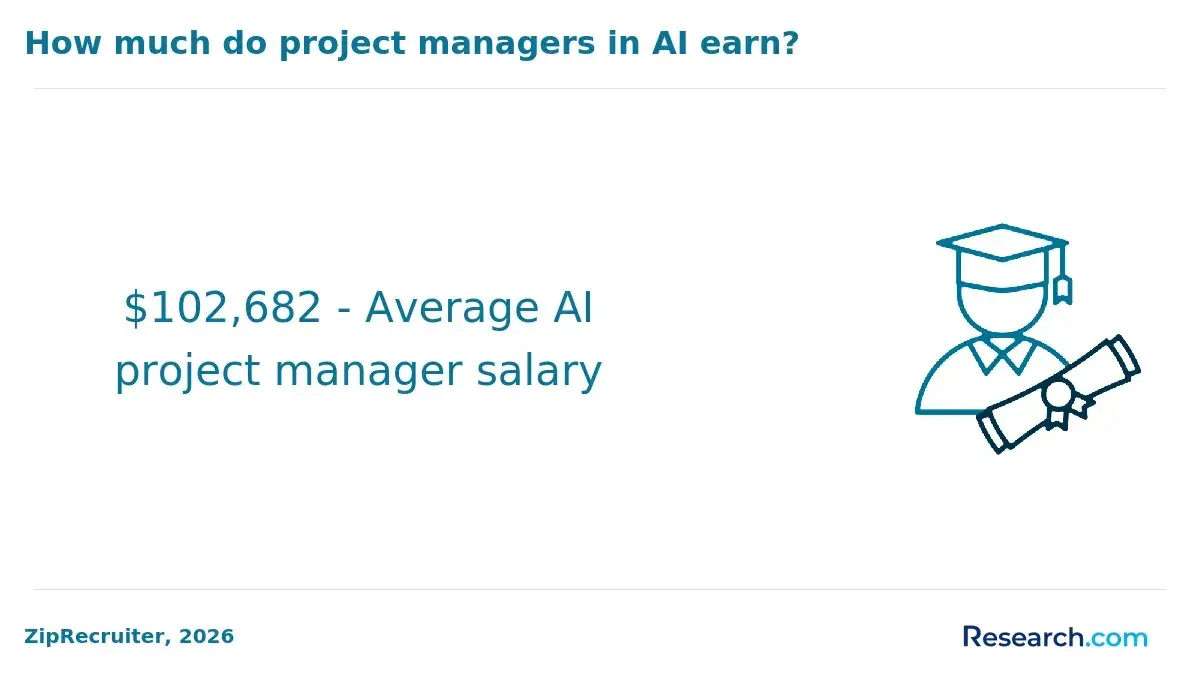
Salaries typically range from $90,000 to over $150,000 annually for senior roles. Advancement often depends on the graduate’s mix of technical literacy, regulatory knowledge, communication ability, industry experience, and evidence of applied governance work.
What salary and job outlook can AI governance graduates expect in the U.S.?
AI governance graduates in the U.S. can expect strong demand because organizations need professionals who can manage the legal, ethical, privacy, security, and operational risks created by AI adoption. The field is still developing, so job titles and reporting lines vary, but many roles overlap with compliance, information security, technology policy, enterprise risk, privacy, and responsible AI.
Information Security Analysts, roles closely related to AI risk and compliance, are expected to grow by 32% from 2022 to 2032, much faster than the average for all occupations. This growth reflects the broader need for professionals who can protect systems, manage data-related risks, and help organizations respond to evolving technology threats.
Typical entry-level salaries range from $85,000 to $110,000 annually. With 3-5 years of experience or specialized certifications like Certified Information Systems Security Professional (CISSP), professionals can earn between $120,000 and $150,000. Senior roles, such as AI ethics officers or chief compliance officers, may command salaries above $180,000, particularly in tech or financial sectors.
Common AI governance-related roles include AI compliance analyst, AI risk manager, information security analyst, ethical AI specialist, AI policy analyst, responsible AI program manager, and AI governance lead. These professionals may review model risks, write AI policies, coordinate audits, advise leadership, track regulatory developments, or help product teams design safer AI systems.
Demand is especially high in healthcare, finance, and government agencies requiring AI accountability. These sectors often deal with sensitive data, regulated decision-making, and high consequences for errors, bias, privacy failures, or security breaches.
To improve employability, graduates should build practical evidence of their skills. Useful steps include completing AI risk or audit projects, learning major AI regulation frameworks, gaining cybersecurity or privacy knowledge, developing strong writing samples, attending responsible AI events, and earning relevant certifications when aligned with career goals. The strongest candidates can communicate across technical, legal, policy, and executive audiences.
Other Things You Should Know About Artificial Intelligence
Yes, AI governance master's programs in 2027 often require a thesis focusing on ethical AI implementation or policy development. This thesis usually involves extensive research and must be supervised by faculty with relevant governance expertise over two academic terms.
Yes. Many AI governance master’s programs require a capstone in the final term, usually worth 3 to 6 credits. It typically asks students to produce a policy memo, risk assessment, or governance framework for an AI system, often reviewed by faculty and an external practitioner.
In 2027, several AI master's programs offer internships focused on governance careers. These institutions include Carnegie Mellon University, Stanford University, and the University of Oxford, enabling students to gain hands-on experience in AI ethics, policy, and regulation, crucial for AI governance roles.
References
- What Is AI Governance? https://www.paloaltonetworks.com/cyberpedia/ai-governance
- Top College Degrees for Securing the Highest-Paying AI Jobs in 2026 https://www.investopedia.com/top-college-degrees-for-securing-the-highest-paying-ai-jobs-in-2026-11946777
- Best AI Masters Online & On-Campus - AIDegreePrograms.org https://aidegreeprograms.org/rankings/best-ai-masters-programs/
- Market Analysis of 146 AI Governance Job Postings https://axialsearch.com/insights/ai-governance-jobs/
- Top 10 Emerging Careers in Artificial Intelligence in 2026 | AI Jobs Guide https://www.mywestford.com/blog/top-10-emerging-careers-in-artificial-intelligence/
- Best AI Compliance Certification Guide 2025: Compare AICP, ISO, IAPP & ISACA https://www.exin.com/article/best-ai-certification-guide-2025/
- AI Compliance and Governance https://esmt.berlin/executive-education/analytics-ai-programs/ai-and-compliance
- Best AI Compliance Courses and Certifications in 2025 https://learnprompting.org/blog/ai-compliance-courses-and-certifications
- M.SC. IN Artificial Intelligence https://put.poznan.pl/msc-artificial-intelligence
- What Is an AI Governance Manager? Role, Salary & Hiring https://www.searchsvc.com/2026/03/24/what-is-an-ai-governance-manager/