2027 Employer Demand for AI Degree Graduates

Co-Founder and Chief Data Scientist
Companies across industries face intense competition to recruit professionals skilled in artificial intelligence, yet many graduates from unrelated fields struggle to meet employer expectations. Hiring managers seek candidates who combine foundational knowledge with practical expertise to drive innovation. However, finding flexible and accredited educational pathways tailored for career changers remains challenging.
This article explores current employer demand for AI degree graduates, highlighting key job market trends and the value of specialized credentials. It aims to help prospective students and professionals identify effective strategies to transition into the artificial intelligence workforce and align their education with employer needs.
Key Things You Should Know
- Demand for artificial intelligence degree graduates grew by over 35% from 2024 to 2025, with the highest hiring rates in technology, healthcare, and finance sectors.
- Employers prioritize skills in machine learning, natural language processing, and ethical AI development, reflecting a shift toward responsible and explainable AI systems.
- Median starting salaries for AI degree holders surpassed $95,000 in 2025, indicating a competitive market for qualified professionals with practical experience.
How strong is current employer demand for artificial intelligence degree graduates in the U.S.?
Employer demand for artificial intelligence degree graduates in the U.S. continues to grow rapidly, with nearly 628,000 job postings requiring at least one AI skill, accounting for 1.7% of all postings. This marks a significant rise from about 0.5% in 2010, highlighting robust job market trends for artificial intelligence degree holders in the United States. Opportunities span many sectors including technology, healthcare, finance, and manufacturing.
Employers seek professionals skilled in machine learning, natural language processing, and AI-driven automation. Proficiency in programming languages like Python or R, along with data management and applying AI concepts to practical problems, is highly valued. Graduates with AI degrees often benefit from combined expertise in data science, software engineering, or specialties such as robotics and cybersecurity.
Entry-level roles include AI software engineer and data analyst, while advanced positions focus on research and development, commanding higher demand. Many employers emphasize candidates with hands-on experience through internships or projects, alongside continuous learning and certification in emerging AI tools to boost employability.
To navigate the evolving landscape, graduates should tailor resumes to emphasize relevant technical skills and AI fundamentals. Those interested in advancing their knowledge might consider exploring the top data science master's programs in the US to enhance their career prospects in this competitive field.
What AI-related job roles can you pursue with an artificial intelligence degree?
An artificial intelligence degree unlocks a variety of AI degree job opportunities in the United States across numerous industries. Key roles include machine learning engineers, who design algorithms that enable systems to learn from data, and data scientists, who extract patterns and actionable insights from large datasets using AI tools. Careers in artificial intelligence and machine learning also include AI research scientists advancing fields such as natural language processing, computer vision, and reinforcement learning.
Other positions worth noting are AI software developers, who integrate AI models into applications, and robotics engineers, who create intelligent machines capable of autonomous tasks. AI product managers connect technical teams with business objectives, overseeing AI project launches, while AI ethics specialists focus on the societal effects and fairness of AI technologies, promoting responsible implementation.
Employer demand for AI-focused roles has grown 25.2% year-over-year as of Q1 2025, with a median salary of $156,998 highlighting the value of specialized knowledge. Prospective students should consider their interests-such as deep learning, data analysis, or AI policy-and gain hands-on experience through internships or projects. Staying current with emerging AI frameworks and tools is critical in this fast-evolving field. For those seeking accessible paths, exploring the best online AI degree programs can be an effective way to enter this dynamic sector.
What salary ranges and earning potential do artificial intelligence graduates typically see?
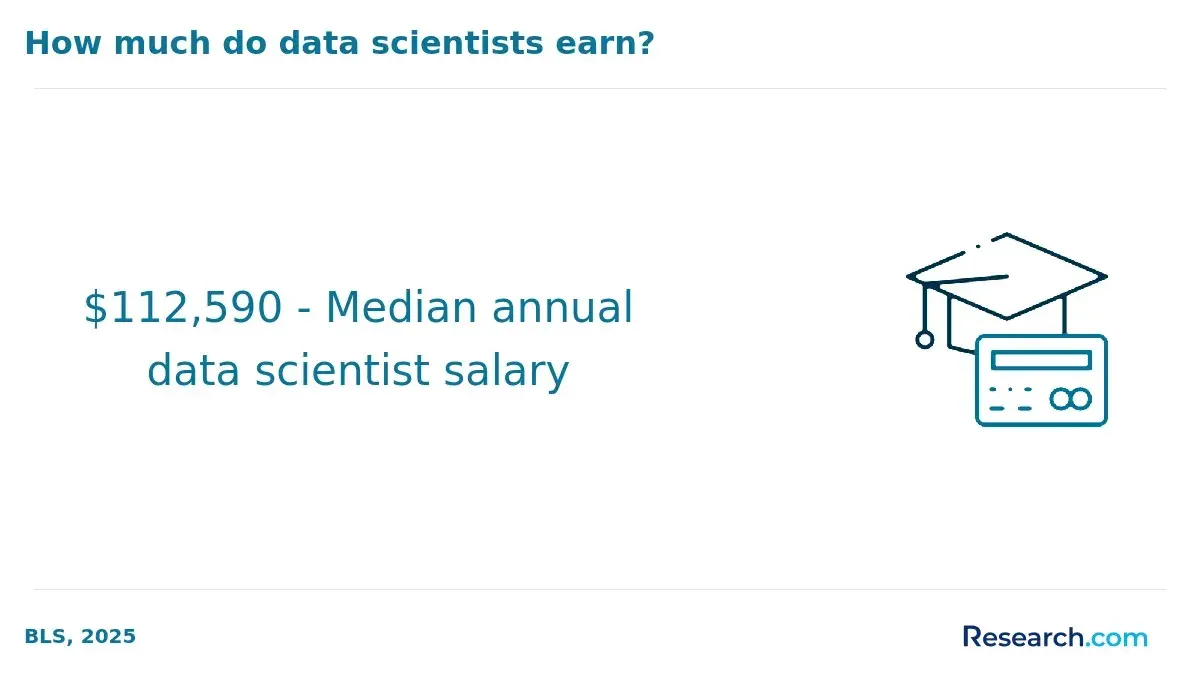
Artificial intelligence graduates can expect starting salaries typically ranging from $80,000 to $120,000 annually, influenced by degree level and industry. Those with bachelor's degrees often receive entry-level offers near $80,000, while master's degree holders commonly command salaries closer to $110,000 or more. The employer salary expectations for artificial intelligence degree holders are emphasized by National University's June 2024 report, which found that 3 in 4 employers prefer candidates with master's degrees for AI roles, highlighting the credential premium impacting earning potential.
Mid-career AI professionals with advanced degrees often earn between $130,000 and $180,000, especially in technology, finance, and healthcare sectors. Individuals without graduate degrees may face salary growth plateaus earlier in their careers. Specialized skills like machine learning engineering, natural language processing, or computer vision can push salaries above $200,000 in competitive markets.
Geographic location is also crucial. AI graduates in major tech hubs such as Silicon Valley, Seattle, or New York typically see compensation packages 15% to 25% higher than the national average. Benefits and bonuses frequently supplement base pay, enhancing overall compensation.
For those assessing AI programs, the earning potential for artificial intelligence graduates in the US job market underscores the value of graduate education, in addition to internships, relevant certifications, and portfolio projects. Prospective students seeking advanced research credentials might also consider pursuing an online PhD AI program to further maximize career opportunities.
How do artificial intelligence degrees differ from computer science and data science programs?
Artificial intelligence degrees differ notably from computer science and data science programs in scope and specialization. While computer science programs lay a broad foundation in computing principles, algorithms, and software development, AI degrees focus explicitly on creating intelligent systems capable of learning, reasoning, and decision-making. This includes courses on machine learning, natural language processing, robotics, and computer vision, highlighting key AI degree versus computer science curriculum differences.
Data science programs emphasize statistical methods, data analysis, and managing large datasets. They teach skills to extract insights rather than build autonomous systems, covering probability theory, data mining, and predictive analytics. In contrast, AI degrees blend these elements but add neural networks, deep learning, and AI ethics, distinguishing an AI degree from data science programs by preparing graduates for challenges unique to intelligent machines.
The demand for AI-specific skills is rising rapidly. According to the Atlanta Fed's 2024 data, job postings requiring AI skills for candidates with an associate degree or higher more than tripled from 2010 to 2024, rising from 0.4% to 1.4%. This trend reflects employer preference for targeted AI knowledge. Graduates often pursue careers in autonomous systems, advanced robotics, AI product development, and algorithmic research. Those interested can explore more about AI trainer jobs.
Prospective students should consider whether they want specialized expertise in AI algorithms or broader training in computational theory or data interpretation to align their education with future career opportunities.
What admission requirements and prerequisites do U.S. artificial intelligence degree programs have?
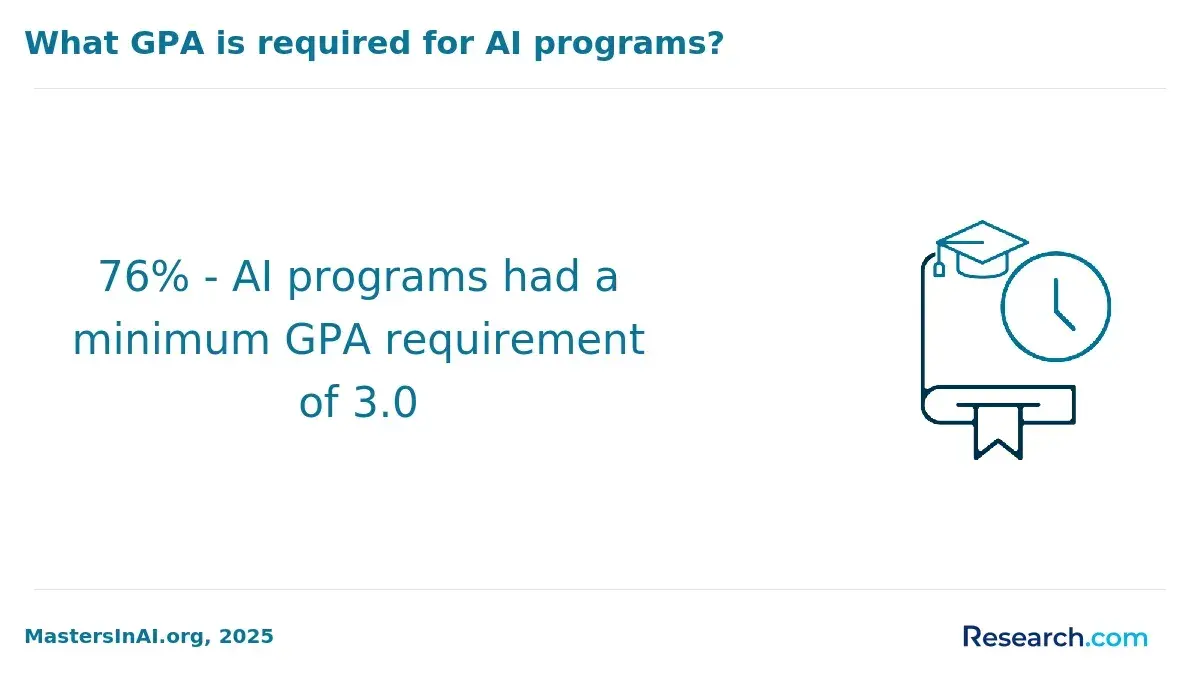
U.S. artificial intelligence degree programs commonly require applicants to hold a bachelor's degree in computer science, engineering, mathematics, or a closely related field. Admissions committees emphasize strong academic credentials in essential subjects like calculus, linear algebra, probability, and programming. Many programs set a minimum GPA around 3.0 on a 4.0 scale, while others assess candidates holistically, considering letters of recommendation and relevant experience.
Typical prerequisites include coursework in data structures, algorithms, and statistics, vital for mastering AI topics such as machine learning and natural language processing. Although some graduate programs request GRE scores, many top institutions now prioritize portfolio assessments and research experience instead. Applicants without formal computer science backgrounds often gain admission by completing prerequisite courses or proving competency through coding bootcamps or online programs.
Rework's 2026 workforce pipeline analysis indicates that by Q3 2025, bootcamps and online credential programs produced 58% of new "AI-ready" entrants to the U.S. labor market, surpassing universities. This shift underscores the acceptance of alternative educational paths.
Working professionals frequently pursue part-time or certificate programs that allow flexibility while requiring foundational technical skills. Some master's programs accept non-technical applicants who complete bridging courses in programming and statistics. Prospective students should review each program's admission criteria carefully and connect with admissions counselors to tailor their application based on individual backgrounds and career goals.
How long do artificial intelligence degree programs take, and what do they cost?
Artificial intelligence degree programs vary in length depending on the level and format. A bachelor's degree typically takes four years of full-time study, though some accelerated three-year options exist and require a heavier workload. Master's degrees usually require one to two years after completing a bachelor's, with programs offered full-time or part-time. Doctoral studies range widely but commonly last four to six years due to research demands.
Tuition costs vary significantly by institution and program. Public in-state universities average about $10,000 annually for undergraduates, while out-of-state tuition can be two to three times higher. Private schools often charge $40,000 or more per year. Graduate programs range from $20,000 to $50,000 total, depending on prestige and format.
Additional expenses such as textbooks, software, and necessary hardware can add several hundred dollars yearly. Online programs can reduce overall costs and offer flexible scheduling but require strong self-discipline.
According to Handshake's 2026 graduate analysis, 4.2% of entry-level full-time job postings mentioned AI tools or skills, nearly double the share from the previous year. This growth highlights employer demand for proven AI expertise among new graduates, underscoring the value of pursuing an AI-related degree.
What core courses and skills are taught in accredited artificial intelligence degree programs?
Accredited artificial intelligence degree programs build strong foundations in both theory and practical skills. Core coursework typically covers machine learning algorithms, including supervised and unsupervised learning, neural networks, and deep learning frameworks. Efficient problem-solving techniques are taught through data structures and algorithms, while probability and statistics coursework enables understanding data uncertainty and making accurate predictions.
Proficiency in programming languages such as Python, R, and Java is essential. Hands-on experience with AI libraries like TensorFlow or PyTorch is often included. Specialized courses in natural language processing (NLP) help students develop applications for language understanding, speech recognition, and text generation. Additionally, computer vision classes teach methods for analyzing visual data. Ethical considerations are addressed through AI ethics and policy modules, reflecting the growing importance of responsible AI deployment.
Supplementary studies in robotics and automation demonstrate real-world AI applications. Capstone projects or research experiences provide practical skills in system design, testing, and deployment. Complementary expertise in data engineering and cloud computing supports managing large datasets and scalable AI solutions.
However, a 2025 analysis by Revelio Labs cited by CNBC notes a 35% drop in entry-level job postings since January 2023, linked to AI automation of routine tasks. Graduates are encouraged to focus on advanced interdisciplinary topics and robust problem-solving to stay competitive as the job market evolves.
How do online artificial intelligence degrees compare to campus-based programs for career outcomes?
Employer demand in the AI field favors demonstrable expertise over traditional degrees. IntuitionLabs' 2025 review notes that only 5% of employers consider a traditional college degree essential for new hires, instead prioritizing certifications, bootcamps, and project experience. Online artificial intelligence degrees provide access to current tools and industry projects aligned with employer needs, often including hands-on labs, portfolio development, and certification preparation to showcase skills effectively.
Campus programs still offer immersive environments with networking and internships, but online alternatives replicate many benefits through virtual job fairs and remote placements. Financially, online AI programs typically offer more flexibility and affordability, allowing students to balance work and study while gaining relevant experience.
Factors critical for career success include:
- Integration of practical AI projects and certifications within the curriculum.
- Opportunities to build a portfolio addressing real-world AI challenges.
- Support for securing internships or placements, whether on-campus or virtual.
- Flexible pacing that supports continuous learning alongside employment.
Choosing a program focused on curriculum relevance, experiential learning, and career support matters more than delivery mode. Candidates demonstrating up-to-date skills-online or campus-based-are preferred in a rapidly evolving AI landscape.
What accreditation and quality standards should AI degree seekers look for in U.S. schools?
U.S. students aiming for a career in AI should choose programs accredited by bodies like the Accreditation Board for Engineering and Technology (ABET). This accreditation ensures the curriculum meets high standards in computer science, engineering, and related fields essential for AI skills. Regional accreditation, such as from the Middle States Commission on Higher Education or the Western Association of Schools and Colleges, also guarantees institutional quality and support.
Course offerings should include machine learning, data structures, algorithms, and AI ethics. Practical experience via labs, capstone projects, or internships is vital. Programs partnered with industry leaders or research institutions often offer strong real-world exposure and networking.
The Federal Reserve Bank of Atlanta's "By Degree(s)" study highlights that job postings requiring at least a bachelor's degree frequently demand AI skills, especially in computer and mathematical occupations. This emphasizes completing a bachelor-level program from an accredited institution to maximize career opportunities.
Research faculty expertise and their published work in AI. Faculty affiliations with professional organizations like the Association for the Advancement of Artificial Intelligence (AAAI) can enrich educational quality. It's also important to check if programs support emerging AI fields like natural language processing or computer vision. Look for clear evaluation policies, transparent graduation rates, and career services focused on AI to ensure program reliability and student support.
How do professional certifications and continued training impact AI graduates' career growth?
Professional certifications and ongoing training play a crucial role in accelerating careers for AI graduates by validating specialized skills and ensuring they stay current with rapid technological changes. Employers increasingly seek candidates who demonstrate continuous learning beyond formal degrees, emphasizing practical expertise in areas like machine learning frameworks, prompt engineering, and large language model development.
Data from Indeed Hiring Lab, cited by CNBC, reveals that job postings mentioning generative AI tripled between September 2023 and September 2024. This surge highlights the growing demand for skills such as prompt engineering and LLM development, which are often not fully covered in standard academic programs.
Key benefits of continued training for AI graduates include:
- Improved employability by aligning skills with evolving job market requirements.
- Access to higher-paying roles like AI specialists and research engineers.
- Opportunities to transition into emerging subfields such as generative AI and reinforcement learning.
- Increased credibility through recognized certifications from respected organizations.
Certificates from providers such as Microsoft, Google, and industry bodies focused on AI ethics, data strategy, or cloud-based AI deployment complement academic knowledge with practical experience. Candidates who actively pursue these credentials gain a competitive advantage in an increasingly crowded job market by staying on the cutting edge of technology.
Other Things You Should Know About Artificial Intelligence
Ethical concerns in artificial intelligence focus on privacy, bias, and accountability. AI systems can inadvertently perpetuate biases present in their training data, leading to unfair outcomes. Additionally, transparency about how AI makes decisions and protecting user privacy are critical challenges addressed by researchers and policymakers.
Interdisciplinary skills are highly valuable in artificial intelligence careers. Professionals who combine technical expertise with knowledge in fields like psychology, linguistics, or ethics can better design AI systems that interact naturally with humans and adhere to societal norms. Such skills broaden an AI specialist's ability to tackle complex real-world challenges.
Yes, artificial intelligence degrees equip graduates for diverse industries including healthcare, finance, automotive, and government sectors. These roles often require AI solutions for enhancing diagnostics, automating financial analysis, improving autonomous vehicles, or optimizing public services. The demand for AI expertise extends well beyond classic technology firms.
In 2027, key industries with increased demand for AI degree graduates include healthcare, where AI enhances diagnostics, and finance for automated trading algorithms. Additionally, the automotive industry's growth in autonomous vehicles presents opportunities for graduates, especially those with an AI and financial technology master’s.
References
- Master’s in Artificial Intelligence Salary | University of Bridgeport https://www.bridgeport.edu/news/masters-in-artificial-intelligence-salary-expectations/
- University Degree vs AI Bootcamp: Which is Best Career Path? https://agilefever.com/university-degree-vs-ai-bootcamp-which-is-best/
- Driving Career Growth: 5 Reasons AI CERTs and IIL are Redefining AI Certification for Every Professional Role https://blog.iil.com/driving-career-growth-5-reasons-ai-certs-and-iil-are-redefining-ai-certification-for-every-professional-role/
- A Complete 4-Year Course Plan for an Artificial Intelligence Undergraduate Degree https://www.mihaileric.com/posts/complete-artificial-intelligence-undergraduate-course-plan/
- Artificial Intelligence Degree Career Outcomes: Jobs, Salaries & Growth https://hakia.com/degrees/artificial-intelligence/career-outcomes/
- New Use of Artificial Intelligence Accreditation Policy and Procedures - Middle States Commission on Higher Education https://www.msche.org/2025/07/02/new-use-of-artificial-intelligence-accreditation-policy-and-procedures/
- How Generative AI Is Reshaping Entry-Level Jobs for College Graduates https://www.chmura.com/blog/how-generative-ai-is-reshaping-entry-level-jobs-for-college-graduates
- Professional AI Training: How to Choose the Right Program https://www.strategicaileader.com/professional-ai-training-how-to-choose-the-right-program/
- AI Salaries - How Much AI Jobs Pay https://www.tractionkeys.com/post/ai-salaries---how-much-ai-jobs-pay
- Artificial Intelligence - Reimagining CS https://reimaginingcs.org/pathways/artificial-intelligence/