2027 AI Career Outcomes Report for Degree Graduates

Co-Founder and Chief Data Scientist
Many graduates with unrelated degrees face uncertainty when considering a shift into artificial intelligence careers. The rapid evolution of the field and diverse educational paths complicate decision-making. Prospective students often struggle to identify flexible, accredited programs that balance current industry demands with career outcomes.
Understanding which credentials lead to meaningful employment and growth is critical for navigating this transition smoothly. This article analyzes career outcomes for graduates entering artificial intelligence, aiming to clarify pathways and provide data-driven insights that empower readers to make informed choices about advancing their careers in this dynamic sector.
Key Things You Should Know
- In 2026, 78% of degree graduates specializing in artificial intelligence secure full-time employment within six months, reflecting strong industry demand and growth.
- Median starting salaries for artificial intelligence graduates increased to $95,000 in 2025, outpacing many other STEM fields and indicating highly competitive compensation.
- Top employers include technology firms, healthcare, and finance sectors, highlighting diverse career paths and expanding applications for artificial intelligence skills.
What artificial intelligence degree options exist and which are best for career advancement?
Degree options for artificial intelligence range from undergraduate to specialized master's programs. Common undergraduate paths include computer science with AI focuses, data science, and dedicated AI bachelor's degrees. Graduate studies typically offer master's degrees in artificial intelligence, machine learning, robotics, or interdisciplinary fields such as AI combined with business analytics or cognitive science.
For those seeking professional growth, selecting from the best artificial intelligence degree programs for career advancement can provide enhanced expertise and access to research and industry networks. According to the National Association of Colleges and Employers, 86% of bachelor's and 89% of master's graduates exposed to AI courses were employed or pursuing further education within six months, highlighting strong demand for AI skills.
When choosing a program, students should evaluate:
- The curriculum's emphasis on practical AI skills like machine learning, neural networks, and natural language processing.
- Internship and project opportunities featuring real-world AI applications.
- Faculty expertise and ties to AI research labs or companies.
- Reputation and alumni success in AI sectors such as autonomous systems or healthcare AI.
For working professionals, master's programs with focuses on emerging AI techniques or interdisciplinary uses offer significant career advancement. Meanwhile, bachelor's degrees supply foundational knowledge but usually require graduate studies or specialized certifications to move beyond entry-level roles. Exploring artificial intelligence career paths can help clarify how various top regional artificial intelligence degree options for professional growth align with individual goals.
What jobs and career paths are available to graduates with AI degrees?
Graduates with degrees in artificial intelligence have access to diverse career paths in North America across multiple industries. Common job roles for graduates with artificial intelligence degrees include machine learning engineer, data scientist, AI research scientist, computer vision engineer, and natural language processing specialist. These positions involve designing AI models, analyzing large datasets, and enhancing automated systems. Other growing roles focus on AI ethics, product management, and technical consulting, which combine technical skills with strategic insight.
Employment opportunities span technology, healthcare, finance, automotive, and government sectors. For instance, AI professionals in healthcare develop predictive models and diagnostic tools, while in finance they work on fraud detection and algorithmic trading systems. Emerging areas like autonomous vehicles and robotics require AI for perception and control technologies.
The job market for entry-level positions is competitive, with only a 1.6% increase expected in hiring for the Class of 2026, down from 7.3% for the previous year, according to the National Association of Colleges and Employers' Job Outlook report cited by The Daily Cardinal. Candidates can improve prospects through internships, research projects, or contributions to open-source AI frameworks. Pursuing specialized skills such as deep learning, reinforcement learning, or AI hardware optimization also boosts employability.
Networking within professional AI communities and maintaining a strong portfolio aligned with employer needs enhances career potential. Prospective students may consider programs like a mechanical engineering program online that incorporate AI elements to broaden expertise relevant to industry demands.
What salary ranges and earning potential can AI degree graduates expect?
AI degree graduate salary ranges in the United States typically start between $70,000 and $90,000 annually for entry-level roles. Mid-career professionals often earn from $110,000 to $140,000, with specialized positions in machine learning engineering or AI research exceeding $160,000, especially in tech-centric cities like Silicon Valley, Seattle, and Austin. Combining AI expertise with data science, software development, or cloud computing skills enhances earning potential due to strong market demand.
Employers place high value on practical experience. Graduates skilled in generative AI tools frequently secure better positions and higher salaries. A 2025 study in Frontiers in Psychology revealed that graduates with greater knowledge and frequent use of generative AI were significantly more likely to work in jobs aligned with their majors, reporting increased productivity and professional fulfillment.
Salary ranges vary by sector and role:
- Entry-level AI analyst or data scientist: $70,000-$95,000
- AI software engineer or developer: $90,000-$130,000
- Machine learning engineer or AI research scientist: $120,000-$170,000+
Graduates looking to maximize earning potential in specialist areas like AI ethics, natural language processing, or computer vision should pursue continued education and certifications. Salaries also depend heavily on geographic location, with coastal metro areas generally offering higher pay but also higher living costs.
Those interested in expanding relevant skills can explore masters in data science online programs, enhancing their qualifications. Aligning skills with employer demands-particularly hands-on experience with AI frameworks-remains crucial for long-term success and improved earning potential for artificial intelligence bachelor's degree holders.
What education and skills are required to start a career in artificial intelligence?
Building a career in artificial intelligence requires targeted education and specialized expertise. A bachelor's degree in computer science, data science, mathematics, or engineering typically forms the essential academic foundation. Advanced qualifications like a master's or PhD focused on machine learning and neural networks can enhance career prospects. Coursework should cover programming languages such as Python, R, or C++, along with statistics, linear algebra, and probability theory, which are critical for understanding AI algorithms.
Essential skills and qualifications for starting in artificial intelligence also include hands-on proficiency with machine learning frameworks like TensorFlow and PyTorch. Experience with data analysis tools such as SQL or Hadoop is highly valued. Strong problem-solving abilities and familiarity with model evaluation metrics improve real-world performance. Engaging in internships, building AI projects, or contributing to open-source AI repositories offers practical experience that boosts employability.
Soft skills significantly impact success. Effective communication fosters collaboration across diverse teams, while critical thinking helps navigate the ethical challenges posed by AI technologies. The fast-paced AI landscape demands continuous learning through online courses, certifications, and workshops.
The 2024 survey by Prospects reveals that 10% of UK graduates changed careers because of AI's widespread impact, emphasizing the importance of adaptable skills and interdisciplinary knowledge for career flexibility. Combining technical education with business or domain-specific knowledge-like healthcare or finance workflows-adds value in sector-focused AI applications. For those exploring complementary skill sets, consider vetted cyber security online courses to broaden your expertise in related technology fields.
How do online artificial intelligence degree programs compare to campus-based options?
Online artificial intelligence degree programs provide flexible access to core subjects like machine learning, natural language processing, and data science using virtual labs and video lectures. These programs suit working professionals or those unable to relocate, often at more affordable costs. In contrast, campus-based options offer stronger hands-on experiences through dedicated AI research centers, in-person collaboration, and direct faculty mentorship.
Key factors to consider include:
- A reported 14% decline in entry-level AI job hiring for ages 22-25 since ChatGPT's launch, indicating higher competition and the importance of credentials.
- Campus options may have more internship and recruiting opportunities, which remain valuable despite AI-driven shifts.
- Online programs require self-motivation and proactive networking to connect with employers.
Career outcomes vary with effort and program quality. Graduates from hybrid campuses with active AI research may access niche roles, while online learners often thrive in adaptable positions like AI implementation and applied analytics. Checking for industry partnerships and capstone projects can improve job readiness.
In a rapidly evolving market, supplementing any AI degree with current skills and portfolio projects is vital. Both online and campus pathways can lead to success, but navigating today's competitive entry-level job market demands ongoing dedication.
What coursework and specializations are included in typical artificial intelligence degrees?
Artificial intelligence degrees typically combine fundamental computer science courses with specialized subjects aimed at intelligent systems. Key foundational topics include programming, data structures, algorithms, and discrete mathematics, which build the needed technical skills for AI development. Students often focus on areas such as machine learning, natural language processing, computer vision, robotics, and knowledge representation. These disciplines prepare them to create systems capable of data analysis, autonomous decision-making, and language comprehension.
Advanced coursework frequently explores neural networks, reinforcement learning, and the ethical considerations of deploying AI technologies. Statistics and probability are essential components, underpinning many AI models. Many programs also emphasize practical experience through projects or internships, enabling students to work directly with real-world data and AI frameworks.
Institutions vary in approach; some integrate cognitive science, neuroscience, or business analytics, equipping graduates for industries like healthcare and finance. Others prioritize software engineering principles critical for building scalable AI systems. Prospective students should carefully review curricula to ensure a blend of theoretical knowledge and applied skills suited to their career aims.
Research indicates that a 10% increase in AI task exposure within a profession correlates to a 0.6% decline in job growth projections by 2034, highlighting the need to develop adaptable and interdisciplinary expertise. Such AI education helps mitigate risks related to automation's impact on employment.
How long do artificial intelligence degree programs take and what do they cost?
Degree programs in artificial intelligence vary in length depending on the level and format. Associate degrees typically require about two years, while bachelor's degrees take around four years of full-time study. Master's programs often span one to two years, particularly for those with existing STEM backgrounds. Doctoral degrees generally need an additional three to five years, emphasizing research and specialized knowledge.
Costs differ widely due to factors such as public versus private institutions, residency, and delivery method. Public universities usually charge in-state students between $10,000 and $15,000 annually, with out-of-state fees reaching $25,000 or more. Private institutions often exceed $35,000 per year. Online programs can reduce tuition costs and offer flexible payment options, appealing to working professionals.
Additional expenses include textbooks, software licenses, and computing resources essential for AI coursework. Many programs provide practical labs and cloud computing credits, which can influence overall costs.
With AI tools integrated into education-used daily by over one-third of final-year students according to a 2026 survey by Inside Higher Ed-combining solid theoretical foundations with hands-on experience is crucial. Prospective students should seek programs that balance deep knowledge with practical tool use to meet evolving industry demands and student trends.
How is accreditation important for artificial intelligence programs and how can students verify it?
Accreditation verifies the quality and credibility of artificial intelligence programs by ensuring they meet rigorous academic standards set by recognized agencies. Such programs align their curriculum with industry demands and incorporate the latest AI technologies. Graduating from an accredited program enhances job prospects, as many employers require degrees from accredited institutions to confirm foundational knowledge and skills.
Notably, entry-level roles requiring AI expertise nearly doubled in 2026, highlighting the importance of accredited education. Students should confirm whether programs are accredited by regional or national bodies approved by the U.S. Department of Education or the Council for Higher Education Accreditation (CHEA). Common accrediting agencies include the Higher Learning Commission (HLC) and the Middle States Commission on Higher Education (MSCHE).
Useful steps to verify accreditation include:
- Checking the institution's official website for accreditation details and associated agencies.
- Consulting the U.S. Department of Education and CHEA databases for current accreditation status.
- Contacting the registrar or admissions office to confirm AI program accreditation and inquire about AI-specific endorsements.
Accredited programs also provide access to federal financial aid, which is critical for many students. Furthermore, some advanced professional certifications and licenses necessitate graduation from accredited AI programs. While non-accredited programs may seem attractive shortcuts, they often limit career opportunities and professional recognition in this evolving field.
What is the job outlook and industry demand for artificial intelligence professionals?
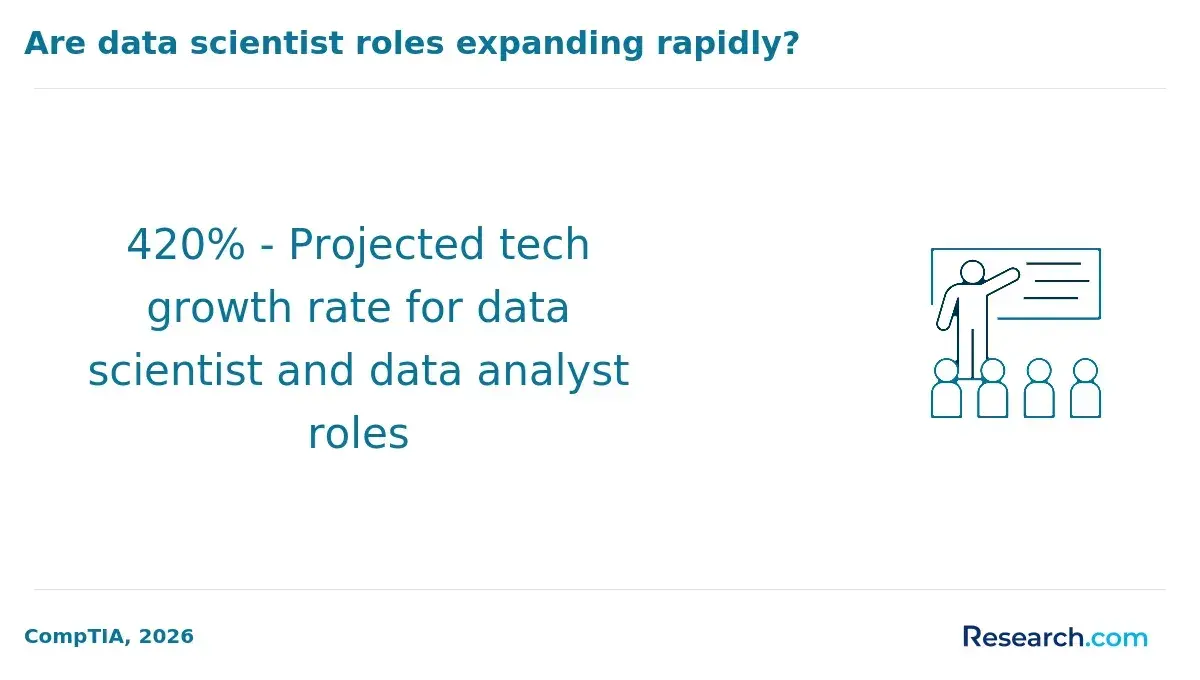
The demand for artificial intelligence professionals continues to grow across industries such as technology, healthcare, finance, automotive, and government. Key roles include AI development, machine learning engineering, data science, and AI ethics. Employers prioritize candidates skilled in designing algorithms, building AI models, and managing large data projects.
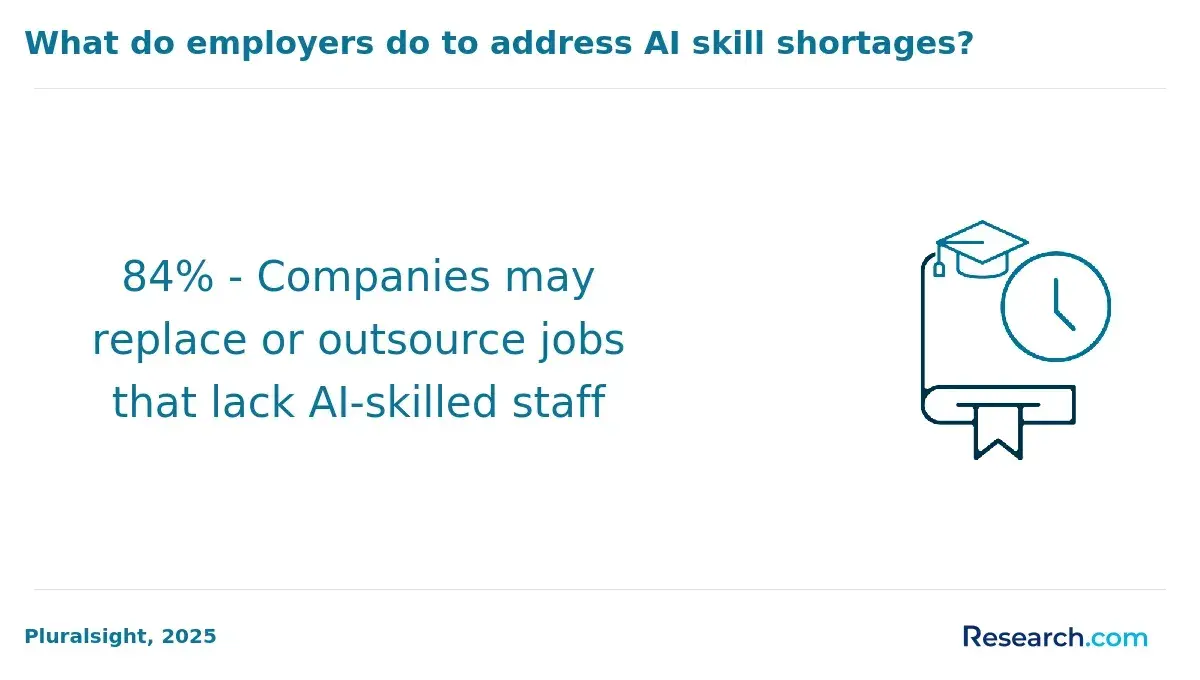
However, many recent graduates face a training gap. A survey highlighted by Forbes found only 23% of recent graduates and 29% of rising graduates felt their education offered substantial AI training relevant to their jobs. This gap means practical experience is essential to complement academic knowledge.
Students and professionals should focus on gaining hands-on experience with AI frameworks like TensorFlow and PyTorch, and programming languages such as Python and R. Broader expertise in ethical AI, natural language processing, and computer vision increases employability. Interdisciplinary skills combining AI with healthcare, cybersecurity, or other domains are also valuable.
To bridge these training gaps:
- Enroll in specialized AI certifications or boot camps.
- Participate in real-world AI projects and open-source contributions.
- Develop skills in data handling, model evaluation, and deployment.
- Keep up with AI regulations and industry standards.
Combining foundational degrees with targeted, practical training helps meet employer expectations and improves job prospects amid concerns about AI's impact on entry-level opportunities.
How can students choose a reputable artificial intelligence degree program that fits their goals?
Evaluate degree programs by their curriculum relevance, faculty expertise, career support, and alumni outcomes. Look for programs offering robust coursework in machine learning, data science, natural language processing, and ethics in AI to ensure comprehensive technical training. Confirm faculty research credentials and industry experience to verify their current engagement in the field.
Programs with strong partnerships with tech companies, internships, and high job placement rates provide practical experience and valuable networking opportunities. Connections with leading AI firms or research labs often enhance employment pathways.
Consider program flexibility, including part-time, online, or hybrid formats, which benefit students balancing other commitments. Specializations such as robotics or computer vision can help tailor education to specific career goals.
Analyze salary and employment data to understand potential risks and rewards. According to a Center for Research on the Wisconsin Economy analysis cited in The Daily Cardinal, Computer and Information Science majors at UW-Madison have the highest starting wages and lifetime returns.
Yet by 2025, computer engineering and computer science rank among the top majors for unemployment, underscoring career volatility in AI fields. Choosing programs that emphasize adaptable skills like problem-solving and interdisciplinary knowledge is vital. Also, inquire about post-graduate support including career counseling and continuing education, which can help graduates navigate evolving job markets.
Other Things You Should Know About Artificial Intelligence
Artificial intelligence professionals often encounter challenges related to data quality, model bias, and interpretability of algorithms. Ensuring ethical use of AI systems and addressing privacy concerns are also significant issues. Additionally, staying current with rapidly evolving technologies requires continuous learning and adaptation.
In 2027, the job market for AI graduates has significantly expanded, with more sectors integrating AI technologies. According to the AI Career Outcomes Report, there's a marked increase in demand for specialized AI skills in healthcare, finance, and manufacturing, reflecting the importance of multidisciplinary AI applications.
Understanding artificial intelligence ethics is becoming essential for career success, as professionals must ensure AI systems are fair, transparent, and accountable. Ethical considerations influence how AI models are developed and deployed to minimize harm and bias. Employers increasingly expect graduates to be knowledgeable about responsible AI practices.
Internships and hands-on projects are critical for artificial intelligence graduates to apply theoretical knowledge in real-world settings. Practical experience helps build technical skills, improve problem-solving abilities, and enhance employability. Many employers prioritize candidates with demonstrated experience working on AI applications or research.
References
- A Complete 4-Year Course Plan for an Artificial Intelligence Undergraduate Degree https://www.mihaileric.com/posts/complete-artificial-intelligence-undergraduate-course-plan/
- Online Bachelor’s Degree: Artificial Intelligence https://www.umgc.edu/online-degrees/bachelors/artificial-intelligence-ai
- How to Choose the Right AI Course? – AiXQP https://aixqp.com/how-to-choose-the-right-ai-course/
- AI Programs and Courses | DeVry University https://www.devry.edu/online-programs/area-of-study/artificial-intelligence.html
- Do AI Degree Programs Worth It?Cost,Time, Career Alternative https://agilefever.com/artificial-intelligence-degree-programs/
- AI Use by ACAHM-Accredited Institutions and Programs — Accreditation Commission for Acupuncture and Herbal Medicine https://www.acahm.org/blog/ai-use
- AI Degrees: All Schools with Artificial Intelligence Bachelor’s Degrees - MastersInAI.org https://www.mastersinai.org/degrees/artificial-intelligence-degrees/
- AI skills to boost your tech career - Intuit Blog https://www.intuit.com/blog/innovative-thinking/ai-skills-to-boost-your-tech-career/
- What Do You Learn In an Artificial Intelligence Course? | CompSci https://www.computerscience.org/resources/artificial-intelligence/
- Master’s in Artificial Intelligence Salary | University of Bridgeport https://www.bridgeport.edu/news/masters-in-artificial-intelligence-salary-expectations/