2027 How Fast Can You Earn an AI Master's Degree?

Co-Founder and Chief Data Scientist
In 2026, many professionals with unrelated undergraduate degrees face the challenge of transitioning into the fast-evolving field of artificial intelligence. Time constraints and the need for flexible learning options complicate this career pivot. Traditional master's programs often require multiple years of full-time study, which is impractical for working adults. Understanding how quickly one can earn a credible AI master's degree becomes essential for planning a strategic career move. This article analyzes the varying program lengths, formats, and accreditation factors to help prospective students identify efficient and flexible pathways into artificial intelligence careers.
Key Things You Should Know
- Many AI master's degree programs in 2026 offer accelerated tracks allowing completion in as little as 12 to 18 months, compared to traditional 2-year timelines.
- Online and hybrid formats have expanded access, with over 60% of U.S. programs now offering flexible scheduling to accommodate working professionals.
- Demand for AI expertise has driven increased investment in curriculum updates, integrating the latest machine learning frameworks and ethical AI training.
How fast can you realistically earn an AI master's degree in the United States?
The realistic timeframe for earning an AI master's degree in the United States generally ranges from 12 to 30 months. The average duration to complete an AI master's program in the US aligns closely with data from the National Center for Education Statistics, which states that a master's degree in computer science takes about 2.5 years.
Traditional programs usually take two to three years, offering a comprehensive curriculum covering machine learning, neural networks, and data science fundamentals.
Accelerated AI master's programs shorten this period to as little as 12 to 18 months by using intensive schedules and year-round enrollment. Part-time options often extend the length beyond 30 months, making them well-suited for working professionals. Some schools provide online or hybrid formats that maintain similar duration ranges but offer more flexibility in pacing.
When considering programs, students should evaluate their career goals and availability. For those wanting quick entry into the workforce, accelerated tracks demand a strong commitment and prior knowledge. Traditional timelines may better suit students seeking deeper research experience. The choice depends on program structure, credit requirements, and individual time management capacity.
Prospective learners can find guidance on career paths related to this degree by exploring opportunities connected to a degree in AI.
What are the typical admission requirements for accelerated AI master's programs?
Typical admission requirements for accelerated AI master's programs emphasize strong undergraduate preparation and relevant experience. Most programs mandate a bachelor's degree in computer science, engineering, mathematics, or related STEM fields.
LinkedIn's 2024 Jobs Report found that 67% of AI job postings require a bachelor's degree as a minimum, underscoring the importance of rigorous undergraduate prerequisites in these programs. Applicants should demonstrate solid foundations in programming, linear algebra, calculus, statistics, and data structures.
Eligibility criteria for fast-track artificial intelligence degrees often include a minimum GPA, usually around 3.0 on a 4.0 scale, though some programs may consider lower GPAs if supplemented with relevant work experience or advanced AI coursework.
Submission of GRE scores is less common but can still be required by competitive institutions. Letters of recommendation that highlight analytical ability, technical expertise, and motivation for AI specialization are typically expected.
Many accelerated master's programs seek applicants with prior exposure to AI concepts or projects, such as experience with machine learning frameworks, research internships, or contributions to AI open-source projects. Candidates without direct AI experience may need to complete prerequisite courses prior to admission.
Personal statements or essays play a crucial role in outlining career goals and commitment to the field. Some programs also accept working professionals with substantial industry experience in place of traditional academic credentials, provided they submit documentation of relevant roles and ongoing professional development.
Prospective students interested in pursuing affordable education options can explore the cheapest data science masters in USA. This resource complements understanding typical admission requirements for accelerated AI master's programs and helps guide informed decisions about fast-track artificial intelligence degrees.
Which universities offer the fastest AI master's degrees, and how do they compare?
Georgia Tech's Online Master of Science in Computer Science with an AI specialization is among the fastest artificial intelligence master's programs in North America. Its flexible online format and modular course design allow students to accelerate degree completion while balancing work or other commitments.
Serving over 11,000 students, this affordable program costs around $10,000 total, making it an accessible choice for many. This combination of speed, scalability, and cost-efficiency is especially appealing to working professionals seeking rapid credentialing without significant debt.
When comparing top artificial intelligence master's degrees in the US, programs vary in duration, cost, and delivery. Northeastern University's Align Master's program offers accelerated tracks completing in 12 to 16 months, aimed at career changers. Carnegie Mellon University's full-time AI-focused master's degrees generally take 12 to 18 months, emphasizing in-depth research and rigorous curricula.
Many on-campus options require full-time study with fixed semesters, whereas online options like Georgia Tech's enable part-time pacing tailored to individual availability.
Students should evaluate their time, tuition budget, and learning preferences carefully. Programs with larger online cohorts provide extensive peer networks and resources but may have less direct faculty interaction. For prospective students exploring fast AI education, reviewing online AI degree programs can offer valuable insights and comparisons across cost and flexibility.
What is the difference between full-time, part-time, and online AI master's degree options?
Full-time AI master's degree options typically require 12 to 15 credit hours per semester, enabling students to finish within 1.5 to 2 years. This schedule suits recent graduates or those able to focus solely on their studies, offering more access to campus resources, labs, and networking. However, it may require pausing full-time work temporarily. Choosing between full-time versus part-time AI master's degree options often depends on career stage and time availability.
Part-time programs extend over 3 to 4 years with 6 to 9 credit hours per semester, ideal for working professionals balancing employment and education. This option provides a manageable workload but results in a longer time to degree completion. Enrollment in part-time online formats has surged, reflecting the reported 15% year-over-year growth in online master's programs, supporting career advancement alongside work obligations.
Online AI master's degree programs offer maximum flexibility with remote access to lectures, assignments, and discussions, often adaptable to various schedules and time zones. Accredited online degrees now match on-campus content at many universities.
Students should weigh the benefits of flexible location and schedule against challenges like time management and limited hands-on experience. Those considering fields like cybersecurity might explore cyber security degrees for related opportunities.
When deciding among these approaches, reflect on your current job situation, learning style, and support network. Full-time immerses you in study, part-time balances career demands, and online programs maximize convenience and flexibility.
How much does an accelerated AI master's degree cost, and what financial aid is available?
The cost of an accelerated AI master's degree ranges from $9,000 to $36,000 for online programs, offering about 40% in tuition savings compared to on-campus options. The Council of Graduate Schools 2024 survey reports that a typical computer science master's tuition falls between $15,000 and $60,000. These accelerated degrees, often available fully online or in hybrid formats, reduce costs through shorter enrollment periods and lower living expenses.
Financial aid includes federal student loans with interest rates starting at 5.5% for graduate borrowers. Many schools also offer merit-based scholarships aimed at STEM and AI fields, cutting expenses by $2,000 to $10,000 annually. Employer tuition reimbursement programs commonly cover 50% to 100% of tuition when courses align with an employee's job role.
Graduate assistantships are another option, providing tuition waivers plus stipends between $12,000 and $18,000 yearly, mostly found at research-intensive universities, though they may be less available in accelerated programs. Additional funding may come from private scholarships and grants offered by organizations such as the Allen Institute for AI or the AI Education Foundation.
Applicants should confirm eligibility and deadlines early, since accelerated programs often have condensed schedules. Budgeting should include tuition plus additional costs like technology fees and textbooks. Completing FAFSA early improves chances to secure federal aid and grants.
What core courses and specializations are typically included in fast-track AI master's programs?
Fast-track AI master's programs focus on core subjects like machine learning algorithms, deep learning, data structures, probability and statistics, and programming languages such as Python or R. Key early specializations often include computer vision and natural language processing (NLP), reflecting the high demand employers place on these skills.
According to the Bureau of Labor Statistics 2024 Occupational Outlook Handbook, machine learning, NLP, and computer vision rank as the top three sought-after AI specializations in the US job market.
Specialization options commonly encompass machine learning, NLP, computer vision, robotics, and AI ethics. Some programs provide tailored tracks like AI in healthcare, AI for cybersecurity, or reinforcement learning, offering students practical applications that deepen expertise in targeted domains.
Many accelerated master's programs blend coursework with hands-on projects or capstone experiences, enabling students to apply AI tools to real-world challenges. This practical approach helps develop immediately applicable skills crucial for career advancement.
Prospective students should confirm the availability of flexible specialization choices and whether the program incorporates the latest AI tools and frameworks, given the field's rapid evolution. When selecting a fast-track program, consider curriculum depth, year-round course availability, specialization alignment with career goals, and faculty expertise to ensure access to cutting-edge research and mentorship.
What certifications or professional credentials complement an AI master's degree?
Certifications and professional credentials enhance the value of an AI master's degree by verifying technical skills and readiness for real-world applications. Top certifications come from major cloud providers like AWS, Google Cloud, and Microsoft Azure, focusing on AI and machine learning deployment, model training, and cloud infrastructure management. Coursera's 2024 Skills Index reports a 45% increase in completion rates for these certifications among master's degree holders seeking to boost their qualifications.
The AWS Certified Machine Learning - Specialty validates expertise in data engineering, exploratory analysis, model training, and deployment on AWS. Google's Professional Machine Learning Engineer certification assesses the ability to design and deploy ML models on Google Cloud, while Microsoft's Azure AI Engineer certification emphasizes integrating AI workloads with Azure Cognitive Services and Machine Learning.
Beyond cloud-centered credentials, certifications in data science, big data, and programming languages such as Python or R remain essential. Specialized options, including TensorFlow Developer and Certified Data Scientist, further develop relevant skills and frameworks.
Balancing theoretical knowledge with platform-specific, hands-on skills is a challenge for many professionals. Earning these certifications helps meet employer demands for applied expertise and can accelerate career growth. Combining a master's degree with targeted certifications maximizes both employability and practical capability in the competitive AI job market.
What entry-level and advanced career roles are available to AI master's graduates?
Graduates with a master's degree in artificial intelligence often start their careers in specialized technical roles reflecting the field's complexity and industry demand. LinkedIn's 2024 data shows that 28% of AI master's holders begin as Machine Learning Engineers, designing algorithms that help systems learn from data and improve autonomously. These roles are common in sectors like technology, healthcare, and finance.
Another 22% pursue careers as AI Research Scientists, focused on developing innovative models in areas such as machine learning, natural language processing, or computer vision. These positions require strong programming skills and are found in academia, corporate labs, and AI startups.
Data Scientist roles attract 18% of AI graduates, where they analyze large datasets to generate insights and build predictive models, often overlapping with AI and machine learning disciplines. Other job opportunities include AI Software Engineer, Computer Vision Engineer, Robotics Engineer, and AI Product Manager. Experienced professionals may advance to roles such as AI Architect or Director of AI Research, combining technical expertise with leadership and strategy.
Entry-level roles emphasize programming, mathematics, and applied machine learning, while senior roles require experience in research, model deployment, and collaboration. Building real-world experience through internships or projects is essential to transition successfully into these careers.
What is the job outlook and salary potential for AI master's degree holders?
Job prospects for those holding a master's degree in artificial intelligence are notably robust. The U.S. Bureau of Labor Statistics projects a 23% growth in jobs related to computer and information research science from 2023 to 2033, which surpasses average job growth for all fields. This increase is driven by rising demand for professionals skilled in AI, machine learning, and data science, with median annual salaries exceeding $130,000, reflecting strong earning potential.
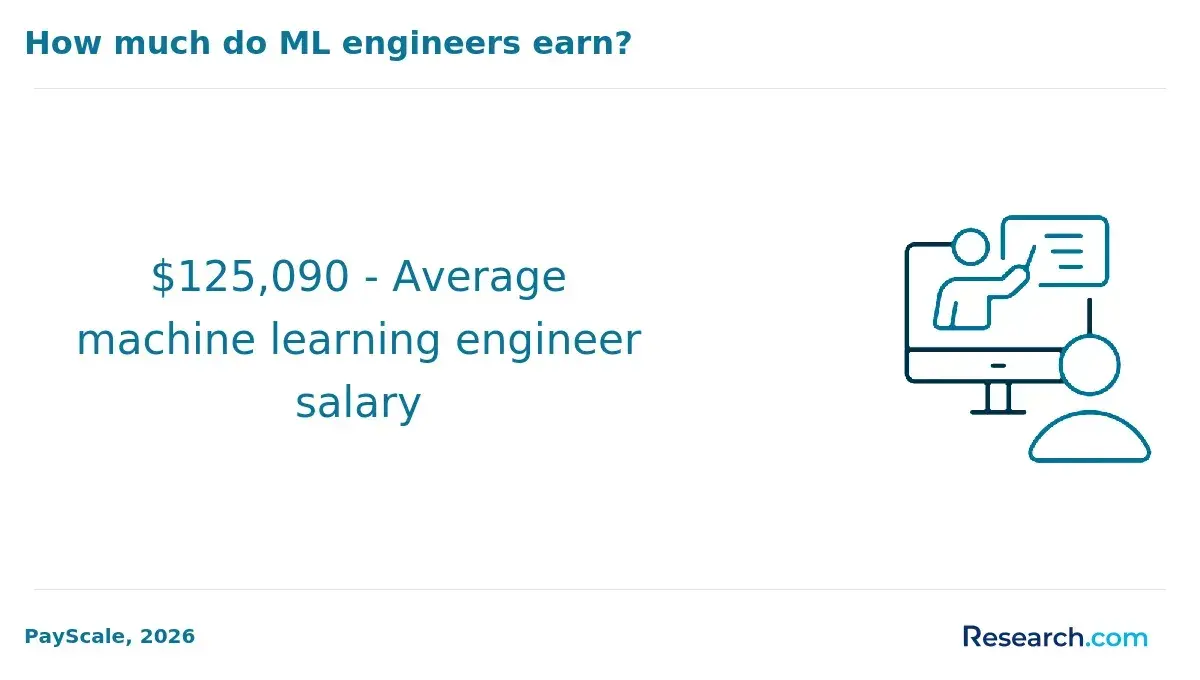
Graduates often pursue diverse roles such as AI researchers, machine learning engineers, data scientists, or AI software developers. Entry-level salaries usually start above $90,000, while senior positions in tech centers like Silicon Valley or New York can offer total compensation over $160,000. Salary levels depend on job title, location, and industry.
Employers typically prefer candidates with practical expertise in AI frameworks, programming languages like Python and R, and knowledge of neural networks or natural language processing. Those with these skills tend to receive more competitive offers. Growth opportunities exist across sectors including healthcare, finance, automotive, and government, reflecting AI's broad integration.
For professionals already working, earning a master's in artificial intelligence may accelerate career advancement and boost wages by 20% to 40%, depending on experience and employer. Obtaining relevant certifications and developing practical AI portfolios further enhance employability in this fast-evolving field.
How do you evaluate the accreditation and reputation of an AI master's program?
Verifying recognized accreditation is essential when selecting a master's program in artificial intelligence. The Accreditation Board for Engineering and Technology (ABET) remains a key benchmark for quality in computer science and engineering degrees. Less than 15% of master's programs in this field hold ABET accreditation, underscoring the value of choosing a program that meets industry and academic standards.
Faculty expertise plays a critical role; programs led by instructors active in AI research, conferences, and technology collaborations tend to offer a stronger education. Many reputable programs include hands-on projects and internships, fostering practical skills and improving job prospects within the AI industry.
Program rankings and alumni success also reveal reputation. Look for transparency in graduate employment rates in AI roles, contributions to AI patents, and startups founded by former students. These factors help gauge a program's credibility and potential impact on your career.
Established programs affiliated with recognized institutions often provide more reliable outcomes. Caution is advised with new or solely online offerings lacking clear accreditation or qualified faculty, as these may limit eligibility for certifications or doctoral studies.
Start your evaluation with ABET or equivalent accreditation, then consider faculty credentials, curriculum quality, and graduate outcomes to confidently select a program aligned with your AI career goals.
Other Things You Should Know About Artificial Intelligence
While having a background in computer science or related fields is highly recommended for pursuing a master's degree in AI, some programs offer foundational courses to bridge gaps for students from other disciplines. These preparatory classes typically cover programming, mathematics, and basic machine learning, allowing candidates with diverse academic histories to enter AI master's programs.
Typically, an AI master's program demands around 15-20 hours of study per week, combining lectures, assignments, and projects. This varies based on full-time or part-time enrollment and specific program requirements by institutions in 2027.
Most AI master's programs require a minimum of 30 to 36 credit hours for completion. Some programs may include a mix of core courses, electives, and a capstone project or thesis. Specific credit requirements vary by institution.
Many programs require either a thesis or a capstone to graduate, but not both. A thesis track often adds 3 to 6 credit hours and can extend completion by one semester. A capstone is usually a project-based course tied to AI applications, data analysis, or model deployment.
References
- Artificial Intelligence Certificate Programs - MastersInAI.org https://www.mastersinai.org/degrees/ai-certificate-programs/
- How Long Does it Take to Get a Master’s Degree? https://www.aiuniv.edu/degrees/business/articles/how-long-does-it-take-to-get-a-masters-degree
- How to Learn AI and Deep Learning in 2026: Skills, Tools, and Career Path https://www.icertglobal.com/blog/how-to-learn-ai-and-deep-learning-in-2026-guide
- Tuition fees and costs - Master Artificial Intelligence https://www.uva.nl/shared-content/programmas/en/masters/artificial-intelligence/tuition-fee-and-costs/tuition-fees-and-costs.html
- Top AI Certifications for 2026: A Guide to Advancing Your Tech Career | DataCamp https://www.datacamp.com/blog/top-ai-certifications
- Master's in AI: US Job Market & Salary Outlook (2024) https://drrajus.com/masters-in-ai-career-outlook-and-salary-trends/
- Blogs https://www.leoglobaloverseas.com/blogdetails/ai-career-pathways-from-msc-to-industry-roles
- Best AI Certifications to Boost Your Career in 2026 – Dataquest https://www.dataquest.io/blog/best-ai-certifications/
- Accelerated Artificial Intelligence (AI) Master's Degree Programs - AI Degrees Online https://aidegreesonline.com/degrees/masters/accelerated-ai-programs/
- Fastest AI Master’s Programs for 2026 (1 Year or Less) https://aidegreeprograms.org/rankings/fastest-ai-masters-programs/