2027 Comparing a Scientific Finding With a News Headline in Public Health

Co-Founder and Chief Data Scientist
A public health headline may turn a narrow finding into a broad warning or promise. For students, practitioners, and anyone sharing health information, that gap matters: an overstated claim can distort personal choices and community decisions.
This guide shows you how to trace a headline to its source, compare the populations and outcomes being described, and judge what the research can support. It also explains when coursework, supervised experience, or a degree can help you do this work professionally.
Key Things You Should Know
- Compare the headline with the study's actual population, exposure, comparison group, outcome, and time frame before accepting its claim.
- Check absolute as well as relative risk: in an illustrative example, a rise from 1 in 100 to 2 in 100 is a doubling of risk and an increase of 1 percentage point.
- A headline-reading exercise can build basic evidence literacy; producing defensible public health guidance also requires methods training, attention to uncertainty, and often supervised practice.
What is the difference between a scientific finding and a public health news headline?
A scientific finding is a result tied to a defined research question, study population, measurements, analysis, and limitations. A news headline is a short description meant to help readers decide whether to read a story. It may accurately summarize the finding, but brevity can erase qualifications that change its meaning.
The comparison below shows how a plausible headline could depart from a hypothetical study. It is an illustration, not a report of actual research.
| Element | Hypothetical study finding | Potentially misleading headline |
| Population | Adults surveyed in one city | "Americans" |
| Result | An association between reported exposure and an outcome | "Exposure causes disease" |
| Uncertainty | Alternative explanations remain possible | "Scientists prove" |
The headline's most consequential change is often not its tone but its claim of causation or generality. Students beginning this kind of comparison can use an original-study-versus-headline exercise alongside accelerated courses in public health bachelor's study, provided the course actually teaches source appraisal rather than only health-topic surveys.
How can readers verify whether a public health headline accurately reflects research?
Start with the article's cited study, not its headline or a social-media excerpt. If the full paper is unavailable, use its abstract and publicly available methods information, but treat any judgment as provisional. The following sequence catches the most consequential mismatches.
- Identify the original paper or report, its publication date, and whether it is peer-reviewed, a preprint, or a corrected or retracted work.
- Write down who was studied, what was measured, the comparison group, and how long participants were followed.
- Match the headline's exact verbs to the design: "linked to" may fit an observational association; "prevents" or "causes" usually demands stronger causal evidence.
- Look for absolute numbers, uncertainty intervals, missing data, and limitations before repeating a relative-risk claim.
- Compare the paper's conclusion with the news story's body and headline; note which one introduces any stronger claim.
If you cannot locate the underlying study, say so rather than treating a press release as independent verification. For readers seeking structured introductory practice, compare the actual methods coursework within online public health undergraduate education options; an online label alone says nothing about how often students critique original papers.
Why do public health professionals compare scientific evidence with media coverage?
Professionals compare them because a message can affect behavior even when the underlying evidence is preliminary. A health department communicator may need to correct an exaggerated benefit; a nonprofit evaluator may need to explain why results from another community do not establish that its own program will work. The aim is not to dismiss journalism. It is to preserve what is known, what remains uncertain, and what action is reasonable.
Good communication also considers the audience. An accurate relative-risk statement can still mislead if people cannot see the baseline risk, while a technically correct population average may conceal important differences in exposure or access to prevention. Professionals should avoid implying that a group is responsible for a risk when structural conditions may matter.
People who want to move from evaluating stories to designing evidence-based messages can compare specialization choices in public health graduate study. Health communication, epidemiology, and evaluation training support different parts of the task; no concentration name substitutes for checking its actual courses and applied work.
First define the claim being tested: among which people, does which exposure or intervention, compared with what alternative, change which outcome over what period? That question makes it easier to spot when a headline answers something the study never measured.
Study design determines which conclusions are plausible. A randomized trial can strengthen causal inference about an intervention when assignment, follow-up, and measurement are sound. A cohort study can establish that a measured exposure preceded an outcome, but confounding may remain. A cross-sectional survey can describe patterns at one time; it generally cannot establish which factor came first. Qualitative interviews can explain experiences and implementation barriers without estimating a population-wide effect from a small, purposive sample.
For any design, inspect selection into the study, outcome definitions, missing observations, and whether the analysis followed a plan specified before results were known. Replication and agreement with other well-conducted studies strengthen confidence; a single striking estimate does not. Learning these judgments rarely requires a doctorate. If doctoral epidemiology research is the actual goal, weigh supervision, data access, and epidemiology doctorate net tuition planning against what a shorter methods course or supervised project would accomplish.
Epidemiology clarifies who is at risk, how exposure and disease are defined, and which comparison could answer the public health question. Biostatistics helps estimate the size and precision of an observed difference. Neither turns an observational association into proof of causation by itself.
Suppose a hypothetical study reports an outcome in 1 of every 100 unexposed people and 2 of every 100 exposed people over the same follow-up period. The exposed group has twice the observed risk, but the absolute difference is 1 additional outcome per 100 people. A headline using only "twice the risk" omits information readers need. Before treating even that fuller description as causal, ask whether the groups differed in other relevant ways and whether the denominators and follow-up were comparable.
Readers entering an MPH from another discipline need not assume they lack the required background. They should compare each program's formal statistics prerequisites with recommended preparation and consider addressing prerequisite gaps before MPH enrollment when a methods course would make research appraisal more manageable.
Public health bachelor's programs can introduce study appraisal, population health, and clear writing. An MPH generally combines professional public health preparation with methods and practice; an epidemiology or biostatistics MS may go deeper into research design or analysis. A DrPH is oriented toward advanced practice leadership, while a PhD centers on producing original research. These are broad distinctions, not promises about any school's curriculum.
For this specific skill, inspect assignments rather than degree labels. Ask whether students compare original papers with public claims, calculate and explain absolute risk, revise messages for a defined audience, and receive feedback from methods and communication instructors. A supervised communication or evaluation project can demonstrate more than a course title alone.
Admissions convenience is a separate consideration: online public health master's programs without recommendation letters may simplify an application, but that policy does not establish the depth of their evidence-evaluation training. If your goal is to assess stories for your current job, a targeted course and reviewed writing samples may be more proportionate than another degree.
Delivery mode is less important than access to feedback, usable data, qualified supervision, and opportunities to explain findings to nontechnical audiences. An online program can teach rigorous appraisal through live seminars and annotated paper reviews; a campus program can offer direct collaboration and research-group access. Neither format guarantees those experiences.
Ask how often methods courses meet live, whether group analysis has fixed meeting times, what software and data students may use, and who supervises an applied project. Working students should also check fieldwork hours, campus visits, and the availability of asynchronous feedback. When comparing budget-conscious accelerated public health education, consider whether a compressed schedule leaves enough time to critique a study, receive comments, and revise an accurate public-facing summary.
Check both the institution's recognized accreditation and whether the Council on Education for Public Health (CEPH) accredits the relevant school, public health unit, or standalone program. Then verify which degrees fall within that accreditation's scope. Institutional accreditation does not mean every public health degree is CEPH-accredited, and a school's CEPH status should not be assumed to cover an unrelated degree.
Accreditation is a quality-assurance consideration, not proof that a particular course teaches headline appraisal well. Before enrolling, confirm current status with the accreditor and program, then inspect the curriculum and student work requirements. This matters particularly when comparing affordable public health doctorates by study duration: price and speed cannot establish accreditation scope, research supervision, or fit for a communication goal.
Health education specialists develop and assess educational materials; health department communication staff translate changing evidence into public messages; epidemiologists analyze population patterns and explain their limits to decision-makers. Research assistants and program evaluators may prepare evidence summaries, while journalists and editors apply related scrutiny outside public health agencies. Actual duties and entry requirements vary by employer.
For an early-career applicant, a credible portfolio might include a short comparison of a published study and its headline, a corrected plain-language summary, and a note explaining uncertainty. Use publicly available material and do not present an exercise as an agency-approved message. Entry-level communication or research-support experience, followed by supervised responsibility, is a more realistic path to high-stakes risk messaging than assuming a degree alone confers authority.
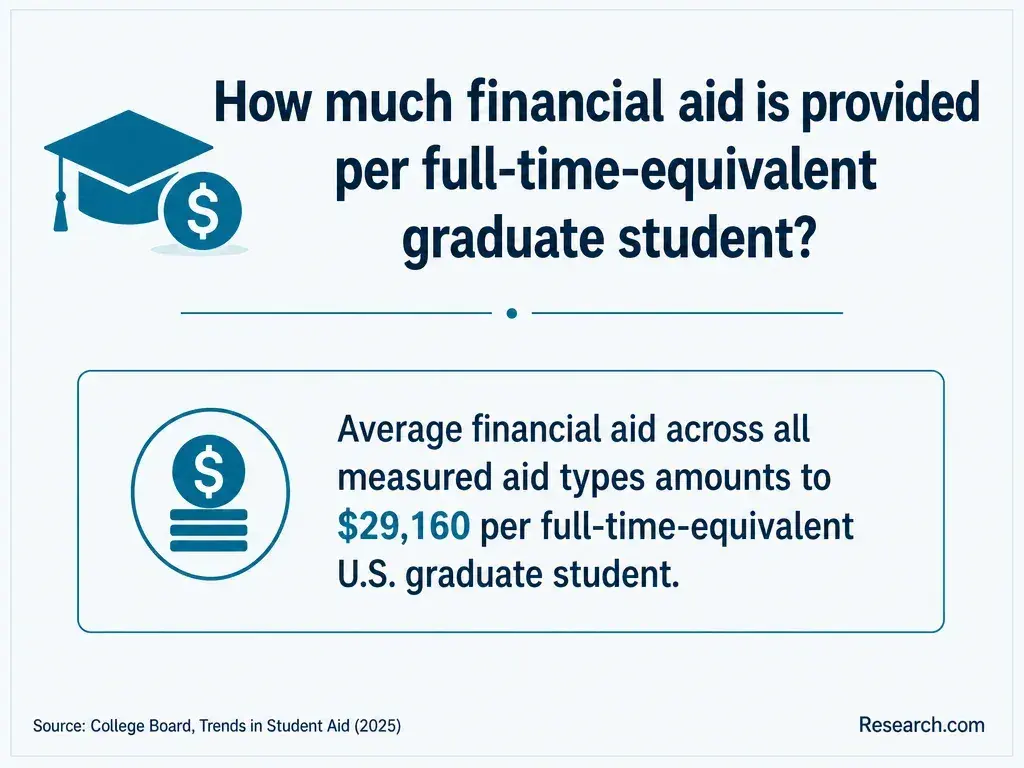
Advanced research or leadership roles may justify further study; routine evidence translation often does not require a doctorate. If considering that route, use an online public health doctorate admissions guide to begin checking eligibility, then assess whether the program's research or practice aims match the work you actually want to do.
What salary and job outlook can public health graduates expect?
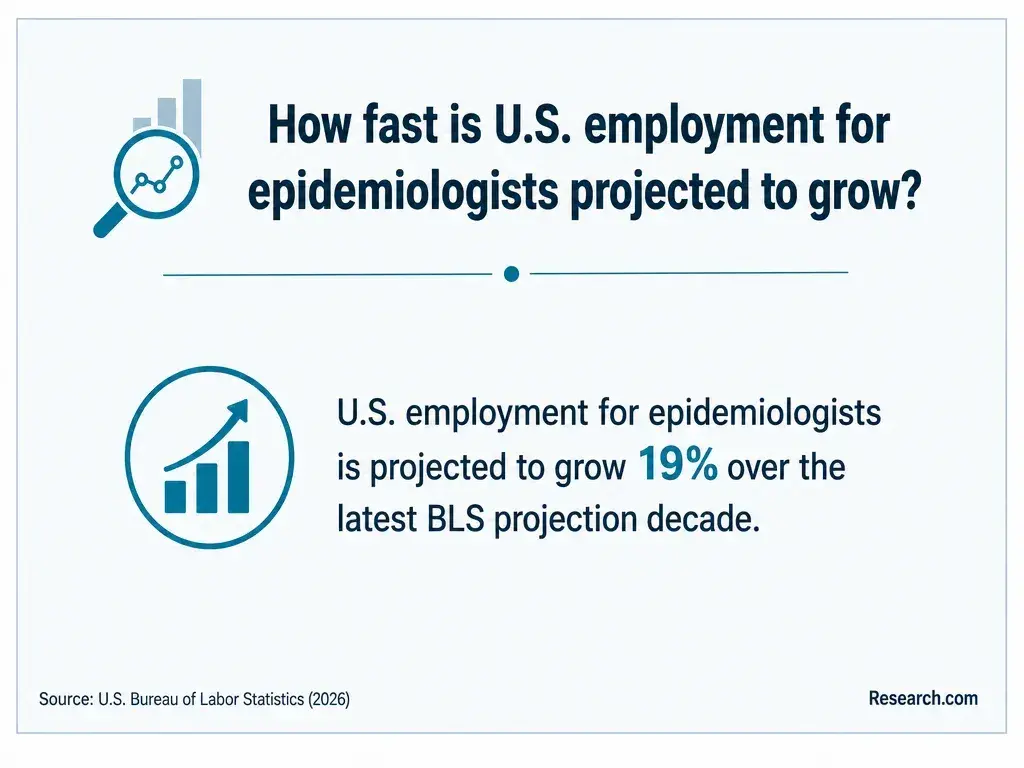
There is no single salary or growth rate for "public health graduates." The U.S. Bureau of Labor Statistics reports occupation-wide wages and employment projections for defined jobs, such as epidemiologist or health education specialist - not earnings attributable to an MPH or any particular school. A graduate's prospects also depend on role, location, experience, employer, and technical skills.
For a useful comparison, identify the job you want first, then check the latest Occupational Outlook Handbook wage reference year, projection period, typical entry education, and job duties for that occupation. Compare those requirements with the total cost and time of the training you are considering. A public health master's graduate pay guide can provide context, but do not treat an occupational median as an entry-level offer or as a return guaranteed by a degree. For a narrowly defined communication goal, employer-supported training or a methods course may offer better value than a full graduate program.
Other Things You Should Know About Public Health
Post a correction where you shared it, identify the claim that was wrong, and replace it with a qualified summary. Make the correction visible rather than quietly deleting context others may have relied on.
No. It can help you locate terms to investigate, but it may omit limitations or misstate numbers. Check every consequential claim against the paper before using it in coursework or public communication.
Usually, a short, attributed quotation is practical for analysis, but follow your institution's academic-integrity and copyright guidance. Cite the news story and the underlying research separately.
Usually not on its own. A study may not apply to your circumstances, and a headline rarely conveys the full balance of benefits and harms. Discuss consequential care decisions with a qualified clinician.
- Uncertainty and how we measure it for our surveys | Office for National Statistics https://www.ons.gov.uk/methodology/methodologytopicsandstatisticalconcepts/uncertaintyandhowwemeasureit
- Use of relative and absolute effect measures in reporting health inequalities: structured review - PMC https://pmc.ncbi.nlm.nih.gov/articles/PMC3432634/
- Systematic Reviews | CDC Library https://www.cdc.gov/library/research-guides/systematic-reviews.html
- News reports that don't report magnitude of scientific findings could mislead the public | University of Michigan News https://news.umich.edu/news-reports-that-dont-report-magnitude-of-scientific-findings-could-mislead-the-public/
- Newspapers Guide: Find a study reported in the news | LibGuides at Wartburg College: Vogel Library https://knightguides.wartburg.edu/newspaper/finding-original-study
- Reading dies in complexity: Online news consumers prefer simple writing | Science Advances https://www.science.org/doi/10.1126/sciadv.adn2555