2027 Comparing a Public Health BS With a Bachelor of Applied Science

Co-Founder and Chief Data Scientist
A public health BS and a Bachelor of Applied Science (BAS) can lead toward similar entry-level work, but they may offer different routes to graduation. That difference matters most if you are transferring an applied associate degree, returning to school, or planning for graduate study.
This comparison explains what the degree labels do—and do not—tell you about coursework, accepted credits, cost, and career preparation. You will leave with a way to compare actual programs rather than choosing by degree title alone.
Key Things You Should Know
- A public health BS often emphasizes science and quantitative foundations; a BAS often emphasizes applied coursework and may be designed for students bringing technical or applied credits. Neither pattern is universal.
- For most entry-level public health jobs, relevant skills and supervised experience matter more than the BS or BAS label; neither degree grants a clinical license or guarantees certification.
- A conventional full-time bachelor's pathway commonly takes about four years, but transfer students should compare approved degree audits—not advertised timelines—to determine remaining coursework and cost.
What Is the Difference Between a Public Health BS and a Bachelor of Applied Science?
A Bachelor of Science in public health is an undergraduate degree whose requirements commonly include population health, research methods, and science or quantitative coursework. A Bachelor of Applied Science is also a bachelor's degree, but its program may be structured around applied professional study or completion of an earlier applied associate degree. A BAS is not necessarily a public health degree: its major might instead be health services, community health, or another field.
The distinction is a program-design clue, not a measure of academic legitimacy. A particular BAS could require more statistics than a particular BS, and either could include an internship. Compare the exact major, required courses, and credits your school will apply toward graduation. If an MPH or another graduate degree is a possible next step, review graduate public health degree and concentration options against the preparation each bachelor's program provides.
Which Degree Is Better for Public Health Careers?
Choose the program that builds evidence for your target role. For community outreach or program coordination, that might mean health communication, community partnerships, and a supervised project. For an entry-level data-support role, look harder at statistics, epidemiology, spreadsheets or coding, and opportunities to explain findings accurately. Neither degree title substitutes for those skills.
A BS may be the stronger choice when its science and methods sequence fits a future quantitative graduate program. A BAS may be better when it applies more prior credits and offers substantial program-implementation experience. The recommendation reverses if the actual course plans differ.
For someone likely to pursue an MPH, comparing tuition with public health graduate outcomes can help put today's bachelor's decision in the context of a longer education budget; occupation-wide earnings are not a forecast of an individual graduate's pay.
How Do Public Health BS and BAS Programs Compare in Curriculum?
The table describes common design differences, not requirements shared by every school. Use it to identify the course catalog details that could change your decision.
| Comparison point | Public health BS | Public health-related BAS |
| Academic emphasis | May give more space to science, statistics, epidemiology, and research foundations | May give more space to applied professional coursework and program operations |
| Earlier coursework | May prescribe specific general education and major prerequisites | May be designed to accommodate an applied associate degree or technical credits |
| Experiential learning | May offer an internship, research project, or capstone | May offer a workplace project, internship, or applied capstone |
| Key limitation | A science-oriented title does not prove advanced analytic training | An applied title does not prove that fieldwork or prior credits will satisfy degree requirements |
Check required course descriptions and sequencing, especially if a later master's program expects statistics or other specific preparation. Online public health master's entry requirements vary by program; neither bachelor's label establishes that every prerequisite has been met.
A BS is often a useful fit for a student starting college or seeking a defined science-and-methods foundation. A BAS deserves close attention from a returning student with an applied associate degree, military learning, or technical coursework that a school may incorporate into its bachelor's plan. The deciding document is an approved degree audit showing which credits satisfy general education, major, elective, and residency requirements—not simply how many credits are accepted.
Working students should also compare course availability and fieldwork schedules. A shorter-looking BAS is not a better choice if required classes are offered infrequently or its applied project cannot fit around employment. If your main goal is a graduate credential, do not choose a bachelor's route solely because you assume future applications will require workplace references: some online MPH admissions and recommendation exemptions differ by school. Compare the bachelor's preparation you need first.
Yes, schools offer online bachelor's pathways in public health and related applied fields, but the delivery format does not establish flexibility. Check whether classes are asynchronous, whether group work has scheduled meetings, and whether an internship or capstone requires local placement, daytime hours, or campus visits. These details matter particularly if you work or provide care at home.
When using resources for public health bachelor's degree planning online, confirm the exact degree name and current delivery requirements with each institution. An online BAS completion program may also require a qualifying block of previous coursework; an online BS may be open to first-year students but have different prerequisite sequences.
Both routes require admission to the institution, but admission to a particular major or BAS completion track may have separate conditions. A BS may admit first-year and transfer students, while a BAS may require an associate degree, a minimum number of prior credits, or specified technical coursework. These are possibilities, not universal rules.
Transfer applicants should request a written evaluation and ask which accepted courses actually fulfill major, general education, and residency requirements. Supply official transcripts, course descriptions, and, when relevant, documentation of military or other assessed learning. A low undergraduate GPA may affect later graduate plans differently from bachelor's admission; guidance on explaining a low GPA in public health graduate admissions is a separate question from whether a school will admit you to its BS or BAS.
Four years of full-time study is a common planning baseline for a bachelor's degree begun without college credit. A BAS completion pathway may take less time for a student whose previous courses satisfy its requirements, but accepted credits alone do not establish a graduation date. Prerequisite sequences, course rotation, residency rules, and part-time enrollment can extend either route.
If speed matters, compare the remaining courses term by term rather than counting transfer credits in isolation. Online public health bachelor's programs with accelerated courses may shorten individual class sessions, but a faster calendar is useful only if the required courses are available in the right order and the workload is manageable.
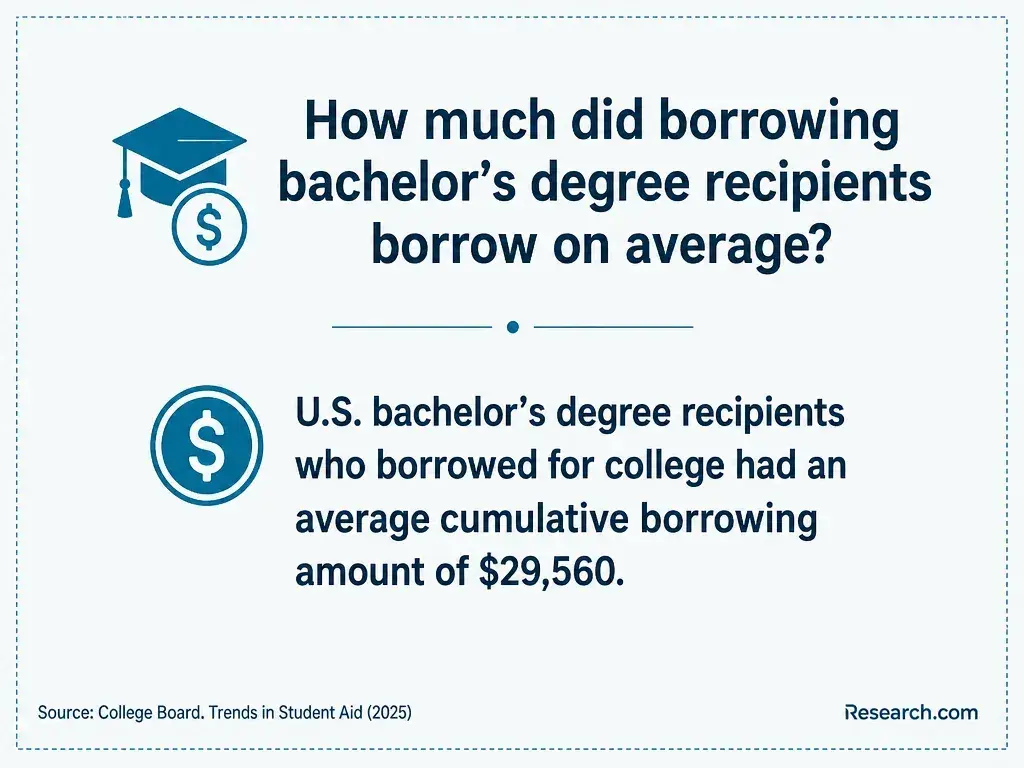
Neither degree label determines tuition. Compare the school's current charges with the number of credits you will actually need there, then account for fees, books, travel or placement costs, and any earnings you might forgo. A BAS that applies more prior coursework could cost less overall even if its per-credit tuition is higher; a BS could cost less if its aid package or remaining requirements are more favorable.
Ask each school for a degree audit and an aid estimate based on your expected enrollment level. If you anticipate graduate study, keep that expense separate rather than assuming it is included in the value of the bachelor's degree. Resources on public health graduate tuition after institutional funding can inform later planning, but awards and eligibility must be verified for the specific program and student.
Graduates of either pathway may pursue entry-level work supporting community health programs, outreach, health education, data collection, or program evaluation. Tasks and hiring criteria vary: a health education role may emphasize communication and program planning, while an analyst-support role may require stronger quantitative evidence. Internships, community projects, and work samples can make those abilities clearer to employers.
Do not treat an occupational median wage as the salary attached to a BS or BAS. The U.S. Bureau of Labor Statistics reports pay for occupations, not degree titles; geography, employer, responsibilities, and experience affect an offer. Some research-intensive roles, including many epidemiologist positions, typically call for education beyond a bachelor's degree. If advanced research is your objective, consider the full pathway—including possible lower-cost public health PhD degree pathways— - rather than expecting either undergraduate degree to qualify you immediately.
How Do Accreditation and Certifications Affect Public Health Careers?
First verify the institution's recognized accreditation. Then check any public health-specific accreditation claim against the Council on Education for Public Health (CEPH) listing: accreditation of a school, unit, or program does not automatically mean every degree it offers is covered. Ask the institution to identify the status and scope applicable to the exact BS or BAS you are considering.
Certifications are separate from degrees. For example, Certified in Public Health (CPH) and health education credentials have their own eligibility and examination rules; a bachelor's diploma does not award them automatically. Likewise, neither degree grants nursing or other clinical licensure. If graduate study is part of your credential plan, provisional entry criteria for public health graduate study concern admission, not professional certification eligibility.
Other Things You Should Know About Public Health
No. An Associate of Applied Science is an associate degree; a Bachelor of Applied Science is a bachelor's degree. An associate degree may provide a route into a BAS, subject to the receiving school's credit evaluation.
Possibly, if the institution offers both and permits the change. Request a new degree audit first: courses that count toward one major may not satisfy the other's requirements.
Only if the program approves it under its internship rules. Ask about supervision, learning objectives, required hours, and whether work completed before approval can count.
Ask whether the position requires a particular major, specific coursework, certification, or relevant experience. Use the written job posting as your starting point rather than assuming "bachelor's degree" means every BS or BAS qualifies.
- The Landscape of US Undergraduate Public Health Education | nih.gov https://pmc.ncbi.nlm.nih.gov/articles/PMC6134569/
- MPH Program Requirements & Curriculum - Public Health https://cosspp.fsu.edu/publichealth/program-requirements/
- Bachelor of Science in Public Health - University of Arkansas https://publichealth.uark.edu/bs-public-health/
- What Can You Do With a Public Health Degree? | University of North Dakota https://und.edu/blog/what-can-you-do-with-a-public-health-degree.html
- Practicums, Internships and Projects What's the Difference? | Oregon State University https://health.oregonstate.edu/internships/types-of-experiential-learning
- What is an MPH Degree and What Can You Do With It? | snhu.edu https://www.snhu.edu/about-us/newsroom/health/what-is-an-mph-degree
- How Do Transfer Credits Work When You Go Back to School? | Whitworth Online https://online.whitworth.edu/news-articles/how-do-transfer-credits-work-when-you-go-back-to-school/
- How to Transfer Credits from One College to Another | neit.edu https://www.neit.edu/blog/how-to-transfer-credits-from-one-college-to-another
- Master of Public Health (MPH) Graduate Program | purdue.edu https://hhs.purdue.edu/graduate-programs/master-of-public-health-mph/
- Public Health - College To Career - Georgia State University https://collegetocareer.gsu.edu/public-health/