2027 Does a Public Health BS Prepare You for Immunization Program Administrative Work?

Co-Founder and Chief Data Scientist
A public health BS can help you enter immunization program work, but coordinating vaccine outreach, records, and reporting takes more than classroom knowledge. For students and early-career applicants, the important distinction is between supporting a program and being responsible for its staff, budget, and performance.
This guide maps those responsibilities to coursework and supervised experience, explains where a bachelor's degree is enough to compete, and shows what to check before investing in a program.
You can use it to target realistic jobs and close the specific skills gaps they reveal.
Key Things You Should Know
- Yes, for many support roles: A public health BS can prepare you for outreach coordination, record quality, reporting, and program support when paired with relevant hands-on experience.
- Not automatically for management: Responsibility for budgets, staff, contracts, or program strategy generally calls for demonstrated experience; employers set their own degree requirements.
- Compare actual job postings: The Bureau of Labor Statistics does not publish a wage category specifically for "immunization program administrator," so a general public health salary is not a reliable offer estimate.
What does immunization program administrative work involve?
Immunization programs operate through health departments, health systems, clinics, and community partners. Their administrative staff help turn vaccination goals into workable schedules, outreach activities, records, and reports. The work is distinct from administering vaccines: coordinating a clinic does not authorize someone to give injections or make clinical decisions.
Depending on the employer, a position may involve arranging partner meetings, tracking supplies and appointments, preparing grant reports, answering process questions, or helping staff use an immunization information system. Record-related work can include identifying missing fields or duplicate entries, but access to identifiable vaccination records requires the employer's authorization and privacy training.
A program manager may additionally oversee contracts, budgets, personnel, and performance - responsibilities a new graduate should not assume are part of an entry-level "coordinator" title.
Read the duties rather than the title. A posting centered on scheduling and documentation calls for different preparation from one requiring jurisdiction-wide policy decisions. Even if you eventually consider public health doctoral programs with broader entry options, a doctorate is not a substitute for learning how immunization operations work on the ground.
Can a public health BS prepare you for immunization program administration?
Yes, with an important limit: A public health BS offers a sound foundation for administrative support and some coordinator positions, especially when a student can show applied work with outreach, data quality, or program evaluation. It does not, by itself, establish readiness to direct an immunization program.
For example, a graduate who has helped organize outreach with a health department can discuss schedules, partner communication, and how participation was tracked. A graduate whose only exposure was a classroom lecture may understand vaccination as a prevention strategy but still need training in clinic workflows and reporting systems. Neither should claim experience handling confidential records without authorized, supervised work.
Before choosing more education, compare your experience with the job's stated responsibilities. If you already manage operations in a clinic or nonprofit, a focused immunization placement or employer training may fill the gap more directly than another degree. If a target management posting requires graduate education, comparing accessible online public health master's options may be useful - but check whether the position values management experience more heavily than an additional credential.
What public health jobs support immunization programs?
Immunization work spans several functions. This comparison separates plausible bachelor's-entry work from positions that commonly demand deeper technical preparation or substantial experience; individual postings remain the authority on qualifications.
| Role or function | Typical contribution | Preparation to demonstrate |
| Program assistant or coordinator | Schedules activities, maintains documentation, communicates with partners, supports reporting | Organization, spreadsheets, clear communication, supervised program experience |
| Outreach or health education staff | Develops accessible information and works with communities on vaccination barriers | Health communication, community engagement, evaluation of outreach |
| Data or immunization information system support | Checks record quality and prepares authorized reports | Data accuracy, privacy practices, system-specific training |
| Program manager | Oversees staff, budgets, partners, and performance | Demonstrated operational responsibility; employer-specific degree requirements |
| Epidemiologist or research lead | Conducts more advanced surveillance or research | Specialized methods training, often beyond a generalist BS |
For a first job, search by function as well as title: "immunization outreach," "program support," and "registry data quality" can reveal different routes into the same field. If your goal is research leadership rather than administration, comparing affordable public health PhD pathways addresses a different, longer training decision; it is not the default next step for program coordinators.
Look for courses that teach you to interpret population-health information and put a program into practice. Epidemiology should help you understand coverage measures and surveillance reports without confusing a change in recorded doses with proof that an outreach effort caused it. Introductory statistics and data management should build confidence in checking denominators, missing records, and basic summaries.
Health communication, community health, and program planning matter just as much: immunization staff must listen to partners, explain information clearly, and assess whether an activity reached its intended audience. Health policy or public health systems coursework can clarify why funding, reporting, and authority differ across organizations. An elective alone, however, does not confer a specialization or prove proficiency with a particular registry.
Ask whether a course project or approved placement lets you produce a practical, shareable example, such as a deidentified outreach plan or reporting workflow. If you later pursue graduate study but lack a needed methods course, starting public health graduate study with prerequisite gaps requires checking the specific program's rules rather than assuming every school offers the same flexibility.
There is no single professional license attached to the job title "immunization program administrator." Administrative work is not the same as clinical vaccination: a role that administers vaccines must meet the applicable state scope-of-practice, training, and employer requirements. Data-system access and privacy training are also governed by the organization, not granted by a public health degree.
Some employers may value public health or health education credentials, while others emphasize experience with grants, records, or community partnerships. Check the exact posting and the credential issuer's eligibility rules before paying for a certification. A BS does not automatically award one, and a graduate degree does not create clinical authority.
If a future role specifically prefers an MPH, online public health master's no-letter application paths concern admissions convenience - not an immunization certification requirement.
It can be, provided you can obtain credible applied experience. Online coursework may teach epidemiology, communication, and program planning effectively, but employers will still want evidence that you can coordinate with people, handle routine data accurately, and work within privacy rules. Ask how the school supports placements near you and whether a current job can be proposed for an approved project; neither arrangement should be assumed to qualify automatically.
Also check live-session times, group projects, campus visits, course availability, and placement hours. "Online" does not necessarily mean asynchronous or easy to combine with employment. When comparing affordable online public health colleges, weigh those obligations alongside tuition: a cheaper program that cannot accommodate an appropriate placement may be a poor fit for this career goal.
Requirements depend on the institution and whether you are applying as a first-year or transfer student. Schools may admit students directly to the public health major or require a separate application after introductory courses. Review the program's published prerequisites - particularly statistics, biology, or general education where applicable - rather than assuming every BS has the same science requirements.
Transfer applicants should request a degree audit showing not merely which credits are accepted, but which satisfy the major, general education, and remaining graduation requirements. The receiving institution makes those decisions. If you are concerned about an earlier academic record, ask admissions about the bachelor's program's own policies; advice on public health master's entry with a modest GPA addresses a different admissions level.
A bachelor's degree is ordinarily planned as a multiyear course of study, but your remaining time depends on accepted credits, major sequencing, course availability, and any required field experience. Request a term-by-term plan before treating an advertised completion timeframe as your own. Online public health bachelor's accelerated class options may shorten individual course blocks without reducing the credits or placement work you must complete.
For a useful cost comparison, ask each school for tuition and mandatory fees based on your residency and enrollment status. Add likely books, technology, placement travel, and any unpaid time away from work; then subtract only aid or employer support you have actually confirmed. A lower per-credit price does not necessarily mean a lower total cost if fewer prior credits apply to the degree.
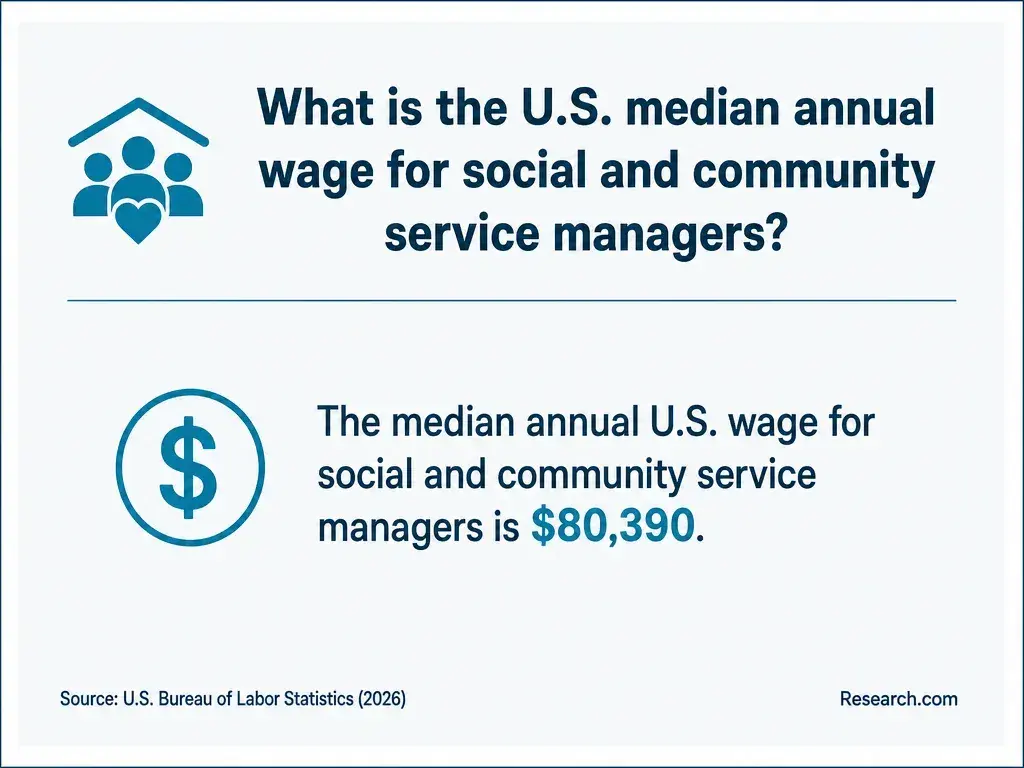
There is no defensible single salary figure for this title. An administrative assistant, outreach coordinator, registry specialist, and program manager may all work in immunization, but their pay reflects different duties, employers, locations, and experience requirements. The Bureau of Labor Statistics reports wages for defined occupations rather than for every program-specific job title, so an occupation-wide median should not be presented as the salary of public health BS graduates.
For a realistic estimate, collect salary ranges from recent postings in your location and separate bachelor's-entry support roles from management positions. Check whether a government posting uses a fixed pay grade and whether the range assumes prior experience. If you are considering graduate education mainly for earnings, comparing earnings across MPH career paths can provide broader context, but it cannot predict an immunization-program offer or prove that the degree will pay for itself.
How do you choose an accredited public health BS program?
First confirm that the institution holds recognized institutional accreditation. Then check whether the public health school, unit, or program has Council on Education for Public Health accreditation and whether the specific bachelor's degree is within its accredited scope. Institutional accreditation and public health-specific accreditation answer different questions; do not infer the latter from a university's general status.
For this career goal, compare the actual curriculum and placement arrangements, not just the degree name. Ask who helps secure immunization-related projects, what supervision is required, whether students can work with community partners or authorized data, and what graduates' reported outcomes actually measure. A program with strong applied opportunities may serve you better than one advertising an immunization-related course but offering no route to supervised practice.
Finally, compare the full cost with the requirements of jobs you would realistically pursue. If a posting calls for a bachelor's degree and experience, do not budget for graduate school by default. If later advancement clearly requires it, investigate online public health master's aid eligibility separately; potential graduate aid should not be counted as funding for your BS.
Other Things You Should Know About Public Health
Yes, if it gives you relevant, describable experience with outreach, event coordination, or community partnerships. Confirm what duties and supervision the organization permits; volunteering alone does not authorize access to vaccination records.
Not always. Systems and access rules vary by jurisdiction and employer. Show that you can learn structured data workflows, protect confidential information, and follow documentation procedures; check postings for required system experience.
Usually only with appropriate permission and safeguards. Use a public or fully synthetic example if you cannot obtain approval to share the work, and never include identifiable vaccination records or confidential partner documents.
No. Health departments, community organizations, and health systems may offer relevant outreach, scheduling, reporting, or program-support work. Choose experience that matches the duties in the jobs you intend to pursue.
- Public Health Agencies: Their Roles in Educating... - NCBI - NIH https://www.ncbi.nlm.nih.gov/books/NBK221185/
- Undergraduate Training in Public Health Should Prepare Graduates for the Workforce - PMC https://pmc.ncbi.nlm.nih.gov/articles/PMC4283444/
- Working at HHS https://www.hhs.gov/about/working-at-hhs/index.html
- 10 Essential Public Health Services | cdc.gov https://www.cdc.gov/infrastructure/public-health-systems-emerging-practices/10-essential-public-health-services.html
- Vaccine Administration and Clinical Guidance | mass.gov https://www.mass.gov/info-details/vaccine-administration-and-clinical-guidance
- Capstone experience | College of Public Health https://cph.osu.edu/students/undergraduate/capstone
- Bachelor of Science in Public Health https://clas.wayne.edu/public-health/programs/bs
- BS in Public Health: Undergraduate Degrees & Minors | Richard M. Fairbanks School of Public Health https://fairbanks.indianapolis.iu.edu/academics/undergraduate/bsph/index.html