2027 From Public Library Program Assistant to Public Health: Planning a Bachelor's Pathway

Co-Founder and Chief Data Scientist
Public library program assistants already do work that matters to community health: connecting people with information, coordinating accessible events, and building trust with local partners. Moving into public health, however, may require skills and credentials that library work alone does not provide.
This guide helps you decide whether a bachelor's degree is the right next step, which entry-level roles fit your experience, and how to compare programs without assuming a degree will automatically lead to a new job.
Key Things You Should Know
- Your strongest bridge is community-facing program work; strengthen it with public health coursework and evidence that you can plan, document, and evaluate an activity.
- A bachelor's degree commonly takes about four years of full-time study from the start, but existing college credit may change your timeline only after a school evaluates how it applies to the degree.
- Compare the full cost and fieldwork requirements against specific job postings: some outreach roles accept relevant experience, while specialist and research roles may require further training.
What Does a Public Health Bachelor's Degree Prepare You to Do?
A public health bachelor's degree introduces population-level prevention: understanding health patterns, identifying barriers to services, communicating evidence, and helping assess whether a program reaches its intended audience. For a library program assistant, its most useful contribution is turning familiar outreach work into documented public health practice.
For example, planning a library workshop shows coordination skills. A public health education can add ways to identify a community need, select trustworthy information, work with a health partner, protect participant privacy, and assess attendance or feedback without claiming the event improved health outcomes.
A bachelor's degree is generally preparation for supervised or early-career work, not independent clinical practice or advanced epidemiologic research. If your eventual goal is specialized practice, compare public health master's specialization comparisons later; you do not need to choose a graduate specialty before selecting an undergraduate program.
How Can Public Library Program Assistants Transition Into Public Health Careers?
Start with the work you already perform. Event logistics, plain-language communication, referral to reliable resources, accessibility planning, and relationships with community organizations can support a move into health outreach or program coordination. The gap is usually not community contact; it is demonstrating health-specific knowledge, appropriate boundaries, and basic evaluation skills.
A practical transition has three stages:
- Review local health department, nonprofit, and health-system postings for outreach or program support; note the tasks and minimum qualifications, not just the titles.
- With your library's approval, seek a project with a qualified community partner, such as promoting a partner-led prevention event or improving access to vetted health information.
- Document your own contribution in a privacy-safe portfolio: the audience, approved materials, coordination process, and measures you used, without patron records or unsupported impact claims.
If you already meet the requirements for a community-facing opening, applying before enrolling may be the lower-cost move. If postings consistently ask for a bachelor's degree or stronger data and program-planning skills, the degree has a clearer purpose. Consider MPH education and long-term earnings only if graduate study later becomes relevant; MPH-related pay figures should not be treated as a forecast for a bachelor's-level career change.
What Education and Training Are Required for Entry-Level Public Health Jobs?
Requirements follow the job's duties and employer, not a single public health rule. Some community health worker and outreach positions accept relevant experience and provide training. Health education specialist positions commonly expect a bachelor's degree. Research support jobs may emphasize statistics, data handling, or prior project experience. Check each posting for state-specific credentials, language requirements, travel, and whether experience can substitute for education.
Library experience can demonstrate service and communication, but it does not by itself establish competence to give medical advice, handle protected information, or analyze health data. Useful preparation may include a statistics course, training in evidence-based health information, and supervised work with a health organization. A public health degree does not confer clinical licensure or automatic certification.
Graduate applications are a separate decision with separate documentation rules. If you later pursue a master's degree, check each school's requirements rather than assuming the rules resemble undergraduate admission; public health graduate applications without references addresses one possible application constraint.
Choose the format that lets you complete coursework and obtain credible applied experience while keeping your library job, if you need to. Online instruction can reduce commuting, but live classes, group projects, exams, and local internships may still require fixed hours. Campus programs may make it easier to meet faculty and nearby partners, though travel and course schedules can limit access.
Before enrolling, ask for the actual schedule of required courses and the rules for any internship or capstone. Confirm whether the school helps locate sites, who supervises students, whether your current workplace could qualify, and whether placement hours conflict with paid shifts. Library employment is not automatically an approved public health placement.
These format questions become more important at advanced levels, where supervision and on-site commitments may differ substantially. If a doctorate becomes a later goal, research online doctoral public health entry pathways separately rather than using a bachelor's program's flexibility as a guide.
Look for a curriculum that adds skills your library job cannot easily teach. Introductory epidemiology explains patterns of disease and risk; statistics supports responsible interpretation of data; health communication helps adapt evidence for different audiences. Courses in social and structural determinants of health, policy, ethics, and program planning add context for working with communities.
For a library-to-outreach transition, an especially useful sequence is introductory public health, statistics, health communication, then a supervised planning or evaluation project. Check prerequisites and when each course is offered: a required course available infrequently can extend the degree even if most credits transfer.
If you discover that you prefer intensive data analysis to community programming, compare the undergraduate statistics and computing opportunities available to you. Specialized graduate study is a later option; online graduate biostatistics options for professionals involve preparation beyond a typical introductory bachelor's course.
Most decisions begin with admission to the college, but entry into the public health major may have additional requirements. A first-time applicant should check the school's academic records and general admission rules. A returning or transfer student should also request an official evaluation of prior college work, including statistics, science, and general education courses.
Accepted credit is not the same as completed degree requirements. Ask for a degree audit showing which credits satisfy the major, prerequisites, and residency rules, and which count only as electives. The school has final authority over equivalencies and substitutions; obtain decisions before relying on a projected graduation date or cost.
If earlier grades are a concern, ask the undergraduate admissions or advising office about its current policies rather than assuming graduate rules apply. Guidance on public health master's options after a weak GPA is relevant only if you later apply for graduate study.
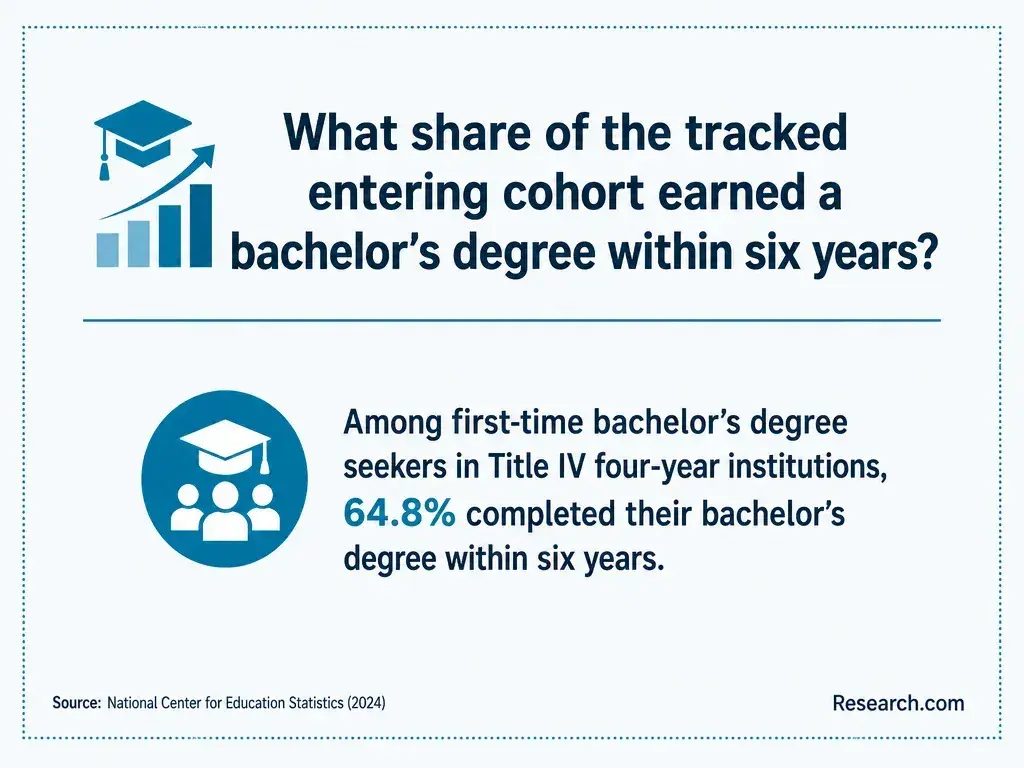
A bachelor's degree commonly takes about four years of full-time study when started without college credit. Your remaining time depends on applicable transfer credit, course sequencing, enrollment pace, and any fieldwork. Part-time study may fit library shifts better but can extend the period during which you pay fees and balance work with school.
Compare schools using a written estimate of tuition and required fees for the remaining courses you must take, not an advertised annual rate alone. Add books, technology, commuting or travel, and any unpaid placement hours. Ask the financial aid office how your intended enrollment pace affects eligibility, and ask your library employer whether education assistance is available; do not count on reimbursement until its terms are confirmed.
Keep future graduate costs separate from the bachelor's decision. Resources on doctoral public health study costs and career directions describe a different educational commitment, not a cost you must take on to enter community outreach work.
Focus on openings whose daily tasks match your library experience and new academic skills. Titles vary by employer, so the table distinguishes plausible entry points from roles that generally call for substantially more preparation.
| Role to investigate | Relevant library experience | Preparation or limitation to check |
| Community outreach or program assistant | Event coordination, referrals, community partnerships | Health-specific training, travel, and employer degree requirements |
| Community health worker | Trusted communication and connecting people with resources | Employer training and any applicable state requirements |
| Health education specialist | Accessible materials and audience-focused programming | Bachelor's-level qualifications and any employer-requested credential |
| Public health research assistant | Information organization and careful documentation | Statistics, research procedures, and data-access training |
Seek postings that describe supervised implementation, education, or research support - not independent clinical care or senior leadership. An epidemiologist is a distinct, typically graduate-level occupation; if research becomes your goal, investigate additional methods training and, much later, options such as affordable epidemiology doctoral study with aid. A doctorate is not a prerequisite for the entry-level roles in the table.
There is no single salary for public health bachelor's graduates. Pay depends on the occupation, location, employer, experience, and responsibilities. The U.S. Bureau of Labor Statistics reports occupation-wide wages for roles such as community health worker and health education specialist, but those figures include workers with varied education and career histories; they are not starting-salary promises for degree holders.
For a useful personal estimate, collect current local postings for roles you would qualify for, separate positions that require a bachelor's degree from those that do not, and compare posted pay with your present compensation. Factor in benefits and any income lost during an unpaid internship. When weighing later education, online public health master's tuition and job prospects can inform a separate graduate-level comparison; do not attribute those potential outcomes to an undergraduate degree.
How Do You Choose an Accredited Public Health Bachelor's Program?
First, verify the institution's accreditation and the exact degree you would earn. Then check the Council on Education for Public Health's directory for the accredited school, unit, or standalone program and confirm whether the bachelor's degree you are considering is within its scope. Institutional accreditation and public health-specific accreditation answer different questions; neither substitutes for checking the curriculum and placement opportunities you need.
Ask each finalist for a degree audit or sample plan, required-course schedules, fieldwork approval rules, total remaining charges, and examples of support for working students. Favor the program that offers a feasible route to the tasks in your target job postings - not simply the broadest list of concentrations. If you eventually want research training, examine future prerequisites before paying for extra undergraduate courses; low-cost PhD study in public health is a separate, research-focused decision.
Other Things You Should Know About Public Health
Yes. It can support communication with communities an employer serves. Describe the languages you use and the work you have done, but do not claim medical interpretation qualifications unless you hold them.
Not without appropriate workplace permission and privacy safeguards. Describe your process or use an approved, deidentified example instead of sharing identifiable patron information.
Provide vetted information and direct people to qualified professionals. A library role or public health degree does not authorize individual diagnosis or treatment advice.
No. An approved project with a health partner may let you build relevant experience while employed. Keep your library duties, partner responsibilities, and any academic placement requirements clearly separated.
- Public libraries: A community-level resource to advance... - PMC https://pmc.ncbi.nlm.nih.gov/articles/PMC6329675/
- Careers in Public Health - New York State Department of Health https://www.health.ny.gov/prevention/public_health_works/careers/
- Health Literacy for Public Health Professionals Resources | cdc.gov https://www.cdc.gov/health-literacy/php/resources/health-literacy-resources.html
- Cost of Attendance (Budget) | 2025-2026 Federal Student Aid Handbook https://fsapartners.ed.gov/knowledge-center/fsa-handbook/2025-2026/vol3/ch2-cost-attendance-budget
- Types of Financial Aid: Grants, Work-Study, and Loans | studentaid.gov https://studentaid.gov/understand-aid/types
- General Principles of Transfer Credit | Trenholm State Community College https://catalog.trenholmstate.edu/general-principles-of-transfer-credit
- What Can You Do With a Public Health Degree? | North Carolina Central University https://online.nccu.edu/blog/what-can-you-do-with-a-public-health-degree/
- Community College to University Transfer Credit Guide | Franklin University https://www.franklin.edu/blog/transfer-from-community-college-to-4-year-university
- What Are 3 Bachelor of Science in Public Health Concentrations? A Complete Guide | About the University of Cincinnati https://www.uc.edu/blog/what-are-3-bachelor-of-science-in-public-health-concentrations-a-complete-guide.html
- bachelor's degree in Public Health | missouri.edu https://healthsciences.missouri.edu/public-health/bachelors-degree/