2027 Does a Public Health BS Prepare You for School Health Program Coordination Support?

Co-Founder and Chief Data Scientist
A school health program needs more than good ideas: someone must coordinate partners, organize activities, track results, and work within district rules. If you are considering a public health BS, the important distinction is whether it prepares you to support that work or independently lead it.
This guide connects undergraduate coursework to actual school health tasks, explains where experience and credentials matter, and shows how to assess programs and job postings before committing to a degree.
Key Things You Should Know
- Yes, for support roles: A public health BS can prepare you for outreach, program logistics, health education, and basic evaluation, especially when it includes supervised work with schools or youth-serving organizations.
- Not automatically for coordinator roles: District jobs may require school-based experience, a particular credential, or a clinical license; a public health degree does not replace those requirements.
- Compare evidence, not degree titles: A conventional bachelor's pathway takes about four years of full-time study, but your remaining time and cost depend on accepted credits, course sequencing, and fieldwork access.
What does a public health BS teach about school health program coordination?
A public health BS teaches students to think about health across groups rather than treat one patient at a time. In a school setting, that perspective supports activities such as identifying barriers to participation, adapting health messages for families, coordinating community partners, and measuring whether an initiative reached its intended students.
Coordination support usually means carrying out defined tasks under a program lead: scheduling sessions, preparing materials, documenting participation, communicating with partners, and helping interpret aggregate results. It does not imply authority to diagnose students, provide nursing care, or make district policy. Coursework may explain a program-planning framework, but a supervised school project shows whether a student can use it within a school calendar, budget, and approval process.
If you later consider an MPH for broader program leadership, review its specific curriculum and checking CEPH accreditation before MPH enrollment rather than assuming your BS or a future graduate degree has a particular accreditation scope.
Can a public health BS qualify you for school health coordinator jobs?
Sometimes, but the job description controls. A BS may meet the education requirement for a program assistant, health education specialist, or coordinator position that emphasizes outreach and implementation. Another district's "school health coordinator" may supervise staff, manage grants, oversee districtwide strategy, or require nursing or educator credentials. The shared title does not establish shared qualifications.
Read postings for both minimum requirements and daily duties. A recent graduate is generally more competitive when they can document a supervised project, reliable communication with families or partners, and careful handling of program information.
If the role requires several years of school-based work, an assistant position can be a more direct first step than another degree. Doctoral admissions standards are a separate question; reviewing selectivity in public health doctoral study will not tell you whether you meet a district's hiring criteria.
What education and credentials are required for school health program coordinators?
There is no single nationwide credential for every job called a school health program coordinator. Employers set education and experience requirements according to the work, while states and districts may impose additional rules.
For a nonclinical wellness program, a relevant bachelor's degree and school or community-program experience may be sufficient. A position that performs school nursing duties requires the applicable nursing license and any state-required school credential; a public health BS does not provide either.
Health education credentials can be useful when an employer requests them, but eligibility must be checked with the certifying organization. Likewise, a district may require background screening or training before an employee or volunteer works in a school. Verify those conditions with the hiring district rather than treating them as universal degree requirements.
An MPH may become useful for more advanced program leadership, while planning doctoral study in public health is ordinarily a separate, later-career decision - not a prerequisite for providing coordination support.
The strongest course combination follows the work, not just the major's name. Program planning and evaluation help students define an objective and choose feasible measures. Health communication and social and behavioral health help them create respectful, accessible materials. Introductory epidemiology and statistics help them interpret group-level patterns without overstating what the data prove. Policy or public health ethics courses add context for approvals, privacy, and equitable access.
Look for a course or supervised project that produces a practical artifact - such as an outreach plan, a logic model, or an aggregate-data report - and asks for feedback from a real partner. An advanced methods course is less valuable for an entry-level support role if it displaces an opportunity to practice implementation. Specialized research training, including an online epidemiology doctorate cost and funding comparison, addresses a substantially different career goal.
Either format can teach the relevant concepts. The decisive difference for this goal is whether you can complete meaningful school-connected work while receiving adequate supervision. The comparison below highlights what to verify rather than assuming one format is inherently more practical.
| Factor | Online BS | Campus-based BS |
| Course schedule | May reduce commuting, but live sessions and group work can still be scheduled | May provide predictable in-person meetings, with less geographic flexibility |
| School-related experience | May depend more heavily on the student finding an approved local site | May offer nearby partners, without guaranteeing a school placement |
| Networking | Requires deliberate contact with local districts and community organizations | May offer more in-person access to faculty and local partners |
Ask who identifies placements, whether school-year scheduling affects the experience, and what happens if a district cannot accept students. Delivery format also should not be confused with admissions policy: online public health master's programs without recommendation letters concern a later degree and do not establish requirements for an online BS.
Requirements depend on whether you are applying as a first-year student or transferring, and whether the institution separately admits students to the public health major. Schools may assess prior coursework in mathematics, science, writing, or statistics; some courses may be needed before upper-division study rather than before university admission.
Transfer students should request a degree audit that separates credits accepted by the university from credits that satisfy the major, general education, and graduation requirements. Confirm remaining course sequences before estimating time or cost. Graduate rules are different: provisional entry criteria for public health graduate study should not be used to infer undergraduate admission eligibility.
A conventional full-time bachelor's route takes about four years, but transfer credit, part-time enrollment, prerequisite sequences, and the timing of a required internship can change an individual student's schedule. Shorter courses do not necessarily shorten the degree if a needed course or school-based opportunity is offered only at certain times. Compare the actual degree plan with options for public health bachelor's pacing and course length.
There is no reliable single price for a public health BS. Request an institution-specific estimate that includes remaining credits, tuition and required fees, books or software, travel to fieldwork, and any reduced work hours. For a transfer student, the cheapest advertised per-credit rate may cost more overall if fewer prior courses apply to graduation.
The closest entry points are school wellness or health-program assistant, district health education support staff, and youth-program coordinator at a community organization partnering with schools. Titles vary: compare responsibilities rather than searching only for "school health coordinator." Some graduates instead begin in a health department or nonprofit that delivers programs in schools, where they can build implementation experience before applying to districtwide roles.
A useful job search separates positions that support delivery from those that independently design strategy, supervise staff, or provide regulated care. If long-term advancement motivates additional education, compare the actual positions you want with the expense and likely use of that education. Public health doctorate financial planning and outcomes belongs to that long-term assessment, not to the minimum pathway into school-program support.
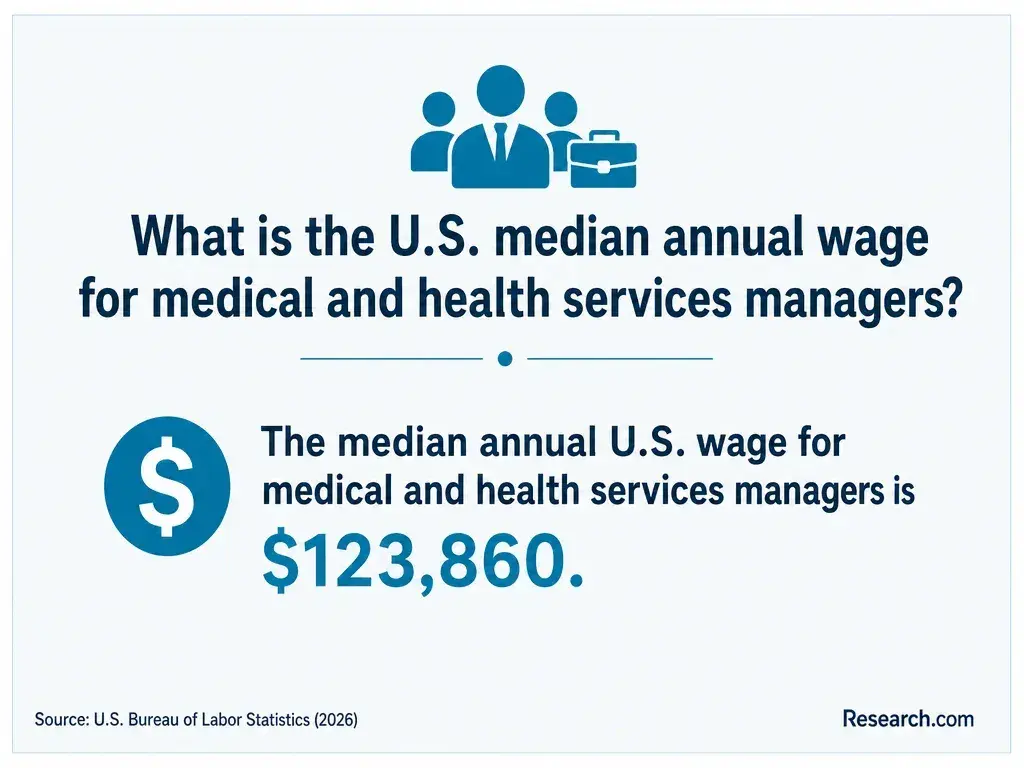
There is no single authoritative US salary series for "school health program coordinator." District and nonprofit postings may place substantially different duties under that title, and pay can depend on location, collective bargaining, contract length, supervisory responsibility, and required credentials.
A wage reported for the broader occupation of health education specialist is useful context only when the posting's duties actually match that occupation; it is not a promised coordinator salary or a public health BS graduate outcome.
For a decision you can use, compare local postings with the same work calendar and responsibility level, then ask whether pay is quoted for a school year or a full year. If you are weighing future graduate study against earnings, public health master's university award comparisons can inform the education-cost side - but they cannot establish what a district will pay.
What job outlook and certifications apply to school health coordinators?
No national employment projection isolates school health program coordinators as a uniform occupation. Broader projections for health education specialists can indicate demand for related skills, but they should not be read as a forecast of district openings. School positions also depend on local budgets and whether health activities are staffed by districts, health departments, or outside partners.
For certification, match the posting to the work: a nonclinical health education role may value an applicable health education credential, while nursing duties require the relevant license and state-specific qualifications. Confirm current eligibility with the credentialing body and the employer before paying for an exam or program.
A PhD is not a routine certification route for this work; even lower-cost public health PhD degree pathways should be considered only if a separate research career is the goal.
Other Things You Should Know About Public Health
Do not assume you can. Ask the school and your faculty supervisor what approvals, privacy rules, and data restrictions apply. An aggregate or simulated dataset may be more appropriate.
Ask what tasks volunteers can perform, who supervises them, what screening or training is required, and whether the schedule fits your coursework. Volunteering does not automatically count toward an academic internship.
Describe your responsibilities and present an approved, redacted work sample or a clearly labeled example you created independently. Do not include identifiable student information or imply a partner endorsed work it has not reviewed.
Start with a defined objective and feasible measures, such as participation and anonymous feedback. Interpret changes cautiously: attendance or a short survey alone cannot prove that the activity improved health.
- School Health Services - NCBI - NIH https://www.ncbi.nlm.nih.gov/books/NBK232689/
- How States Can Support Coordinated School Health | cdc.gov https://archive.cdc.gov/www_cdc_gov/healthyschools/cshp_archive/states.htm
- Undergraduate Training in Public Health Should Prepare Graduates for the Workforce - PMC https://pmc.ncbi.nlm.nih.gov/articles/PMC4283444/
- Chapter 2: School Health Services | mo.gov https://health.mo.gov/book/export/html/5331
- Competencies for Public Health Professionals | cdc.gov https://www.cdc.gov/infrastructure/training-professional-development/competencies-for-public-health-professionals.html
- Health promoting schools | who.int https://www.who.int/health-topics/health-promoting-schools
- Indiana Healthy Schools: Health Education | in.gov https://www.in.gov/indiana-healthy-schools/components-of-school-health/health-education
- Bachelor of Science in Public Health | charlotte.edu https://ech.charlotte.edu/degrees-and-programs/phs-undergraduate-programs/bachelor-science-public-health-bsph-2/
- Public Health, B.S. | Southern Connecticut State University https://www.southernct.edu/academics/programs/public-health-bs
- CEPH Bachelor of Public Health Domains | cdrewu.edu https://www.cdrewu.edu/academics/program/bachelor-of-science-in-public-health/ceph-bachelor-of-public-health-domains/