2027 MPH Integrative Learning Projects: When a Partner Requires Confidential Results

Co-Founder and Chief Data Scientist
A public health partner may welcome an MPH project but refuse to release its findings. That can work - if the student's program can assess the work without requiring public disclosure. For students planning an integrative learning experience, the decision is whether confidentiality terms leave enough evidence for faculty review, protect the partner's data, and allow graduation on schedule.
This guide explains the agreements, privacy checks, restricted deliverables, and fallback options to settle before the project begins.
Key Things You Should Know
- Confidential results do not automatically disqualify an MPH integrative learning project; the program must still be able to review a substantive final product and assess the required competencies.
- Agree on who may access data, analyses, and the final product before work starts. Partner permission, school approval, and any required privacy or research review are distinct decisions.
- If faculty cannot see enough evidence to grade the work, a public summary alone may not suffice. Arrange restricted review or an approved alternative before the partner withholds results.
What Is an MPH Integrative Learning Project?
An MPH integrative learning experience, or ILE, is a culminating opportunity to synthesize public health competencies in a substantial product. Depending on the program, that product might be an evaluation report, policy analysis, implementation plan, or another practice-oriented work. Faculty assess whether the student can apply and communicate what they learned; a partner may also use the product to make a decision.
The ILE is not automatically the same as an applied practice experience, internship, or research thesis. A student might draw on fieldwork for an ILE, but the school decides what each requirement entails and whether the same work can serve both. Course length is similarly a separate issue: information about public health bachelor's pacing and course length cannot establish how long an MPH student has to obtain approvals and complete an ILE.
For a confidential project, scope the product around a decision the partner actually faces - for example, whether an outreach program's monitoring measures are usable - rather than promising findings before data access is approved. The student should be able to demonstrate methods, interpretation, limitations, and professional judgment even if the results cannot be posted publicly.
How Should MPH Students Handle Confidential Project Results?
Separate faculty access from public release. A partner may reasonably prohibit a public report while permitting named faculty to examine a restricted version. The arrangement fails academically if confidentiality also prevents the program from seeing the work it must assess.
These common disclosure arrangements differ in what the school can evaluate. None should be assumed acceptable without the ILE director's approval.
| Result-sharing arrangement | Faculty can assess | Principal limitation |
| Restricted full report | Methods, findings, interpretation, and limitations | Requires approved access and secure handling |
| Redacted report plus restricted appendix | Public-facing reasoning and sensitive supporting evidence | Redaction may obscure key evidence if the appendix is unavailable |
| Public summary only | Communication of selected conclusions | May not demonstrate the underlying analysis or required competencies |
| Methods-focused alternative product | Design, documentation, and justified decisions | Must meet the program's learning outcomes without unsupported claims about results |
Ask the partner and program which arrangement they will accept before committing to the project. Changing to an affordable shorter online public health degree is not a practical remedy for a disclosure dispute late in an MPH; an approved change of product or scope is usually the decision to examine first.
What Privacy Rules Apply to Confidential Public Health Projects?
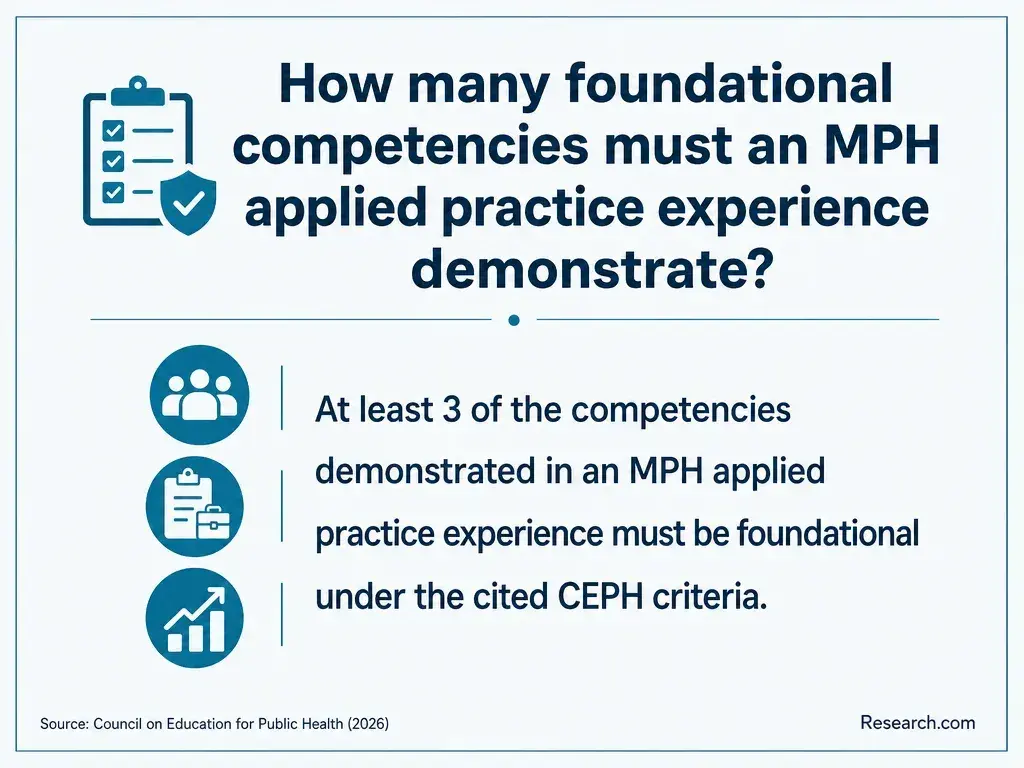
Confidential describes an access restriction; it does not identify the legal rule behind it. HIPAA may apply when a covered entity or its business associate handles protected health information. Its requirements do not automatically govern every dataset held by a nonprofit, university, or health department. State law, agency rules, contracts, and partner policies may impose additional restrictions.
FERPA can matter if the project uses education records maintained by an educational institution or its agent. The federal Common Rule may require a human-subjects research determination or review for a project designed as research; calling an activity "program evaluation" does not settle that question. Conversely, not every student evaluation requires institutional review board approval. The school's designated review office - not the student or partner acting alone - should make applicable determinations.
A program's educational obligations are separate from these privacy rules. When assessing online MPH accreditation and program quality, check the specific program's accreditation scope and ILE rules; accreditation alone does not authorize disclosure of partner data or guarantee a confidential-project procedure.
Use the least sensitive information that can answer the approved question. An aggregated dataset or partner-produced extract may eliminate the need for the student to receive direct identifiers, but small groups and combinations of variables can still reveal people. The partner's data steward and the university's security staff should decide which systems and transfer methods are permitted.
A workable data-handling plan should cover the full life of the project:
- Record the approved data fields, purpose, users, access period, and prohibited uses.
- Use partner-approved storage and transfer tools; do not move restricted files to personal email, devices, or unapproved cloud services.
- Limit access to authorized people and keep analysis files, exports, and drafts within the approved environment.
- Check tables, quotations, maps, and screenshots for identifiers or revealing small groups before sharing them.
- Follow the agreed retention, return, or deletion process when the project ends.
Students comparing accessible online public health master's options should ask what secure software and faculty-review arrangements are actually available. An online format does not, by itself, make a partner's data accessible from home.
The agreement should identify the student, partner supervisor, faculty reviewer, and offices authorized to approve changes. It should distinguish a partner's right to review material for confidentiality from a right to control the student's academic conclusions or grade.
Before signing, the parties should resolve these terms in writing:
- The project question, intended product, competencies to be assessed, milestones, and expected feedback.
- Permitted data, analysis environment, security responsibilities, and any required data-use or confidentiality agreement.
- Who may read drafts and the final product, including faculty and any additional assessors required by the program.
- What may be presented, published, or included in a portfolio, and how redactions will be approved.
- Review deadlines, a procedure for disputed redactions, and a fallback if data access or final approval is withdrawn.
- Ownership and permitted reuse of reports, code, figures, and partner materials.
Have the school's appropriate office review legal terms; a student should not independently promise that the university will follow a partner's nondisclosure agreement. A project authorization is also different from an admissions reference letter. Resources on public health master's programs that omit reference letters address application requirements, not permission to use partner data.
Yes, if the program approves the product and the information can be used under the applicable rules. Deidentified should not mean merely removing names: dates, locations, rare characteristics, or linked records may still permit identification. Where HIPAA applies, its deidentification standards require more than an informal judgment that a file "looks anonymous."
Restricted results can be more academically useful than a heavily stripped public report. For example, faculty might assess a full analysis inside an approved system while the partner receives a report and the student retains only a cleared description of the methods. The student should document how exclusions, suppressed cells, or missing records limit interpretation, rather than implying that redaction leaves conclusions unchanged.
Methodological preparation matters here. Guidance on applying to an MPH with incomplete prerequisites concerns entry to a program; it does not waive the statistical, ethical, or data-handling skills needed for a defensible restricted-data ILE. If those skills are still developing, narrow the question and seek supervision.
Faculty need enough access to judge the student's own contribution, competency synthesis, evidence, limitations, and communication. A partner's statement that the report was helpful may provide context, but it cannot replace academic assessment. The program may use named reviewers, a secure viewing environment, a restricted appendix, or an approved presentation format; its policies determine what is permissible.
Agree in advance on how reviewers will inspect evidence without acquiring or retaining files they are not allowed to hold. For group projects, identify the student's individual work. If the partner requests changes, preserve a record of what was revised for factual accuracy or privacy and what remains the student's independent analysis.
Assessment of an ILE is not the same as admission based on grades. Advice on building an MPH application with weaker grades cannot predict how a faculty member will grade a confidential project; the applicable rubric and access to assessable work control that decision.
Notify the faculty advisor or ILE director promptly, especially if the deadline is near. Do not release restricted results to prove that work was completed, and do not describe unverified findings as established. A partner may have a legitimate reason to delay release, but the school still needs an assessable student product.
The response depends on what the program has already approved. Faculty might review work in a secure setting, accept a restricted methods-and-interpretation product, authorize a new question using permitted data, or require a replacement project. Those are academic decisions, not outcomes the student can assume. Keep dated records of completed work, access requests, partner feedback, and approval decisions so the advisor can evaluate feasible options.
Ask about extension, incomplete-grade, and repeat-course rules before missing a deadline; each may affect time and cost. Starting a different degree - even after reviewing public health doctorate costs and career outcomes - would not resolve an unfinished MPH requirement. The immediate priority is a documented completion plan with the current program.
If partner work is central to your goals, ask for the ILE handbook and sample agreement before enrolling or proposing a site. Compare programs on whether they permit restricted faculty review, who approves data-use terms, what product must be submitted, and what happens when a partner delays or refuses clearance. Confirm that the answers apply to your entry term and intended delivery format.
Ask the ILE director: "Can faculty grade a nonpublic final product, and who must have access?" Follow with questions about approved storage, partner review deadlines, replacement projects, and whether a public presentation or repository deposit is mandatory. For a student working at a nonprofit or health agency, also ask whether an employer-based project is allowed; employment alone does not establish project approval.
Compare the MPH's rules with the degree you actually intend to complete. Guides to comparing online public health doctoral programs may be useful for a later practice-leadership goal, but a DrPH applied project's policies cannot be substituted for an MPH program's ILE requirements.
Which Public Health Careers Use Confidential Project Skills?
Confidential-project skills are relevant to entry-level evaluation, program coordination, health-system quality improvement, and public health data roles. The transferable work includes defining an appropriate question, limiting access, documenting analysis, reporting uncertainty, and explaining findings to people authorized to act on them. More advanced analytical or leadership responsibilities generally require additional experience and supervision; the MPH alone does not confer access to restricted data or authority to release it.
For a portfolio or interview, describe the problem, your methods, your contribution, and the decision the product was designed to inform. Share only partner-cleared examples or a newly created demonstration - not a disguised copy of a confidential result. Compensation varies by occupation, employer, location, and experience; understanding salary variation after an MPH is more useful than treating one project or degree as a salary promise.
Other Things You Should Know About Public Health
Usually, a student can describe their role and general methods without disclosing protected information, but the agreement may restrict even the partner's name. Obtain clearance for specific wording if necessary.
Possibly. Newly created synthetic data can illustrate a workflow, but it must be labeled as illustrative and must not reproduce sensitive records or be presented as the project's actual results.
Ownership depends on the partner agreement, university policies, employment terms, and any software licenses. Settle reuse and portfolio permissions before sharing code outside the project.
Not automatically. The MPH program must separately confirm whether the work meets each requirement's competencies, supervision, deliverables, and approval rules.
- DHCS Data De-Identification Guideliness (DDG) | ca.gov https://www.dhcs.ca.gov/file/file-193726-pdf/
- HIPAA and Research | hhs.gov https://www.hhs.gov/hipaa/for-professionals/special-topics/research/index.html
- FERPA | Protecting Student Privacy - Department of Education https://studentprivacy.ed.gov/ferpa
- About Human Subjects Research | US EPA https://www.epa.gov/scientific-leadership/about-human-subjects-research
- How to Determine if a Project Is Human Subjects Research, a Quality Improvement Project, or Both - PMC https://pmc.ncbi.nlm.nih.gov/articles/PMC7122260/
- Confidentiality Agreement Primer | Integrated Engineering Design https://design.utk.edu/students/resources/nda/
- Does My Project Need Review? - IRB https://irb.ucdavis.edu/irb-submissions/do-i-need-irb-review/
- Human Subjects Research | UW Research https://research.washington.edu/research/myresearch-lifecycle/setup/compliance-requirements-non-financial/human-subjects-research/
- Research Data Access and Ownership | University Policies and Standards https://policy.oregonstate.edu/policy/research-data-access-and-ownership
- Confidentiality | UW Department of Bioethics & Humanities | RAISE https://depts.washington.edu/bhdept/ethics-medicine/bioethics-topics/detail/58