2027 MPH Practicum Placement Claims: Support vs a Guaranteed Site

Co-Founder and Chief Data Scientist
"We help students find practicums" can mean anything from sharing a contact list to arranging interviews with established partners. It does not necessarily mean an MPH student will receive an approved site. That distinction matters before you commit to a program, especially if you need a local placement, have limited availability, or cannot absorb a graduation delay.
This guide explains what placement claims usually cover, what accredited programs must assess, and which written policies reveal who does the work when a prospective site falls through.
Key Things You Should Know
- Placement support is not a site guarantee. Ask whether the program promises an approved placement, merely helps identify prospects, or offers a fallback if a site withdraws.
- CEPH accreditation sets educational expectations, not an individual placement promise. An MPH applied practice experience must produce at least two work products demonstrating competencies; the school determines how placements are approved and arranged.
- Compare responsibility and risk. Identify who finds and contacts hosts, who approves the site and preceptor, and what happens to your timeline if approval or onboarding stalls.
What Does MPH Practicum Placement Support Typically Include?
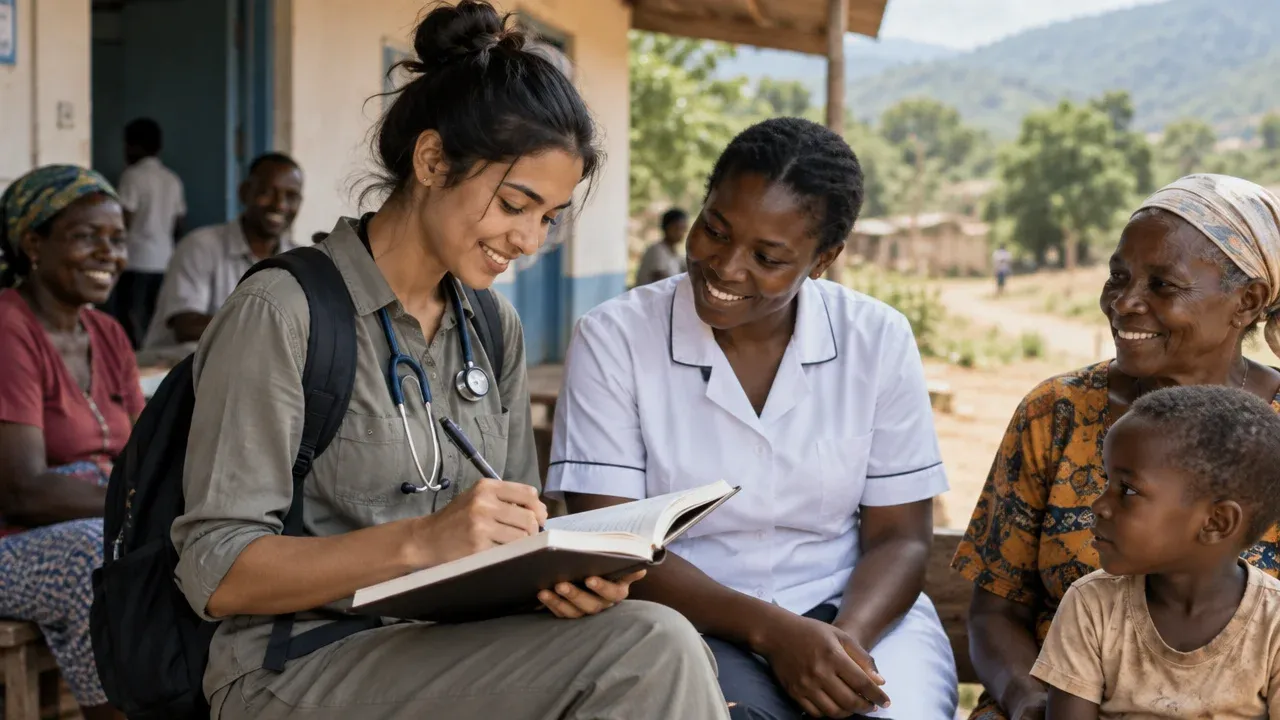
An MPH practicum is commonly the setting for an applied practice experience (APE): supervised work that lets a student apply public health competencies and produce assessable work. "Placement support" describes help with finding and preparing for that work, not a standardized service.
Depending on the program, support may include a directory of prior hosts, introductions to partners, help shaping a project, review of learning objectives, agreement templates, or assistance when a prospective site declines.
Ask which services are available to every student and which depend on the student's location or concentration. A prospective host may still need to interview the student, approve the project, and complete its own onboarding.
Check that the degree and experience being discussed are actually an MPH APE. Types of public health master's degrees can have different applied or research requirements; placement language for one degree should not be assumed to apply to another.
Do MPH Programs Guarantee Practicum Sites?
Some programs may promise to arrange a site; many promise assistance instead. Neither a school's use of "placement support" nor CEPH accreditation, by itself, guarantees a particular student an approved host, location, schedule, or start date. A host's willingness to take a student is also different from the school's approval of the proposed experience.
Read a guarantee as a set of conditions: Does it apply in your state? Must you accept any qualifying site, including an unpaid or on-site position? What happens if a host withdraws?
A meaningful written promise identifies who supplies an alternative and how the school handles a delay. An admissions offer, even from a program listed among less selective online MPH programs, answers none of those placement questions.
Who Is Responsible for Securing an MPH Practicum Placement?
Responsibility is usually shared, but the division varies. A student may identify and approach hosts; a coordinator may provide leads and negotiate agreements; a faculty member may approve competency goals; and the host may select the student and assign a preceptor. Only the program can confirm that a proposed arrangement satisfies its degree requirements.
Get the division of labor in writing before enrolling. In particular, ask whether staff will contact hosts on your behalf or only review leads you find, and whether they will help replace a site that becomes unavailable. Do not confuse an admissions referee with a practicum preceptor: MPH admissions without faculty recommendations concerns entry requirements, not who will supervise applied work after enrollment.
For an MPH covered by Council on Education for Public Health (CEPH) accreditation, the APE must allow students to demonstrate public health competencies through practice-based work. CEPH expects at least two work products as evidence of that learning. A work product might be an evaluation plan or communication tool, but its suitability depends on the approved project and competency mapping, not its title alone.
CEPH's educational standard does not mean every school uses the same hour minimum, host type, agreement, or approval process. Confirm the current requirements for your specific degree and entry term, including whether your school permits a project at your employer.
Also verify that CEPH accreditation covers the MPH in question; institutional accreditation or an adjacent public health degree is not a substitute. Students exploring public health BS distance learning pathways should not assume undergraduate fieldwork follows MPH APE rules.
Online coursework does not remove local fieldwork logistics. A program might approve a student-proposed organization near home, introduce the student to a regional partner, or consider a remote project with suitable supervision.
Each option still requires an eligible project, an available preceptor, school approval, and any host agreements or onboarding. A host's ability to accept students can differ by location and term.
Ask whether the program has recently approved sites where you live, whether it supports out-of-state agreements, and whether required meetings or site activities fit your work and caregiving schedule.
Course calendars and fieldwork calendars can differ. Online public health bachelor's term-length comparisons may help illustrate course pacing, but a short online term does not mean an MPH host can complete approvals on the same timetable.
A suitable site offers a defined public health problem, work the student can meaningfully perform, and a feasible path to approved deliverables. The preceptor should have relevant expertise, time to orient and supervise the student, and authority to provide feedback. Observation alone is unlikely to provide strong evidence of applied competency.
Before accepting an offer, confirm the expected tasks, supervision frequency, schedule, equipment or travel needs, and who may approve use of organizational information. Site approval, access to data, and permission to share a work product are separate decisions.
If the project involves restricted records or participant information, ask the site and school what privacy, data-use, and review requirements apply. Admissions questions such as MPH admission chances with a low GPA do not change these site and preceptor standards.
Begin as soon as the program provides its APE timeline, not when you are ready to register for the course. Finding a host, securing an agreement, defining competency-linked work, and completing host screening can take longer than expected. Ask the coordinator for the deadlines that apply to your intended term and location.
Work backward from the approval deadline. First identify feasible settings and scheduling constraints; then discuss project scope with the school before promising a host that its work will count. Budget for possible unpaid hours, commuting, or a reduced work schedule.
When comparing the cost and duration of public health master's degrees, include the possibility that a delayed APE could extend enrollment or postpone completion; verify the school's actual charges rather than assuming an extra term is free.
A well-scoped practicum can provide evidence of skills that coursework alone may not show: working with a community partner, analyzing a program's needs, drafting an evaluation plan, or communicating findings for a decision. The value is strongest when the tasks resemble your target role and a preceptor can speak specifically to your contribution.
A placement is not a job offer or proof of readiness for every public health position. Ask whether you may describe or share a sanitized version of your work; confidential data and partner materials need permission before entering a portfolio.
If your long-term goal involves advanced practice leadership, planning doctoral study in public health is a separate decision. Choose the MPH practicum for achievable, supervised work now rather than treating it as a guaranteed route to a later credential.
Ask the APE coordinator for the current handbook or written policy, then use the questions below to test what "support" means for your circumstances. Request answers that apply to your degree, location, and intended start term.
- Who finds prospective hosts, who contacts them, and who makes the final site and project approval decision?
- Is an approved site guaranteed in writing? If not, what specific help is available when my search fails or a host withdraws?
- Can I use my employer, a remote project, or an out-of-state host, and what additional approvals would each require?
- What are the deadlines, preceptor qualifications, required work products, and consequences if an agreement is not ready on time?
- What costs might I bear for travel, screening, unpaid time, or continued enrollment?
Financial support also deserves a separate check. Online public health graduate scholarships and costs can inform a broader budget, but confirm whether any aid remains available during the practicum term and whether it covers fieldwork-related expenses.
How Can Students Compare MPH Programs' Placement Support?
Compare programs by the help they commit to providing when placement becomes difficult, not by the number of partner logos on a website. The distinctions below help separate a useful lead from an enforceable placement commitment; individual schools may combine features.
| Claim to examine | What it may provide | What it does not establish |
| Site directory or partner network | Potential organizations to approach | An opening near you or a host willing to accept you |
| Coordinator assistance | Introductions, project advice, or agreement support | A site by a specified date |
| Written placement guarantee | A stated school commitment, subject to its terms | Your preferred host, schedule, pay, or location |
For each finalist, request the policy, compare its conditions, and ask what happened operationally when recent placements fell through, without treating an anecdote as an outcome rate. Give extra weight to documented help in your geographic area and a workable backup plan.
If you have not yet earned the bachelor's degree required for MPH admission, comparing public health bachelor's tuition rates belongs to that earlier education decision; it cannot establish what an MPH program will do for your practicum.
Other Things You Should Know About Public Health Programs
Some hosts may pay students, but payment is not assured. Confirm compensation, required hours, and any limits on outside employment before accepting a project.
Yes. Contact the school's disability services office early to discuss the approval process and how an accommodation would work at a host site. Online classes do not necessarily make on-site tasks accessible without planning.
Only if the host and school permit it. Ask whether you can share a public version, remove confidential information, or describe your methods and contribution without distributing the underlying work product.
Tell the preceptor and academic coordinator promptly. A revised project may need approval to ensure the remaining tasks and work products still meet learning objectives.
- Supervision training in healthcare: a realist synthesis - PMC https://pmc.ncbi.nlm.nih.gov/articles/PMC7359165/
- School-Determined Requirements - FSA Partner Connect https://fsapartners.ed.gov/knowledge-center/fsa-handbook/2025-2026/vol1/ch1-school-determined-requirements
- Field Practicum | Department of Public Health Sciences | Assessment and Curriculum Support Center https://manoa.hawaii.edu/publichealth/current-students-2/field-practicum/
- Section 3. Preceptor and Field Site Information | Academics at Walden University https://academicguides.waldenu.edu/masters-public-health-practicum-manual/site-information
- General Public Health Practicum | Columbia University Mailman School of Public Health https://www.publichealth.columbia.edu/academics/applied-practice-experience-apex/coordination-support/general-public-health
- Which MPH Program is Right For Me? | Health Systems and Population Health https://hspop.uw.edu/which-mph-program-is-right-for-me/
- Practicum Instructions | UW School of Public Health https://sph.washington.edu/mph-practicum/forms-and-deliverables