2027 From Health Research Recruitment to Public Health: Choosing a Graduate Pathway

Co-Founder and Chief Data Scientist
Health research recruitment gives you a close view of who participates in studies - and who encounters barriers - but moving into public health may require skills beyond enrolling participants. This guide is for recruiters and research coordinators considering their next step. It compares graduate pathways with shorter alternatives, shows how to evaluate programs and costs, and connects your existing experience to realistic roles. The goal is to help you choose training for the work you want to do, rather than enroll in a degree simply because it sounds relevant.
Key Things You Should Know
- An MPH is often the strongest fit for program or population-health practice; a research-oriented MS is more useful when the target job requires deeper study-design or analytical skills.
- Recruitment experience is relevant evidence of participant communication and research operations, but it does not by itself establish epidemiology, biostatistics, or program-evaluation proficiency.
- Check two separate accreditation questions - whether the institution is accredited and whether CEPH accreditation covers the public health degree you are considering - before comparing cost and career outcomes.
What public health graduate degrees can lead from health research recruitment to public health careers?
Start with the responsibilities you want next. Recruiting people for health studies can build skills in explaining protocols, communicating across communities, tracking enrollment, and protecting participant information. Public health roles may additionally require you to interpret population data, design programs, evaluate results, or manage partnerships.
The pathways below differ in what they prepare you to do. Program titles alone cannot establish whether a curriculum supplies the methods training or field experience your target role requires.
| Pathway | Best fit for a recruiter seeking | Important limitation |
| MPH | Population-health practice, program implementation, evaluation, or community partnerships | A generalist MPH may not provide advanced statistical or research training. |
| Research-oriented MS | Study design, epidemiology, biostatistics, or another defined research specialty | Its narrower focus may offer less preparation for broad program-management work. |
| Graduate certificate or targeted training | A specific skill gap while continuing to work | Credits may not transfer into a later degree, and the credential may not meet a job's degree requirement. |
| DrPH or PhD | Later-stage practice leadership or independent research | Neither is usually the most direct first step from recruitment into a new public health function. |
If your target job is still in research operations, a coordinator role plus methods training may be more direct than an MPH. If you do not yet hold a bachelor's degree and the jobs you want require one, compare degree-completion options and comparing public health bachelor's tuition rates before assuming graduate study is the next step.
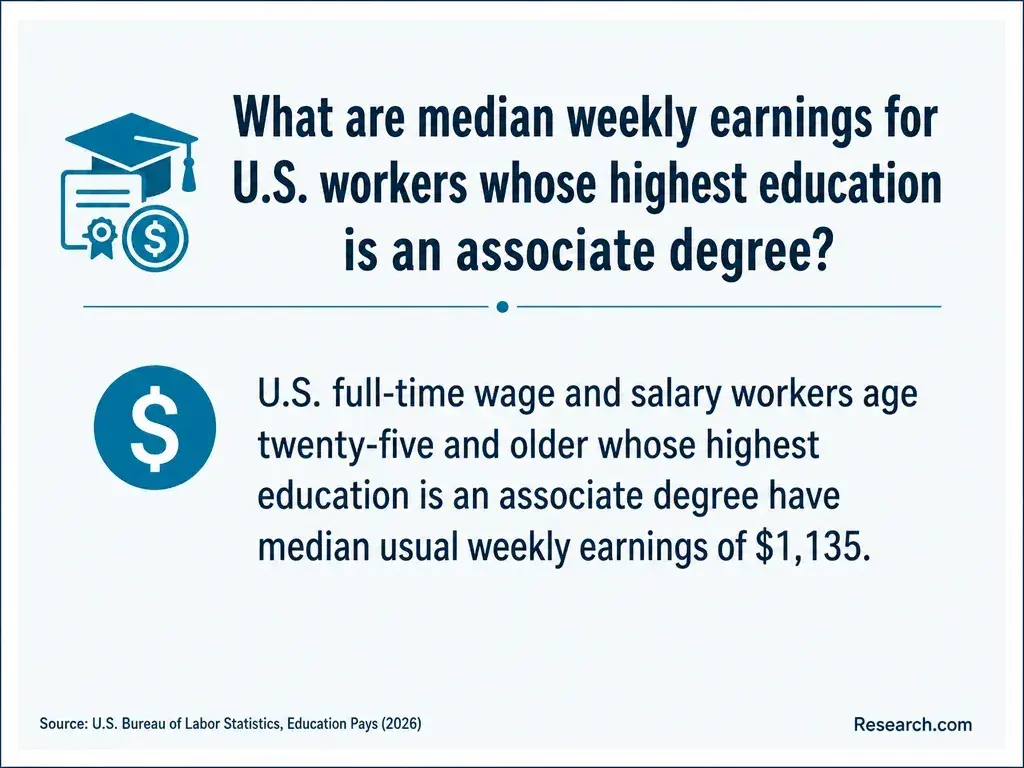
What are the admission requirements for public health graduate programs?
Most master's applicants need a bachelor's degree, academic transcripts, and application materials specified by each school. Programs may also request recommendations, a statement of purpose, a résumé, or particular prerequisite courses. A public health undergraduate major is not universally required; an MS with substantial quantitative work may expect more mathematics or statistics preparation than a generalist MPH.
Use your application to show what recruitment work actually involved: protocol adherence, participant-facing communication, database use, coordination with investigators, and attention to equitable access. Then identify gaps honestly. Recruiting for a study is not the same as analyzing its results. If grades are a concern, review public health graduate GPA requirements and alternatives alongside each program's published policy; relevant recent coursework may strengthen an application without replacing a stated minimum.
Before applying, ask admissions staff whether a statistics course is required or merely recommended, when any outstanding prerequisite must be completed, and how they assess professional experience. Obtain the answer for the specific degree and entry term rather than relying on a schoolwide description.
How do you choose an accredited public health graduate program?
Check institutional accreditation first, then confirm the exact school, unit, or program covered by Council on Education for Public Health (CEPH) accreditation. A university's accreditation does not mean every public health degree it offers falls within CEPH's scope. Confirm the degree name and current status directly with the institution and accreditor before treating accreditation as relevant to your plans.
Next, compare evidence of fit: required epidemiology and evaluation courses, access to research or community partners, placement support, supervision, graduate outcomes, and whether current recruitment work could support an approved applied experience. School approval is necessary; employer willingness alone is not enough. Admissions accessibility is a separate issue from educational quality. If you explore MPH programs with broader admissions criteria, still apply the same accreditation and curriculum checks.
An MPH typically develops population-health foundations, epidemiologic reasoning, data interpretation, policy awareness, program planning, and applied practice. For a recruiter, the pivotal shift is from documenting who enrolled to asking whether a program reaches its intended population, how participation is measured, and what the evidence can - and cannot - support.
A research-focused MS may go further into study design, statistical modeling, data management, and a thesis or other research work. Compare actual course sequences and supervised projects, not concentration names alone. For example, a recruiter aiming to become a quantitative analyst should look for sustained methods coursework and opportunities to produce defensible analyses; flexible online biostatistics master's options are worth examining only if the prerequisites and mathematical depth fit that goal.
In either pathway, work involving participant or health data calls for attention to privacy, data permissions, and appropriate review. Experience accessing a recruitment database does not automatically authorize its use for coursework or publication.
Online study may let you keep a recruitment job, while campus study may make in-person research collaboration and local partner relationships easier. Neither format guarantees a placement or a manageable schedule. Ask about live sessions, group meetings, campus visits, fieldwork hours, and whether an applied project can be completed with an employer.
Delivery format and application requirements are different decisions. A search for online graduate public health options without letters can help narrow an application list, but it does not establish that classes are asynchronous or that fieldwork is remote. Request a sample term schedule and placement policy before committing, particularly if your current job has fixed participant-visit hours.
Duration depends on required credits, course availability, enrollment pace, and any practicum or thesis. A part-time route may preserve earnings but extend the time before you can apply new skills; a faster route may require reduced work hours. Compare each school's published curriculum and an individual tuition estimate rather than assuming programs with the same degree title cost the same.
Build a total-cost estimate that includes tuition and mandatory fees, travel or residency expenses, software, possible unpaid fieldwork, and earnings you would forgo. Ask whether your employer offers education assistance and whether it covers the specific degree. Listings of budget-friendly Master of Public Health programs can start a comparison, but confirm charges, aid conditions, and time to completion with each school. If supervised experience or a targeted course can qualify you for your next job, include that lower-cost option in the comparison.
The most natural transitions build on recruitment rather than discard it. Research coordinators manage more of a study's operations; community engagement specialists work on relationships and participation; program evaluators examine implementation and outcomes. Epidemiologists investigate patterns of health and disease, but those roles typically call for stronger epidemiology and analytical preparation than recruitment alone demonstrates.
Read job postings for tasks rather than relying on titles. If a role requires cleaning data, writing an evaluation plan, or managing a budget, identify a course, supervised project, or work assignment that would let you demonstrate that task. Leadership and independent research roles generally require additional experience or training. For a long-term goal beyond a master's degree, comparing DrPH and PhD program goals helps distinguish practice leadership from research training; neither doctorate is necessary for most initial career moves from recruitment.
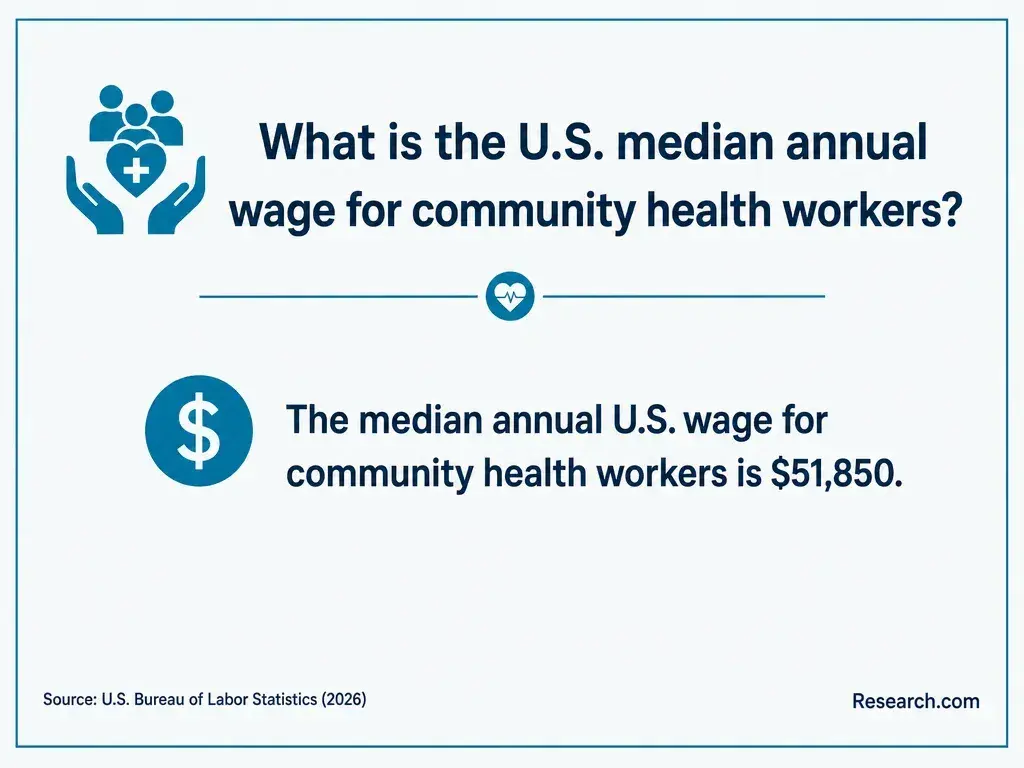
Pay depends on the occupation, location, employer, responsibilities, and experience - not simply on possessing an MPH or MS. A research coordinator, community engagement specialist, epidemiologist, and program manager should not be assigned one "public health graduate salary." For a useful benchmark, match the duties in a target posting to the closest US Bureau of Labor Statistics occupation, then examine that occupation's published wage distribution and reference year. Some recruitment and evaluation titles do not map neatly to a single occupation.
Compare a plausible next-job offer with your current pay and the full cost of training, rather than using an occupation-wide median as your expected starting salary. The same caution applies when reviewing public health doctorate expenses and salary prospects: a doctoral credential does not by itself produce a particular salary or promotion.
There is no single job-growth rate for "public health professionals." US Bureau of Labor Statistics projections cover defined occupations, while recruitment, community engagement, and evaluation jobs can appear under varied titles. Use the projection for a role whose duties match your target, and check local employers' postings for the software, methods, and experience they currently request. National growth does not predict the number of openings accessible to a new graduate in one area.
If your eventual goal is an academic research career, investigate faculty fit, methods preparation, and funding rather than treating general workforce demand as a reason to enroll in a doctorate. Resources on grant-supported epidemiology doctoral pathways can frame funding questions, but any offer must be checked for guaranteed support, duties, renewal terms, and gaps.
Which certifications or licenses do public health careers require?
Many research operations, program, and analyst jobs do not require a public health license. Requirements depend on the exact role and employer. The Certified in Public Health (CPH) credential and health education credentials such as CHES or MCHES have separate eligibility rules; completing a public health degree does not automatically award them. Clinical positions retain their own state licensure requirements regardless of public health coursework.
Check several target job postings and the credential issuer's current rules before paying for a degree primarily to gain certification eligibility. Where no license or certification is required, weigh the job's demonstrable skill requirements against public health degree affordability and completion planning. A supervised assignment or focused course may be sufficient for your next move, even if a graduate degree remains useful later.
Other Things You Should Know About Public Health
Describe the populations you worked with, your responsibilities, the protocols you followed, and any documented process improvements. Separate work you performed from analyses or decisions made by investigators.
Only with the required employer and academic permissions. Ask who controls the data and whether privacy, data-use, or institutional review requirements apply before proposing a project.
Not necessarily. First see whether you can take on supervised coordination, community engagement, or evaluation tasks in your current setting. That experience may clarify which training you need.
Compare several job descriptions and speak with people doing the work. Identify the tasks that interest you and the qualifications that recur before committing to a degree or specialization.
- Competencies for Public Health Professionals | cdc.gov https://www.cdc.gov/infrastructure/training-professional-development/competencies-for-public-health-professionals.html
- Master's Degree Requirements | University of South Carolina https://academicbulletins.sc.edu/graduate/degree-requirements/masters-degree-requirements/
- Careers in Health Policy and Public Health Management | Boston University https://www.bu.edu/sph/blog/public-health-jobs-and-health-policy-jobs/
- Participant and patient engagement, recruitment, and retention | duke.edu https://myresearchpath.duke.edu/topics/participant-and-patient-engagement-recruitment-and-retention
- How to Apply & FAQ's | Yale School of Public Health https://ysph.yale.edu/admissions-financial-aid/master-in-public-health-admissions/apply-to-yale-school-of-public-health/
- Requirements and Process | Marxe School of Public and International Affairs | https://marxe.baruch.cuny.edu/homepage/admissions/graduate-admissions-requirements-and-process/
- Practicum or Thesis: Which option is right for you? | fitchburgstate.edu https://blog.fitchburgstate.edu/gce/practicum-or-thesis-whats-right-for-you-applied-comm-2
- Applying to the M.D. Program | School of Medicine | University of Connecticut https://medicine.uconn.edu/admissions/applying-to-the-md-or-md-mba-programs/
- Ways to Pay for Grad School: Evaluating Your Options | The University of Scranton https://gradadmissions.scranton.edu/blog/articles/online-learning/ways-to-pay-for-grad-school.shtml
- MPH Career Pathways & Outcomes - Tufts School of Medicine https://medicine.tufts.edu/academics/public-health/mph-career-pathways-outcomes