2027 Choosing a Public Health PhD for Community-Based Research

Co-Founder and Chief Data Scientist
A public health PhD can prepare you to study questions identified with communities, but a program's community-engagement language does not tell you whether its faculty, partnerships, and funding can support your dissertation. This guide is for prospective researchers comparing doctoral programs, including people with nonprofit, public-sector, or research experience. It explains how to assess supervision, community responsibilities, training, costs, and career outcomes so you can choose a feasible research path—or decide that a practice-focused degree would serve your goal better.
Key Things You Should Know
- Choose a program around a feasible research relationship: an available advisor, relevant methods expertise, a willing community partner, and a realistic route to data access.
- Confirm what doctoral funding covers and for how long; tuition remission, stipends, summer support, and community-research expenses are separate questions.
- A PhD trains researchers, not every community-health professional. For context, the US Bureau of Labor Statistics reports a $83,980 median annual wage for epidemiologists in May 2024; that occupation-wide figure is not a PhD graduate salary.
What Is a Public Health PhD for Community-Based Research?
It is a research doctorate in which a student develops original population-health research while working with communities or community-serving organizations. Depending on the project, partners may help define questions, interpret findings, decide what results are useful, or share in decisions about dissemination. Community-based participatory research is a more specific approach involving shared participation across stages of research; not every study conducted at a community site meets that standard.
The dissertation must meet the university's scholarly requirements as well as any commitments made to partners. That can create productive but demanding negotiations over timelines, data stewardship, authorship, and how findings are returned. Community permission, institutional review, and legal authority to use data are distinct; none should be presumed from a faculty member's existing relationship with a site.
Choose a PhD when your goal is to design and lead original studies. A DrPH generally emphasizes practice leadership and applied problem-solving; an MPH prepares professionals for population-health work without requiring a research doctorate. If you primarily want to improve an existing program rather than build a research career, compare public health master's fees and earning potential before committing.
What Careers Can You Pursue With a Community-Based Public Health PhD?
Graduates may seek faculty or postdoctoral research positions, research scientist roles in health systems and institutes, or senior research and evaluation positions in government and nonprofits. Their work can include securing grants, designing studies, supervising analysts, negotiating partner responsibilities, and translating results into decisions. Academic independence usually develops through publications, funding, and continued collaboration—not the degree alone.
A community organization may value a researcher who can build evaluations with staff rather than deliver a report after the fact. Yet many program-management, outreach, and routine evaluation jobs do not require a PhD. If those are your target roles, compare actual job postings and earnings across MPH career paths before choosing the longer research route. Clinical care and regulated positions require their own qualifications; a public health PhD does not confer a clinical license.
How Do You Choose an Accredited Public Health PhD Program?
Start with institutional accreditation, then check the Council on Education for Public Health (CEPH) directory for the exact accredited school, unit, or program and whether the degree you are considering falls within its scope. Institutional accreditation and CEPH accreditation answer different questions; neither establishes that a particular advisor or community partnership is available to you.
The comparison below separates credentials from the conditions that will determine whether you can complete community-based research:
| What to compare | Evidence that matters | Why it matters |
| Supervision | Current faculty research, advising capacity, and relevant methods expertise | A topic match alone does not ensure sustained guidance. |
| Partnerships | Examples of continuing work and how partners participate in decisions | A placement site is not necessarily a research partner. |
| Dissertation feasibility | Milestones, data-access processes, ethics support, and committee expertise | Community timelines may not match university deadlines. |
| Funding and location | Written offer terms, required duties, travel, and on-site expectations | Research can require expenses beyond tuition. |
Ask prospective advisors what role a new student could realistically take, how partner priorities shape projects, and what happens if a site or dataset becomes unavailable. Speak with current students about mentoring and progression, not just recruitment materials. If location limits your choices, use public health doctoral education options online as a starting point, then verify each degree's research requirements and accreditation scope directly with the institution.
Expect advanced training in research design, epidemiology or another substantive field, quantitative and qualitative methods, and the theories relevant to your question. Community-focused work may also require partnership development, culturally responsive communication, mixed-methods integration, implementation research, and ways to share findings beyond journals. Course titles are less informative than the depth of training and opportunities to apply it under supervision.
Match methods to the proposed decision. Studying whether an intervention changed outcomes calls for a credible comparison and attention to confounding; understanding why residents do not use a service may call for carefully sampled interviews and reflexive analysis. Either approach needs attention to privacy, consent where applicable, data agreements, and the appropriate institutional and community review processes.
Applicants still completing an undergraduate degree, if enrolled in public health bachelor's programs with compressed classes, can speed up the time to a degree. However, take note that compressed courses are not a substitute for sustained research experience or the method preparation needed for doctoral work.
Requirements vary by program. Schools commonly assess prior degrees, academic record, a statement of research interests, recommendations, and evidence that an applicant can undertake rigorous research. A relevant master's degree, statistics coursework, thesis, publication, community experience, or GRE score may matter at a particular school, but none should be assumed to be universally required.
A strong application connects a specific population-health question to methods you can begin to use, explains your responsibilities in prior research or community work, and identifies faculty whose current work genuinely aligns. If you work for a nonprofit, distinguish program delivery from research tasks such as framing a question, obtaining appropriate approvals, analyzing evidence, and reporting limitations. Ask whether potential advisors are accepting students and whether admission depends on a faculty match or a particular funding arrangement.
If you have not yet finished a qualifying undergraduate degree, distance learning options for public health undergraduates may help you plan that first step. Confirm any later PhD program's degree and methods expectations before assuming a particular bachelor's curriculum will suffice.
Plan for multiple years of coursework, examinations or other advancement milestones, a dissertation proposal, research, and a defense; the precise timeline and maximum time to degree are program-specific. Community research can take longer when relationship-building, partner review, recruitment, seasonal services, or access agreements must precede data collection. A narrowly scoped question with an approved fallback data source may be more achievable than an ambitious project dependent on one unconfirmed partner.
Ask for the program's recent completion-time data and the rules for part-time enrollment, leaves, continued funding, and dissertation registration. If that commitment exceeds what your research or career goal requires, comparing selectivity across online MPH options can inform a shorter alternative—but admission accessibility does not establish that an MPH will provide the research depth you want.
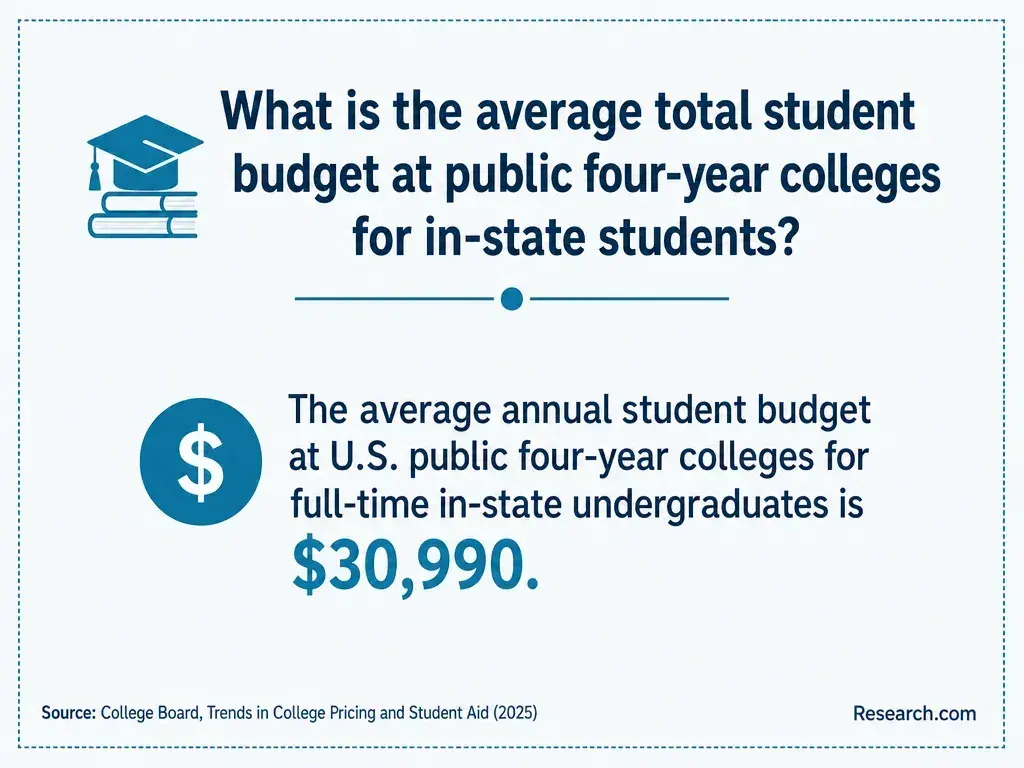
The meaningful price is your expected net cost over the full period of study, not advertised tuition. Compare tuition and mandatory fees with any remission; stipend amount and duration; health coverage; summer support; required teaching or research work; and costs for travel, community meetings, transcription, software, and continued enrollment. Also account for earnings you would give up and any limits on outside employment.
Get funding terms in writing. Ask which years are guaranteed, what depends on grant renewal or academic progress, whether summer support is included, and who pays partner-related research expenses. A funded offer can still leave substantial living or project costs; an unfunded offer warrants particular caution when a dissertation depends on extensive fieldwork. A guide to comparing doctoral public health costs and pay can help frame the trade-off, but use each university's written offer for your calculation.
They can be if the program provides sustained research supervision, appropriate methods training, and a workable arrangement with partners where you will conduct the research. Online coursework does not make interviews, meetings, site visits, or partner review asynchronous. Check required campus visits, live sessions, travel funding, local research support, and whether a proposed external advisor or partner can participate under university policy.
Ask who will oversee ethics applications, data security, and site agreements when research takes place away from campus. If your goal is primarily to apply evidence in a current community role rather than produce an original dissertation, comparing lower-tuition MPH programs may be more useful than selecting a PhD for its remote format alone.
There is no reliable single salary for community-based public health PhD graduates. Pay depends on the occupation, employer, location, research funding, experience, and whether the role is a postdoctoral appointment or a permanent position. As one occupational benchmark, the US Bureau of Labor Statistics reports a $83,980 median annual wage for epidemiologists in May 2024. That figure covers workers in the occupation across education and experience levels; it does not predict a new PhD graduate's offer or describe all community researchers.
For a useful comparison, collect posted pay ranges for the specific roles and regions you would pursue, then weigh them against years of study and your written funding offer. If an MPH could meet your career objective, investigate institutional aid pathways for public health master's students as part of the cost comparison rather than assuming the doctorate will provide a better financial return.
What Is the Job Outlook for Public Health Researchers?
The Bureau of Labor Statistics projects 16% employment growth for epidemiologists from 2024 to 2034. That is a useful signal for one research-related occupation, not a forecast of faculty openings or demand for community-based PhD graduates. Academic positions, grant-funded research jobs, and nonprofit evaluation roles have different hiring processes and may require distinct publication, partnership, or technical records.
Test your intended path against current postings: note whether employers ask for a doctorate, particular methods, grant experience, or demonstrated community collaboration. If your aim is an entry-level community-health position rather than independent research, inexpensive public health bachelor's education and supervised work experience may be a more direct route. Choose the PhD because its research training is necessary for the work you want—not because public health jobs exist.
Other Things You Should Know About Public Health
Often, but compensation depends on the grant budget, university payment rules, and the partner's preferences. Discuss compensation while planning the project rather than assuming partners can contribute unpaid time.
Ownership and permitted uses depend on applicable law, funding terms, institutional policies, and agreements with the organization. Set out access, storage, publication, and future-use expectations before collecting data.
Yes. Credible research reports findings accurately, including null or unexpected results, and explains limitations. Agree in advance on how partners can review findings without being asked to approve or suppress unfavorable conclusions.
They may. Research involving a tribal nation can require its own permissions, review, and data-governance agreements in addition to university processes. Contact the relevant tribal authority early; university approval alone may not authorize the work.
- Academia - The Future of the Public's Health in the 21st Century https://www.ncbi.nlm.nih.gov/books/NBK221242/
- Research Ethics Education for Community-Engaged... - PMC https://pmc.ncbi.nlm.nih.gov/articles/PMC3483026/
- Community Planning: Data & Benchmarks | Public Health Infrastructure Center | CDC https://www.cdc.gov/infrastructure/public-health-systems-emerging-practices/data-benchmarks.html
- 7.9 Allowability of Costs/Activities | nih.gov https://grants.nih.gov/grants/policy/nihgps/HTML5/section_7/7.9_allowability_of_costs_activities.htm
- Public Health, PhD | gmu.edu https://gch.gmu.edu/program/public-health-phd
- How Community-Based Partnerships Address Health-Related Social Needs: Examples and Insights from Four States - NAM https://nam.edu/perspectives/how-community-based-partnerships-address-health-related-social-needs-examples-and-insights-from-four-states/
- Implementation science and participatory research | harvard.edu https://cs288.hsites.harvard.edu/file_url/119
- Budget and Cost Resources | umich.edu https://orsp.umich.edu/project-lifecycle/develop-proposal/budget-and-cost-resources/
- Community-Based Public Health Certificate Program | jhu.edu https://publichealth.jhu.edu/academics/community-based-public-health-certificate-program
- What is the Difference Between a DrPH and a PhD? | Fairfield University https://www.fairfield.edu/news/insights/nursing-health-studies/difference-between-drph-and-phd.html