2027 Checking Missing Responses in an Undergraduate Health Survey

Co-Founder and Chief Data Scientist
A blank answer in an undergraduate health survey may mean a student skipped a sensitive question, followed a survey instruction, or never completed the questionnaire. Those situations have different implications for a public health analysis.
This guide is for students working with survey data in a course or supervised project. It explains how to count missing responses, investigate patterns, decide whether an analysis needs adjustment, and describe what the results can and cannot show.
Key Things You Should Know
- Separate nonparticipation from unanswered items, and exclude questions a respondent was not supposed to receive from the item-missing denominator.
- Report missingness for each analysis variable and examine whether it differs across relevant respondent groups; an overall completion rate can conceal a consequential pattern.
- Choose complete-case analysis, weighting, or imputation based on the survey design and plausible reasons for missingness, not on a universal cutoff.
What is missing-response bias in an undergraduate health survey?
Missing-response bias occurs when unanswered survey information makes an estimate systematically different from the value it aims to describe. First define that target: for example, the prevalence of a reported health behavior among all eligible undergraduates at one institution during a specified survey period. A result calculated only from respondents who answered the behavior question may miss that target if their likelihood of answering is related to the behavior.
Distinguish unit nonresponse—an eligible student did not provide a usable survey—from item nonresponse—a participating student left a relevant question unanswered. A question omitted by legitimate skip logic is neither.
Analysts often describe missingness as missing completely at random (MCAR), missing at random conditional on observed information (MAR), or missing not at random even after accounting for observed information (MNAR). These are assumptions about the missingness process, not labels a blank cell can reveal.
Students who want deeper training in the assumptions behind imputation can explore biostatistics graduate study while working; a graduate degree is not necessary to perform an initial missingness audit.
How can students check missing responses in undergraduate health survey data?
Start with the questionnaire and the population the survey intended to reach, not a software command that counts every blank alike. Keep an unaltered copy of the authorized dataset and document each recoding decision.
The following sequence produces an audit that another student or supervisor can reproduce:
- Identify eligible invitations, started surveys, usable submissions, and the rules for duplicate or ineligible records. Do not infer a participation rate if the number of eligible invitees is unknown.
- Read skip instructions and response codes. Distinguish unanswered, "prefer not to answer," "don't know," invalid entries, and questions not asked; preserve those distinctions where substantively useful.
- For each question, count eligible respondents who should have received it, count those without an analyzable answer, and calculate item missingness as missing eligible answers divided by eligible respondents for that item.
- Repeat the count for variables in the planned analysis, including the outcome, comparison groups, and adjustment variables. Record how many observations remain when all required variables must be present.
- Check the counts against survey routing and the data dictionary, then save a short audit log with the analysis date, variable definitions, and any exclusions.
A rushed course calendar is not a reason to skip that audit. When considering accelerated courses in public health bachelor's study, students should ask whether the schedule leaves time for data cleaning, review, and revision, not just software instruction.
Why do missing responses matter in public health survey analysis?
Missing answers can reduce precision, change which students contribute to an estimate, or distort a comparison. Suppose students experiencing greater stress are less willing to answer a stress question. The average among those who answer could understate stress in the target population. That is a plausible risk, not a finding about any particular survey.
Even when missingness is unrelated to the outcome, dropping incomplete records can shrink the usable sample and widen uncertainty. If missingness varies by group, comparisons may reflect response behavior as well as health differences. A statistically significant result does not resolve these problems, and an observed association does not establish causation.
For a student presenting this work as evidence of research readiness, a transparent limitations paragraph is more valuable than claiming to have eliminated bias. That principle also applies when preparing MPH applications after uneven undergraduate grades. Describe the methods you used and what you learned without suggesting that a project overrides a program's admissions requirements.
Begin with counts by question and by survey stage. Then compare answer availability across observed characteristics relevant to the research question, such as class year or survey mode, if collecting and using those characteristics is authorized.
A missingness map can show whether the same records lack several answers; a response-indicator model can examine whether observed characteristics predict an answer. Account for sampling weights, clustering, or stratification when the survey design requires it.
These approaches reveal observed patterns, not the unobserved answers themselves. A test of MCAR, including Little's test, may challenge that assumption but cannot prove MAR or rule out MNAR. Sparse groups can also make comparisons unstable. The distinction matters when choosing an interpretation:
| Missingness assumption | What it means for interpretation |
| MCAR | Answer availability is unrelated to observed and unobserved values; complete records need not be systematically different because of the missingness process. |
| MAR | Answer availability may depend on observed information; methods using that information can be defensible if the assumption is plausible. |
| MNAR | Answer availability still depends on unobserved information; observed data alone cannot establish the size or direction of the resulting bias. |
These are research-method questions, not a reason to pursue doctoral study for a class survey. Students weighing advanced research training can compare affordable online public health PhD programs only after deciding whether sustained independent research, not this single audit, is their goal.
Choose a response that fits the purpose of the estimate, the extent and pattern of missingness, and the information available. There is no missingness percentage below which complete-case analysis is automatically unbiased. Report the chosen method and its assumptions alongside the number of records used.
Common approaches have different strengths and limitations:
- Available-answer or complete-case analysis: Straightforward and sometimes reasonable when missingness is limited and its assumptions are plausible, but each estimate may use a different group; complete-case analysis can also introduce selection bias.
- Survey weighting or nonresponse adjustment: Can address differential participation when reliable information about the invited population and the sampling design exists. Weights cannot repair differences they do not capture.
- Multiple imputation: Creates analyses that account for uncertainty about missing values under a defensible model, typically relying on MAR and useful observed predictors. It requires checks; replacing every blank with a mean is not an equivalent shortcut.
- Sensitivity analysis: Shows how conclusions change under plausible alternative assumptions, particularly when missing answers may depend on the unreported value itself.
For an undergraduate assignment, a well-justified primary analysis plus a feasible sensitivity check may be enough; confirm expectations with the instructor. If further training is the aim, compare a focused methods course with the time and cost of a degree rather than assuming the latter is required.
Published comparisons of public health master's fees and earning potential are a starting point, not evidence that a particular salary increase will follow.
Introductory epidemiology helps students define the population, measure, and comparison. Biostatistics covers descriptive estimates and uncertainty. Research methods addresses sampling, questionnaire wording, skip logic, and sources of bias.
A course with a supervised data project adds practice in cleaning data, documenting decisions, and communicating limitations. Course titles alone do not establish how deeply a program teaches missing-data methods.
For this skill, inspect assignments and prerequisites before choosing electives: look for work with a codebook, reproducible analysis, survey denominators, and interpretation of nonresponse. A student with strong statistics preparation may need survey-design practice more than another general data course.
If later considering an MPH, public health master's reference requirement comparisons address one application detail, but should not substitute for checking the specific program's methods curriculum.
Campus, hybrid, and online bachelor's programs can all support survey analysis if students have access to appropriate methods courses, feedback, and a feasible supervised project.
Compare the actual sequence rather than the format label: when is statistics offered, what software or data access is required, and can students obtain timely help when a dataset contains unexpected routing or missing-value codes?
Asynchronous lectures may help with scheduling, but group research, instructor meetings, or community projects can still have fixed times. An undergraduate who only needs to strengthen missing-data skills should compare a targeted course or supervised project with the cost and time of additional formal study.
If an MPH is a later possibility, budget planning for online MPH study can help frame that separate decision; an online format alone does not establish flexibility or affordability.
Verify the institution's recognized institutional accreditation and whether the specific undergraduate public health degree falls within the scope of Council on Education for Public Health (CEPH) accreditation, if the school advertises it.
CEPH can accredit a school or program of public health, but a university's accreditation, or the presence of other accredited public health degrees, does not by itself establish the status of the bachelor's degree under consideration.
Check the accreditor's listing and ask the program to identify the degree and unit covered. Accreditation is a quality-assurance consideration, not proof that a student will receive hands-on survey training; inspect the curriculum and project opportunities separately. The same scope-checking principle applies when comparing accreditation across online MPH programs.
Entry-level program assistants, research assistants, evaluation coordinators, and some health education staff may clean survey files, track response counts, prepare descriptive summaries, or explain limitations to a supervisor. Job titles and requirements vary.
A portfolio example showing an authorized, reproducible missingness audit can demonstrate practical skill more clearly than a claim of proficiency based only on a course title.
These roles are distinct from independently directing complex research or serving as an epidemiologist, for which employers commonly seek more advanced preparation or experience.
A student aiming for independent research can investigate graduate pathways, including an online public health doctorate admissions guide, while recognizing that doctoral admissions and entry-level survey work answer different career questions. Never place identifiable student responses or restricted survey files in a public portfolio.
How do public health data skills affect salary and job outlook?
Survey-analysis skills can strengthen an application for roles that explicitly require data cleaning, reporting, or evaluation, but no occupation-wide wage figure measures the pay effect of checking missing responses.
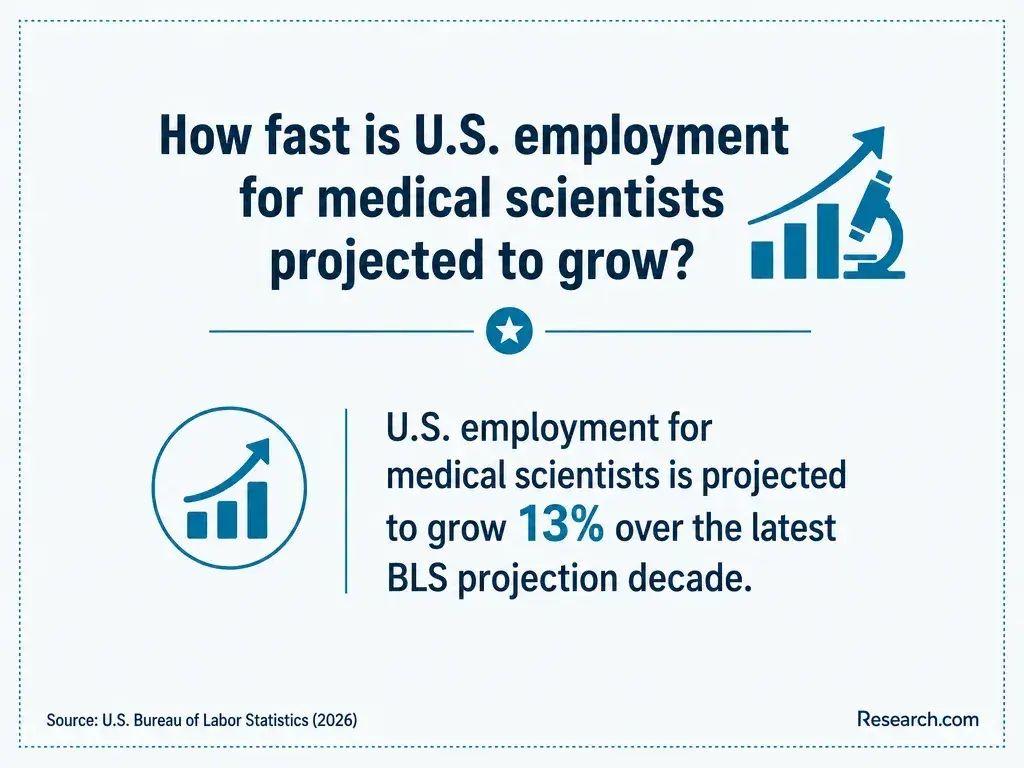
For a US salary comparison, first identify an actual target occupation and its typical entry requirements, then consult the most recent Bureau of Labor Statistics Occupational Outlook Handbook wage year and projection period for that occupation. Its median describes employed workers across experience levels, not the expected pay of a new bachelor's graduate.
Compare local postings for required software, degree level, supervised experience, and pay before paying for further education. A methods project or employer training may meet the need more directly than a graduate degree. If advancement later calls for an MPH, use building a realistic online MPH application list to evaluate program fit, rather than treating projected occupational growth as a personal return-on-investment forecast.
Other Things You Should Know About Public Health Programs
No. Preserve it as a distinct response during cleaning. Whether it contributes to a substantive estimate depends on the question and the analysis plan; collapsing it into an ordinary blank can hide a meaningful response pattern.
Not reliably. The questionnaire explains routing, permitted answers, and which students should have seen each item. An export alone may not distinguish a skipped question from one that was never displayed.
Not automatically. Small cells or combinations of characteristics may expose participants. Follow the institution's disclosure rules and obtain approval before sharing restricted data or detailed subgroup results.
No. Requirements depend on the activity, intended use, participants, and institution. Ask the instructor or appropriate institutional office about review, consent, data-use permission, and any restrictions before collecting or reusing responses.
- Dealing with Missing Data | va.gov https://www.herc.research.va.gov/include/page.asp
- The prevention and handling of the missing data - PMC - NIH https://pmc.ncbi.nlm.nih.gov/articles/PMC3668100/
- Types of Missing Data - NCBI - NIH https://www.ncbi.nlm.nih.gov/books/NBK493614/
- Oregon Health Authority: Student Health Survey https://www.oregon.gov/oha/ph/birthdeathcertificates/surveys/pages/student-health-survey.aspx
- Missing Data and Multiple Imputation | Columbia University Mailman School of Public Health https://www.publichealth.columbia.edu/research/population-health-methods/missing-data-and-multiple-imputation
- Missing data in surveys: Key concepts, approaches, and applications - ScienceDirect https://www.sciencedirect.com/science/article/abs/pii/S1551741121001157
- Best Practices for Survey Research | AAPOR https://aapor.org/standards-and-ethics/best-practices/