2027 CEPH Accreditation: Checking the Exact Degree and Delivery Format

Co-Founder and Chief Data Scientist
A university may advertise CEPH accreditation even when the degree or online pathway you want is not clearly identified in that claim. Before applying or paying a deposit, you need to establish what the Council on Education for Public Health (CEPH) accredits, which academic unit offers your degree, and whether your delivery format is included.
This guide gives prospective US public health students a verification process, explains where format and degree-level differences matter, and shows how to compare programs without mistaking accreditation for a promise about flexibility, cost, or employment.
Key Things You Should Know
- Check four details together: the CEPH-accredited school or program, the exact awarded degree, your campus or online pathway, and the accreditation status applicable to your entry term.
- CEPH accreditation and university-wide institutional accreditation answer different questions; neither an accredited university nor an accredited MPH automatically establishes that another public health degree is covered.
- Request written confirmation when a listing and a school's degree or format description do not clearly match. Then compare scheduling, applied learning, total cost, and job-specific requirements separately.
What does CEPH accreditation mean for public health degree programs?
CEPH is the specialized accreditor for eligible US public health schools and programs. It evaluates an accredited unit against standards concerning its educational offerings, resources, assessment, and public health preparation. Accreditation is a judgment about a defined school or program—not a separate endorsement of every health-related degree at the university or a guarantee that every graduate will obtain a job.
Institutional accreditation concerns the university as a whole; CEPH accreditation concerns a particular public health school or program and its approved scope. Admission difficulty is another separate issue. Even if you start with a list of less selective online MPH programs, confirm each candidate's CEPH scope rather than treating ease of entry as evidence for or against accreditation.
How can you verify whether a specific public health degree is CEPH accredited?
Begin with CEPH's directory of accredited schools and programs, then compare its entry with the university's current catalog. The names must identify the same academic unit and awarded degree—not merely a similarly named department or a concentration mentioned in marketing materials. Because listings may not explain every format or newly reorganized offering, resolve ambiguity directly with the program and, where necessary, CEPH.
Use this sequence before you rely on an accreditation claim:
- Record the university, the school or program that awards the degree, the exact credential on the diploma, your campus or online pathway, and your intended entry term.
- Find the unit in CEPH's directory and review its stated accreditation status and available scope information; distinguish accreditation from applicant or other preliminary statuses.
- Compare those details with the current academic catalog and the program's written description of locations and delivery formats.
- Ask the program's accreditation contact to confirm in writing that your exact degree and pathway fall within its CEPH-accredited unit for your entry term; ask CEPH to clarify an unresolved discrepancy.
Save the dated directory entry, catalog page, and reply. This matters especially when a school has changed names, introduced an online track, or moved a degree between academic units. If university awards for online public health graduate education shape your shortlist, check accreditation and award eligibility independently: confirmation of one does not establish the other.
Does CEPH accreditation cover the exact degree and delivery format?
It can, but a general claim that a university "is CEPH accredited" is not enough to establish coverage for your enrollment. A CEPH-accredited school may offer multiple public health degrees, while an accredited standalone program has a more specifically defined offering. An adjacent degree owned by another unit cannot be assumed covered. Likewise, an online pathway should not be treated as included solely because a campus pathway has the same degree name.
The distinction is between the credential awarded and how and where its curriculum is delivered. Confirm both, particularly if you plan to switch formats later. An online bachelor's student considering short-session courses for online public health majors should also check whether those courses belong to the degree pathway being verified; course length alone says nothing about accreditation scope.
If a program representative cannot confirm coverage, do not infer it from a webpage badge. Ask which CEPH-accredited unit owns the degree, whether your format is included, and whether a planned organizational or curriculum change affects your entry term.
Place-based generally describes instruction centered on a physical location; distance-based describes instruction delivered remotely. These descriptions concern delivery, not a higher or lower level of accreditation. A distance-based student can still face scheduled live classes, campus visits, local fieldwork, or in-person assessments. A place-based student may take some online courses without being enrolled in a distance-based pathway.
The following comparison separates the format labels from the obligations that affect enrollment:
| Feature | Place-based pathway | Distance-based pathway |
| Routine instruction | Centered on an identified campus or other physical site | Delivered primarily through remote instruction |
| Schedule to confirm | Campus days, evening classes, and travel | Live-session times, deadlines, group work, and any required visits |
| Applied learning to confirm | Site assignment and local travel | Remote-site eligibility, supervision, and who arranges a placement |
For employed students, "online" is not synonymous with "self-paced." Someone comparing biostatistics graduate programs for busy professionals, for example, should check live quantitative labs and project collaboration alongside the program's format and accreditation details.
CEPH accredits eligible schools of public health and public health programs rather than granting an independent accreditation to each concentration name. Their covered offerings can include undergraduate and graduate public health degrees, depending on the accredited unit's approved scope. An MPH, a research-oriented MS, a practice-focused DrPH, and a research-focused PhD should not be presumed interchangeable—or presumed covered simply because one appears beside another in a catalog.
A concentration such as epidemiology or health policy is ordinarily a track within an awarded degree, not a separately awarded credential. Verify its formal designation, available courses, and the degree that will appear on your transcript and diploma. If you are investigating public health research doctorate tuition options, determine whether the PhD is offered within a CEPH-accredited school and what that means for the specific degree; do not substitute an MPH accreditation claim for that check.
Requirements depend on degree level and the school's curriculum. Public health study commonly draws on population health, epidemiology, data interpretation, environmental health, policy, social and behavioral approaches, ethics, and community engagement. Professional MPH training generally emphasizes applying these areas to practice, while an MS may devote more coursework to specialized methods or research. Doctoral work has different practice or research expectations.
Accreditation does not establish that a named advanced elective is available when you need it, or that an online student can complete every applied requirement remotely. Compare the catalog's required courses, prerequisites, rotation schedule, and supervised experiences with your goal. A student missing quantitative preparation may need an introductory course before a methods sequence; conditional entry into public health master's programs is a separate admissions possibility, not proof that a prerequisite or degree requirement disappears.
CEPH accreditation does not set one universal application checklist for every applicant. Undergraduate, MPH, MS, DrPH, and PhD pathways differ, and each institution controls its own admission decisions. Schools may review prior degrees and transcripts, academic preparation, experience, statements, recommendations, or tests; the actual requirements, waivers, and deadlines must come from the program for your intended term.
Match your preparation to the credential. A prospective MPH student from another discipline should distinguish required prerequisites from recommended statistics preparation. An MS applicant should examine method expectations, while doctoral applicants should examine the program's practice-experience or research-fit criteria rather than assuming an MPH or a particular job title is universally required. Lists of doctoral public health programs by entry criteria can organize an initial search, but the program's current admissions policy controls.
Accreditation does not prescribe a single completion time or tuition price. Remaining undergraduate credits, graduate credit requirements, full- or part-time pacing, course availability, and fieldwork can all affect duration. For cost, compare tuition with mandatory fees, travel or residency expenses, placement-related costs, and the financial effect of reducing work hours. Ask whether charges are assessed per credit, term, or program and whether a published price applies to your residency and enrollment status.
When using a list for finding a lower-cost online MPH program, request a written estimate for your own course load and entry term. A lower advertised tuition rate may not yield a lower total cost if a program requires additional terms or travel. Conversely, a faster schedule may be impractical alongside employment. Compare the cost of a feasible completion plan, not just a headline rate.
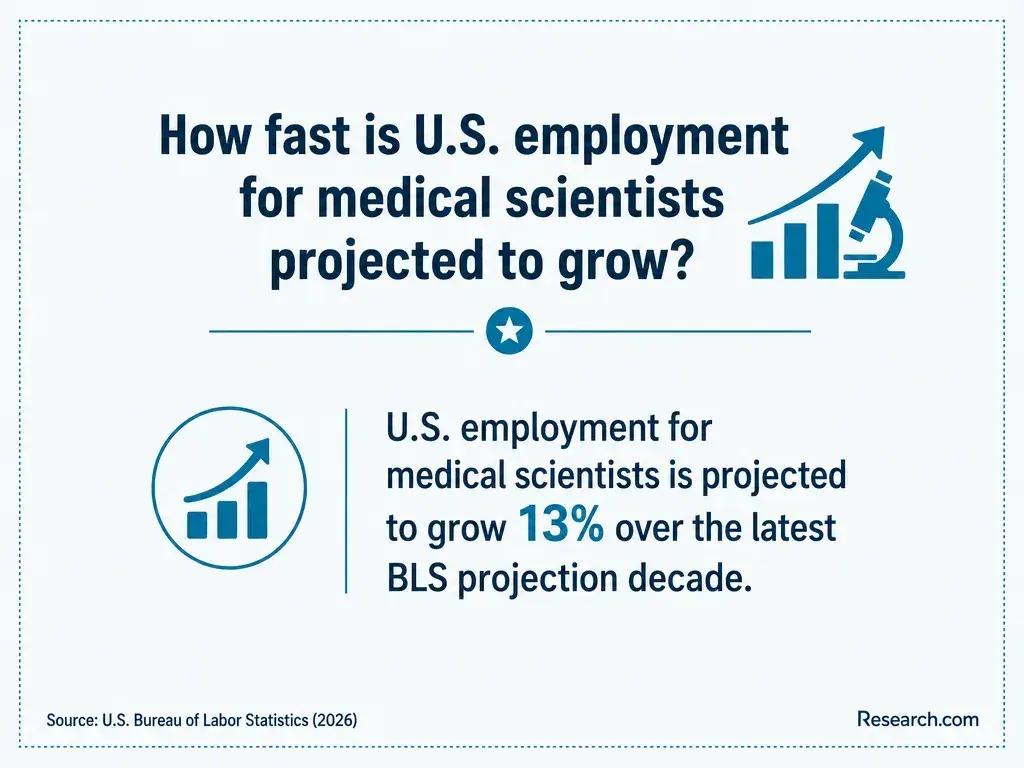
There is no single salary or job-growth figure for "a CEPH-accredited degree." US Bureau of Labor Statistics wage medians and employment projections describe defined occupations—not graduates of a particular program. An epidemiologist, health education specialist, and community health worker perform different work and have different typical entry requirements. Select the occupation matching your intended tasks before using its wage or outlook figures to evaluate a degree.
For example, an MPH may support preparation for a public health program or analytic work, but an epidemiology position may also demand specific methods skills and relevant experience. An undergraduate degree may support entry-level community or program roles without qualifying its holder to lead research. When examining budget-conscious MPH study and career outcomes, separate occupation-wide earnings from verified outcomes for that school's graduates, and examine how any reported outcomes were collected. Accreditation is evidence about educational standards, not an employment guarantee.
How should you compare CEPH-accredited programs, certifications, and licensing requirements?
Use accreditation as a necessary check when CEPH coverage matters to your goal, then compare programs against the work you intend to do. Give priority to the exact degree and format, required skills, applied-learning access, scheduling, and a realistic total cost. A degree's accreditation does not itself award the Certified in Public Health (CPH) credential, a health education certification, or a clinical license. Check the current certifying body's eligibility rules or the relevant state licensing board separately.
That distinction can change the best choice. If a job requires a regulated clinical license, a public health degree alone is not the licensing route. If you already have the necessary degree and need one technical skill, a targeted course or supervised project may be more direct than another full program. For doctoral study, compare practice leadership with research training before reviewing public health doctorate tuition and length; similar prices do not make a DrPH and PhD equivalent.
Before accepting an offer, keep the written accreditation confirmation beside the catalog, format obligations, cost estimate, and any job or credential eligibility rule you are relying on. If one of those documents does not support your intended pathway, resolve the discrepancy before enrolling.
Other Things You Should Know About Public Health
Seeking or applying for accreditation is not the same as being accredited. Check the school's stated status with CEPH and ask what status, if any, would apply to your intended entry term.
Yes. Ask the school how it communicates status changes to students and what its published policies say about affected cohorts. Do not assume that an earlier status automatically resolves a later eligibility question.
No universal rule applies to every job. Read the specific employer's posting and any applicable credential rules; an employer may require, prefer, or not mention a CEPH-accredited degree.
First request a written explanation from the program's accreditation contact and use the institution's published complaint process if appropriate. CEPH can clarify its own accreditation status and scope; it does not replace the university's process for resolving individual academic disputes.
- A narrative review of the CEPH-accredited bachelor's public health programs' curricula in the United States | nih.gov https://pmc.ncbi.nlm.nih.gov/articles/PMC11371682/
- Program Eligibility, Written Arrangements, and Distance Education | 2024-2025 Federal Student Aid Handbook https://fsapartners.ed.gov/knowledge-center/fsa-handbook/2024-2025/vol2/ch2-program-eligibility-written-arrangements-and-distance-education
- DAPIP | Homepage - Office of Postsecondary Education (OPE) https://ope.ed.gov/dapip/
- Other Accreditation Statuses | apa.org https://accreditation.apa.org/other-statuses
- Accreditation | School of Public Health | West Virginia University https://publichealth.hsc.wvu.edu/about/accreditation/
- Council on Education for Public Health (CEPH) | jefferson.edu https://www.jefferson.edu/academics/colleges-schools-institutes/population-health/degrees-programs/public-health/ceph.html
- List of Applicants | Council on Education for Public Health https://ceph.org/about/org-info/who-we-accredit/applicants/
- CPH Eligibility Requirements | NBPHE https://www.nbphe.org/certified-in-public-health/cph-eligibility-requirements/