2027 Graduate Public Health Preparation for Public Health Emergency Planner Roles

Co-Founder and Chief Data Scientist
Public health emergency planning calls for more than knowing what to do during a disaster. Planners must turn health risks, partner responsibilities, and limited resources into workable plans that can be tested and improved. If you are considering graduate study for this career, the choice is whether a program will help you demonstrate those skills - not simply award a relevant-sounding degree.
This guide connects the role's actual work to degrees, coursework, field experience, certifications, costs, and hiring evidence so you can choose the most direct path from your current background.
Key Things You Should Know
- An MPH can provide useful population-health and applied-practice preparation, but emergency planner jobs do not have one universal degree requirement; relevant experience and demonstrated planning work matter.
- Compare programs by their preparedness coursework, opportunities to work with response partners, and the quality of their applied projects - not by a concentration name alone.
- Emergency management director wage data describes a broader, generally more experienced occupation; it is not an entry-level salary estimate for public health emergency planners.
What does a public health emergency planner do?
A public health emergency planner helps a health department, health system, or partner organization prepare to protect population health during events such as disease outbreaks, extreme heat, flooding, or disruptions to essential services. The job is primarily about coordination before an incident, although some positions also support response operations and recovery.
Typical work includes assessing risks and community needs; maintaining emergency operations plans and partner contact procedures; clarifying who makes decisions; planning for accessible public messaging and continuity of services; organizing exercises; and documenting improvements after an exercise or real event. A planner may work with epidemiologists, emergency managers, clinicians, community organizations, and officials responsible for people who need additional support during an emergency.
Titles can obscure the level of responsibility. A preparedness coordinator or program specialist may help maintain plans and track exercise findings under supervision, while a manager may own budgets, agreements, and cross-agency decisions. If you already have logistics, clinical, communications, government, or community-partnership experience, compare your actual responsibilities with job postings before assuming you need another degree. Some graduate programs offer comparing flexible public health master's entry routes, but access to a program and readiness for a planning job are separate questions.
What degree do you need to become a public health emergency planner?
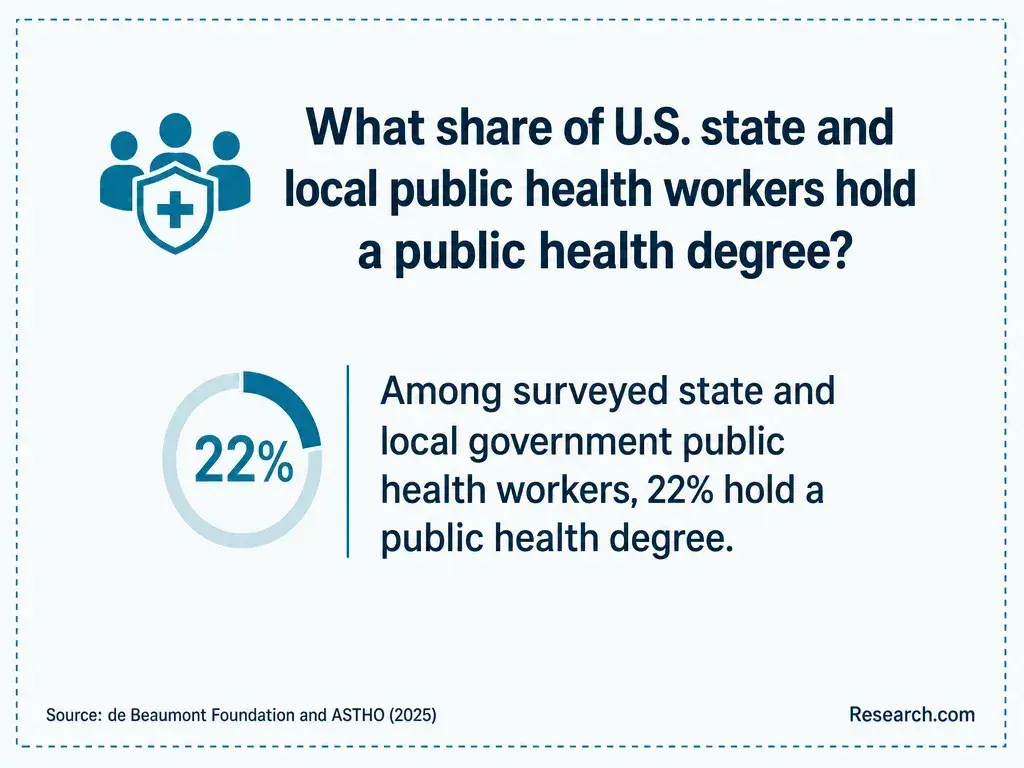
There is no single degree required across US public health emergency planner jobs. Employers may accept a bachelor's degree in public health, emergency management, nursing, environmental health, public administration, or another relevant field, often alongside preparedness experience. Some positions prefer or require a master's degree; supervisory posts commonly place greater weight on substantial operational experience.
An MPH is a strong choice when you need population-health methods, health department practice, and supervised applied work. An MPA may fit someone focused on government operations and interagency administration, while an MHA may better serve a hospital-based preparedness goal. A specialized MS can make sense for research or technical analysis, but its thesis or methods emphasis is not a substitute for operational planning experience. A DrPH or PhD is generally unnecessary for planner entry: those degrees serve different leadership or research goals. If your intended path is doctoral rather than operational, reviewing selectivity in public health doctoral study is a separate decision.
Start with several postings from the type of employer you want. Separate their required qualifications from preferences, then identify which gaps call for coursework and which call for practice. Someone already maintaining response plans may benefit more from a focused course or a larger planning assignment than from a second broad degree.
Which graduate public health programs prepare students for emergency planning roles?
Look for a program that connects public health analysis to operational decisions. An MPH with an officially designated emergency preparedness concentration may be useful, but a generalist MPH with relevant electives and a strong placement can be equally persuasive. A course title alone does not establish a concentration, and a program's advertised partnerships do not guarantee a student placement.
The following comparison shows what each route is most likely to add. Confirm the actual course schedule and applied-experience rules before using it to shortlist schools.
| Graduate route | Potential strength for planning | Limitation to check |
| MPH with preparedness-focused study | Combines population-health foundations with emergency-specific work | Whether exercises, operational planning, and placements are available |
| Generalist MPH with selected electives | Allows a planner to build epidemiology, communication, and evaluation skills | Whether electives run often enough to form a coherent sequence |
| MPA or emergency management master's | Emphasizes government coordination, operations, or incident management | Whether it provides adequate public health context |
| Research-oriented MS | Builds specialized analytic or research capability | Whether its work translates to the operational role sought |
For each finalist, request examples of eligible placement tasks and recent course offerings. Use public health graduate concentration selection to distinguish a formal specialization from a collection of useful electives.
The Council on Education for Public Health (CEPH) accredits public health schools and programs against public health education standards. That is distinct from an institution's accreditation. CEPH status can help you evaluate the public health foundation of an MPH, but it does not certify that graduates are ready to manage an incident or that every degree at a university is covered.
Check the current CEPH listing for the exact school or program and degree you intend to enter, including any stated scope or status. Then compare its preparedness curriculum and field opportunities separately. CEPH-accredited MPH schools and programs can provide a starting point, not a substitute for checking the accreditor and the school directly before applying.
Useful preparation joins public health judgment with the ability to produce an operational document. Students may study epidemiology and surveillance to interpret a developing threat; risk communication to convey uncertainty; health policy and governance to understand authority; and program evaluation to assess whether a plan or exercise worked as intended. Emergency management instruction may cover incident coordination, continuity, exercises, and after-action improvement.
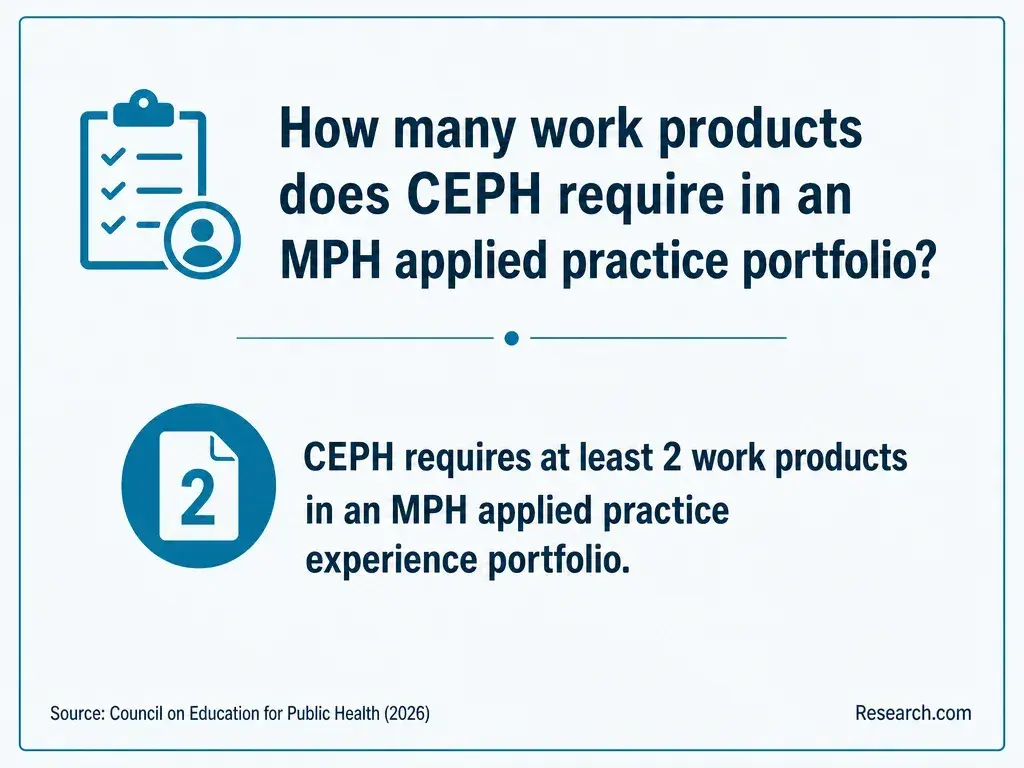
The strongest evidence of readiness is a supervised deliverable tied to a real planning need: for example, an exercise evaluation, an accessible communication protocol, or a revision to a continuity plan. Ask who will supervise the work, whether a host must approve it, and what can be shown to employers. Agency records, partner contact information, and health data may need to remain confidential; a redacted portfolio example is often more appropriate than the original file.
Planning requires enough data literacy to use surveillance and needs assessments responsibly, not necessarily doctoral-level epidemiologic research. A student drawn primarily to advanced disease modeling may be considering a different occupation and funding decision; epidemiology doctorate aid and affordability comparisons belong to that research-oriented path, not to the baseline preparation for a planner.
Yes, if the program supports credible applied work where you live or work. Online study can make graduate coursework accessible to employed students, but it cannot replace practice coordinating with partners, conducting an exercise, or getting feedback on a plan. A remote project may be appropriate when the school and host approve its supervision, tasks, and deliverables.
Before enrolling, check for required live classes, group meetings, campus visits, fieldwork hours, and exercise schedules. An asynchronous lecture does not make a partner agency available outside business hours. Ask who finds the placement, what happens if a proposed site declines, and whether your existing job can qualify; employment alone does not establish fieldwork approval. For a broader format comparison, see finding online MPH programs that fit your profile, then verify each finalist's practical obligations directly.
Requirements differ by school and degree. MPH applicants generally need a qualifying bachelor's degree and must submit academic records and materials specified by the program. Depending on the school, those materials may include a statement, résumé, recommendations, or evidence of quantitative preparation. A prior public health major is not universally required; neither are the same statistics prerequisite, entrance test, or work history at every program.
Present experience in the language of planning tasks: coordination across organizations, maintaining procedures, communicating risk, analyzing needs, or evaluating an exercise. If your undergraduate record is uneven, show later academic work or relevant responsibilities where the application permits. If obtaining referees is difficult, finding MPH programs without recommendation letters may help narrow options, but verify each program's application requirements for your intended entry term.
Completion time depends on required credits, course sequencing, enrollment pace, and fieldwork. Full-time and part-time paths can differ substantially, and an elective offered infrequently may delay a preparedness-focused plan. Request a term-by-term course map rather than relying on an advertised minimum completion time.
Compare total expected expense - not tuition alone. Include mandatory fees, any travel or campus visits, materials, and the earnings or work hours affected by fieldwork. Ask whether your employer offers education assistance and what conditions apply. A lower-cost program with a viable local placement may be a better investment than a more expensive program with a concentration you cannot complete on schedule.
A doctorate usually adds time and a different professional objective rather than offering a cheaper shortcut to planner work. If you are weighing that separate path, lower-tuition online PhD programs in public health address only part of the cost comparison; research support, progression requirements, and career fit also matter.
Targeted training can complement a degree - or provide a more direct next step for someone already doing adjacent work. Federal Emergency Management Agency incident management and National Incident Management System courses are commonly relevant to response coordination. Employer expectations vary, so compare the specific courses named in local job postings with those you have completed.
The Certified in Public Health (CPH) credential demonstrates broader public health knowledge for people who meet its eligibility and examination rules; it is not an emergency planner license. Other emergency management credentials may require documented experience rather than coursework alone. Check the issuing organization's current criteria and whether employers you target actually value the credential before paying for it.
If admission is the immediate obstacle, a certificate or supervised planning assignment may let you build evidence without committing to a full master's program. Applicants concerned about earlier grades can also consider MPH applications after uneven undergraduate grades; certification does not erase a school's academic requirements.
What salaries and job prospects can public health emergency planners expect?
There is no single federal wage series for the title "public health emergency planner." The US Bureau of Labor Statistics tracks emergency management directors, but that occupation includes leadership jobs across sectors and is not an appropriate entry-level planner salary benchmark. Epidemiologist wages describe a different function. For a useful comparison, examine posted pay ranges for planner, preparedness coordinator, and program specialist jobs in your target region and employer type, alongside their experience requirements.
Hiring prospects likewise depend on the agency, its funding, and whether a vacancy centers on planning, operations, or analysis. A graduate degree may strengthen an application without replacing experience working through exercises and revisions with partners. For context on why pay differs across public health roles, see understanding salary variation after an MPH; do not treat an occupation-wide figure as a promised return on tuition.
Other Things You Should Know About Public Health
Possibly. Some positions include response assignments, exercises outside normal hours, or an on-call rotation; others emphasize routine planning. Ask the employer about activation duties and scheduling before accepting an offer.
Preparedness focuses on capabilities built before an event, such as plans, partnerships, training, and exercises. Response uses and adapts those capabilities during an incident. A planner may support both.
Not as a universal job requirement. Some positions may require a background check or specific access authorization. The posting and employing agency determine what applies.
A student can show an approved, nonconfidential work sample or a clearly labeled academic exercise. Remove sensitive operational details, personal information, and partner materials unless disclosure is authorized.
- National Incident Management System (NIMS) Program | fema.gov https://training.fema.gov/programs/nims-ics-position-specific/
- Public Health Emergency Preparedness and Response Capabilities | State and Local Readiness | CDC https://www.cdc.gov/readiness/php/capabilities/index.html
- Responding to Disasters: Training Can Overcome Issues in Disaster Response - PMC https://pmc.ncbi.nlm.nih.gov/articles/PMC10993054/
- Emergency Preparedness, Response, and Recovery Resources for Health Centers | Bureau of Primary Health Care https://bphc.hrsa.gov/technical-assistance/emergency-preparedness-response-recovery-resources-health-centers
- Emergency Preparedness - Healthy People 2030 - odphp https://odphp.health.gov/healthypeople/objectives-and-data/browse-objectives/emergency-preparedness
- What is an MPH Degree and What Can You Do With It? | snhu.edu https://www.snhu.edu/about-us/newsroom/health/what-is-an-mph-degree
- How to Get a Job in Emergency Management: 5 Steps | Northeastern University Graduate Programs https://graduate.northeastern.edu/knowledge-hub/how-to-get-a-job-in-emergency-management/
- What you can do with a public health preparedness degree | Penn State World Campus https://www.worldcampus.psu.edu/about-us/news-and-features/what-you-can-do-with-a-public-health-preparedness-degree
- Emergency Management Director Requirements and Job Outlook | Southeast Missouri State University https://semo.edu/blog/blog-posts/emergency-management-director-requirements
- What Is a Master of Public Health (MPH) Degree? | Purdue Global https://www.purdueglobal.edu/blog/health-sciences/what-is-mph-degree/