2027 DrPH Admissions After a Clinical Master's: Documenting Population-Level Work

Co-Founder and Chief Data Scientist
A clinical master's can prepare you to care for patients, but a DrPH application must show how your work extends beyond individual encounters. That distinction matters when your experience includes quality improvement, outreach, surveillance, or service redesign but your job title does not say "public health."
This guide is for experienced clinicians considering practice-focused doctoral study. It explains how to document population-level responsibility, identify preparation gaps, and check whether a program's admissions rules and applied-project requirements fit the work you can actually do.
Key Things You Should Know
- A clinical master's may meet a DrPH program's degree requirement without an MPH, but the program decides whether your coursework and professional experience qualify.
- Build your application around 3 forms of evidence: the population served, your responsibility for decisions or implementation, and a documented output or result.
- Before applying, verify experience rules and access to an approved project site; neither a clinical title nor a proposed project guarantees doctoral readiness.
What Is a DrPH After a Clinical Master's Degree?
A Doctor of Public Health (DrPH) is a practice-focused doctorate centered on leading, implementing, and evaluating work that affects populations or systems. For a nurse practitioner, physician assistant, social worker, therapist, or other clinical master's graduate, the key transition is from improving care for individual patients to taking responsibility for decisions affecting a defined group, organization, or community.
That shift does not erase clinical expertise. It changes how you use it: a clinician might move from counseling patients about hypertension to leading a health-system effort to improve follow-up across clinics, assess who remains unreached, and revise the process with community and operational partners.
If your goal is independent research rather than practice leadership, a PhD may fit better. If you primarily need a public health foundation, compare an MPH first; a public health master's specialization and earnings guide can help frame that earlier-stage choice without treating another master's as automatically necessary.
Can You Get Into a DrPH Program Without an MPH?
Students can get into programs that accept an appropriate master's or other qualifying graduate degree instead of specifically requiring an MPH. Eligibility is not the same as competitiveness: a clinical credential may satisfy the degree rule while leaving gaps in epidemiology, biostatistics, policy, or documented public health practice.
Other programs may require particular coursework or define qualifying experience more narrowly. Check the admissions policy for your intended entry term rather than assuming one school's rule applies elsewhere.
Ask admissions staff to review your exact degree, transcript, and experience summary. Request clarification on whether deficiencies can be completed before enrollment, during the doctorate, or not at all. If foundational preparation is the main obstacle, accessible admissions pathways for online MPH study may be worth exploring, but select an MPH for the skills and opportunities it provides, not merely as a presumed DrPH prerequisite.
How Do You Document Population-Level Public Health Experience?
Document the unit of change, not just the clinical setting. "Managed diabetes patients" describes care; "redesigned follow-up procedures across clinics serving patients with diabetes" identifies a system-level responsibility. Strong evidence also distinguishes your contribution from the team's work and makes clear whether an outcome was measured, merely targeted, or still unknown.
For each substantial project, assemble a short evidence record using the following sequence. It can guide both your résumé and your statement of purpose.
- Define the population and problem: Name the service area, eligible group, or organizational process, and explain how the need was identified.
- Specify your authority: State whether you designed the approach, managed staff or resources, negotiated with partners, analyzed data, or recommended a decision.
- Describe the method and output: Identify the implementation plan, evaluation, dashboard, policy change, training, or other deliverable you produced.
- Qualify the result: Report an authorized measure and timeframe if available; otherwise explain what was implemented and what remains unevaluated.
- Identify corroboration: Choose a supervisor or partner who can verify your responsibilities without disclosing confidential information.
Use aggregate or approved, deidentified examples in application materials; remove patient identifiers and check employer rules before sharing internal documents.
If your strongest projects lack a defensible denominator, comparison, or interpretation, targeted methods preparation may help. Online graduate biostatistics options for professionals are one possible route, although a course or supervised analysis project may be more proportionate than another degree.
Requirements vary by school, but an applicant should check four separate questions: whether the clinical degree qualifies, how the program defines professional experience, what academic preparation it expects, and what application evidence it requires. Published minimums establish eligibility; they do not establish that an applicant's work demonstrates the leadership and population-health judgment a cohort seeks.
Read experience rules literally. A school may specify post-degree practice, full-time-equivalent work, public health responsibilities, or another condition; none is universal.
In your materials, pair a concise professional résumé with an essay explaining a population-level problem you have worked on, the decisions you owned, what you learned, and why the school's applied training fits your next responsibility. Select recommenders who observed that work, not only your bedside or clinical competence.
Review transcripts for statistics, research methods, epidemiology, and policy preparation, then ask which gaps are formal prerequisites and which are recommendations. Pathways into public health master's prerequisite completion may help you think through foundational coursework, but only the DrPH program can approve an equivalent, waiver, or completion plan for its own admission process.
The Council on Education for Public Health (CEPH) accredits eligible public health schools and programs against public health education standards. It is a useful quality screen, but it does not certify that a particular DrPH will suit your clinical background, schedule, or proposed practice work. Institutional accreditation is a separate check.
Confirm the exact accredited school or program and whether the DrPH is included in its scope using the accreditor's listing and the institution's documentation. An institution's other public health offerings do not answer that question.
Even a detailed account of online public health bachelor's program features cannot establish the status of its doctorate. Then assess advising, applied-project supervision, partner access, and graduate outcomes on their own merits.
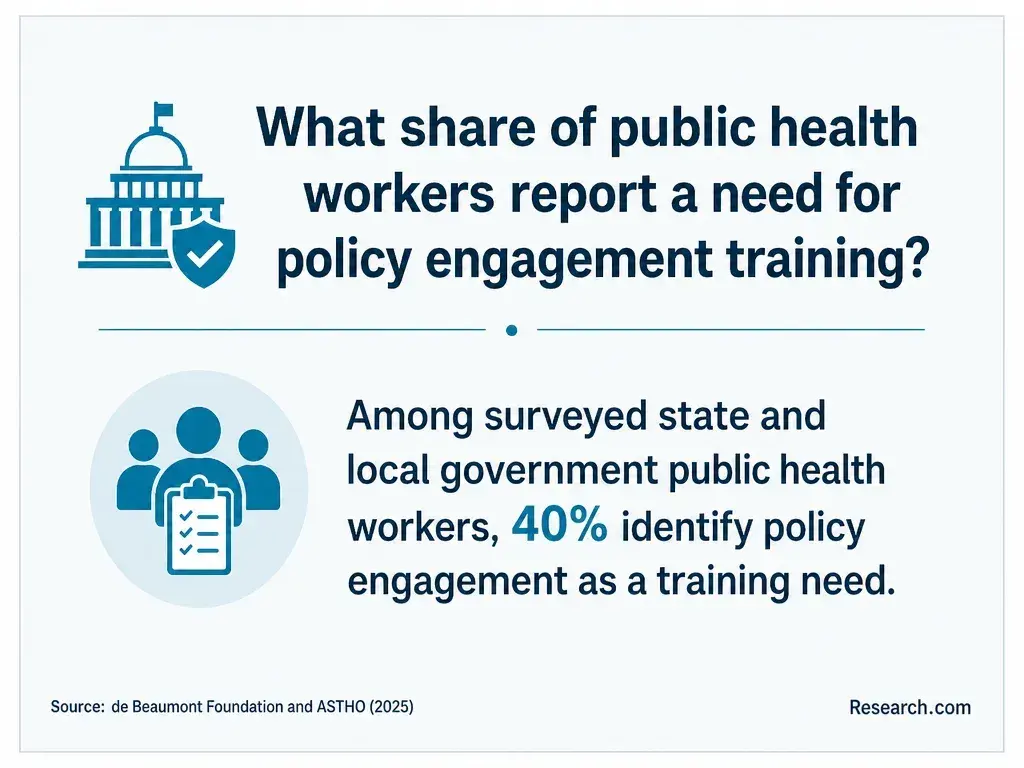
DrPH study generally aims to develop practice leadership: interpreting population data, shaping policy or programs, managing people and resources, engaging communities, and evaluating implementation.
A clinician may already understand care delivery but need more practice defining a population denominator, assessing unequal access, managing cross-sector partners, or deciding whether a program should be changed.
Compare curricula against the responsibility you want next. Someone seeking to direct a community prevention initiative needs meaningful preparation in governance, budgeting, engagement, and evaluation, not simply more disease-specific clinical content. Ask how coursework connects to a supervised applied doctoral project and whether your prospective organization can support it.
Not every gap calls for another full degree. For an experienced clinical master's graduate, low-cost public health bachelor's programs online are unlikely to be an efficient way to gain advanced leadership preparation. Targeted coursework, mentored population-health work, or an MPH may be more appropriate if the missing skills are foundational rather than doctoral-level.
Neither format is inherently better. An online DrPH can reduce routine travel, but it may still require live classes, group meetings, campus visits, and substantial work at an approved project site.
A campus program may offer easier access to local faculty and partners while imposing a commute or relocation. For a working clinician, the decisive issue is whether required activities fit employer coverage, caregiving obligations, and project access.
Request a term-by-term schedule showing synchronous sessions, residencies, project milestones, and any leave or reduced-load rules. Ask whether your current workplace can serve as a project site, who must approve it, and what happens if you change jobs.
Compare online doctorates by purpose as well as delivery: information about online epidemiology doctorate financial assistance may be useful for a research-oriented alternative, but it does not establish a DrPH program's schedule, funding, or applied-project fit.
There is no reliable single timeline or price for all DrPH programs. Completion depends on required credits, enrollment pace, course sequencing, advancement rules, and the time needed to secure approvals and finish an applied project. For an employed clinician, a nominal program length matters less than whether the school offers the courses and supervision needed at your intended pace.
Build a written cost estimate from the school's charges for your entry term. Include tuition, mandatory fees, required travel, materials, possible continuation charges, and any earnings lost to reduced work hours.
Compare that estimate with confirmed employer assistance and funding conditions, rather than assuming reimbursement or aid will continue throughout the program. A resource on comparing doctoral public health costs and pay can frame the trade-off, but request a program-specific estimate before committing.
A DrPH may support advancement into public health program leadership, health-system population-health strategy, government practice leadership, or evaluation and implementation roles.
The strongest opportunities usually build on existing clinical and organizational responsibility. A doctorate alone does not confer a director title or qualify someone for every analytic, executive, or academic position.
Salary depends on the occupation, employer, location, scope of responsibility, and prior experience, not the letters after a graduate's name. For a defensible comparison, identify the job you want, review its actual postings and pay range, and use the US Bureau of Labor Statistics occupation definition only if it matches the work. An occupation-wide median is not a DrPH graduate salary.
Before borrowing, compare the likely change in responsibility and compensation with the full cost of study. A cost and duration of public health master's degrees resource may help if a master's-level route could achieve the same goal.
Does a DrPH Require Licensure or Professional Certification?
A DrPH is an academic degree, not a clinical license. It does not replace the license required to provide regulated care, and maintaining a clinical role still depends on the applicable state board and employer. Public health jobs may have their own credential preferences or requirements, which should be checked in the specific posting and with the responsible certifying body.
Before enrolling, separate the qualification your target job actually requires from the education you would find valuable. If you need foundational population-health training rather than doctoral leadership preparation, cost-conscious online MPH program choices may warrant comparison. Neither an MPH nor a DrPH automatically awards a separate professional certification.
Other Things You Should Know About Public Health Programs
Yes. Identify the team's work, then state precisely what you designed, decided, implemented, or evaluated. Do not claim organization-wide results as your individual achievement.
Ask whether you may describe your responsibilities and use approved aggregate information. A recommender can corroborate your work without attaching confidential records.
A feasible area of interest helps explain fit, but present it as a proposal. Site access, supervision, data permissions, and any required ethics review must still be established.
Yes, particularly when it shows sustained community partnership or implementation responsibility. Ask each program whether it counts toward any formal professional-experience requirement.
- Ways to Approach the Quality Improvement Process | Agency for Healthcare Research and Quality https://www.ahrq.gov/cahps/quality-improvement/improvement-guide/4-approach-qi-process/index.html
- CDC Approach to Program Evaluation https://www.cdc.gov/evaluation/php/about/index.html
- Analysis of CEPH-accredited DrPH programs in the United States: A mixed-methods study - PMC https://pmc.ncbi.nlm.nih.gov/articles/PMC7861440/
- Applying to the Doctor of Public Health | Emory University https://sph.emory.edu/admissions/how-to-apply/drph
- DrPH Public Health | University at Albany https://www.albany.edu/cihs/programs/drph-public-health
- Curriculum and Concentrations | Johns Hopkins https://publichealth.jhu.edu/academics/drph/curriculum
- Doctor of Public Health (DrPH) | College of Public Health UGA https://publichealth.uga.edu/degree/doctor-of-public-health-drph/
- Admissions - How to Apply - DrPH in Global Health Leadership | Richard M. Fairbanks School of Public Health https://fairbanks.indianapolis.iu.edu/admissions/apply/drph.html
- Doctor of Public Health (DrPH) | Claremont Graduate University https://www.cgu.edu/academics/program/doctor-public-health/