2027 MPH Financial Planning Without Assuming a Salary Increase

Co-Founder and Chief Data Scientist
An MPH may strengthen your public health skills, but your household budget cannot spend a promotion that has not happened. If you are considering graduate study while working, the safer decision is to test tuition, borrowing, time away from work, and required fieldwork against the income you have now.
This guide shows how to build that test, interpret career and salary information without treating it as a promise, and identify programs - or smaller training options - that fit your finances.
Key Things You Should Know
- Build the MPH budget with 0% assumed salary growth; include fees, fieldwork, financing costs, and any earnings you would give up.
- An occupational median wage is not an MPH graduate's starting salary. Use your current pay and a realistic no-promotion scenario to test affordability.
- Compare the full cost and scheduling obligations of each program; a lower advertised tuition or online format does not establish a lower household cost.
What Is an MPH and How Can It Support Financial Planning Without a Raise?
A Master of Public Health (MPH) is a practice-oriented graduate degree focused on improving population health through areas such as epidemiology, program evaluation, community engagement, and policy. It can help someone take on more demanding work, but the degree itself does not change an employer's pay scale or guarantee a new job.
For financial planning, separate the education decision from the earnings possibility. The baseline case keeps your present income unchanged through study and repayment. A higher-paying job belongs in an upside scenario only after you have checked actual openings, qualifications, and compensation in your target market. Discussions of MPH education and long-term earnings can help frame possibilities, but they cannot replace a budget based on your own pay.
If your employer needs one specific skill - for example, evaluating a community program - an approved short course, supervised project, or certificate may meet that need at less cost. Pursue the full MPH when its breadth, applied work, and credential are relevant to responsibilities you can realistically reach, not solely because you expect a raise.
How Much Does an MPH Degree Cost, and What Expenses Should Students Budget For?
There is no reliable single MPH price: programs charge by credit, term, or program, and fees and enrollment rules differ. Ask each school for a written estimate covering the credits you still need, the pace you intend to follow, and charges through completion. The categories below distinguish the amount billed by a school from costs that can still strain a working student's budget.
| Cost category | What it may include | Why it matters without a raise |
| School charges | Tuition, mandatory fees, technology charges, and any continuation charges | The advertised per-credit rate may omit required charges. |
| Participation costs | Books, software, travel, campus visits, and applied-practice expenses | These may come due even during a low-credit term. |
| Household and financing costs | Childcare, reduced work hours, loan interest, and repayment | A manageable tuition bill can still create an unaffordable monthly obligation. |
Calculate your net education cost as required school and participation costs plus any lost earnings and financing costs, minus aid that is confirmed and applicable. Then compare the expected payment schedule with the cash left after essential household expenses and an emergency reserve. For program-level cost comparisons, affordable public health graduate study and earnings is a starting point; obtain a current, individualized estimate before relying on a listed price.
What Salary Can MPH Graduates Expect Without Assuming Future Income Growth?
For a conservative plan, the salary to use is your current salary, or the pay in a job you can reasonably retain while enrolled. If study would reduce your hours, use the lower expected earnings during those terms. Test loan payments against that scenario - not against a hoped-for post-graduation offer.
Salary reports require careful interpretation. The US Bureau of Labor Statistics reports wages for occupations, not for everyone holding an MPH. An epidemiologist's occupational median, for instance, includes workers with different degrees, experience levels, and employers; it is not an entry salary or an MPH-specific return. A public-sector employee may also face a fixed pay band even after gaining new skills.
When considering a career change, compare posted pay ranges for positions whose required qualifications you meet, then account for any step down needed to enter the new function. A comparison of affordable public health graduate study and earnings would be useful here, but the same resource is linked above; rely on the program estimate and relevant job postings rather than treating a broad earnings figure as your forecast.
Confirm whether employer assistance requires prior approval, minimum grades, or continued employment. Do not transfer funding assumptions from epidemiology doctoral scholarships and employer benefits to an MPH: eligibility and funding arrangements can differ by degree and institution.
The strongest prospect is usually the path that builds on work you already know how to do. A health department employee may be able to add evaluation responsibilities; a nonprofit program coordinator may move toward program management. A substantial switch into epidemiologic analysis may require additional quantitative coursework and demonstrated projects, not just an MPH concentration.
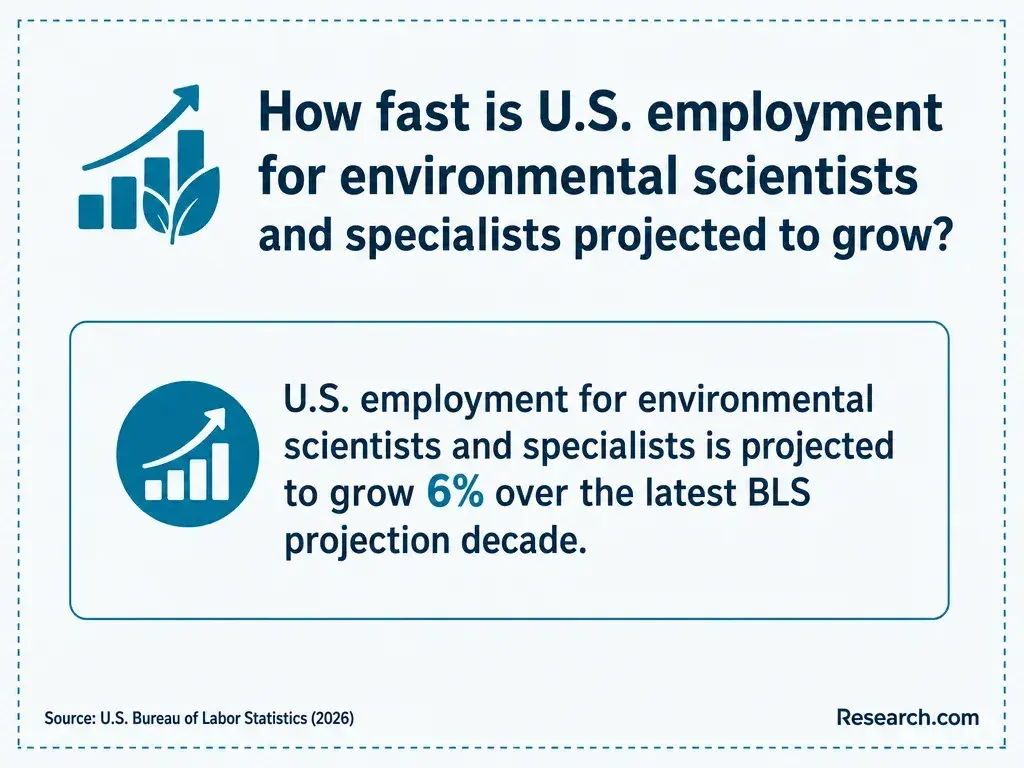
Look at tasks rather than appealing job titles. Community health roles emphasize outreach and trusted partnerships; health education positions often involve designing and assessing interventions; epidemiology roles emphasize surveillance, study methods, and data interpretation. Management positions commonly depend on a record of budgets, supervision, and implementation. Local openings, funding cycles, and employer requirements matter more to your personal prospects than a national growth projection alone.
Before choosing a concentration, collect several postings for your target role and compare their required skills with your present experience. A guide to choosing a public health master's specialization can help you distinguish paths, but select courses and applied work that close gaps employers actually identify.
MPH curricula commonly cover epidemiology, biostatistics, population-health determinants, policy or health systems, and program planning and evaluation. Programs also include applied learning, but its supervision, scheduling, and deliverables vary. Review the actual course sequence before assuming that an advertised concentration develops a particular technical skill.
Financially, course choice matters when it affects time to completion or employability. If your goal is to assess a nonprofit program, seek practical evaluation, budgeting, and community-engagement work. If your goal is an analyst position, check the depth of statistics, data management, and reproducible analysis - and whether you can show that work in a portfolio. Biostatistics graduate education for employed adults may be more appropriate than a generalist MPH when advanced quantitative analysis is the primary goal.
Online study may remove a commute, but it does not necessarily remove fixed class meetings, group work, proctored assessments, or fieldwork at an approved site. Campus study may offer easier access to local partners and in-person support, while imposing travel and scheduled attendance. The lower-cost option is the one that fits your actual work and household schedule without forcing avoidable lost wages or extra terms.
Request sample term schedules and ask when applied-practice hours occur, whether evening or weekend placements are possible, and whether campus visits are required. Check leave and part-time policies if income or caregiving needs could interrupt enrollment. Do not infer MPH flexibility from an online public health doctorate selection guide; a doctorate is a different program with its own attendance and project requirements.
MPH applicants generally need a qualifying bachelor's degree and the materials specified by the individual program, which may include transcripts, recommendations, a statement of purpose, and a résumé. Statistics preparation, tests, work experience, and application systems vary. An unrelated undergraduate major does not, by itself, rule out admission.
For a working applicant, the useful question is whether admission would require extra time or expense before the MPH begins. Ask admissions staff to distinguish mandatory prerequisites from recommended preparation and to identify any costs or deadlines for completing missing coursework. If your academic record is a concern, information on public health master's entry with a modest GPA can help you prepare evidence of recent academic or professional readiness; the program still decides eligibility.
Completion time depends on required credits, enrollment pace, course availability, and when applied work can be approved and finished. A slower pace may protect current earnings but extend fees or borrowing; a faster pace may reduce elapsed time while creating work-hour and childcare costs. Ask for a term-by-term plan at the pace your household can sustain, including a contingency for one interrupted term.
Also distinguish time until admission from time enrolled. If a prerequisite or document is outstanding, clarify whether it must be completed before applying, before starting, or during the program. Guidance on public health graduate applications with outstanding requirements can frame that conversation, but only the admitting school can confirm its policy.
An MPH is an academic degree, not a general license to practice public health. Some jobs have separate credentials or state-specific requirements; clinical practice requires the applicable clinical license. Credentials such as Certified in Public Health (CPH) or health education certifications have their own eligibility and examination rules, which should be checked with the responsible organization and any prospective employer.
Do not budget for a credential - or assume it will increase pay - until you know whether your target jobs require it and whether you qualify. The distinction holds at other degree levels: affordable online public health PhD programs describe research degrees, not substitutes for occupational licensure.
How Can You Choose an Accredited and Reputable MPH Program?
First verify the institution's accreditation and then check whether the Council on Education for Public Health (CEPH) covers the exact school, unit, or MPH program you would enter. Institution-level accreditation and public health-specific accreditation answer different questions; neither establishes that a particular schedule or placement will work for you.
Ask each program for its current total-cost estimate, required-credit plan, applied-practice rules, student support, and outcomes data with clear cohort definitions. Compare those answers alongside your no-raise budget. If the program cannot explain when required courses run or how working students arrange fieldwork, a low advertised price is insufficient evidence of fit. The same scope check applies when comparing accessible public health doctoral programs: do not assume one institution's accreditation statement covers every degree it offers.
Enroll only when the essential costs and time commitments are workable on present income, or when confirmed assistance closes the gap. Otherwise, postponing enrollment or building the needed skill through a smaller, supervised learning opportunity is a financially sound decision.
Other Things You Should Know About Public Health
Preserve enough accessible savings for household emergencies before paying tuition. Compare the loan's repayment obligation with your current-income budget, and seek individualized financial advice if the trade-off is substantial.
Do not treat forgiveness as guaranteed. Eligibility depends on the loan type, qualifying employment, repayment conditions, and current federal rules; verify them before borrowing.
Plan for the upfront payment and any delay before reimbursement. Obtain the policy in writing, including grade, annual-limit, approval, and continued-employment conditions.
Recalculate before accepting an offer, before each new term, and whenever your income, aid, tuition, or caregiving costs change. Keep any future raise as a separate upside scenario until it is confirmed.
- Your financial path to graduation | consumerfinance.gov https://www.consumerfinance.gov/paying-for-college/your-financial-path-to-graduation/
- Federal Versus Private Loans | studentaid.gov https://studentaid.gov/understand-aid/types/loans/federal-vs-private
- Cost of Attendance (Budget) | 2025-2026 Federal Student Aid Handbook https://fsapartners.ed.gov/knowledge-center/fsa-handbook/2025-2026/vol3/ch2-cost-attendance-budget
- MPH Cost of Attendance Information | unc.edu https://studentaid.unc.edu/graduate-programs/mph-costs/
- Public Health Career Salary: Entry to Executive Pay | EWU https://online.ewu.edu/degrees/healthcare/masters-public-health/general-concentration/career-salary-outlook/
- MPH Salary: What Master of Public Health Graduates Earn | Adelphi University https://onlineprograms.adelphi.edu/resources/article/mph-salary-guide/
- Budgeting for College: How to Manage Your Finances | STLCC https://stlcc.edu/insider/college-finances/budgeting-for-college.aspx
- Public Health Employment Outcomes | Columbia University Mailman School of Public Health https://www.publichealth.columbia.edu/become-student/career-services/public-health-employment-outcomes
- Tuition and Fees | Johns Hopkins https://publichealth.jhu.edu/offices-and-services/office-of-admissions-services/tuition-and-fees
- Earning an MPH | University of North Carolina https://onlinemph.unc.edu/blog/mph-pros-cons/