2027 From Church-Based Outreach Coordinator to Public Health: Planning a Bachelor's Pathway

Co-Founder and Chief Data Scientist
Church-based outreach coordinators often already organize partnerships, communicate with communities, and connect people with services. Moving into public health means learning how to apply those strengths across populations, use evidence responsibly, and meet employers' education requirements.
This guide helps you decide whether a public health bachelor's degree is the right next step, what to look for in a program, and how to turn your existing work into credible evidence for applications and entry-level jobs.
Key Things You Should Know
- Start with the job you want: community outreach and program-support roles may value your experience now, while health education or data-focused roles may require additional coursework or credentials.
- A bachelor's degree commonly requires about 120 semester credits, but only a school's degree audit can establish how previous coursework applies and how long you have left.
- Choose a program for its relevant courses, approved fieldwork options, total cost, and verified accreditation - not the assumption that a degree alone guarantees a public health job.
What Is a Public Health Bachelor's Degree and What Careers Can It Lead To?
A public health bachelor's degree studies health at the population level: how communities prevent illness, understand risks, improve access to services, and evaluate whether programs work. A BA, BS, BAS, community health, or health education program may emphasize different subjects, so compare the curriculum rather than relying on the title alone.
For a church-based outreach coordinator, the most direct transition is often into community engagement, health program assistance, service navigation, or health education support. A degree can add grounding in epidemiology, data interpretation, program evaluation, and health systems. It does not by itself qualify someone for clinical practice, advanced epidemiology, or program leadership.
If your eventual goal requires a graduate credential, first identify the job and its actual requirements. A guide to matching public health graduate degrees to careers can help you keep that longer-term choice separate from the immediate bachelor's decision.
How Can Church-Based Outreach Experience Transfer Into Public Health Careers?
Your strongest evidence is the work you performed, not the organization's religious affiliation. Coordinating volunteers can demonstrate implementation skills; building relationships with clinics or food providers can demonstrate partnership work; explaining available services can demonstrate communication and referral skills. Public health employers will also want to know how you worked respectfully with people who did not share your faith.
Translate your experience into concrete, supportable examples: the population served, your responsibilities, the partners involved, and how you monitored the work. An outreach calendar, an approved resource guide, or a summary of nonidentifying service counts may be useful portfolio evidence. Do not disclose congregants' circumstances, health information, or partner data without permission.
The main gap is often method, not motivation. Supporting an event is different from assessing community priorities, choosing an evidence-informed approach, and evaluating its results. Seek supervised opportunities to practice those steps. A doctorate is not the starting point for this transition; even a public health doctoral program selectivity overview addresses a much later decision, not readiness for an initial outreach role.
What Education and Accreditation Should You Look for in a Public Health Program?
First, confirm that the university has recognized institutional accreditation. Then check whether the Council on Education for Public Health (CEPH) accredits the specific school, unit, or standalone program - and whether your intended bachelor's degree falls within that scope. Institutional accreditation and CEPH accreditation answer different questions; neither should be inferred from a university's general advertising.
For this pathway, prioritize courses in community health, health communication, introductory epidemiology, statistics, and program evaluation. Ask who arranges field placements, whether a faith-based organization can be considered as a site, and who must approve its supervisor and learning objectives. Site willingness alone does not establish academic approval.
If you later compare graduate schools, accreditation-focused online MPH comparisons may provide a starting point. Verify each school's current CEPH listing and the exact degree covered before applying.
Online study can reduce commuting, but it does not necessarily make the degree self-paced. Live classes, group assignments, exams, and in-person fieldwork may still compete with outreach events and employment. Campus study may make it easier to meet faculty and local health-agency partners, but travel and fixed class times can be substantial constraints.
Compare the formats against your actual work calendar. Ask for a sample term schedule, the frequency of live sessions, any campus visits, and the rules for completing fieldwork near home. Also ask whether the program helps online students find supervisors rather than leaving placement entirely to them.
If you discover that your target job is primarily quantitative, examine the undergraduate statistics sequence before committing to a generalist program. Later, online biostatistics program planning for workers becomes relevant only if your goals and mathematical preparation support that specialization.
Programs vary, but relevant study commonly includes population health, epidemiology, statistics, health behavior, environmental health, policy, health communication, and program planning or evaluation. An internship or capstone may let you apply those subjects under supervision. A single introductory course is not evidence of advanced analytical competence.
For an outreach coordinator, course sequence matters. Statistics and introductory epidemiology help you read community-health evidence; program planning helps you turn a stated need into a feasible activity; evaluation helps you distinguish attendance from meaningful outcomes. Ask whether prerequisites or once-a-year courses could delay that sequence.
Keep graduate study as an option, not an assumed next step. Policies for public health graduate applications with outstanding requirements vary by school; a strong bachelor's plan is one that meets your near-term job goal while leaving room to address future prerequisites if needed.
Requirements depend on whether you apply as a first-year student, a transfer student, or a returning student. Admission to the university may also be separate from admission to the public health major. Schools may review transcripts, general education, prerequisite courses, grades, and application materials.
If you have prior college study, request an official evaluation and a degree audit showing which credits satisfy general education, major prerequisites, electives, and any residency requirement. An accepted credit may count toward the total without replacing a required course. Supply course descriptions or syllabi when the school asks for them, and get any substitution or appeal decision in writing before planning your graduation date.
Do not borrow requirements from graduate admissions: discussions of MPH programs with no recommendation letter requirement concern a different academic level. Confirm the bachelor's program's own application checklist and deadlines.
A conventional full-time bachelor's route often spans four academic years and roughly 120 semester credits. Your remaining time depends on approved transfer credit, required course sequencing, fieldwork scheduling, and whether you study full- or part-time. Outreach experience may strengthen an application, but it should not be treated as academic credit unless the institution formally awards it.
Compare the full cost of completing the degree, not just advertised tuition. Include mandatory fees, books or software, travel, any campus visits, and the possibility that fieldwork is unpaid. Ask financial-aid staff how your enrollment level and remaining eligible coursework affect aid; ask an employer or organization about education assistance only if it has a documented policy.
Online public health degrees for budget-conscious students can help you identify programs to investigate, but request a personalized remaining-credit audit and cost estimate before deciding which option is cheapest for you.
Potential openings include community health worker, outreach specialist, health program assistant, care-navigation support, and some health education positions. The duties are not interchangeable: a community health worker may connect people with services and follow up; a program assistant may coordinate activities and reports; a health education specialist may design, deliver, or evaluate educational materials. Employers set their own experience and credential requirements, and some states have additional rules for particular roles.
Search vacancies using duties as well as titles. Compare each posting with evidence you can provide from outreach work, coursework, and supervised projects. If postings mainly request partnership-building and referrals, you may be able to pursue them before completing another degree. If they consistently require a bachelor's degree plus evaluation or data skills, choose coursework and fieldwork that close those gaps.
Do not use claims about affordable public health doctorates and earning potential to judge the return on a bachelor's degree. Advanced-degree career outcomes do not describe the entry-level positions you are evaluating.
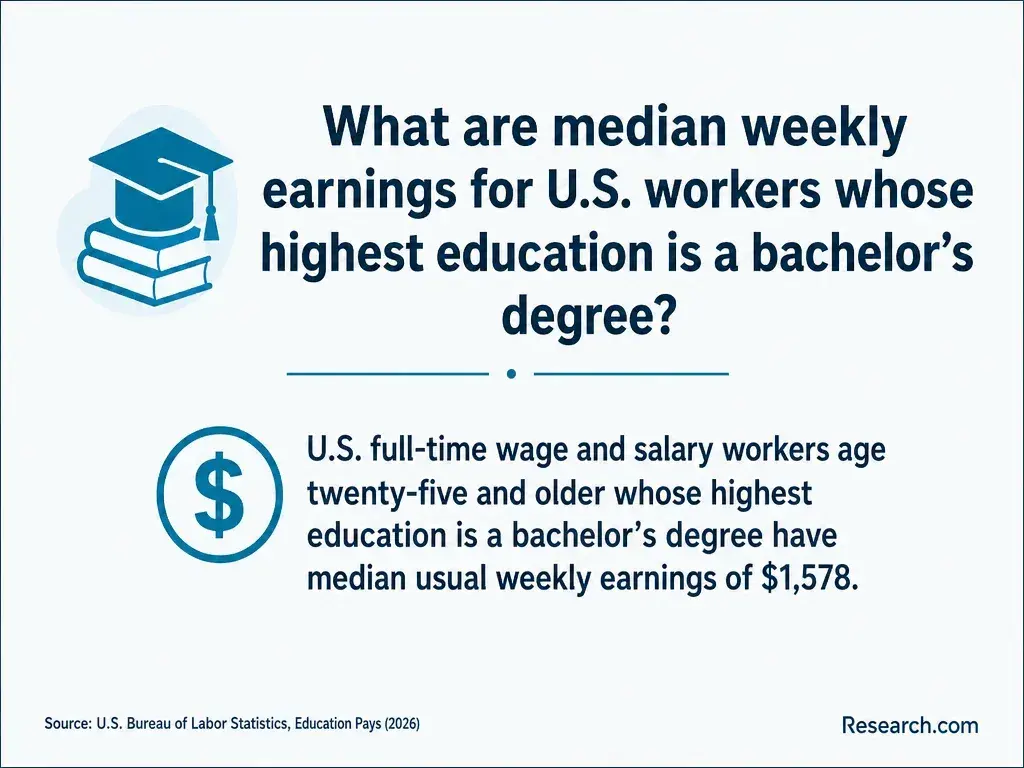
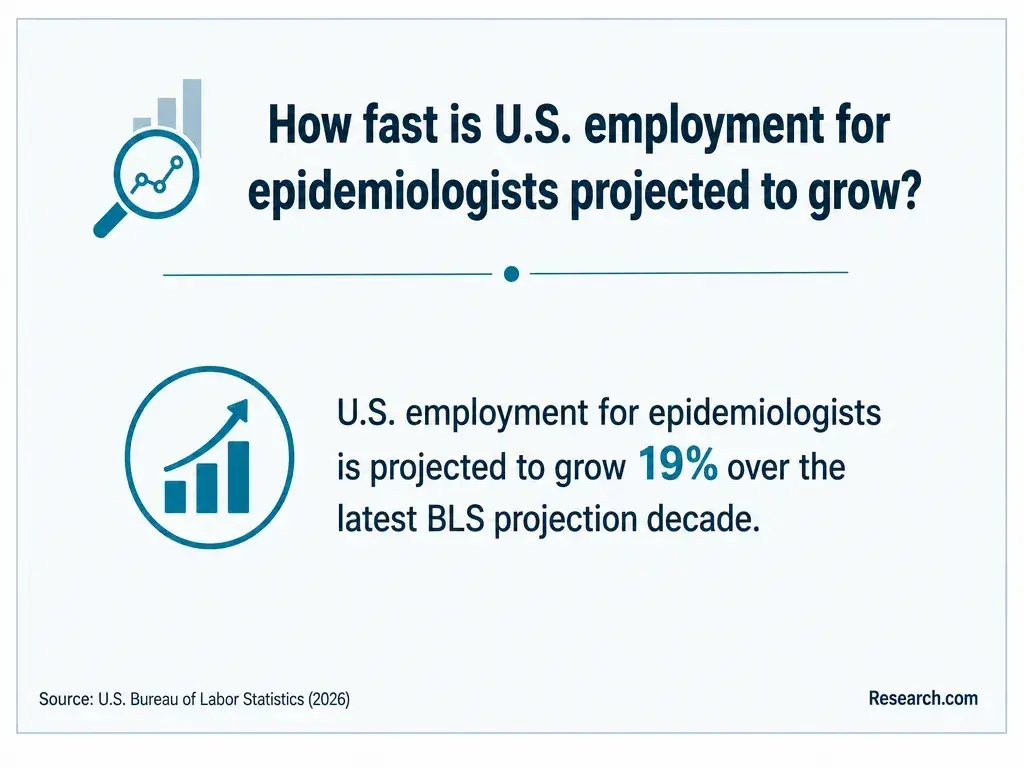
There is no single salary or growth rate for "public health bachelor's graduates." Pay and demand depend on the occupation, location, employer, responsibilities, and experience. For a defensible comparison, use the US Bureau of Labor Statistics Occupational Outlook Handbook entry for the specific occupation you are considering, such as community health worker or health education specialist. Check its wage reference year, projection period, and typical entry requirements before using the figures in a financial decision.
Remember that an occupation-wide median includes experienced workers and people with varied educational backgrounds; it is not an expected starting offer or a degree outcome. Pair that labor-market evidence with local job postings and the program's personalized completion cost. Funding discussions about epidemiology doctoral scholarships and employer benefits concern a different level of study and should not be counted as bachelor's funding.
Do Public Health Careers Require Certification, Licensure, or Graduate Study?
Many outreach and program-support jobs do not require a public health license, but requirements vary by position, state, and employer. A public health bachelor's degree does not confer a clinical license. Credentials such as Certified Health Education Specialist (CHES) or Certified in Public Health (CPH) have separate eligibility and examination rules; check the current certifying organization's criteria and the job postings you intend to pursue before selecting courses around either credential.
Graduate study may become useful for specialized analysis, advanced research, or positions whose employers require a master's degree. It is not automatically necessary for community-facing work. If prior grades are a concern when that later decision arises, low-GPA pathways to public health master's study can help frame questions for admissions staff; the graduate program makes the actual eligibility decision.
Your next step is to select a few target job postings, identify the skills they require, and ask prospective bachelor's programs for a degree audit, fieldwork rules, and a complete cost estimate. That comparison will show whether a degree fills a real gap - or whether targeted training and additional supervised experience are the more direct move.
Other Things You Should Know About Public Health
Yes. Describe your responsibilities in terms of service, partnerships, and community needs, and be ready to explain how you serve people without making assistance conditional on religious participation.
Only with the organization's permission and any required school review. Agree on what may be collected, shared, or published before using records, and avoid identifiable personal or health information without appropriate authorization.
List the role accurately as volunteer experience, include its dates and responsibilities, and describe work you can substantiate. Do not imply that volunteer hours were paid employment.
You can still use it as evidence of experience while seeking an approved placement elsewhere. Ask the academic fieldwork coordinator what sites, supervisors, and project tasks meet the program's requirements.
- Types of Financial Aid: Grants, Work-Study, and Loans | studentaid.gov https://studentaid.gov/understand-aid/types
- Community engagement education in academic health... - PMC https://pmc.ncbi.nlm.nih.gov/articles/PMC9549477/
- Fact Sheet #71: Internship Programs Under The Fair Labor Standards Act | U.S. Department of Labor https://www.dol.gov/agencies/whd/fact-sheets/71-flsa-internships
- Planning and Conducting Health Education for Community Members | Community Engagement Playbook | ATSDR https://www.atsdr.cdc.gov/community-engagement-playbook/php/activities/health-education-for-community.html
- Cost of Attendance (Budget) | 2026-2027 Federal Student Aid Handbook https://fsapartners.ed.gov/knowledge-center/fsa-handbook/2026-2027/vol3/ch2-cost-attendance-budget
- How to Turn Work and Life Experience Into College Credit | St. Thomas University https://www.stu.edu/news/how-to-turn-work-and-life-experience-into-college-credit/
- B.S. in Public Health | CSUSM https://www.csusm.edu/publichealth/bspublichealth/index.html
- Credit for What You Know | Online https://cps.unh.edu/online/apply-register/transfer-credit-evaluation/credit-what-you-know
- How Long Does It Take to Finish an Online Degree? | NMSU Global Campus https://global.nmsu.edu/blog/general/how-long-does-it-take-to-finish-an-online-degree/
- 18 Public Health Skills Needed for Upskilling | 5 Public Administration Careers for MPA Graduates https://www.augusta.edu/online/blog/upskilling-public-health-skills