2027 Evaluating an MPH Practicum in A Migrant Health Network

Co-Founder and Chief Data Scientist
A migrant health network can offer an MPH student meaningful work across clinics, community organizations, and outreach programs - but a compelling mission does not automatically make it a suitable practicum site. Students need an approved supervisor, feasible responsibilities, assessable work products, and permission to use information responsibly.
This guide is for prospective and current MPH students comparing placements or programs. It explains how to test a network's fit, scope a useful project, and account for scheduling, costs, and career goals before committing.
Key Things You Should Know
- A strong placement has a defined public health problem, an approved supervisor, and work the student can perform - not just observe.
- Under CEPH's MPH applied practice experience criteria, students demonstrate at least 5 competencies, including at least 3 foundational competencies, through at least 2 work products; the school decides how the proposed placement meets its requirements.
- Confirm site approval, data permissions, hours, travel, and any unpaid time before accepting a placement; a network's willingness to host you is only one part of approval.
What Is an MPH Practicum in a Migrant Health Network?
An MPH practicum - often called an applied practice experience - is supervised work that lets a student apply public health competencies to a partner's needs. In a migrant health network, the partner might coordinate community outreach, health education, referrals, program evaluation, or support for clinics serving people who move for work or other reasons. The network's structure and the populations it serves vary; "migrant health" is not a single job description or clinical specialty.
The best placement is defined by a shared problem and a useful output, such as improving how outreach activities are documented. Students should ask who sets priorities, which organizations must approve the work, and whether community members have an appropriate role in shaping it. A student should not assume that a network can authorize access to every member organization's records.
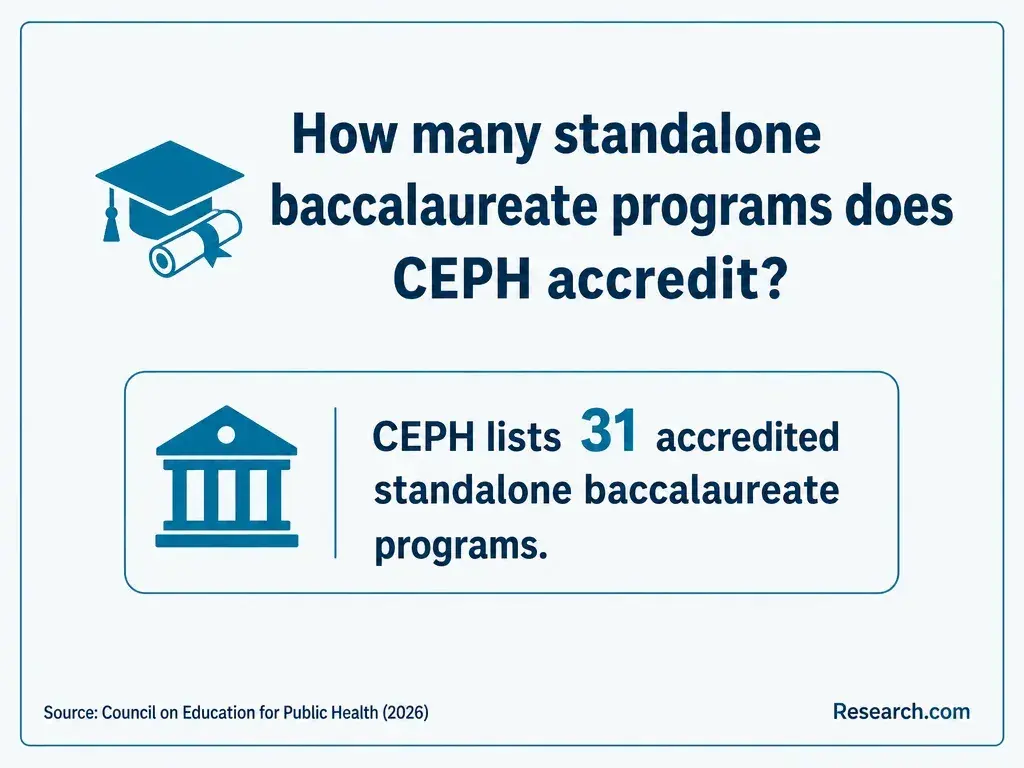
This is graduate-level population-health practice, not a substitute for clinical training. Students still completing undergraduate study may first need to compare online public health bachelor's program features; an undergraduate internship should not be presumed equivalent to an MPH applied practice experience.
How Does CEPH Accreditation Shape MPH Practicum Requirements?
The Council on Education for Public Health (CEPH) sets criteria for accredited public health schools and programs. Its MPH applied practice experience criteria call for work products demonstrating at least five competencies, including at least three foundational competencies, with at least two products available for assessment. A product might be a training tool or an evaluation plan; simply logging attendance is not the same as demonstrating a competency.
CEPH criteria do not, by themselves, approve a particular migrant health network or establish a universal practicum-hour requirement. The student's MPH program determines its approval process, documentation, supervision arrangements, deadlines, and any additional hours or course requirements. Check whether CEPH accreditation covers the exact school or program awarding the MPH, rather than relying on the university's institutional accreditation alone.
Before accepting an offer, request the program's competency map and placement agreement. Ask the academic coordinator to identify which proposed tasks can produce assessable evidence and who will evaluate it. Accreditation is one quality check, not a replacement for public health degree affordability and completion planning when fieldwork could affect the time needed to graduate.
What Skills Can Students Gain Through Migrant Health Practicum Work?
A well-scoped placement can develop community engagement, health communication, program implementation, and evaluation skills. The difference between exposure and demonstrated ability is important: attending outreach meetings may build context, while designing a partner-approved tracking process and explaining its limitations creates evidence of applied work.
Useful analytical tasks might include defining a referral-process measure, checking whether records are complete, or summarizing nonidentifiable service data for a decision-maker. Such work requires attention to who is missing from the data: people without reliable transportation, language access, or contact information may be less visible in routine records. Students who need deeper quantitative preparation can explore online biostatistics education for working learners, but a methods course cannot replace permission to access and interpret a partner's data.
Look for supervision that includes feedback and revision, not just an end-of-term signature. A student should leave able to explain what decision the work supported, whose perspectives informed it, what the evidence could not show, and how privacy was protected.
No single concentration qualifies someone to work across every migrant health network. Choose coursework around the work you want to do, then check whether the program offers relevant electives and a feasible placement. A concentration name is less informative than its methods training, community partnerships, and supervised project opportunities.
The comparison below connects common MPH study areas to plausible network responsibilities. Concentration titles and availability differ by school.
| Study area | Strongest fit | Preparation to check |
| Community health or health promotion | Outreach, health communication, and community partnership | Participatory planning, language access, and program evaluation |
| Epidemiology | Surveillance or interpretation of service patterns | Data quality, denominators, missingness, and privacy |
| Health policy or management | Referral systems, access barriers, and network coordination | Policy analysis, implementation, and organizational constraints |
An MPH makes sense when the target role requires graduate-level public health planning or analysis. If a student's immediate aim is an entry-level outreach role and they have not completed a bachelor's degree, inexpensive public health bachelor's education and supervised community work may be a more direct first step. Neither route grants clinical authority.
Good projects answer a decision the partner actually faces within the academic term. Examples include a multilingual outreach-material review, a referral-workflow map, a staff training resource, or an evaluation plan for a service-navigation activity. Each needs a named audience, an agreed scope, a review cycle, and a work product the school can assess.
Consider a proposed referral-workflow project. The student could map the process with authorized staff, identify where referrals are recorded, and draft a measurement plan. That plan would not establish that referrals improved; measuring change would require suitable baseline information, consistent definitions, and further evaluation. A network may prefer a usable internal tool over a publishable analysis. Students seeking an independent research career should weigh that distinction before comparing this experience with affordability of online public health PhD study.
Agree on data boundaries before work begins. Access to identifiable information, interviews, publication, and use of a final product in a portfolio may require separate organizational permissions, data agreements, or an institutional determination about research oversight. Community permission and school approval are also distinct. A redacted tool or a description of the student's process may be shareable even when underlying records are not.
Both online and campus MPH students may need to identify a site, obtain faculty approval, and complete a formal agreement before starting work. Some programs offer established partners; others expect students to propose a local site. Online coursework does not mean a network can supervise entirely remote work, and campus enrollment does not ensure a nearby opening.
The format comparison below highlights placement conditions to confirm rather than guarantees associated with either delivery mode.
| Arrangement | Potential advantage | Condition to verify |
| Local placement while studying online | May avoid relocation and build local contacts | Who recruits the site, approves remote supervision, and handles agreements |
| Campus program with an established partner | May provide an existing faculty-site relationship | Whether a place is available and whether travel or daytime work is required |
| Placement with a current employer | May reduce travel and scheduling conflicts | Whether duties are distinct enough from the student's job and independently assessable |
Ask for the expected weekly schedule, onsite obligations, supervisor availability, and contingency plan if an agreement is delayed. These questions matter especially when a student is combining fieldwork with employment or caregiving. Admission flexibility, including exploring less selective MPH study pathways, does not establish that placement scheduling will be flexible.
MPH applicants generally need a qualifying bachelor's degree, but programs set their own GPA policies, prerequisites, application documents, and experience expectations. An undergraduate public health major is not universally required. Relevant preparation might come from community work, clinical practice, social sciences, data analysis, or another field, provided the applicant can explain its connection to population health.
Admission and placement eligibility are separate decisions. A program may admit a student before they have a site; it may also require particular coursework, good academic standing, or approval documents before fieldwork begins. Applicants concerned about academic records can review strengthening a lower-GPA public health master's application, then confirm the specific MPH's published rules rather than assuming a waiver.
Ask admissions staff when placement planning starts and ask the practicum coordinator what could prevent approval of a proposed network. Someone hoping to use an existing job should obtain written guidance on whether a distinct project, supervisor, or work schedule is required.
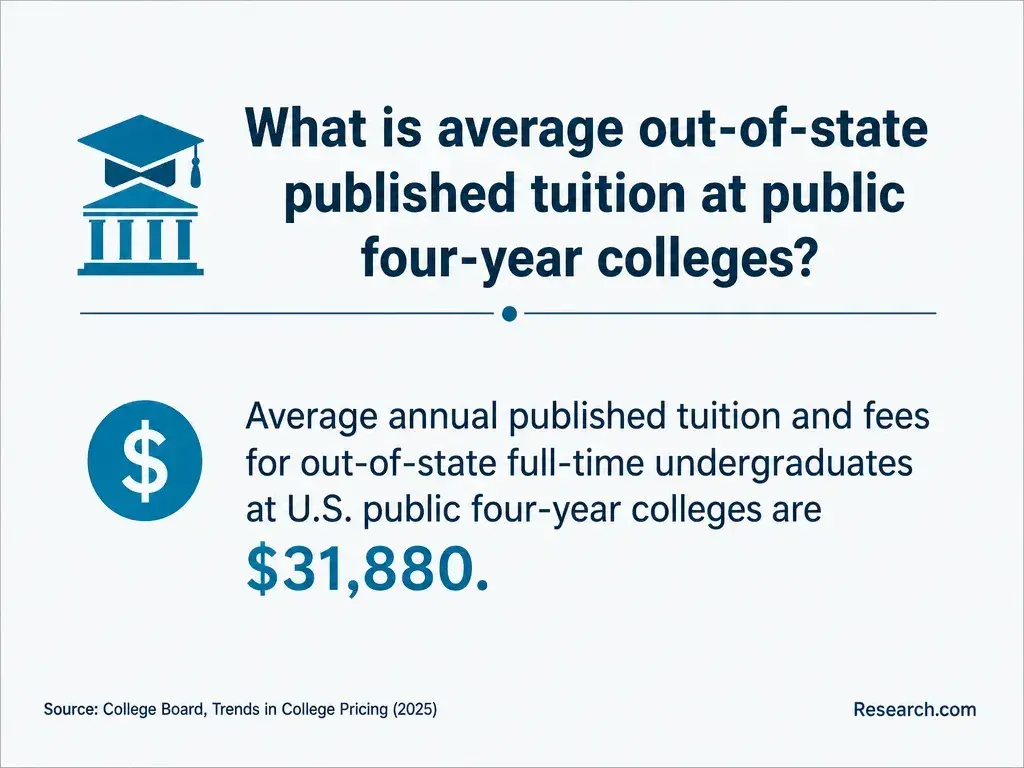
There is no single practicum duration or price across MPH programs. Schools set their own hours, term structure, credit charges, and registration rules. A placement may also require travel, time away from paid work, background checks, or equipment. Even when a site offers a stipend, students should verify its terms rather than budget around an assumed payment.
For a useful estimate, ask the school for the required hours and registered credits, then ask the site when those hours can actually be worked. Compare the resulting schedule with employment and caregiving commitments; a nominally short placement can delay graduation if approvals, partner availability, or required classes do not align. For broader aid comparisons, comparing online public health master's scholarship awards is a starting point, not confirmation that a particular award covers practicum credits or related expenses.
Request a written estimate separating tuition and fees from placement expenses and possible lost earnings. Confirm aid eligibility and whether an extra term would create additional charges before accepting an unpaid opportunity.
A practicum can provide evidence for applications to community health program, health education, evaluation, outreach-coordination, or policy roles. The appropriate entry point depends on prior experience and the project completed. An outreach tool may support a program-coordinator application; a carefully documented analysis may be more relevant to an analyst role. Neither automatically qualifies a graduate for clinical practice, an epidemiologist position, or a management post.
Salary figures require occupational precision. The US Bureau of Labor Statistics reports wages by occupation, not by MPH concentration or practicum site, and titles within migrant health networks can span different occupations and pay structures. Compare the current BLS occupation that matches a job's actual duties, its geographic area, and its entry requirements; do not treat a national occupational median as an expected offer. MPH education and long-term earnings can provide broader context, but local postings and employer pay scales are more useful for assessing a particular opportunity.
Before choosing a placement for career reasons, identify the jobs you would apply for afterward and compare their required skills with the proposed deliverables. If the gap is substantial, seek complementary experience rather than relying on the MPH credential alone.
How Can Students Evaluate a Reputable Migrant Health MPH Program?
Start with the exact MPH degree: verify the scope of its CEPH accreditation and obtain its current applied practice handbook. Then examine the evidence that matters for this placement - how sites are approved, whether a supervisor can provide regular feedback, what happens if a partner withdraws, and whether the school can describe completed projects without exposing confidential community information.
A credible program should be able to explain its responsibilities separately from the site's. Before enrolling or proposing a placement, put these questions to the practicum coordinator and prospective supervisor:
- Which network entity would host and supervise the project, and who must sign the placement agreement?
- What tasks and work products would demonstrate the required MPH competencies?
- What onsite hours, travel, training, and access arrangements are necessary?
- Who approves data use, community-facing materials, and any public or portfolio version of the deliverables?
- What is the backup plan if permissions or site capacity change?
Choose the program that can support a feasible, ethical project - not merely the one advertising a partner network or a convenient format. If your goal has shifted from supervised MPH practice to doctoral research, treat that as a separate decision; reviewing selectivity in public health doctoral study cannot establish the quality of an MPH practicum placement.
Other Things You Should Know About Public Health
Not necessarily. Requirements depend on the role. Do not present yourself as a qualified interpreter without the training the site requires; ask how it provides language access.
Only after the partner and school confirm the purpose, permissions, consent approach, and any required review. A practicum agreement alone does not authorize interviews.
Not automatically. Certifications have their own eligibility and examination rules. Check the certifying organization's requirements for the credential you want.
Ask your coordinator about another unit or partner with an approved supervisor and achievable deliverables. A related placement with stronger supervision may serve your learning goals better.
- Health Communication with Refugee, Immigrant, and Migrant Communities | CDC Yellow Book™ https://www.cdc.gov/yellow-book/hcp/refugees-immigrants-migrants/health-communication-with-refugee-immigrant-and-migrant-communities.html
- The Mediating Role of Migrant Community-Based Organizations | nih.gov https://pmc.ncbi.nlm.nih.gov/articles/PMC10159230/
- Public Health Practicum | Pacific University https://www.pacificu.edu/public-health/practicum
- MPH Practicum | Master of Public Health | Brown University https://mph.sph.brown.edu/applied-learning/mph-practicum
- The MPH Practicum | Johns Hopkins https://publichealth.jhu.edu/offices-and-services/office-of-public-health-practice-and-training/the-mph-practicum
- MPH Practicum - Washington University Bulletin - WashU https://bulletin.wustl.edu/publichealth/mph/practicum/
- Practicums, Internships and Projects What's the Difference? | Oregon State University https://health.oregonstate.edu/internships/types-of-experiential-learning