2027 Public Health PhD Summer Funding: Questions Before Accepting an Offer

Co-Founder and Chief Data Scientist
A public health PhD offer can look fully funded while leaving a summer income gap. That gap matters when research, dissertation work, or a move to campus makes other employment difficult.
If you are comparing doctoral offers, this guide explains how to read summer funding terms, distinguish guaranteed support from possible opportunities, and ask for the details that determine your actual cost of attendance. The goal is to help you accept an offer you can sustain, not one that works only during the academic year.
Key Things You Should Know
- A 9-month stipend does not establish pay for the full 12-month year; ask for the summer amount, dates, and funding source in writing.
- Compare guaranteed support separately from grant-dependent work, competitive fellowships, and assistantships you must obtain later.
- Check summer tuition, required registration, health insurance, research expenses, and work obligations before comparing offer totals.
What Is Public Health PhD Summer Funding?
Public health PhD summer funding is financial support available between academic years while a student continues research training, works on a faculty project, teaches, or advances a dissertation.
It may take the form of a stipend, wages from a research or teaching assistantship, a fellowship, or support tied to a grant. The source matters because it determines whether payment is promised, whether work is required, and who can approve its renewal.
A PhD is generally organized around producing original research; summer can be an important period for data preparation, analysis, field collaboration, and writing. That differs from the professional orientation of an MPH.
If your goal is applied public health practice rather than independent research, review public health master's degree types explained before taking on doctoral funding uncertainty.
Does Public Health PhD Funding Cover the Summer?
An offer may promise an academic-year stipend, provide a year-round stipend, or guarantee support for a stated period while leaving the summer source to be assigned later. A faculty member's expectation that a grant will cover summer work is not the same as a university commitment to pay you.
Read the appointment and award letters together. Identify the covered dates, payment schedule, renewal conditions, and whether the stated annual amount includes summer. If support ends before summer, ask whether you may work elsewhere and whether research or enrollment obligations make that feasible.
Compare the resulting income gap, not just advertised tuition remission, with your living costs. Public health master's tuition and salary comparisons can provide context if the alternative is entering practice sooner, but they cannot establish the value of a particular PhD offer.
What Questions Should You Ask Before Accepting a Funding Offer?
Send the program director or graduate funding office the same questions for each offer, then request written confirmation of any answer that affects affordability. Ask your prospective advisor about research expectations separately; an advisor may not control university-wide stipend, benefits, or fee policies.
- Guarantee: Which summers, if any, are included in the written offer, and what conditions must I meet to keep that support?
- Amount and timing: What will I receive during each summer, when will payments start and end, and could there be a gap between appointments?
- Source and duties: Is summer pay a fellowship, assistantship, or grant-funded appointment? Who assigns the work, and what are the expected hours and deliverables?
- Remaining costs: Must I register for summer credits, and which tuition, fees, insurance premiums, research costs, or travel expenses will I pay?
- Contingencies: What happens if a grant ends, an advisor changes, I reach the end of guaranteed funding, or dissertation work takes longer than planned?
Compare answers by the amount and certainty of support for each summer, not by the largest headline stipend.
If the offer leaves a recurring gap you cannot finance without substantial outside work, a less expensive or shorter educational route may be safer. Public health degree affordability and completion planning offers a broader framework for weighing that trade-off.
These labels describe different funding arrangements, but the controlling terms are the actual award and appointment documents. The comparison below shows why two offers with similar stated stipends can carry different summer risks.
| Support type | What it commonly involves | Summer question to resolve |
| Research or teaching assistantship | Paid duties under an appointment, potentially tied to a course or faculty project | Is a separate summer appointment available and guaranteed? |
| Fellowship | Support that may allow more time for the student's own research, subject to award terms | Does the award cover summer, and are there restrictions on other work? |
| Grant-funded support | Payment connected to a funded project and its approved activities | Is support committed for my summer appointment, or dependent on a future award or renewal? |
Grant-funded work can provide valuable access to public health data, methods training, and collaborators, but it may not give you unrestricted dissertation time.
Ask whether your intended research fits the project, what data access and approvals are needed, and what happens if the project changes. If a research doctorate is not essential to your target role, low-tuition online MPH options may be worth comparing with an unfunded doctoral summer.
A funding package is more than a stipend. It may include tuition remission, a fee waiver, health insurance support, and access to research or conference funds, but none should be assumed to apply during summer. Separate money paid to you from charges the university waives and expenses you must cover yourself.
The categories below provide a way to compare offer documents without treating every benefit as spendable income.
| Package component | What to check for summer | Why it changes the decision |
| Stipend or wages | Coverage dates and payment conditions | Determines income available for living expenses |
| Tuition and fees | Whether required summer registration is covered | An uncovered charge can offset apparent funding |
| Health insurance | Eligibility and premium responsibility between appointments | A coverage change can create a significant household cost |
| Research and travel support | Eligible expenses, approval rules, and reimbursement timing | Project access or conference participation may require upfront spending |
Build a personal summer budget using the university's written charges and your expected housing, transportation, and caregiving costs. Do not count a competitive travel award or possible grant appointment as guaranteed income.
If you are still deciding whether to pursue the education required for your goal, affordable public health BS study options illustrate a different starting point, not a substitute for PhD-level research training.
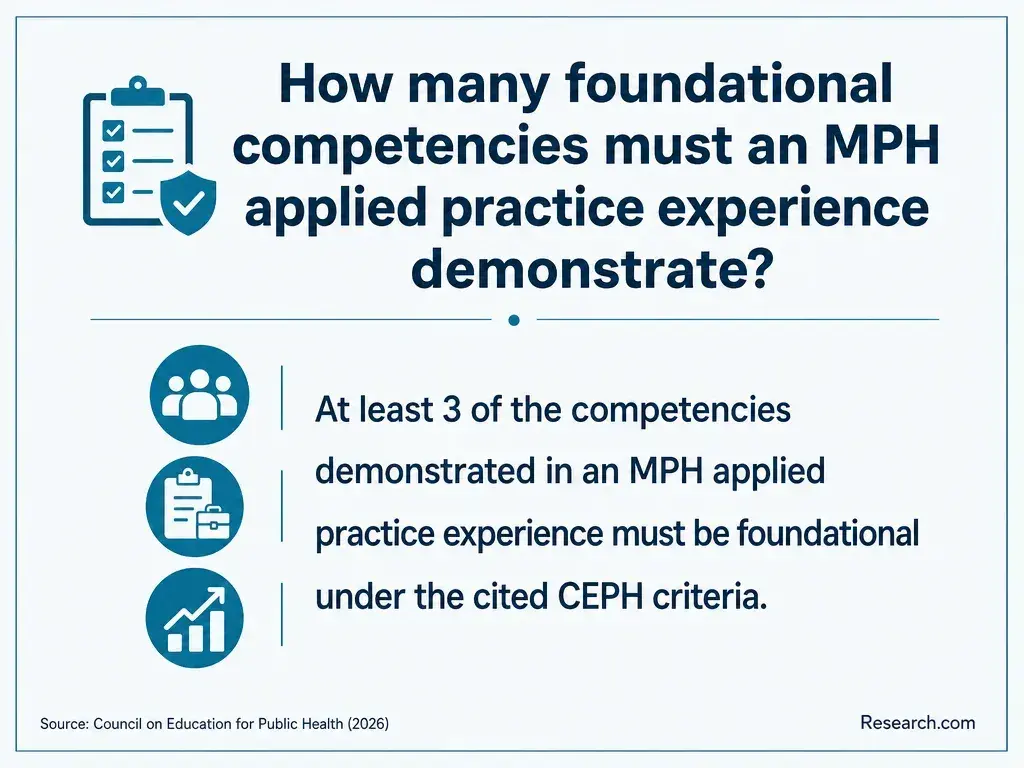
Check the institution's recognized accreditation and the exact scope of any Council on Education for Public Health (CEPH) accreditation.
CEPH accreditation of a school, unit, or program should not be interpreted as a promise about the funding or accreditation status of every degree associated with the institution. Ask the school to identify where your proposed PhD sits within its accredited structure.
Accreditation can help you evaluate institutional and public health educational oversight; it does not establish summer stipend terms, advisor availability, or dissertation resources. Those require separate verification.
Comparing accreditation across online MPH programs is useful if you are also considering a professional master's pathway, but an MPH's accreditation scope should not be attributed automatically to a PhD.
Requirements vary by program and research area. Schools may evaluate prior graduate study, statistics or other methods preparation, research experience, statements of research interest, recommendations, and fit with potential supervisors.
An MPH, publication record, or specific software skill is not universally required. Being eligible to apply is also different from being ready to undertake a funded research appointment.
Before committing to an offer, confirm that faculty can supervise your topic and that the proposed work is feasible with available data, ethical review, and funding. Ask whether admission and funding decisions are separate, and whether you must secure an advisor or assistantship after enrolling.
Applicants who need additional preparation can consider entry flexibility in public health master's programs, while checking each program's actual prerequisites and costs.
Delivery format changes the practical value of summer funding. A campus-based appointment may require on-site laboratory, teaching, or research-team work. An online or hybrid PhD may reduce relocation costs but still require live meetings, campus visits, local research access, or summer enrollment. Neither format guarantees flexible hours or paid summer work.
Ask where you must be during summer, whether assistantship duties can be completed remotely, who provides research supervision, and who pays for required travel. If you are considering accessible online public health doctoral pathways, verify that the specific degree is a research-focused PhD rather than a practice-focused DrPH, then compare its written funding terms with campus offers.
A public health PhD can prepare a researcher for university faculty roles, research organizations, government agencies, or health systems, depending on methods expertise and experience.
Epidemiologists study patterns and causes of health outcomes; faculty positions also typically involve teaching, publishing, and competing for research support. Neither role follows automatically from degree completion, and a summer assistantship is most valuable when its work builds relevant skills and credible research outputs.
For salary or job-growth comparisons, use the US Bureau of Labor Statistics occupation that matches the work you want, not a general "public health PhD salary." Occupational medians include workers with varied credentials and experience and are not forecasts of a graduate's earnings.
If your target is an applied role that does not require doctoral research, compare the PhD's funding risk and time commitment with a master's route. Public health graduate admissions with fewer reference documents may help applicants exploring that alternative, though admissions convenience alone is not a reason to choose a degree.
Which Certifications and Professional Standards Apply to Public Health Careers?
A public health PhD does not itself award clinical licensure or a professional certification. Credentials such as Certified in Public Health (CPH), Certified Health Education Specialist (CHES), and Master Certified Health Education Specialist (MCHES) have separate eligibility and examination rules.
Their relevance depends on the job. Research posts may place greater weight on study design, reproducible analysis, responsible data use, and publication than on a general public health credential.
Check current requirements with the relevant credentialing body and employers before paying for an exam or factoring a credential into your funding decision. If a practice credential and applied work, not original research, are your objective, MPH programs with less restrictive admissions may offer an alternative to pursuing a PhD solely for career advancement.
Other Things You Should Know About Public Health Programs
You can ask whether the program can clarify or improve summer support, but flexibility varies. Explain the specific gap, request any revised commitment in writing, and do not rely on a verbal possibility when deciding.
Tax treatment depends on how payments are classified and used. Ask the university's payroll or student funding office what tax documents it issues, and consult a qualified tax professional about your situation.
Leave can affect stipend payments, assistantship appointments, tuition coverage, and insurance. Request the graduate school's leave and funding policies before assuming support will pause and resume unchanged.
Not necessarily. Employment depends on the student's immigration status, work authorization, and university policies. Confirm the proposed work with the international student office before accepting it.
- Cost of Attendance (Budget) | 2025-2026 Federal Student Aid Handbook https://fsapartners.ed.gov/knowledge-center/fsa-handbook/2025-2026/vol3/ch2-cost-attendance-budget
- Topic no. 421, Scholarships, fellowship grants, and other grants | Internal Revenue Service https://www.irs.gov/taxtopics/tc421
- Scholarship/Fellowship Taxes | University of Chicago https://intranet.uchicago.edu/benefits-and-career/payroll/tax-information/scholarship-fellowship-taxes
- FAQs about Graduate Fellowships | Oregon State University https://graduate.oregonstate.edu/finance/graduate-fellowships-and-scholarships/faqs-about-graduate-fellowships
- Costs for Student Health Insurance Plan - Texas Global https://global.utexas.edu/isss/advising-services/insurance/costs
- Taxation of Scholarships, Fellowships & Stipends | gwu.edu https://taxdepartment.gwu.edu/taxation-scholarships-fellowships-stipends-0
- Financing Your Education - Doctoral Programs | Stanford Graduate School of Education https://ed.stanford.edu/admissions/financing/doctoral
- Reporting Stipend Income On Your Tax Return | Financial Services https://financialservices.wustl.edu/wfin-topic/payroll/tax-issues-fellowship-stipend-recipients/reporting-stipend-income/
- Funding and Support - Department of English - Penn State https://english.la.psu.edu/graduate/funding-and-support/
- The Graduate School Manual - Funding Policies | Binghamton University https://www.binghamton.edu/grad-school/policies-and-procedures/manual/funding-policies-guidelines.html