2027 Public Health BS Completion Grants: Questions for Stop-Out Students

Co-Founder and Chief Data Scientist
Returning to finish a public health BS can be financially complicated: a grant may cover tuition but not an old account balance, and accepted transfer credits may not satisfy the courses you still need. This guide is for students who started college, stepped away, and are considering a return.
It explains which funding sources to check, what to ask about eligibility, and how to compare degree audits and costs before committing. The goal is to help you identify a funded path to graduation - not simply the school offering the largest advertised award.
Key Things You Should Know
- There is no universal public health BS completion grant. Check federal and state aid, institutional reentry awards, and employer assistance; each has different eligibility and renewal rules.
- Request a degree audit before comparing awards: credits accepted by a school may not satisfy its public health major, residency, or graduation requirements.
- Federal Pell Grant eligibility has a lifetime limit equivalent to 12 full-time semesters. Returning students should check their remaining eligibility and satisfactory academic progress status before building a funding plan.
What Are Public Health BS Completion Grants for Stop-Out Students?
A stop-out student attended college but left before earning a bachelor's degree. A completion grant is funding intended to help an eligible student return and finish; unlike a loan, a grant generally does not require repayment if its conditions are met. "Public health completion grant" is a useful search phrase, not a single nationwide award or a promise that funds are reserved for public health majors.
Possible sources include federal Pell Grants, state adult-learner or completion programs, and awards from a college or university. Some institutional awards fill only the gap left after other aid - a last-dollar design. Others may help with a balance that prevents reenrollment. Ask what costs the award can pay, whether it is available each term, and what happens if your enrollment changes.
Keep undergraduate completion funding separate from graduate funding. An epidemiology doctoral education funding guide, for example, addresses a different degree level and should not be used to estimate aid for a returning BS student.
Who Qualifies for Public Health Degree Completion Grants?
Eligibility depends on the award. A school might require prior college credits, a minimum time away, admission to a degree program, demonstrated financial need, or a particular number of credits remaining. State programs may have residency rules. Federal Pell Grant eligibility depends on federal student-aid rules and the student's circumstances, not on choosing public health as a major.
For federal aid, ask the financial aid office to review your remaining Pell eligibility and satisfactory academic progress (SAP). SAP policies address academic measures such as grades and progress toward completion; earlier coursework can matter even after a break. If you are ineligible, ask whether the school permits an appeal and what documentation it requires. An old institutional balance is a separate issue: qualifying for aid does not necessarily clear a registration or transcript hold.
Admission standards and grant rules are also separate. Guidance about MPH admission when some requirements are incomplete does not establish eligibility for a bachelor's completion award. Get the grant's written terms from the office administering it.
How Can Stop-Out Students Find Public Health Completion Funding?
Start with the schools where you could realistically finish, including your former institution. A grant is valuable only if you can meet its conditions and complete the remaining degree requirements at an affordable total cost.
Use this sequence to find funding without overlooking a barrier to reenrollment:
- Collect transcripts from every college attended and request a preliminary public health BS degree audit from each prospective school.
- Submit the FAFSA for the academic year in which you plan to enroll, then ask each financial aid office about grants, SAP status, and remaining federal aid eligibility.
- Ask the school's returning-student or adult-learner office about completion awards, deadlines, minimum enrollment, renewal rules, and help with prior balances.
- Check your state higher education agency and, if employed, ask whether your employer supports an approved degree program.
- Request a written aid estimate and an explanation of how each award changes if you attend part time or transfer additional credits.
For a broader tuition comparison, a guide to inexpensive public health bachelor's education can help you identify programs to investigate. Confirm each school's actual charges and aid offer rather than treating a published tuition figure as your final price.
For your funding decision, the essential program question is whether the institution offers a legitimate, aid-eligible path to the specific bachelor's degree you intend to earn. Verify the institution's accreditation and federal student-aid participation with its admissions and financial aid offices. Then confirm the degree name, campus or online format, major admission rules, and graduation requirements for your entry term.
Institutional accreditation and public health-specific accreditation are distinct. The Council on Education for Public Health (CEPH) accredits eligible public health schools and programs within a defined scope; do not assume every BS at an accredited university, or every degree offered by a school, has the same CEPH status. Ask the program which accreditation applies to the exact degree. Advice on choosing an MPH with CEPH accreditation concerns master's programs and cannot substitute for checking an undergraduate BS.
Finally, obtain written confirmation of any minimum in-residence credits, required courses, capstone or internship, and course-availability constraints. A grant that expires before a required course is offered may not support your actual graduation timeline.
A traditional public health BS, an adult-focused degree-completion program, and some adjacent bachelor's pathways may all review previous college work. Their decisions can differ substantially. An associate degree may cover general education at one school but leave science, statistics, or major prerequisites at another; an applied associate degree may be evaluated differently. Military learning, competency-based study, and international coursework require the receiving institution's review.
The decisive distinction is between credit accepted and requirements satisfied. Ask the registrar or transfer-credit office to evaluate transcripts, and ask the public health department or academic adviser to confirm how each accepted course appears on the degree audit. Check quarter-to-semester conversions, laboratory equivalencies, course recency, substitutions, transfer appeals, and required credits taken at the graduating school. The institution awarding the BS has final authority.
Graduate application advice, including information about online graduate public health options without letters, will not tell you whether an undergraduate epidemiology or statistics course transfers. For that decision, an approved course-by-course audit is more useful than an admissions checklist.
Yes, particularly if travel or a fixed daytime schedule contributed to your earlier stop-out. Online delivery can reduce commuting, but it does not guarantee self-paced study. Before accepting an award, check for live meetings, group work, exam schedules, required campus visits, and the timing of internships or community projects. Those obligations can determine whether you can maintain the enrollment needed for aid.
Compare online programs using the same degree-audit and cost questions you would use on campus. Ask whether required courses run every term, whether you can pause enrollment without losing a grant, and whether an applied experience can be completed near home or at an approved workplace. Get site-approval rules in writing; existing employment does not automatically fulfill a degree requirement.
Descriptions of public health doctoral education options online illustrate why "online" should never be treated as a complete scheduling policy. Confirm the obligations of the BS program you would enter, not those of a different credential.
Public health BS curricula commonly bring together population health, epidemiology, basic statistics or data literacy, health behavior, environmental health, policy, and program planning. Some require a capstone or supervised applied experience. Exact courses and prerequisites vary, so the relevant question for a returning student is not just what the major teaches, but which required courses remain and when they are offered.
Pay particular attention to course sequences. A statistics prerequisite may delay epidemiology; a capstone may be available only after core courses are complete. Ask for a term-by-term plan that identifies prerequisites, approved substitutions, and any course you must repeat. If your aim is an entry-level community program role, look for opportunities to practice communication, data interpretation, and evaluation - not a claim that one course confers specialist expertise.
Research-intensive pathways, including inexpensive public health research doctorates, have different academic purposes. You do not need doctoral-level methods training to finish a BS; you need the courses your approved undergraduate audit requires.
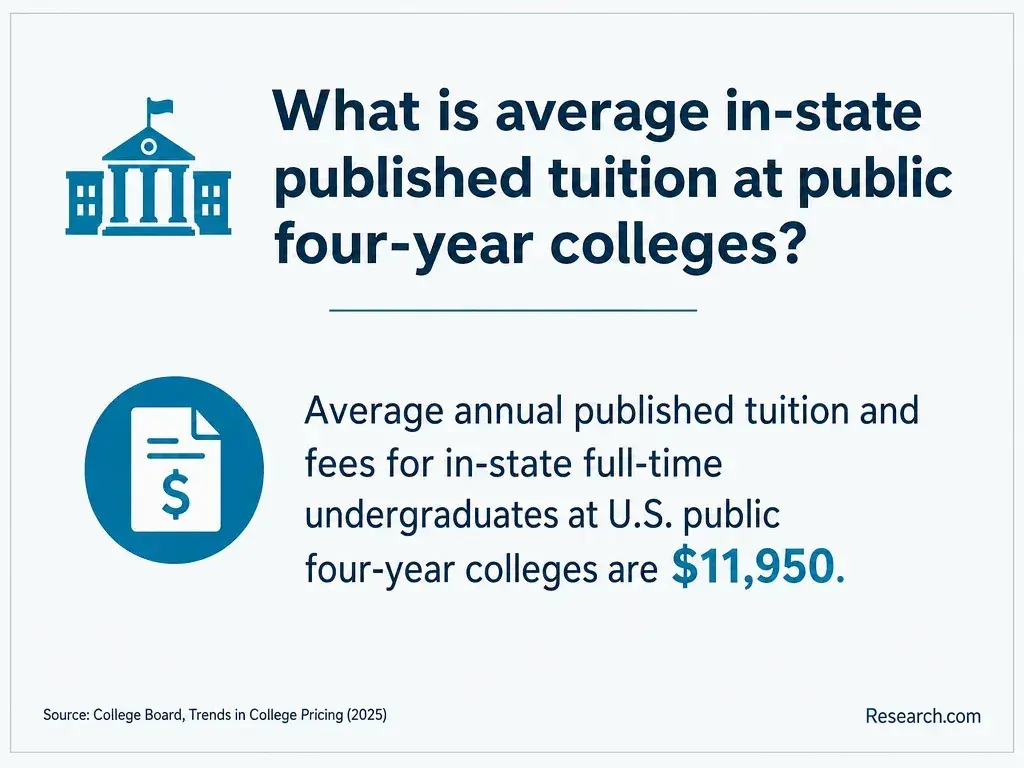
There is no reliable universal price for a completion program. Your cost depends on the credits that apply to graduation, the school's tuition and fees, enrollment pace, remaining aid, and costs outside tuition. Compare written estimates for the same intended schedule rather than advertised per-credit rates alone.
The following components show what to include in a school-by-school estimate; they are not quoted prices.
| Cost component | What to verify | Why it matters |
| Tuition and mandatory fees | Charges for your residency status, program, and enrollment pace | A low rate may not include required fees. |
| Remaining coursework | Credits and terms on the approved degree audit | Accepted electives may not shorten the path to graduation. |
| Applied-learning expenses | Travel, placement, supplies, or unpaid hours if required | These may continue after classroom coursework ends. |
| Funding conditions | Grant amount, covered charges, renewal, and enrollment rules | An award may not cover every term or every expense. |
Ask for the estimated net amount you must pay through graduation, including any old balance that blocks registration. Compare that figure with the income or hours you might forgo while studying. A discussion of online public health master's value addresses a later, separate investment; do not include presumed graduate-degree earnings when judging the affordability of this BS.
A completed BS can support applications for entry-level roles in community organizations, health departments, healthcare systems, and research or program teams. Depending on the employer and your experience, relevant work may include outreach, health education support, program coordination, data collection, or evaluation assistance. Your prior employment and an internship or project may matter as much as the major's name when demonstrating readiness.
Read job descriptions for tasks rather than relying on broad "public health" labels. A role involving community outreach calls for communication and partnership skills; a data-support role may require spreadsheet proficiency and careful handling of sensitive information. Epidemiologist, advanced analyst, and management positions often have additional education or experience expectations. A BS does not provide clinical licensure.
If a target role explicitly requires graduate study, investigate its actual requirements before enrolling in another degree. A list of less selective online MPH programs may help with a later admissions search, but ease of entry is not evidence that an MPH is necessary for your first public health job.
What Salaries and Certifications Can Public Health Graduates Expect?
No single salary describes public health BS graduates. Pay depends on the occupation, location, employer, and prior experience. The US Bureau of Labor Statistics reports wages for occupations such as health education specialists and community health workers, not for everyone holding a particular major. Use the occupation that matches jobs you can realistically seek, then compare its published wage data with local postings; an occupational median is not a starting-salary offer.
Certification is likewise role-specific. The Certified in Public Health (CPH) and Certified Health Education Specialist (CHES) credentials have separate eligibility rules set by their certifying organizations; earning a public health BS does not award either credential automatically. Check the current rules for your degree, coursework, and experience before paying for exam preparation. Employer requirements or state rules may also differ.
A graduate degree is not a prerequisite for every entry-level opportunity. Likewise, less selective online public health doctoral options are not a shortcut to higher pay after a BS. Base any further-education decision on a defined role's requirements and a realistic comparison of cost and likely benefit.
Other Things You Should Know About Public Health
Yes. A default can affect federal student-aid eligibility. Check your loan status through Federal Student Aid and ask your loan holder and prospective school's financial aid office what steps apply before counting on new aid.
Not necessarily. An academic renewal policy may change how a school calculates academic standing without resetting federal satisfactory academic progress or aid limits. Ask the receiving school's financial aid office to review your record.
Tax treatment depends on how grant funds are used and your circumstances. Amounts used for qualified tuition and required education expenses may be treated differently from funds used for living costs. Keep your award and expense records and consult current IRS guidance or a tax professional.
You may lose future eligibility or owe money back, particularly if federal aid must be recalculated after withdrawal. Before leaving a course, ask the financial aid and registrar's offices for a written explanation of the financial and academic consequences of your proposed withdrawal date.
- Cost of Attendance (Budget) | 2025-2026 Federal Student Aid Handbook https://fsapartners.ed.gov/knowledge-center/fsa-handbook/2025-2026/vol3/ch2-cost-attendance-budget
- .04 Award Amounts and Credit Completion Requirements. | Library of Maryland Regulations https://regs.maryland.gov/us/md/exec/comar/13B.08.10.04
- Eligibility Requirements | Federal Student Aid https://studentaid.gov/understand-aid/eligibility/requirements
- Scholarships for Disadvantaged Students | hrsa.gov https://grants.hrsa.gov/2010/Web2External/Interface/Common/EHBDisplayAttachment.aspx
- Public Health Transfer Options | cocc.edu https://cocc.edu/programs/public-health/public_health_degree_transfer_options
- Online BS in Public Health Degree Completion Program | American International College https://www.aic.edu/academics/degrees-programs/ph-degree-completion/
- Bachelor of Science in Public Health Online | SDSU Global Campus https://globalcampus.sdsu.edu/program/health-care/public-health-online-degree-completion/