
2027 Evaluating an MPH Practicum in A Hospital Community Benefit Department

Co-Founder and Chief Data Scientist
A hospital community benefit department can give an MPH student a close view of how a health system identifies community needs and works with local partners. But a placement that sounds relevant may offer little independent practice - or may depend on data the student cannot access.
This guide is for students comparing field sites and MPH programs. It explains what the work involves, how to test a proposed project against academic requirements, and which questions to resolve before accepting an offer.
Key Things You Should Know
- Choose a placement with an approved supervisor, substantive community-facing work, and deliverables tied to your MPH competencies - not observation alone.
- Nonprofit hospitals generally must conduct a community health needs assessment at least once every three years; that cycle can create useful projects, but its timing may not match your practicum.
- Confirm school approval, site permission, data access, scheduling, and any unpaid-work costs separately before committing.
What Is an MPH Practicum in a Hospital Community Benefit Department?
An MPH practicum, often called an applied practice experience, is supervised work in which a student applies public health skills to an organization's real needs. A hospital community benefit department may coordinate a community health needs assessment (CHNA), support its implementation strategy, manage partnerships, or document activities intended to benefit the community.
This is population-health work, not clinical training. Nonprofit hospitals subject to federal community-benefit requirements conduct CHNAs and adopt implementation strategies; reporting also includes IRS Form 990 Schedule H. A student might help interpret community-level evidence or assess a partnership, but should not assume access to patient records or authority to speak for community partners. A for-profit hospital or health-system partner may still offer suitable public health work if the MPH program approves the site and project.
Students still deciding whether they need graduate training can compare public health undergraduate study options. For someone seeking an introductory community outreach role, a bachelor's pathway or supervised work experience may be more direct than an MPH practicum.
What Does a Hospital Community Benefit Practicum Involve?
The work depends on the department's CHNA cycle, staffing, partnerships, and approved student scope. Typical tasks include reviewing public health indicators, summarizing community input already collected with appropriate permission, updating a resource inventory, helping partners define program measures, or preparing a briefing for a community benefit committee.
A strong placement gives the student a defined question and opportunities to revise work after feedback. For example, mapping where a hospital-funded food access program operates can inform a discussion about service reach; it does not, by itself, establish that the program improved health. Ask whether the department can provide usable data, explain its limitations, and arrange appropriate contact with community partners rather than treating them only as sources of information.
Scheduling deserves equal attention. A working student may find that partner meetings occur during business hours even when coursework is asynchronous. If completing earlier public health coursework first is part of the plan, fast-paced public health bachelor's course formats are a separate scheduling decision; they do not shorten a hospital's approval process or make practicum hours more flexible.
How Do You Evaluate a Hospital Community Benefit Practicum?
Start with the decision that matters: can this department support an approved, ethical project with enough practice and feedback to meet your learning objectives? The comparison below distinguishes promising evidence from conditions that warrant clarification.
| Factor | Promising evidence | Reason to pause |
| Project scope | A defined public health question and usable work products | Mostly observation or undefined administrative help |
| Supervision | A named supervisor with time for feedback | No clear reviewer or changing expectations |
| Community partnership | Partner roles and permissions are clear | The student is expected to collect input without an agreed process |
| Data and approvals | Permitted sources and review steps are identified | The project relies on restricted data not yet authorized |
| Feasibility | Meetings, site visits, and outputs fit the academic term | The CHNA timetable or travel requirements conflict with the term |
Before accepting, ask the site supervisor what decision your work will inform, who will review each product, and what happens if a partner meeting or data approval is delayed. Ask the academic coordinator which competencies, products, hours, and agreements must be approved. Neither a willing hospital nor an attractive project substitutes for school authorization.
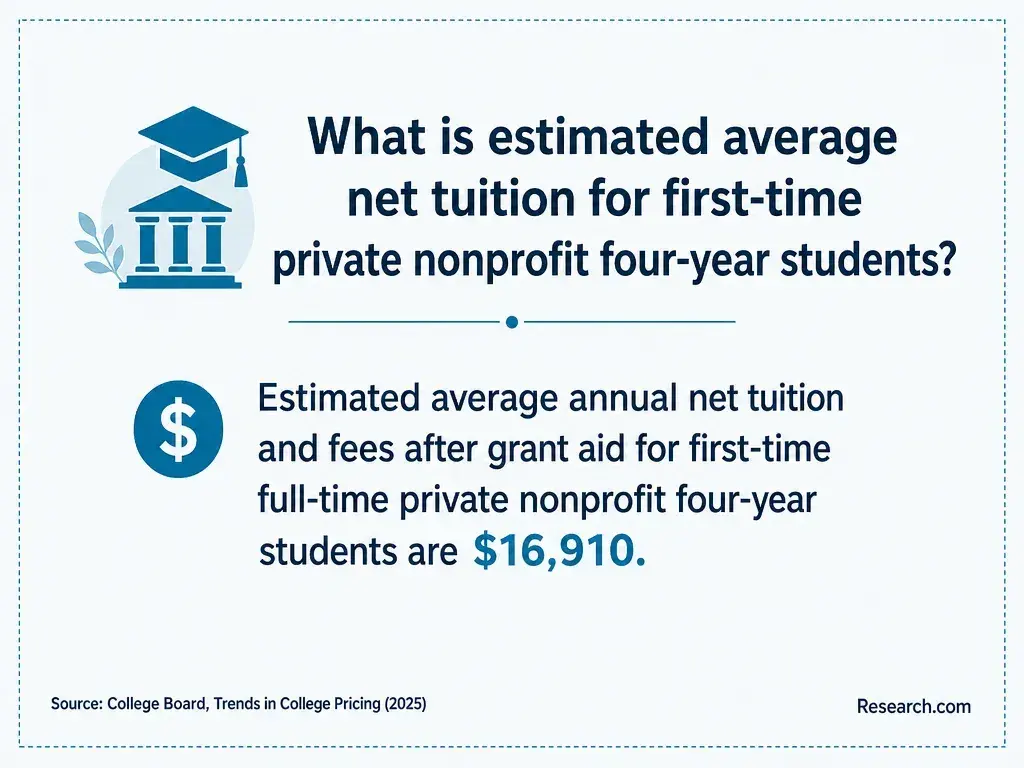
Include unpaid hours, commuting, background checks, and possible lost earnings in the decision. When comparing a longer placement with a quicker educational route, affordable public health programs with faster schedules can provide context - but advertised program speed does not establish that this particular field experience is feasible or affordable.
A community benefit placement can develop population-health assessment, evidence interpretation, program planning, evaluation, communication, and partnership skills. The strength of that learning depends on what the student actually does. Reading a CHNA demonstrates exposure; explaining data limitations, incorporating authorized partner feedback, and revising a usable recommendation demonstrate applied practice.
Competency selection should follow the project. A student preparing an evaluation plan might define a population and measures, assess data quality, and explain how findings could inform a program decision. A student supporting an implementation strategy might focus instead on stakeholder roles, feasible activities, and clear communication. Neither assignment alone establishes advanced biostatistical or clinical expertise.
These distinctions also help when choosing electives or a concentration. Public health master's concentrations and careers can help frame longer-term interests, but the practicum should be judged by its approved tasks and work products, not its placement title.
Suitable projects produce something the department can review and potentially use. Examples include a public-data needs profile, a partner resource map, an evaluation plan for a community program, a draft dashboard specification, or a plain-language summary of an approved CHNA finding. These are possible project designs, not evidence that a particular hospital has commissioned or completed them.
Scope the output around available evidence. A dashboard specification may identify indicators, definitions, sources, and update responsibilities without requiring access to identifiable records. An evaluation plan can propose process measures without claiming that an intervention caused an outcome. If analysis requires substantial statistical modeling, clarify who will supervise the methods; biostatistics graduate study while working addresses a different, more technical preparation goal than most community benefit placements.
Agree in advance on data-use permissions, partner review, confidentiality, and whether any activity needs institutional or human-subjects oversight. A school-approved practicum does not automatically authorize use of protected health information or public release of a report.
Either format can support a local hospital placement. The important differences are how the program helps identify sites, approves agreements, assesses work products, and responds when a project changes. An online MPH may let a student study from home while still requiring weekday meetings, on-site visits, or scheduled faculty check-ins. A campus program may have established local contacts, but placement access should not be assumed.
Ask each program whether students may propose a hospital near home, when site approval must be completed, who resolves agreement delays, and how remote supervision works. Students balancing employment or caregiving should obtain an actual proposed weekly schedule from the hospital. When finding online MPH programs that fit your profile, compare field-placement support separately from admissions accessibility and online course delivery.
Admission to an MPH program and eligibility to begin its practicum are different decisions. A school may require specified coursework, academic standing, faculty approval, a learning agreement, or site documentation before fieldwork counts. A hospital may separately require onboarding, confidentiality training, immunization records, a background check, or access credentials. Requirements vary; request the current rules from both parties before setting a start date.
Students entering from another discipline should distinguish admissions prerequisites from practicum readiness. Prior community, clinical, business, or data experience may help define a project, but it does not replace a school's required preparation or approval. Guidance on applying to an MPH with incomplete prerequisites addresses the earlier admissions decision; confirm separately when the specific program permits field placement.
If you hope to use your current hospital job, disclose your existing duties and supervisor arrangement to the coordinator. The school may require a distinct project, new responsibilities, and a way to assess student learning rather than counting ordinary paid work automatically.
The Council on Education for Public Health (CEPH) sets accreditation criteria for covered public health schools and programs. Its MPH applied practice criteria call for a planned experience, assessment of selected competencies, and tangible work products. Under CEPH criteria, students demonstrate at least five competencies, including at least three foundational competencies, through at least two work products. The school determines how its approved placement and assessment process put those criteria into practice.
Check the exact accredited school or program, whether your MPH degree is within its scope, and the fieldwork handbook applicable to your entry term. Institution-level accreditation alone does not establish CEPH coverage. Do not apply MPH practicum rules to a different degree: doctoral public health program features, including applied-project expectations, require their own review.
The placement can provide relevant evidence for community benefit coordinator, community health program, partnership, or evaluation-support roles. It may also help a student assess whether health-system population-health work suits them. Employers will still evaluate prior experience, analytic ability, communication, and the requirements of the particular job; an MPH practicum is not a guarantee of employment or immediate management responsibility.
Save permitted, redacted examples of work that show your contribution and explain the decision each product was designed to support. A student who built an indicator dictionary, for instance, can discuss how measures were defined and what the available data could not show. Never place confidential hospital information or partner input in a public portfolio without permission.
For someone aiming only at an entry-level outreach position, completing an MPH may not be the least costly route. Compare local job requirements and supervised experience opportunities first; comparing public health bachelor's tuition rates may be relevant if an undergraduate credential, rather than graduate specialization, meets the target role's requirements.
How Can You Compare MPH Programs Offering Hospital Practicum Opportunities?
Compare documented placement support, not promises of "hands-on learning." Request the current practicum handbook and ask each program for its approval timeline, competency and product requirements, site-finding responsibilities, supervision expectations, and policy when a placement falls through. Then ask whether a community benefit project like the one you want would qualify. A hospital partnership named on a website does not establish that a place will be available to you.
Finally, compare the full cost and schedule of earning the degree and completing fieldwork. Tuition, fees, travel, unpaid hours, and time away from work may change which option is workable. Comparing lower-tuition MPH programs is a useful starting point, but obtain each school's current charges and placement policies before deciding. Prefer the program that can explain how your proposed project will be approved and supported - not simply the one that advertises a hospital connection.
Other Things You Should Know About Public Health
Not automatically. Certification bodies set their own eligibility rules and examinations. Check the requirements for the specific credential you want rather than treating practicum completion as certification.
Ownership and permitted use depend on the school-site agreement and hospital policies. Clarify those terms before beginning, especially if you hope to adapt a product for a portfolio.
Tell your faculty coordinator promptly. The school must determine whether a revised project or replacement site can satisfy its requirements; do not assume earlier hours or products will automatically count.
No. Clinical quality improvement generally focuses on care processes or patient outcomes, while community benefit work focuses on community needs and activities beyond an individual care episode. Either might support an MPH placement if the school approves its public health scope.
- CDC Approach to Program Evaluation https://www.cdc.gov/evaluation/php/about/index.html
- Minimum Necessary Requirement | hhs.gov https://www.hhs.gov/hipaa/for-professionals/privacy/guidance/minimum-necessary-requirement/index.html
- Community health needs assessment for charitable hospital organizations - Section 501(r)(3) | Internal Revenue Service https://www.irs.gov/charities-non-profits/community-health-needs-assessment-for-charitable-hospital-organizations-section-501r3
- A scoping review of community health needs and assets assessment: concepts, rationale, tools and uses - PMC https://pmc.ncbi.nlm.nih.gov/articles/PMC9847055/
- Practicum Examples | UW School of Public Health https://sph.washington.edu/mph-practicum/examples
- The MPH Practicum | Johns Hopkins https://publichealth.jhu.edu/offices-and-services/office-of-public-health-practice-and-training/the-mph-practicum
- Gillings MPH Practicum | UNC Gillings School of Global Public Health https://sph.unc.edu/resource-pages/gillings-mph-practicum/


