2027 MPH Biostatistics Preparation After an Algebra-Only Bachelor's

Co-Founder and Chief Data Scientist
An algebra-only bachelor's degree does not necessarily rule out an MPH in biostatistics, but it can leave a substantial gap between admission eligibility and readiness for quantitative coursework. If you are entering public health from another field, the right next step depends on each program's prerequisites and the kind of analysis you hope to do.
This guide shows you how to identify those requirements, build credible preparation, compare programs and costs, and decide whether a biostatistics MPH - or a smaller investment in coursework - fits your goal.
Key Things You Should Know
- An algebra-only bachelor's degree can be eligible for admission, but a biostatistics concentration may require or strongly favor college statistics, calculus, or programming; check each program's rules separately.
- For a CEPH-accredited MPH, plan around a minimum of 42 semester credits, then account for any prerequisite courses that do not count toward the degree.
- Before applying, obtain a written answer about outstanding prerequisites and complete a graded quantitative course if you need stronger evidence that you can handle the curriculum.
Can you pursue an MPH in biostatistics with an algebra-only bachelor's degree?
Yes, potentially. An unrelated major and an algebra-only transcript do not automatically disqualify you from an MPH. The consequential distinction is between qualifying for the MPH program, qualifying for its biostatistics concentration, and being prepared to succeed once courses begin. A school may admit applicants from varied disciplines yet expect more mathematics for a quantitative track.
Start with the work you want to do. If you hope to analyze public health datasets under supervision, an applied MPH with substantial statistics coursework may fit. If your goal is to develop statistical methods or pursue highly mathematical research, a research-oriented MS in biostatistics may require more calculus and linear algebra and may be the better eventual target. Neither path requires you to assume that you need a second bachelor's degree.
If you are considering one, compare its full cost and remaining requirements with individual prerequisite courses; a public health bachelor's affordability guide is a starting point for that separate comparison, not evidence that another degree is necessary.
What prerequisites are required for an MPH in biostatistics?
There is no universal calculus prerequisite for every MPH in biostatistics. Requirements belong to the specific school and concentration, and published admissions language may distinguish a required course from a recommended one. The following comparison helps you read those policies without treating common preparation as an admissions rule.
| Preparation | Why it matters | What to verify |
| College-level statistics | Introduces uncertainty, estimation, tests, and interpretation. | Whether a graded introductory course is required, recommended, or available after admission. |
| Calculus | Supports probability and more theoretical statistical work. | Whether calculus is required for admission, for particular courses, or not at all. |
| Programming | Supports data cleaning, reproducible analysis, and projects. | Whether prior experience is expected and which tools are taught. |
| Linear algebra | Becomes important in some advanced modeling courses. | Whether it is a prerequisite for the MPH track or mainly for an MS or advanced elective. |
Ask admissions and the concentration director to evaluate your actual transcript and identify the course title, acceptable grade, deadline, and whether an outstanding requirement can be completed after admission. A general MPH admissions page may not answer concentration-specific questions. If your concern also involves grades, a low-GPA pathway to public health master's study can help frame that distinct issue; it cannot waive a stated mathematics prerequisite.

How can you strengthen your application without calculus or statistics coursework?
Your strongest evidence is recent, assessable work that addresses the precise gap. If a program requires calculus, experience with spreadsheets is not a substitute unless that program explicitly accepts it. If statistics is recommended rather than required, a graded college course can demonstrate readiness more convincingly than a statement that you enjoy data.
Use this sequence to avoid paying for coursework that your target schools will not recognize:
- Shortlist programs and request written clarification of required versus recommended courses, accepted course providers, and completion deadlines.
- Take the missing graded course most commonly required by your shortlist; start with introductory statistics if none specifies a different first step.
- Build a small, reproducible analysis using public or appropriately authorized data, and explain the question, limitations, and results in plain language.
- Ask a quantitative instructor or project supervisor, where available, to describe your analytical work specifically in a recommendation.
In your statement, connect transferable experience - such as clinical records, business reporting, community surveys, or research assistance - to a realistic public health question. Do not present an introductory project as proof of advanced statistical proficiency. If obtaining references is a separate obstacle, review public health graduate applications without references, then verify the current policy for the exact program.
An MPH combines population-health training with quantitative study. Expect foundations in epidemiology and public health, followed by biostatistical methods, data management, and interpretation of health research. Depending on the program, advanced work may include regression, categorical or longitudinal data, study design, statistical software, and an applied practice experience. An integrative project may require you to communicate findings to a public health audience rather than simply produce model output.
For someone starting with algebra, course sequence matters as much as the course list. Check what precedes the first graduate biostatistics course, whether an introductory statistics class counts toward the degree, and when advanced electives are offered. Ask to see sample assignments: a program that teaches software commands without model diagnostics, uncertainty, or responsible interpretation may not serve your goals.
If you mainly want to interpret evidence or evaluate programs, compare the depth of this concentration with less technical options before committing. A guide to matching public health graduate degrees to careers can help you separate an applied MPH objective from a more research-intensive degree objective.
Delivery mode alone does not determine rigor. Compare the same evidence in either format: mathematical prerequisites, assessments, access to instructors, opportunities to work with real datasets, feedback on code and interpretation, and the quality of applied supervision. An asynchronous lecture can be demanding; it can also leave a student with weak mathematics preparation needing more support than the course provides.
Ask how office hours, computing support, group analyses, examinations, and fieldwork operate for remote students. If you work or have caregiving responsibilities, confirm scheduled meetings and weekly deadlines rather than assuming "online" means self-paced. A list of MPH programs with less restrictive admissions may help you identify options, but easier admission is not evidence that the biostatistics coursework is easier - or that it will provide the quantitative depth you need.
A CEPH-accredited MPH must meet a minimum of 42 semester credits under CEPH's MPH criteria. That is a degree-credit baseline, not a promise about any school's total requirements or your completion date. Full-time study commonly spans roughly two academic years, while part-time enrollment and prerequisite sequencing can extend the timeline. Ask whether a needed calculus or statistics course is additional to the MPH credits.
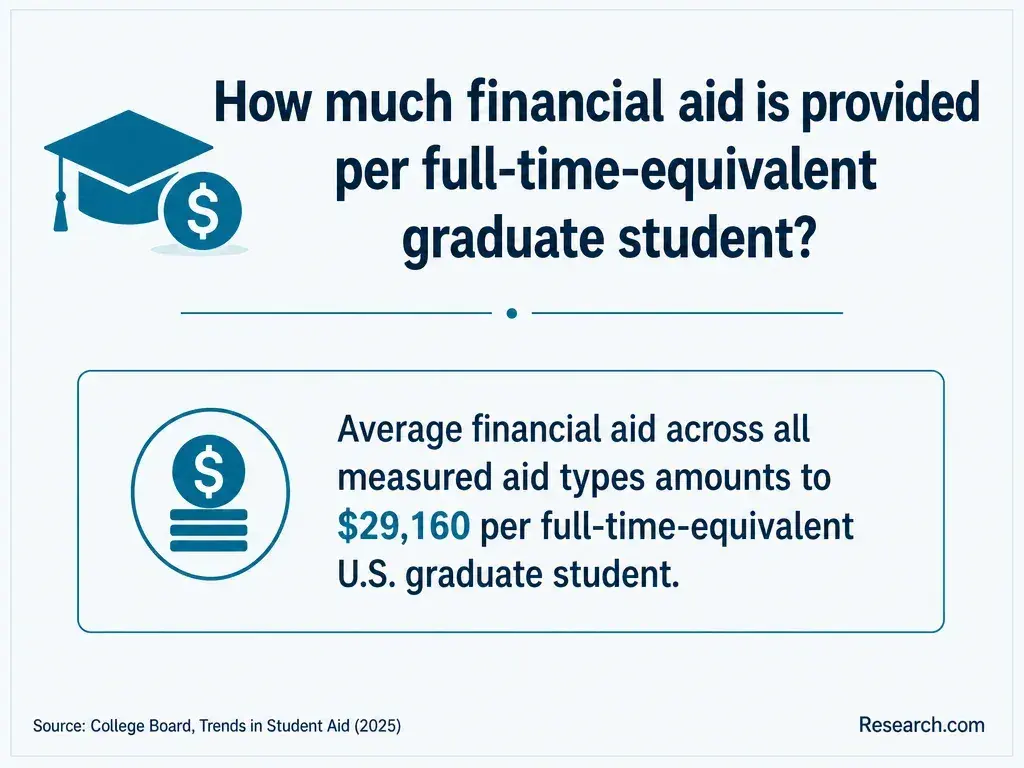
Build a school-specific estimate from the published tuition rate multiplied by required credits, then add mandatory fees and any prerequisite tuition. Also account for books, computing needs, potential travel, and time away from paid work for an applied experience. Compare the same enrollment pace across schools; a lower per-credit price can still cost more if additional credits or travel are required. Check aid terms and whether prerequisites taken outside the degree qualify for funding. A public health graduate scholarship eligibility guide can help you formulate questions, but only the school can confirm an award and its conditions.
Check institutional accreditation and public health-specific accreditation separately. For CEPH, search its accredited schools and programs directory for the exact institution and accredited school, unit, or program. Then confirm with the school that the MPH degree and biostatistics concentration you plan to enter fall within that accreditation scope; a related degree or course title is not enough.
Save the directory listing and ask the program to clarify any uncertain scope or status before paying an enrollment deposit. This distinction matters if you later consider a different credential: an accredited MPH does not establish the status or requirements of a doctorate at the same university. Apply the same independent check when comparing lower-tuition online PhD programs in public health.
An MPH can support quantitative public health work, but job titles do not have uniform degree requirements. Your prospects depend on statistical depth, software skills, subject knowledge, and evidence that you can analyze data responsibly. The distinctions below can help you target appropriate projects and openings.
| Target role | Typical work | Key hiring consideration |
| Public health data analyst | Clean data, produce summaries, and explain patterns to program teams. | A portfolio and experience with the employer's tools may matter alongside the MPH. |
| Biostatistician | Help design analyses, fit models, assess uncertainty, and collaborate with researchers. | Some positions expect substantially more mathematical training or an MS. |
| Epidemiology analyst or research assistant | Support surveillance, study data management, or analysis under supervision. | Study-design knowledge and experience with the relevant population or data source matter. |
Use the qualifications in actual job postings to test whether your target is an entry role or an experience-dependent specialist role. If your long-term aim is to lead independent epidemiologic research, compare doctoral preparation separately; grant-supported epidemiology doctoral pathways address a later decision, not a requirement for starting applied analysis work.
There is no reliable single salary figure for "MPH biostatistics graduates." The US Bureau of Labor Statistics reports occupation-wide wages for statisticians, not pay for holders of a particular degree or concentration. Those figures include workers with different credentials, industries, experience levels, and responsibilities; some biostatistics MPH graduates instead take analyst or epidemiology positions.
For a useful pay comparison, match the job duties and location of positions you could realistically qualify for, then consult the latest Bureau of Labor Statistics occupational wage data and actual vacancy ranges. Compare likely pay with your total education cost and any earnings you would forgo while studying. The MPH graduate compensation guide offers broader context, but neither a national occupational median nor an MPH-wide estimate predicts your offer.
What certifications and skills improve biostatistics job prospects?
For most analytical openings, demonstrated ability matters more than collecting general public health credentials. Prioritize data cleaning, a statistical language used in your target jobs, regression interpretation, reproducible scripts, clear visualizations, and concise explanations of uncertainty. In a portfolio project, document data provenance, missingness, analytical choices, and limitations; use public or authorized data and remove confidential information.
The Certified in Public Health credential may be relevant to some public health roles if you meet its current eligibility rules, but it is not a substitute for biostatistical training or an automatic result of earning an MPH. Likewise, a software course completion badge does not establish that you can choose and critique an appropriate analysis. Seek supervised projects where someone reviews both your code and your reasoning.
Further graduate study makes sense when the roles you want consistently require deeper theory or independent research - not merely because you started with algebra. Before considering a doctorate, compare job requirements and the full opportunity cost; public health doctorate value and affordability is a separate decision from building the skills needed for an initial analyst role.
Other Things You Should Know About Public Health
It may. Send the course description and syllabus to each program and ask whether the course satisfies its specific prerequisite. Admission offices may make the final equivalency determination.
Policies vary. Ask whether the program accepts AP credit, requires it to appear on your college transcript, or expects a graded college calculus course.
Only with appropriate permission. Do not publish identifiable, protected, or proprietary data; a public dataset or a permitted, safely redacted example is usually simpler.
Not necessarily. Ask whether the program permits outstanding coursework at application or offers conditional admission, and get its completion deadline before choosing an application cycle.
- School-Determined Requirements | 2024-2025 Federal Student Aid Handbook https://fsapartners.ed.gov/knowledge-center/fsa-handbook/2024-2025/vol1/ch1-school-determined-requirements
- Admissions FAQs | Biostatistics https://sph.umich.edu/biostat/programs/faq.html
- MPH in Biostatistics - Yale School of Public Health https://ysph.yale.edu/school-of-public-health/graduate-programs/master-of-public-health-mph-degree/biostatistics/
- Key Courses | MPH in Biostatistics | Emory University https://sph.emory.edu/degrees-programs/mph/biostatistics/key-courses
- BS Math/MS Biostatistics | University of Oklahoma Hudson College of Public Health https://publichealth.ouhsc.edu/academics/degree-programs/dual-degrees/bs-math-ms-biostatistics
- MPH Biostatistics | ufl.edu https://phhp.ufl.edu/academics/masters-programs/mph/mph-concentrations/mph-biostatistics/
- Verifying Your Prerequisite Course Work | ucsf.edu https://pharmd.ucsf.edu/admissions/reqs/academic/verify
- Admission Requirements - UW Biostatistics https://www.biostat.washington.edu/apply/requirements
- Requirements & Applying | Department of Biostatistics & Informatics | Colorado School of Public Health https://coloradosph.cuanschutz.edu/education/departments/biostatistics-informatics/students/requirements---applying
- Admissions - Master of Public Health - The University of Chicago https://publichealth.bsd.uchicago.edu/about/admissions/