2027 From Substance Use Recovery Program Assistant to Public Health: Planning a Bachelor's Pathway

Co-Founder and Chief Data Scientist
As a substance use recovery program assistant, you may already see how housing, access to care, stigma, and local policy affect people seeking support. A public health bachelor's degree could help you move from assisting individual programs toward planning, outreach, and evaluation across communities, but it is not the only route.
This guide shows how to build on your experience, identify the skills you still need, compare degree formats and costs, and judge which jobs are realistic after graduation.
Key Things You Should Know
- A public health bachelor's can support a move into community outreach, prevention, or program coordination; it does not qualify you to provide licensed substance use treatment.
- Compare programs by the credits that satisfy degree requirements, not just credits accepted, and by whether required fieldwork fits your job schedule.
- The U.S. Bureau of Labor Statistics reported a May 2024 median wage of $51,030 for community health workers. That occupation-wide figure is not a promised salary for public health graduates.
What does a public health bachelor's degree prepare you to do?
A public health bachelor's degree teaches you to examine health needs across populations, not only one person's treatment or recovery plan. For a recovery program assistant, that can mean learning to identify service gaps, communicate prevention information, help coordinate referrals, and assess whether an outreach program is reaching its intended community.
The degree is most useful when your target job calls for program planning, health education, community engagement, or basic data interpretation. It is less direct if you want to remain in hands-on peer support or become a licensed counselor: those paths have their own training and state-specific requirements.
If speed matters, compare short online public health degree options against a written degree audit; an advertised short format cannot resolve missing prerequisites or required fieldwork.
How can recovery program assistants transition into public health careers?
Start with the work you already do: explaining services, coordinating appointments, supporting outreach, maintaining records, or noticing barriers that repeatedly prevent access.
Those experiences can translate to public health roles, but employers will also want evidence that you can work beyond an individual caseload—for example, helping implement a prevention campaign or summarize a program's aggregate results.
A practical transition has three stages:
- Choose a target function, such as outreach coordination, health education, or program evaluation, and read local job descriptions for its actual duties.
- Document transferable work without disclosing client information; identify gaps in data skills, writing, community partnership, or supervision.
- Seek a supervised project at work or through school that produces a permitted, shareable example of the target skill.
If the desired role requires graduate education later, investigate alternative entry routes to a public health master's rather than assuming every undergraduate elective must prepare you for every possible graduate program. If you mainly want to advance in direct recovery services, employer training or a relevant state-recognized credential may be more direct than a bachelor's degree.
What education and training do public health careers require?
Requirements depend on the job's duties, not on whether an employer calls it "public health." Outreach and program-support positions may accept varied educational backgrounds and relevant experience.
Health education roles commonly seek a bachelor's degree; more specialized epidemiology and independent research roles generally require graduate preparation. Clinical counseling is a separate, regulated pathway.
For someone already employed in recovery services, a bachelor's is a sensible next step when job postings consistently specify one and you need stronger population-health, writing, and evaluation skills. Ask your supervisor which responsibilities you could practice now under supervision.
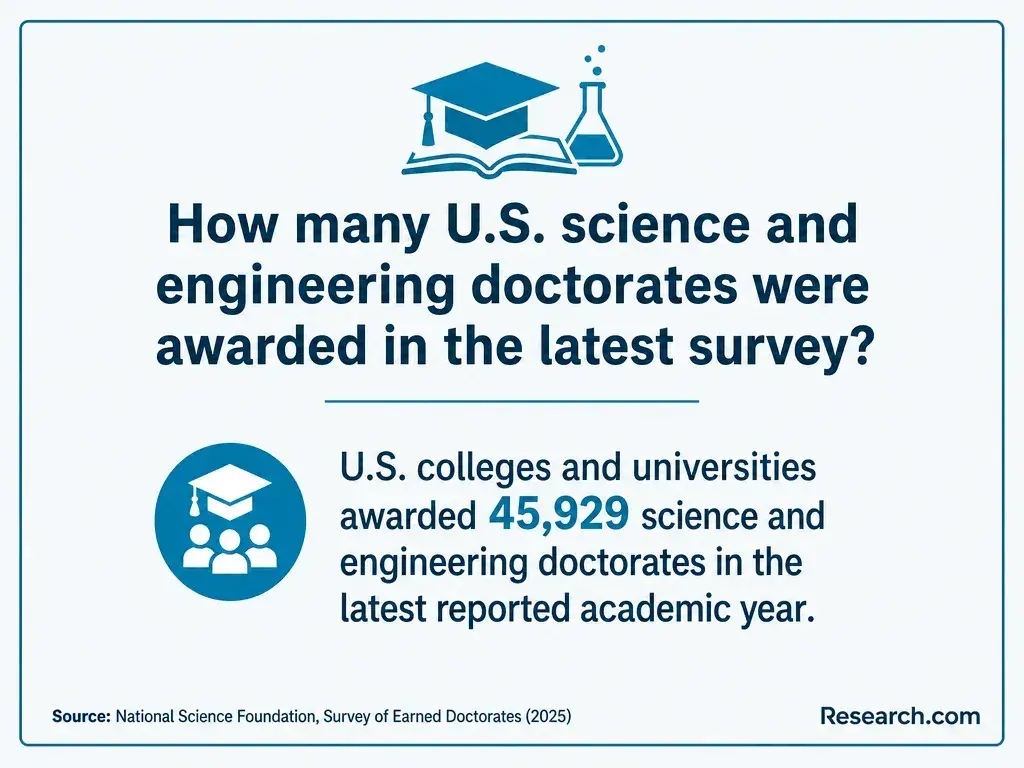
If you eventually pursue an MPH, admissions rules differ. Online MPH study without reference letters may be an option at some schools, but it does not remove other application or degree requirements. A research doctorate is a much later decision, not a prerequisite for entry-level prevention work.
First, confirm that the university holds recognized institutional accreditation. Then check whether the Council on Education for Public Health (CEPH) accredits the relevant school, unit, or standalone bachelor's program, and whether the degree you would enter falls within that accreditation's scope. Institutional accreditation and CEPH accreditation answer different questions; neither should be inferred from a marketing statement about the university generally.
Ask admissions for the exact degree name and accrediting unit, then verify them in the accreditor's directory. If graduate study is part of your longer-term plan, a guide to online MPH programs with CEPH accreditation can help you frame questions for that later choice. Do not assume a bachelor's degree must carry the same accreditation status as an MPH, or that accreditation alone establishes certification eligibility.
Programs commonly combine general education with epidemiology, introductory statistics, health behavior, environmental health, health policy, and program planning or evaluation. For a recovery program assistant, the most valuable courses often connect substance use prevention to social and structural factors, community partnerships, ethical communication, and careful interpretation of program data.
Look beyond course titles. A statistics class should help you interpret rates and uncertainty; an evaluation class should help you select appropriate measures without claiming that a program caused an outcome it has not established. If you hope to move into technical analysis, check mathematics and programming prerequisites before choosing electives.
Comparing online biostatistics graduate programs can clarify how much additional preparation that substantially different career path may require. An undergraduate elective alone does not confer advanced analyst skills.
Some schools offer online public health bachelor's coursework. Online delivery does not necessarily mean you can complete every requirement at any hour: classes may have live sessions, group assignments, scheduled exams, or an internship at an approved site. For someone working shifts in recovery services, the decisive question is whether those commitments fit the actual workweek.
Before enrolling, ask for the course rotation, live-session times, fieldwork rules, and whether your current employer could be considered as a site. Employer willingness is not school approval, and ordinary job duties may not meet a fieldwork requirement.
If you expect to continue to graduate school online, compare those future scheduling and price commitments separately; low-tuition online MPH options do not tell you whether a bachelor's program is affordable or flexible.
First-year and transfer applicants may face different rules. A university might admit you while the public health major separately requires prerequisite courses or a later application.
Schools may request transcripts, a minimum academic record, or specific general education and statistics preparation; confirm the rules for your entry term rather than assuming your recovery-service experience substitutes for coursework.
If you have previous college credits, request an official evaluation showing which credits are accepted, which satisfy general education or major requirements, and which remain as electives. Then obtain a degree audit and ask about course substitutions, required credits taken at the university, and appeals.
The receiving institution makes the final determination. A weak earlier academic record need not define every future application, but advice about public health master's admissions with a low GPA addresses a different admissions stage; ask the bachelor's program about its own policies.
Many U.S. bachelor's programs are built around approximately 120 semester credits, but your remaining time depends on the credits that apply to the degree, course sequencing, enrollment pace, and fieldwork availability. Accepted transfer credits that count only as electives may leave more requirements and more tuition than expected.
Compare a written estimate of remaining tuition and mandatory fees with books, technology, travel to fieldwork, and any reduction in paid work hours. Ask financial aid staff how your enrollment pace and transferred credits affect aid eligibility, and ask your employer whether education assistance is available under its actual policy.
Scholarships for a later MPH are a separate calculation. Comparing university scholarships for MPH study is useful only if you later choose that degree. For the bachelor's decision, compare the cost of finishing with the qualifications required by jobs you would realistically seek.
Relevant openings may include community health worker, outreach coordinator, prevention program assistant, and health education specialist. Titles are inconsistent: compare duties, required credentials, and supervision rather than assuming every "coordinator" role is entry-level. Your recovery-service experience may be especially relevant to employers working on substance use prevention, referral access, and community partnerships.
The U.S. Bureau of Labor Statistics reported a May 2024 median wage of $51,030 for community health workers. That is the midpoint for an occupation across employers and experience levels, not an entry-level offer or a return on investment for a public health bachelor's.
Check local postings for pay and requirements before making a financial decision. Epidemiology research is a different, typically graduate-level path. If that becomes your goal, an epidemiology doctoral education funding guide belongs in a later comparison, not in your budget for entering community practice.
What certifications and licenses do public health professionals need?
A public health bachelor's does not itself award a clinical license or professional certification. Some employers prefer a health education credential, such as CHES, while peer support, substance use counseling, and other regulated work may have state-specific training, supervision, examination, or licensing rules. Check the current certifying organization or state board for the exact role you want before selecting courses on the assumption that they establish eligibility.
Credentials should follow the job, not replace a job decision. A doctorate is also an academic qualification rather than permission to provide clinical care. Public health research doctorate tuition options are relevant only if you later pursue research training. If your immediate goal is stronger performance in a recovery program, supervised experience and a targeted credential may deliver more value sooner than another degree.
Other Things You Should Know About Public Health Programs
It can inform respectful, effective community work, but it does not replace a school's admission requirements or an employer's required credential. You decide whether and how to disclose personal experience.
Describe your responsibilities, the populations served, and skills developed using information you are permitted to share. Remove client details and obtain workplace permission before sharing internal materials.
Yes. The degree may add prevention and program-planning skills without requiring a career change. Check whether the added responsibilities or advancement you want actually require it.
Ask a program advisor for a degree audit, a fieldwork coordinator about site rules, financial aid staff about your enrollment plan, and prospective employers which qualifications they require.
- Prevention of Substance Use | samhsa.gov https://www.samhsa.gov/substance-use/prevention/substance-use-disorders
- Substance Use Disorder Professional (SUDP) | Washington State Department of Health https://doh.wa.gov/licenses-permits-and-certificates/professions-new-renew-or-update/substance-use-disorder-professional/certification-requirements
- Workplace Supported Recovery | Substance Use and Work https://www.cdc.gov/niosh/substance-use/workplace-supported-recovery/index.html
- Chapter 6 - How To Become a Peer Specialist - NCBI https://www.ncbi.nlm.nih.gov/books/NBK596268/
- Types of Financial Aid: Grants, Work-Study, and Loans | studentaid.gov https://studentaid.gov/understand-aid/types
- Public Health Approach to Substance Use - Mental Health Guide https://mhguide.hogg.utexas.edu/policy-environment/public-health-approach-to-substance-use/
- Public Health Careers | Programs of Study https://www.uml.edu/health-sciences/public-health/programs-of-study/public-health-careers.aspx
- Public Health (BS) | luc.edu https://catalog.luc.edu/undergraduate/health-sciences-public-health/public-health-bs/
- Admissions - Master of Public Health - The University of Chicago https://publichealth.bsd.uchicago.edu/about/admissions/
- 7 Behavioral Health Jobs Herzing Can Help You Prepare For https://www.herzing.edu/blog/behavioral-health-jobs-herzing-can-help-prepare-for