2027 Online Real Estate Degree Programs for Veterans: GI Bill Benefits, Costs & Top Considerations

Co-Founder and Chief Data Scientist
Choosing an online real estate degree as a veteran is not just a program search. It is a benefits, cost, credit-transfer, and career-licensing decision. The right school can help you use GI Bill benefits efficiently, convert eligible military training into college credit, and prepare for real estate work without forcing you to pause family, employment, or service-related responsibilities.
The difficult part is that the real cost is not always obvious. Tuition, mandatory fees, book costs, credit-transfer policies, housing allowance rules, and VA approval status can vary by institution. Recent data reveals that less than 40% of veterans enrolled in online real estate-related programs use their full GI Bill housing benefit, potentially missing out on vital financial support.
This guide explains who may qualify, how online real estate programs work, what accreditation means, how GI Bill benefits apply, what support services to look for, and what careers and salaries may be possible after graduation. It is designed for veterans, active-duty service members, reservists, National Guard members, and eligible dependents comparing online real estate education options.
Key Benefits of Online Real Estate Degree Programs for Veterans
- The GI Bill covers tuition and fees for many accredited online real estate degree programs, enabling veterans to pursue education without significant out-of-pocket costs.
- Online real estate degrees offer flexible schedules, allowing veterans to balance studies with personal and professional responsibilities effectively.
- Many programs provide dedicated career services tailored to military-connected students, improving job placement rates by up to 20% within six months of graduation.
Who Qualifies as a Veteran for Online Real Estate Degree Programs?
For online real estate degree programs, “veteran” status usually matters because it affects access to GI Bill benefits, military tuition support, transfer-credit review, and campus veteran services. Nearly 1.3 million veterans used education benefits in the 2021-2022 academic year, which shows how important it is to confirm eligibility before enrolling.
Final eligibility is determined through the U.S. Department of Veterans Affairs and the school’s certifying process, but most applicants fall into one of the following categories:
- Veterans with qualifying active-duty service: Former service members from the Army, Navy, Air Force, Marine Corps, Coast Guard, and other eligible branches may qualify if their service history meets the requirements of the benefit program they plan to use.
- Current active-duty service members: Some active-duty personnel can use GI Bill benefits while still serving, though the rules may differ from those that apply after separation.
- Applicants with an eligible discharge status: A discharge status other than dishonorable is generally required. Honorable and general discharges often qualify, while other discharge classifications may require additional review.
- Reservists and National Guard members: Many reservists and National Guard members qualify when they meet minimum active-duty requirements or were activated under qualifying orders.
- Eligible dependents: Some spouses and children may use benefits through programs such as the Fry Scholarship or Transfer of Entitlement, depending on the service member’s eligibility and transfer status.
Before applying to an online real estate program, veterans should request or confirm their Certificate of Eligibility, ask whether the school is approved for VA education benefits, and verify how the program classifies online enrollment. Students comparing broader career paths may also review fields such as online artificial intelligence degree programs alongside real estate to evaluate long-term fit.
Do Online Real Estate Degree Programs Accept Military Training for College Credit?
Many online real estate degree programs review military training for possible college credit, but approval is not automatic. Nearly 70% of U.S. colleges accept credit recommendations from military training evaluations, yet each school decides how those credits apply to a specific degree plan.
For veterans, accepted credits can reduce tuition, shorten the time to graduation, and help preserve GI Bill entitlement. However, military credits may apply more easily to electives or general education requirements than to major-specific real estate courses, especially if the curriculum includes finance, law, property management, or state licensing preparation.
- Joint Services Transcripts: The Joint Services Transcript documents military courses, occupations, and training. Admissions or registrar offices use it to determine whether prior learning matches college-level requirements.
- American Council on Education recommendations: Many colleges use ACE credit recommendations as a starting point when evaluating military learning, but the recommendation does not guarantee acceptance.
- Prior learning assessments: Some schools allow exams, portfolios, professional certifications, or competency-based reviews to document learning that does not appear as a traditional college course.
- Transfer-credit limits: Institutions often cap how many credits can be transferred into a degree. They may also require a minimum number of credits to be completed through the school awarding the credential.
- Program relevance: Training in leadership, logistics, contracting, finance, facilities, administration, or operations may be more relevant to real estate, property management, or business coursework than unrelated training.
The best approach is to request an unofficial transfer evaluation before committing. Ask the school which credits count toward the major, which count as electives, and how many credits remain after the review. Also ask whether accepted credits affect full-time status, GI Bill payments, or expected graduation date.
How Do Online Real Estate Degree Programs Work for Veterans?
Online real estate degree programs typically combine business, finance, property law, valuation, market analysis, and real estate practice coursework. For veterans, the main advantage is flexibility: students can study without relocating, attend while working, and often complete coursework around family or service-related obligations.
Most programs use a learning management system where students watch lectures, submit assignments, participate in discussions, take exams, and communicate with instructors. Some courses are fully asynchronous, while others may include scheduled online meetings, proctored assessments, group projects, or field-related assignments.
- Flexible course delivery: Asynchronous classes allow students to log in at different times, which can help veterans managing work shifts, appointments, family responsibilities, or reserve duties.
- Part-time and full-time options: Veterans can often adjust course loads, but enrollment intensity may affect housing allowance, benefit use, and completion time.
- Veteran-focused advising: Strong programs connect students with advisors who understand GI Bill rules, transfer credits, deployment interruptions, and re-entry into academic life.
- VA certification support: Accredited programs that are approved for VA benefits usually have a School Certifying Official who reports enrollment to the VA and helps correct certification issues.
- Career preparation: Online programs may include resume support, internship guidance, networking help, and preparation for real estate roles. Students should also confirm separate state licensing requirements because a degree alone may not qualify someone to work as a licensed real estate agent or broker.
One veteran student described the value of online flexibility this way: “The ability to log in whenever I had time without worrying about missing a live class was a huge relief.” He also noted that veteran-specific support helped him understand “how the GI Bill payments flowed.” His experience reflects a common point: online learning works best when the program is flexible, but students still need proactive advising and careful benefits planning.
Are Online Real Estate Degree Programs for Veterans Accredited?
Yes, many online real estate degree programs for veterans are accredited, but students should verify both accreditation and VA approval before enrolling. Accreditation and GI Bill approval are related, but they are not the same thing. A school can be accredited and still require confirmation that a specific program is approved for VA education benefits.
Institutional accreditation evaluates the college or university as a whole. It matters for federal financial aid, credit transfer, graduate school admission, employer recognition, and overall academic credibility. Programmatic accreditation, when available, evaluates a specific academic program or field. For real estate programs, students should also pay close attention to whether the curriculum aligns with state licensing or professional requirements.
Attending a VA-approved, accredited school is especially important for veterans because GI Bill tuition payments and housing allowance benefits depend on proper school and program certification. Accreditation can also influence whether credits transfer to another institution and whether employers view the credential as legitimate. According to the U.S. Department of Veterans Affairs, over 90% of online degree programs approved for veterans hold accreditation.
Before enrolling, veterans should ask three direct questions:
- Is the institution accredited by a recognized accrediting agency?
- Is this specific online real estate program approved for VA education benefits?
- Does the program meet, support, or clearly separate itself from state real estate licensing requirements?
Students seeking a lower-cost path can also compare accredited options across fields, including an affordable online bachelor’s degree, before deciding whether real estate is the best academic and career fit.
How Much Do Online Real Estate Programs for Veterans Cost?
Online real estate program costs depend on tuition, required credits, fees, books, transfer credits, and how GI Bill benefits apply. Tuition generally ranges from $200 to $600 per credit, but the sticker price does not always show what a veteran will actually pay out of pocket.
| Cost factor | What veterans should check |
| Tuition per credit | Confirm whether the school charges $200 to $600 per credit, whether military or online tuition discounts apply, and whether rates differ for in-state, out-of-state, or private school students. |
| Total credits required | Most programs need 60 to 120 credits for graduation. Transfer credits from prior college or military training can reduce the number of credits still needed. |
| Mandatory fees | Technology, registration, course material, and online learning fees often add several hundred dollars each semester. Ask whether these fees are covered by benefits or billed separately. |
| Books and supplies | Real estate courses may require textbooks, software, calculators, exam tools, or market research materials. These costs should be included in the budget. |
| Housing allowance | Veterans using GI Bill benefits should understand that monthly housing stipends are generally reduced for fully online students compared with on-campus learners. |
| Out-of-pocket costs | Costs can remain if tuition or fees exceed benefit coverage, if a student is not eligible for full benefits, or if enrollment status reduces payments. |
To estimate total cost, multiply the per-credit tuition by the number of credits you still need after transfer evaluation, then add required fees and materials. Veterans should also ask the school’s veteran benefits office for a term-by-term cost projection rather than relying only on marketing pages.
Students comparing the value of different online credentials may also review other fields, such as an online masters in psychology, to understand how tuition, career outcomes, and benefit use differ across programs.
What GI Bill Benefits Can Be Used for Online Real Estate Degrees?
Veterans can often use GI Bill benefits for online real estate degrees when the school and program are approved for VA education benefits. Each year, more than 1 million veterans and their families rely on these benefits to support higher education, but the amount available depends on the benefit chapter, length of qualifying service, enrollment level, and program approval status.
- Post-9/11 GI Bill tuition and fee coverage: This benefit typically pays up to 100% of in-state tuition and fees at public schools and provides comparable assistance for private or foreign institutions. Actual coverage depends on eligibility percentage and program rules.
- Direct payment to the school: Tuition and required fees are usually paid to the institution, which can reduce the need for veterans to pay large amounts upfront.
- Monthly Housing Allowance: Monthly Housing Allowance (MHA) for online learners is generally set at 50% of the national average, which is lower than the rate for many students attending in-person classes.
- Book and supply stipend: Eligible students can receive up to $1,000 annually for textbooks, materials, and supplies.
- Transferred benefits: Eligible spouses and children may use transferred entitlement when the service member meets the requirements and the transfer has been approved.
- Benefit limits: The GI Bill may not cover every expense. Fees, reduced eligibility percentages, enrollment changes, private school costs, or repeated coursework can affect what remains out of pocket.
Veterans should confirm the following before the term begins: whether the program is VA-approved, how many credits count toward the degree, whether enrollment is considered full-time or part-time, when payments are expected, and how online-only status affects MHA.
A veteran who completed an online real estate degree using GI Bill benefits said the housing allowance rules were confusing at first, but manageable with help from the school. “Balancing coursework while understanding the financial support took effort, but the monthly stipends and tuition coverage made it feasible,” she explained. Her advice was to communicate early with both the VA and the school’s veteran affairs office.
What Veteran Support Services Are Offered in Online Real Estate Degree Programs?
Strong online real estate programs do more than accept GI Bill benefits. They provide support systems that help veterans stay enrolled, solve benefits issues, plan careers, and adjust to online learning. Research shows that veterans who engage with these resources experience up to a 15% higher retention rate in higher education.
- Academic advising: Advisors help veterans choose courses, understand degree requirements, apply transfer credits, and avoid taking classes that do not count toward graduation.
- Benefits counseling: Veteran benefits staff or School Certifying Officials explain GI Bill certification, tuition payments, housing allowance rules, enrollment changes, and documentation requirements.
- Career services: Career teams can help translate military experience into real estate resumes, prepare for interviews, identify internships, and connect students with employers in brokerage, property management, appraisal, leasing, or investment settings.
- Mental health and wellness resources: Confidential counseling can support veterans dealing with stress, transition challenges, isolation, or the pressure of balancing school with work and family.
- Peer communities: Veteran student groups, online forums, mentoring programs, and virtual veteran centers can reduce isolation and provide practical advice from students with similar backgrounds.
- Accessibility and disability support: Veterans with service-connected disabilities or other documented needs should ask about accommodations for exams, course materials, deadlines, and technology access.
- Technology support: Online learners need reliable help with learning platforms, proctoring tools, software, and digital course materials, especially in programs with asynchronous coursework.
When comparing schools, veterans should ask whether support is available fully online, during evening or weekend hours, and from staff who regularly work with military-connected students. A benefits office that responds quickly can be as important as tuition price.
How Long Does It Take to Complete an Online Real Estate Degree as a Veteran?
The time required depends on the credential, enrollment status, transfer credits, and whether the program offers accelerated terms. Veterans should plan the timeline carefully because completion speed affects GI Bill entitlement use, housing allowance eligibility, and the point at which they can enter or advance in the real estate workforce.
- Certificate programs: Some real estate certificates may be completed in less than a year. These can be useful for focused skill development, but students should verify whether they are eligible for VA benefits and whether they support licensing or career goals.
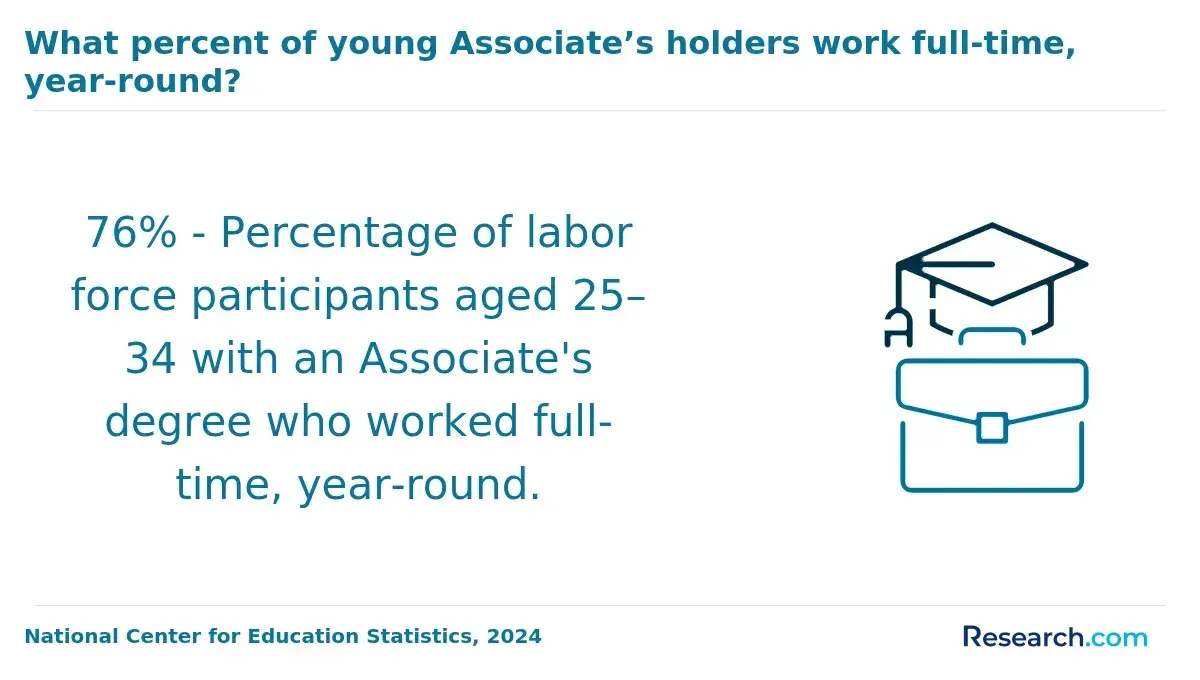
- Associate degrees: Associate programs typically take about two years for full-time students. They may be a practical starting point for veterans seeking a lower-cost credential before transferring into a bachelor’s program.
- Bachelor’s degrees: A bachelor’s degree generally requires around four years of full-time study. Veterans attending part time often take five or six years, depending on course load and transfer credit.
- Credit transfer: Prior college coursework, military training, and eligible professional learning can shorten the timeline if accepted toward degree requirements.
- Course format: Accelerated online courses can speed completion, while traditional semester schedules may provide more structure and a steadier workload.
- Life and service obligations: Work schedules, family responsibilities, medical appointments, reserve duties, and deployment-related interruptions can affect pacing. Flexible programs make it easier to pause or reduce course load when needed.
Before enrolling, ask for a degree plan that shows the estimated graduation date under full-time, part-time, and transfer-credit scenarios. Then compare that plan with remaining GI Bill entitlement so you do not run out of benefits before finishing. Veterans evaluating broader return-on-investment options may also compare real estate with high paying degrees in other fields.
What Jobs Can Veterans Get With an Online Real Estate Degree?
An online real estate degree can support careers in sales, brokerage, property management, appraisal, leasing, investment analysis, development, and real estate operations. According to the U.S. Bureau of Labor Statistics, real estate broker and sales agent jobs are projected to grow 7% from 2022 to 2032, faster than the average for all occupations.
Veterans should remember that many real estate roles require state licensure or additional credentials. A degree may strengthen business knowledge and employer appeal, but it does not automatically replace licensing exams, supervised experience, or continuing education where those are required.
- Real Estate Agent: Agents help clients buy, sell, or rent property. Veterans can apply communication, discipline, negotiation, and mission-focused planning to client service and transaction management.
- Real Estate Broker: Brokers may supervise agents, manage transactions, or operate a brokerage after meeting state requirements. Leadership experience from military service can be useful in this path.
- Property Manager: Property managers oversee residential, commercial, or mixed-use properties, coordinate maintenance, manage tenant relationships, and track budgets.
- Real Estate Appraiser: Appraisers estimate property values for financing, sales, taxation, or investment purposes. Analytical skills and attention to detail are especially important.
- Real Estate Analyst: Analysts evaluate market trends, property performance, investment opportunities, risk, and financial projections for firms, developers, lenders, or investors.
- Leasing Consultant: Leasing consultants market properties, screen prospects, explain lease terms, and support occupancy goals for apartment communities or commercial properties.
- Commercial Real Estate Associate: Veterans with strong operations, logistics, or finance backgrounds may fit roles involving office, retail, industrial, or multifamily assets.
The best job target depends on whether you prefer commission-based sales, salaried property operations, analytical work, or leadership roles. Veterans comparing flexible education paths with strong job potential can also explore online degrees that pay well and align with their career goals.
What Salary Can Veterans Earn With an Online Real Estate Degree?
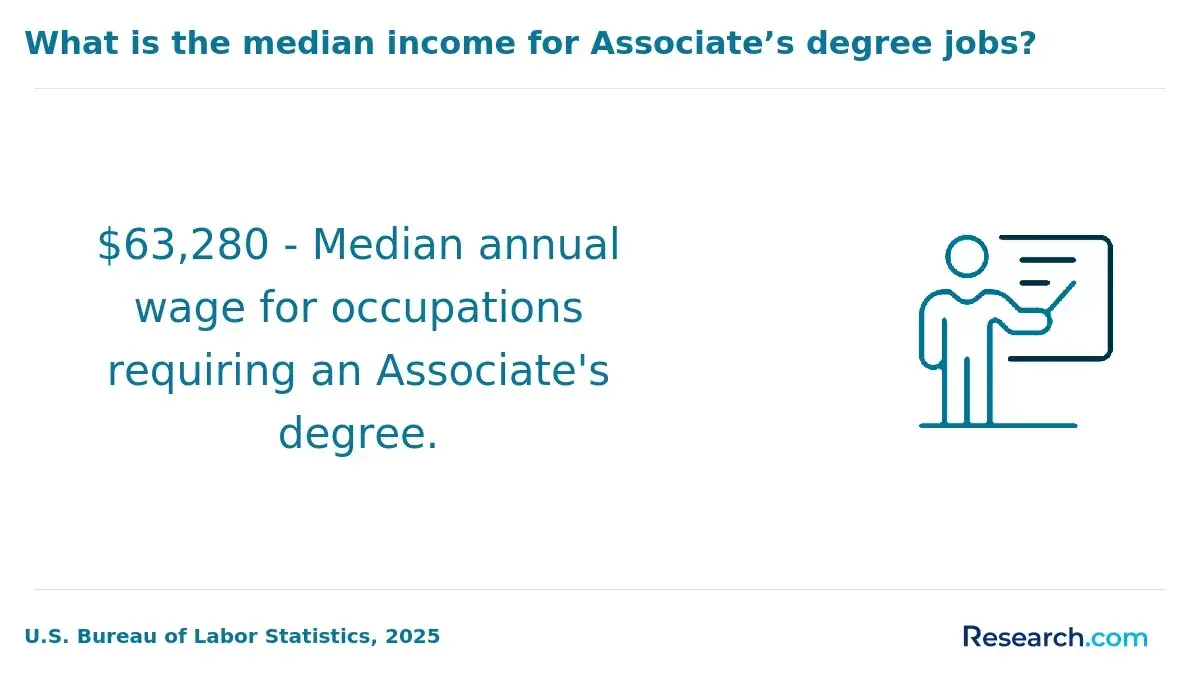
Salary outcomes in real estate vary widely because compensation may depend on commissions, location, property type, market cycles, licensing level, and experience. The U.S. Bureau of Labor Statistics reports that the median annual salary for real estate brokers and sales agents is about $50,730, but individual earnings can be lower or higher than the median.
- Role: Residential sales, commercial brokerage, property management, appraisal, leasing, and analysis can have different pay structures. Some roles are salary-based, while others rely heavily on commissions or bonuses.
- Market location: Earnings tend to be influenced by local property values, transaction volume, rental demand, and regional business activity.
- Licensing and credentials: Veterans who meet state licensing requirements and build specialized expertise may qualify for more advanced roles over time.
- Experience: Real estate income often increases with client networks, transaction history, market knowledge, and professional reputation.
- Property type: Commercial real estate roles can offer higher earning potential than some residential roles, but they may also require more specialized knowledge and longer deal cycles.
- Military background: Leadership, discipline, negotiation, planning, and risk assessment skills can transfer well, especially in client-facing, management, and investment-related positions.
Veterans should treat salary data as a planning benchmark, not a guarantee. Before choosing a program, compare likely debt or out-of-pocket cost with the career path you actually want, the licensing steps required in your state, and the time it may take to build income in the real estate market.
What Graduates Say About Their Online Real Estate Degree for Veterans
- Valerie: "Choosing an online real estate degree program helped me keep moving while transitioning from military to civilian life. I could study at my own pace, manage family responsibilities, and build practical knowledge for the property market. The average cost of attendance felt reasonable compared with traditional options, and finishing the program gave me more confidence in my next career step."
- Zeke: "I needed a program that respected my service background and my budget. Using my GI Bill benefits significantly reduced out-of-pocket costs, and the flexible format made it easier to balance coursework with work and family. The program helped me connect my leadership and organizational skills to real estate practice, which made the civilian transition feel more manageable."
- Grayson: "Earning my real estate degree online was a practical way to strengthen my credentials without losing control of my time or expenses. The coursework helped me apply military discipline in a civilian business setting, and graduating positioned me as a more prepared and trustworthy real estate professional."
Other Things You Should Know About Real Estate Degrees
Yes, if the course is approved by the U.S. Department of Veterans Affairs and offered by a GI Bill–eligible school. Veterans must also meet the school’s admission rules, and many licensing courses must satisfy their state real estate commission’s pre-licensing hour requirements.
Veterans enrolled in online real estate degree programs in 2027 can access specialized support services like tutoring, career counseling, and mental health resources. Schools often have veteran support centers to help with academic advising and adapting military skills to civilian job markets.
Veterans can utilize their GI Bill benefits to cover tuition and fees for online real estate degrees in 2027. Ensure the program is VA-approved, which allows access to housing stipends, books, and supply allowances. Consulting with a school's veterans' office can facilitate understanding and optimizing these benefits.
Veterans can transfer credits by submitting their Joint Services Transcript (JST) to the prospective online real estate program. Each institution evaluates these credits individually, and acceptance depends on the program’s policies and the applicability of military coursework to real estate degree requirements.
References
- How to Become a Real Estate Agent as a Military Veteran: Step-by-Step Guide https://www.colibrirealestate.com/career-hub/blog/veteran-real-estate-agent/
- Real Estate Agent Training Courses Online | Get Your License https://www.360training.com/agent-campus
- Admissions for Military & First Responders | RESNYS https://resnys.com/admissions-for-military-first-responders/
- Military Appreciation Program | Champions School https://www.championsschool.com/resources/military-appreciation/
- Veterans in Real Estate | The CCIM Institute https://www.ccim.com/education/scholarships-and-programs/veterans-real-estate
- MRP Certification – Hogan School of Real Estate https://hoganschool.com/mrp-certification
- Real Estate Education for Veterans: Leveraging GI Bill Benefits | Mil-estate Real Estate Network https://www.mil-estate.com/post/real-estate-education-for-veterans-leveraging-gi-bill-benefits
- Veteran Real Estate Programs | VREB Network https://vrebnetwork.com/veteran-real-estate-programs/
- Catalog 2025-2026 https://www.westvalley.edu/catalog/departments/real-estate-tution-free.html
- Veterans to Agent: Become a Real Estate Agent | Allied Schools https://www.alliedschools.com/blog/veterans-become-real-estate-agent-california/